This recipe offers a low-carb alternative to traditional sushi by utilizing prepared cauliflower rice as the base. It is a nutrient-dense option that remains gluten-free and dairy-free while maintaining a fresh flavor profile.
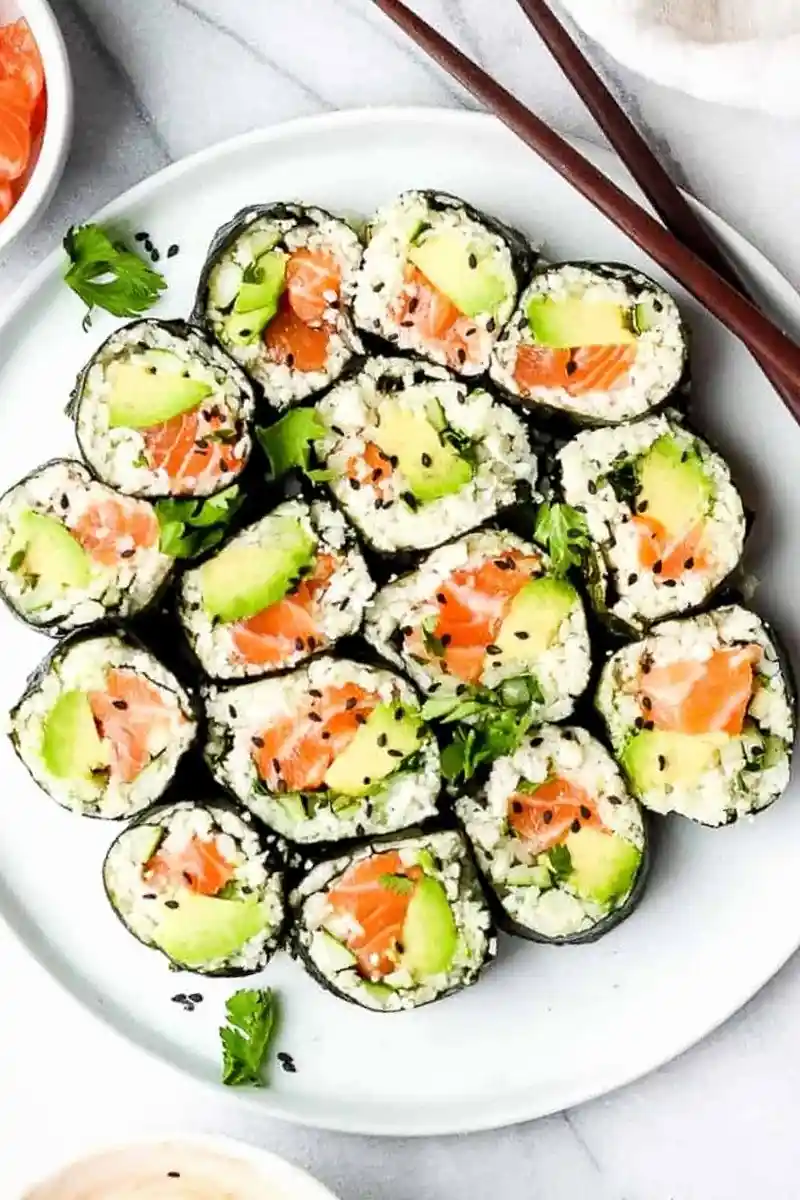
List of ingredients
- 3 cups grated cauliflower rice – serves as the grain substitute.
- 2 tablespoons rice vinegar – provides the characteristic tangy sushi flavor.
- 2 teaspoons tapioca starch – acts as a binding agent to hold the rice together.
- Pinch of salt – enhances the overall seasoning of the cauliflower.
- 1/2 lb sushi-grade salmon – can be substituted with tuna or smoked salmon.
- 1/2 tablespoon Frank’s Red Hot – adds heat; sriracha is an alternative for non-Paleo diets.
- 1 avocado, sliced – provides a creamy texture to the interior.
- 1 cup fresh cilantro – adds a bright, herbal element.
- 1/2 cucumber, cut into small sticks – adds a crisp, refreshing crunch.
- 3-4 nori sheets – seaweed wraps used to secure the roll.
- Coconut aminos – a soy-free alternative for dipping.
- Spicy mayo or wasabi mayo – optional garnish for added creaminess and heat.
- Bamboo sushi roller – required tool for shaping the rolls.
- Parchment paper – prevents the rice from sticking to the bamboo tool.
step-by-step instructions
- Cook the cauliflower rice: Heat a large skillet over medium-high heat and add the grated cauliflower. Stir constantly with a wooden spoon for 3 minutes. Add salt and rice vinegar, cooking for another 2 minutes. Stir in the tapioca starch until fully combined, then transfer to a bowl to cool slightly.
- Dry the rice: Place a paper towel on a large plate and pour the cauliflower rice on top. Cover with another paper towel and press down firmly to remove excess moisture. Return the dried rice to the bowl.
- Prepare the salmon: Cut the sushi-grade salmon into small, uniform cubes. Place the cubes in a bowl and stir in the Frank’s Red Hot or sriracha until the fish is evenly coated.
- Assemble the sushi roll: Place a bamboo sushi roller on a cutting board and lay one nori sheet on top. Spoon the cauliflower rice onto the nori and use the back of the spoon to create a thin, compressed layer. Leave the top 1 inch of the nori uncovered.
- Layer the fillings: Arrange cucumber sticks, cilantro, salmon cubes, and avocado slices in a straight line across the bottom of the nori, roughly 1 inch from the edge.
- Roll the sushi: Lift the bottom edge of the nori and fold it over the filling using the bamboo roller. Tuck the edge under the fillings and continue rolling away from your body, applying firm pressure to ensure a tight cylinder.
- Cut and serve: Use a very sharp knife to slice the roll into 1-inch pieces. Wipe the knife clean between each cut for precision. Serve immediately with coconut aminos and garnish with extra cilantro, black sesame seeds, and spicy mayo.
Techniques for Preparing Cauliflower Rice
Utilizing a Box Grater for Texture
Manual grating with a box grater produces a more consistent grain size compared to food processors. This prevents the cauliflower from becoming a puree and ensures a texture closer to actual sushi rice. Aim for the smallest holes on the grater for the best results.
Managing Water Content with Paper Towels
Cauliflower naturally releases a significant amount of water when cooked. Using the paper towel press method is critical because excess moisture prevents the tapioca starch from binding. Ensure you press firmly to remove as much liquid as possible before spreading it on the nori.
The Role of Tapioca Starch as a Binder
Since cauliflower lacks the natural starches found in sticky rice, tapioca starch is used to create adhesion. This allows the roll to maintain its shape during the slicing process. Be sure to stir it in thoroughly while the rice is still warm to activate the binding properties.
Filling Variations and Substitutions
Alternative Protein Choices
While salmon is the primary recommendation, sushi-grade tuna provides a similar texture and flavor profile. For a more intense taste, smoked salmon can be used, though you may want to reduce the amount of added salt. Cooked shrimp or imitation crab (ensure it is gluten-free) also work well.
Vegetarian Filling Options
To make a completely plant-based roll, replace the salmon with marinated tofu or tempeh. Adding pickled daikon radish or shredded carrots increases the nutritional value and adds a vibrant color. Sliced bell peppers also provide a satisfying snap and sweetness.
Enhancing Flavor with Different Herbs
Cilantro provides a traditional fresh taste, but Thai basil or mint can offer a unique aromatic twist. Sliced scallions are another excellent addition for a mild onion flavor. Using a combination of herbs can create a more complex flavor profile.
Mastering the Rolling Process
Achieving a Compressed Roll
The key to a sushi roll that does not fall apart is firm pressure. When using the bamboo roller, pull the tool toward you slightly as you roll away to compress the ingredients. This ensures the cauliflower rice adheres to the nori and the fillings stay centered.
Preventing Nori from Tearing
Avoid over-wetting the nori sheet with the cauliflower rice. A layer that is too thick or too moist can make the seaweed brittle or cause it to tear. Keeping the rice layer thin and well-dried prevents these structural issues.
Precision Cutting Methods
A dull knife will crush the roll rather than slice it. Use a non-serrated, very sharp chef’s knife and apply a gentle sawing motion. Wiping the blade with a damp cloth between every cut prevents the rice from sticking and keeps the edges clean.
Serving and Pairing Suggestions
Creating a Professional Sushi Platter
Arrange the sliced rolls on a flat wooden board or slate platter. Garnish the edges with thin slices of pickled ginger and a small mound of wasabi. This presentation mimics a traditional sushi restaurant experience and enhances visual appeal.
Developing Custom Dipping Sauces
Coconut aminos provide a savory base, but you can enhance it by adding a drop of sesame oil or a squeeze of lime. For those who prefer creaminess, mix compliant mayonnaise with sriracha and a touch of honey for a balanced sweet and spicy dip.
Complementary Side Dishes
Pair these rolls with a side of steamed edamame seasoned with sea salt for added protein. A simple miso soup made with a vegetable-based broth and small tofu cubes complements the fresh flavors of the salmon and avocado.
Storage and Freshness Guidelines
Recommended Consumption Timing
This recipe is best enjoyed immediately after assembly. Unlike traditional sushi rice, cauliflower rice continues to release moisture over time, which can soften the nori sheet. Eating the rolls fresh ensures the maximum contrast between the crisp seaweed and the tender filling.
Avoiding Sogginess in Leftovers
If you must store the rolls, wrap them tightly in parchment paper and place them in an airtight container. However, be aware that the nori will likely lose its crunch. To mitigate this, you can store the fillings and prepared rice separately and roll them just before serving.
Temperature Control for Raw Fish
Since this recipe uses sushi-grade raw salmon, temperature control is paramount. Keep the fish refrigerated until the moment you are ready to cube and season it. Serve the finished rolls chilled to maintain the safety and quality of the protein.
Troubleshooting Common Issues
Resolving Rice Disintegration
If the cauliflower rice does not stick to the nori, it is likely due to excess moisture or insufficient starch. Ensure you use the paper towel drying method and verify that the tapioca starch was stirred in while the rice was hot. If the problem persists, try using a slightly smaller amount of rice.
Fixing Unraveling Rolls
Rolls that unravel usually suffer from a lack of tension during the rolling process. Ensure you are tucking the bottom edge of the nori firmly under the filling. Using a piece of parchment paper between the bamboo roller and the nori can also help you apply more pressure without sticking.
Correcting Overcooked Cauliflower
If the cauliflower becomes mushy, it was likely cooked for too long or on too low a heat. Use medium-high heat to sauté the rice quickly so that it softens without breaking down completely. Avoid covering the pan during the initial sauté, as this traps steam and leads to mushiness.
Frequently Asked Questions
Can I use frozen cauliflower rice?
Yes, you can use frozen cauliflower rice. However, you must thaw it completely and squeeze out as much excess water as possible using a kitchen towel before cooking to avoid a watery consistency.
How do I know if salmon is sushi-grade?
Sushi-grade salmon has been commercially flash-frozen to specific temperatures for a set duration to kill potential parasites. Always purchase salmon specifically labeled as sushi-grade or consult your fishmonger about the freezing process.
Can I make these without a bamboo roller?
If you do not have a bamboo roller, you can use a clean kitchen towel or a piece of plastic wrap. The goal is to have a flexible surface that allows you to apply firm, even pressure across the length of the roll.
What is the best substitute for nori?
If nori is unavailable, you can use thin slices of cucumber wrapped around the filling or large collard green leaves. While the flavor will change, these options provide a similar structural purpose for holding the ingredients together.
How do I prevent the avocado from browning?
To keep the avocado slices looking fresh, lightly brush them with lemon or lime juice. The acidity prevents oxidation, ensuring the green color remains vibrant until the sushi is served.
Print
Spicy Salmon Cauliflower Rice Sushi Roll
- Total Time: 20 minutes
- Yield: 4 servings 1x
- Diet: Whole30, Paleo, Gluten-Free, Dairy-Free
Description
Our Spicy Salmon Cauliflower Rice Roll recipe is so you can enjoy your favorite sushi roll in a way that is gluten-free, Whole30 and Paleo!
Ingredients
- 3 cups cauliflower rice, grated
- 2 tablespoons rice vinegar
- 2 teaspoons tapioca starch
- pinch of salt
- 1/2 lb sushi grade salmon
- 1/2 tablespoon Franks Red Hot
- 1 avocado, sliced
- 1 cup fresh cilantro
- 1/2 cucumber, cut into small sticks
- 3–4 nori sheets
- coconut aminos
- spicy mayo or wasabi mayo
Instructions
- Make Cauliflower Rice: Place grated cauliflower in a large skillet over medium-high heat, cook for 3 minutes, add salt and rice vinegar for 2 minutes, stir in tapioca starch, and cool slightly.
- Dry Rice: Press cauliflower rice between paper towels on a large plate to absorb excess water.
- Prep Salmon: Cut salmon into small cubes and stir to coat with Franks Red Hot or Sriracha.
- Assemble Sushi Roll: Place nori on a bamboo roller, spread a thin layer of cauliflower rice leaving 1 inch at the top, lay cucumber, cilantro, salmon, and avocado in a line, and roll firmly using the bamboo roller.
- Cut + Serve: Cut into 1 inch slices and serve with coconut aminos, garnished with cilantro, black sesame seeds, and spicy mayo.
Notes
This recipe is best enjoyed immediately after making; leftovers are not recommended.
- Prep Time: 15 minutes
- Cook Time: 5 minutes
- Category: Dinner
- Method: Counter Top
- Cuisine: Asian
Nutrition
- Serving Size: 1 roll
- Calories: 280 kcal
- Sugar: 3 g
- Sodium: 450 mg
- Fat: 14 g
- Saturated Fat: 3 g
- Unsaturated Fat: 11 g
- Trans Fat: 0 g
- Carbohydrates: 11 g
- Fiber: 4 g
- Protein: 15 g
- Cholesterol: 60 mg