This blackened chicken is seasoned with a bold spice rub and seared to perfection for a smoky finish. It is a fast-cooking meal that is ideal for healthy dinner rotations or weekly meal prep.
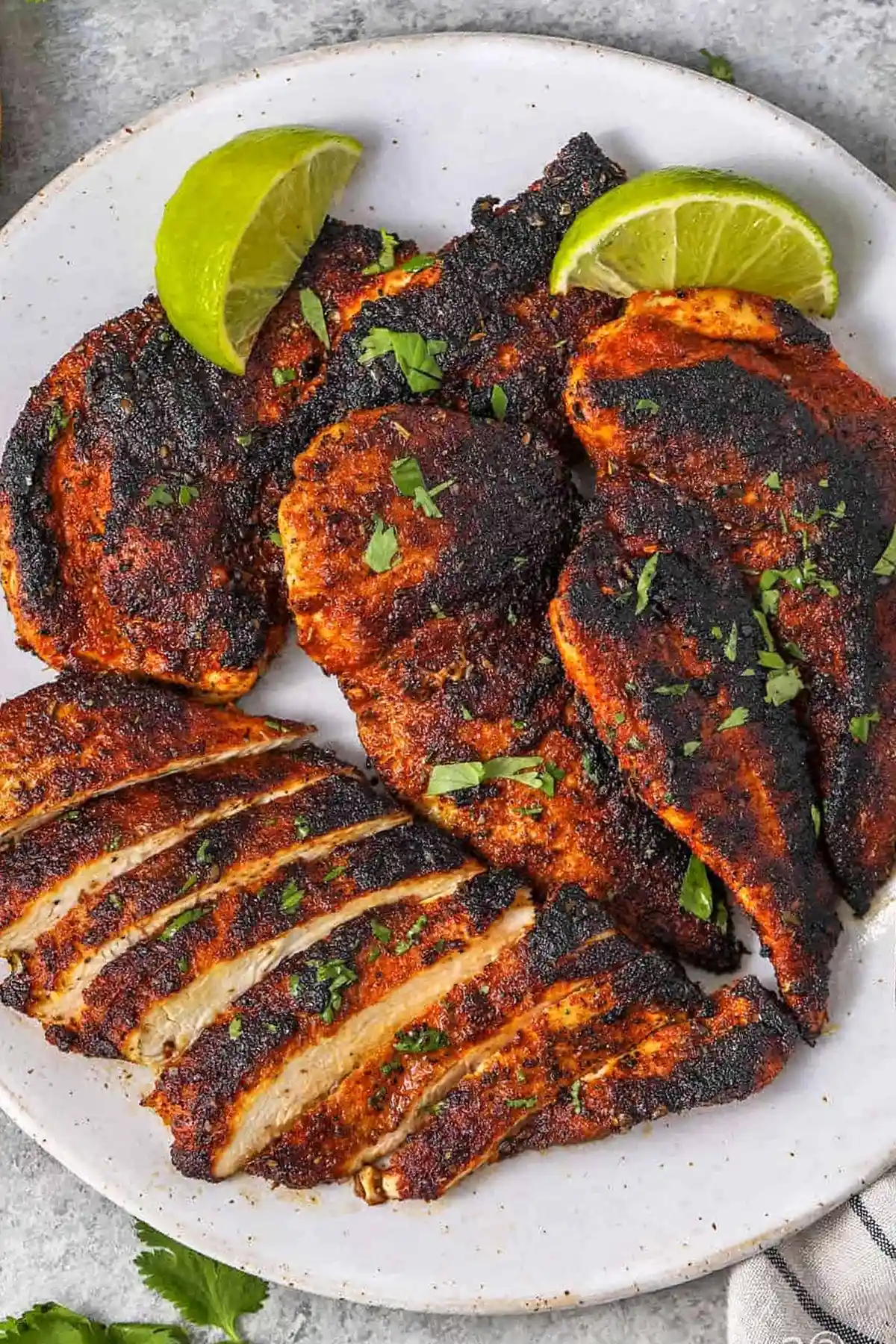
List of ingredients
- 2 boneless skinless chicken breasts (6 to 7 ounces each) or 2 lbs boneless chicken thighs – use thighs for more moisture.
- 3 tablespoons extra virgin olive oil – used for searing and preventing sticking.
- 1½ teaspoons paprika – adds a classic earthy base and color.
- 1 teaspoon smoked paprika – provides the essential smoky depth.
- 1 teaspoon cumin – adds a warm, nutty aroma.
- 1 teaspoon dark brown sugar – helps create a caramelized crust.
- ½ teaspoon kosher salt (or ¼ teaspoon table salt) – enhances all the other spices.
- ½ teaspoon dried oregano – adds a subtle herbal note.
- ½ teaspoon garlic powder – provides a savory, pungent flavor.
- ½ teaspoon onion powder – adds a sweet and savory complexity.
- ½ teaspoon chili powder – brings a mild heat and richness.
- ¼ teaspoon cayenne pepper (optional) – use this for an extra spicy kick.
step-by-step instructions
- Prepare the seasoning: In a small bowl, combine the paprika, smoked paprika, cumin, dark brown sugar, salt, oregano, garlic powder, onion powder, chili powder, and cayenne. Stir until well mixed and set the mixture aside.
- Prep the chicken: Place the chicken breasts on a cutting board and cut them in half horizontally. This creates 4 thinner chicken fillets that cook evenly and quickly.
- Apply the rub: Generously rub the blackened seasoning over both sides of each chicken fillet. Press the spices into the meat to ensure they adhere well during cooking.
- Heat the pan: Pour the olive oil into a 12-inch skillet or a cast iron skillet. Heat over medium heat until the oil is shimmering and hot.
- Sear the meat: Carefully add the chicken to the hot pan. Cook for about 4-6 minutes per side without moving them too often. Remove when the chicken is blackened and the internal temperature reaches 165°F.
Expert Searing Techniques
Using a Cast Iron Skillet for Superior Searing
Cast iron is the best choice for blackening because it retains heat better than any other material. This allows the chicken to sear instantly upon contact, creating the charred crust. If using a different pan, ensure it is fully preheated before adding the oil.
Managing Pan Temperature
Keep the heat at a steady medium. If the pan is too hot, the brown sugar in the rub will burn and become bitter before the chicken is cooked through. If it is too low, the chicken will release moisture and steam instead of searing.
The Importance of Resting the Meat
Allow the chicken to rest on a plate for 5 minutes after removing it from the pan. This allows the juices to redistribute throughout the meat. Cutting into the chicken immediately causes the juices to run out, resulting in drier meat.
Avoiding Overcrowding the Skillet
Place the fillets in the pan with enough space between each piece. Overcrowding drops the pan temperature and prevents the blackened crust from forming. Cook the chicken in batches if your skillet is too small to fit all pieces comfortably.
Using a Meat Thermometer for Precision
The only way to guarantee the chicken is safe and juicy is using an instant-read thermometer. Remove the chicken from the heat when it hits 160-165°F. Overcooking by even a few degrees can make the lean breast meat tough.
Flavor Modifications
Reducing the Heat Level
If you prefer a milder flavor, omit the cayenne pepper entirely. You can also replace the chili powder with a mild paprika to keep the color without the zing. This makes the dish more suitable for children or those sensitive to spice.
Enhancing the Smokiness
To increase the smoky profile, increase the smoked paprika by an additional half teaspoon. You can also use a chipotle powder for a deeper, earthier heat. Ensure you balance this with a pinch more salt to keep the flavors sharp.
Adjusting the Sweetness
The brown sugar is key for the crust, but you can use honey or maple syrup instead. If using liquids, brush them on after the initial sear to prevent them from burning too quickly. For a savory-only version, simply remove the sugar.
Adding Fresh Herbal Notes
While dried oregano is used in the rub, finishing the chicken with fresh parsley or cilantro adds a bright contrast. Squeeze a fresh lime wedge over the meat just before serving. This acidity cuts through the richness of the blackened crust.
Alternative Protein and Ingredient Options
Substituting Chicken Breasts with Thighs
Boneless skinless chicken thighs are an excellent alternative to breasts. They have a higher fat content, which makes them more forgiving and harder to overcook. Thighs will take slightly longer to cook but offer a juicier result.
Low-Carb Sugar Substitutes
Replace the dark brown sugar with a brown monk fruit sweetener or erythritol. These substitutes provide the necessary caramelization without adding glucose. Use a 1:1 ratio to maintain the consistency of the rub.
Alternative Cooking Oils
While extra virgin olive oil is recommended, avocado oil is a great substitute due to its higher smoke point. Grapeseed oil also works well for high-heat searing. Avoid using butter alone as it will burn at the temperatures needed for blackening.
Using Pre-made Blackened Seasoning
You can use a store-bought blackened seasoning to save time. Be cautious with the salt levels, as premade blends are often very salty. Taste a small amount of the blend first and adjust the added salt in the recipe accordingly.
Diverse Serving Suggestions
Fresh Salad Toppers
Slice the blackened chicken into strips and place them over a bed of mixed greens. Pair with corn, black beans, avocado, and a creamy cilantro-lime dressing. The warm, spicy chicken creates a great temperature contrast with the cold salad.
Wraps and Sandwiches
Place the chicken fillets inside a warm flour tortilla with shredded cabbage and chipotle mayo. Alternatively, serve on a toasted ciabatta bun with a tangy coleslaw. The charred flavor of the chicken pairs well with creamy and crunchy toppings.
Pasta Pairings
Serve the blackened chicken over a bed of fettuccine alfredo. The rich, creamy white sauce balances the bold and spicy notes of the blackening rub. Garnish with cracked black pepper and fresh parmesan cheese.
Grain and Burrito Bowls
Use the chicken as a protein for a burrito bowl with brown rice, quinoa, or cauliflower rice. Add sautéed peppers, onions, and a dollop of Greek yogurt or sour cream. This is a highly practical option for healthy meal prepping.
Preservation and Reheating Guide
Refrigerator Storage
Store leftover chicken in an airtight glass or plastic container. Keep it refrigerated for up to 4 days. To prevent the meat from drying out, ensure the container is tightly sealed to keep air away from the crust.
Freezing for Long Term Use
Allow the chicken to cool completely before freezing. Wrap each fillet tightly in foil or parchment paper and place them in a heavy-duty freezer bag. Properly stored blackened chicken lasts up to 3 months in the freezer.
Best Reheating Methods
The best way to reheat is in a skillet over medium heat with a teaspoon of oil. This helps crisp the crust back up without overcooking the center. Avoid the microwave if you want to maintain the texture of the blackened rub.
Oven Reheating Tips
Place the chicken on a baking sheet at 325°F for about 10 minutes. Cover the pan loosely with foil to trap moisture. This prevents the chicken from becoming rubbery or dry during the reheating process.
Oven-Based Cooking Method
Temperature and Timing
Preheat your oven to 425°F for a high-heat roast. Prepare the chicken with the rub as directed in the pan-fry version. Bake the fillets in a baking dish for 17 to 20 minutes until the internal temperature is 165°F.
Preparation Steps for Baking
Rub the chicken with olive oil first, then apply the spice blend. This creates a barrier that helps the spices adhere and prevents the meat from sticking to the dish. Use a wire rack inside the baking dish for better airflow.
Achieving a Crust in the Oven
To get a more charred look in the oven, turn on the broiler for the last 2-3 minutes of cooking. Watch the chicken closely to prevent the sugar in the rub from burning. This provides a similar effect to the skillet sear.
Troubleshooting the Blackening Process
Preventing the Chicken from Sticking
If the chicken sticks to the pan, it usually means the pan wasn’t hot enough or the oil hadn’t reached the shimmering point. Do not force the meat off the pan; let it sear naturally. It will release itself once the crust has formed.
Managing Burnt Spices
If the seasoning burns before the chicken is cooked, lower the heat immediately. You can add a small splash of water or broth to the pan to deglaze and lower the surface temperature. Next time, ensure the heat is medium, not medium-high.
Fixing Undercooked Centers
If the outside is black but the inside is raw, lower the heat and cover the pan with a lid for a few minutes. The trapped steam will cook the center through without burning the exterior further. Always use a thermometer to verify doneness.
Preventing Dry Texture
Dry chicken is usually the result of overcooking. Follow the 165°F rule strictly. If you are using breasts, cutting them into thinner fillets ensures they cook quickly, reducing the time the meat is exposed to high heat.
Frequently Asked Questions
Can I use frozen chicken for this recipe?
You must thaw the chicken completely before seasoning and cooking. Frozen chicken releases too much water in the pan, which will steam the meat and prevent the blackened crust from forming.
What is the best pan for blackening?
A cast iron skillet is the gold standard for this technique due to its heat retention. However, a heavy-bottomed stainless steel skillet also works well. Avoid non-stick pans if you want a truly deep char.
Can I make this in an air fryer?
Yes, you can air fry the seasoned fillets at 375°F for about 10-12 minutes. Flip them halfway through. While you won’t get the same pan-sear, you will get a very flavorful and crispy result.
How do I store the extra spice rub?
Store any leftover spice mixture in an airtight jar in a cool, dark pantry. It will stay fresh for several months. Simply shake the jar before each use to redistribute the ingredients.
Print
Bold and Smoky Blackened Chicken
- Total Time: 30 minutes
- Yield: 4 servings 1x
- Diet: General
Description
Blackened chicken is seasoned with a bold blend of spices and pan-fried until charred and crispy on the outside.
Ingredients
- 2 boneless skinless chicken breasts (6 to 7 ounces each or 2lbs boneless chicken thighs)
- 3 tablespoons extra virgin olive oil
- 1½ teaspoons paprika
- 1 teaspoon smoked paprika
- 1 teaspoon cumin
- 1 teaspoon dark brown sugar
- ½ teaspoon kosher salt (or ¼ teaspoon table salt, more to taste)
- ½ teaspoon dried oregano
- ½ teaspoon garlic powder
- ½ teaspoon onion powder
- ½ teaspoon chili powder
- ¼ teaspoon cayenne pepper (optional)
Instructions
- Step 1: In a small bowl, combine the paprika, smoked paprika, cumin, dark brown sugar, salt, oregano, garlic powder, onion powder, chili powder, and cayenne. Set the spice mixture aside.
- Step 2: Cut the chicken breasts in half horizontally to create 4 thinner chicken fillets.
- Step 3: Rub the blackened seasoning over both sides of the chicken.
- Step 4: Heat the olive oil in a 12-inch skillet or cast iron skillet over medium heat.
- Step 5: Once hot, add the chicken and cook for about 4-6 minutes per side or until blackened and cooked through.
Notes
For the best crust, use a well-preheated cast-iron skillet. Let the chicken rest for 5 minutes after cooking to retain juices. For oven baking: Preheat to 425°F, rub chicken with oil and seasoning, and bake for 17 to 20 minutes.
- Prep Time: 15 minutes
- Cook Time: 15 minutes
- Category: Chicken, Dinner
- Method: Pan frying
- Cuisine: American
Nutrition
- Serving Size: 1 serving
- Calories: 235 kcal
- Sugar: 1 g
- Sodium: 429 mg
- Fat: 14 g
- Saturated Fat: 2 g
- Unsaturated Fat: 11 g
- Trans Fat: 0.01 g
- Carbohydrates: 3 g
- Fiber: 1 g
- Protein: 24 g
- Cholesterol: 72 mg