This buttery and smoky shrimp dish offers a bold taste of New Orleans in a simple preparation. It is an ideal appetizer or main course for those who enjoy spicy seafood and a rich, savory dipping sauce.
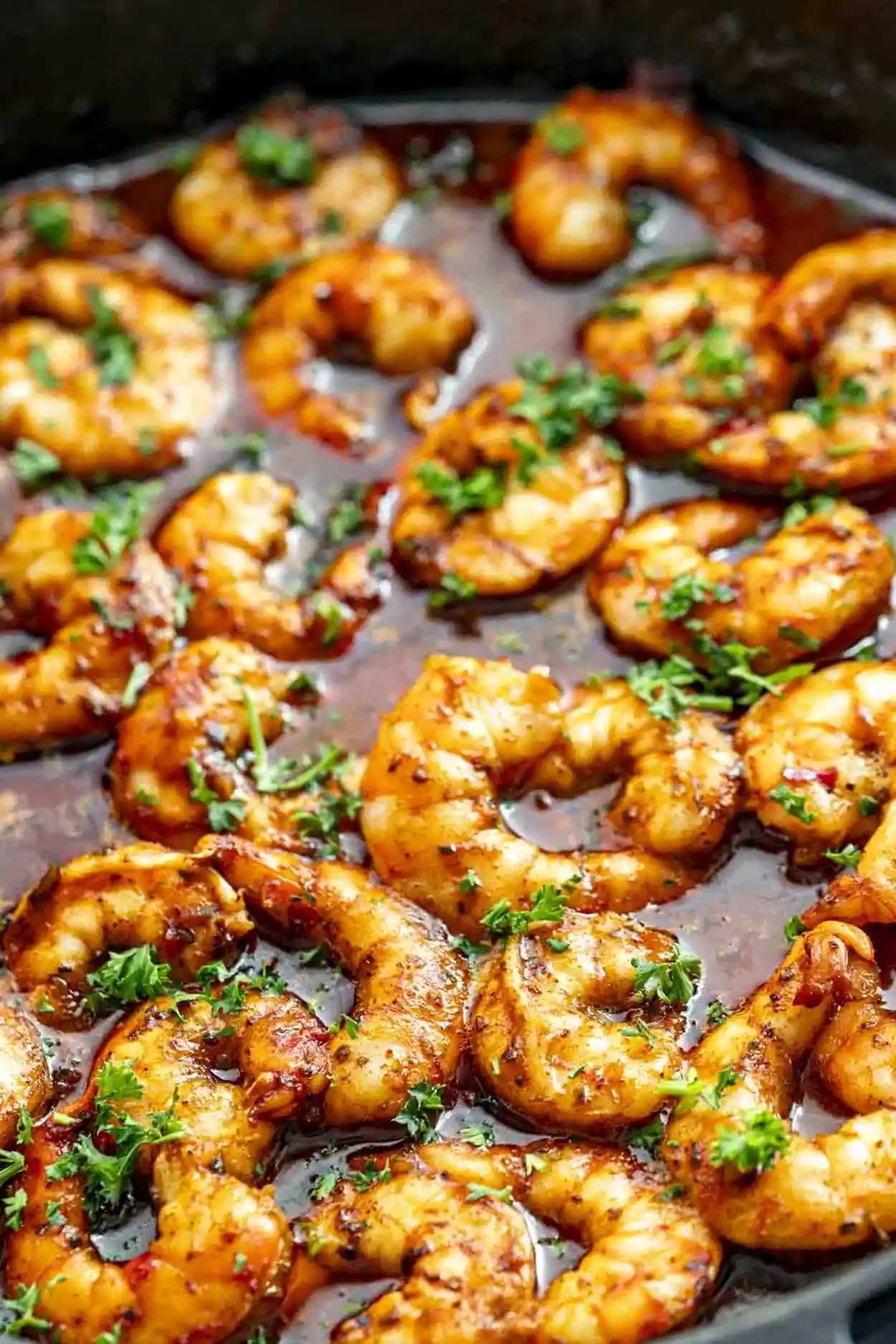
List of ingredients
- 1 pound white tiger shrimp – peeled and deveined for easier eating.
- 2 tablespoons butter (unsalted) – allows for precise salt control.
- 2 tablespoons olive oil – prevents the butter from burning during simmering.
- 2 tablespoons sweet chili sauce – adds body and a touch of sweetness.
- 1 tablespoon Worcestershire – provides a deep, savory base.
- 1 teaspoon chili powder – adds a mild, earthy heat.
- 1 teaspoon liquid smoke – creates an authentic smoky flavor.
- 1 teaspoon smoked paprika – enhances the color and smokiness.
- 1 teaspoon dried oregano – adds a subtle herbal note.
- 1 teaspoon sriracha hot sauce (or tabasco) – controls the spicy kick.
- 4 cloves garlic (minced) – adds a pungent, aromatic quality.
- juice from ½ lemon – provides essential acidity to balance the fats.
- salt and pepper (to taste) – basic seasoning for flavor enhancement.
- 2 tablespoons parsley (chopped) – adds a fresh finish and color.
step-by-step instructions
- Prepare Shrimp: Peel and devein the shrimp thoroughly. This ensures a clean texture and professional presentation.
- Simmer Sauce: Add all ingredients except the shrimp and parsley to an oven-safe skillet. Stir and simmer for 5 to 10 minutes to meld the flavors together.
- Cool Down: Remove the skillet from the heat source. Let it cool for a couple of minutes to avoid cooking the shrimp prematurely.
- Coat Shrimp: Add the shrimp to the skillet and toss them well. Ensure every piece is fully immersed in the sauce for maximum flavor.
- Marinate: Cover the skillet with aluminum foil. Refrigerate for at least 30 minutes, but up to 4 hours, to let the flavors penetrate the meat.
- Preheat Oven: Set your oven to 400℃. Ensure the oven is fully preheated before the skillet goes in.
- Bake: Remove the foil and bake for 10 to 15 minutes. Watch closely to avoid overcooking the delicate seafood.
- Serve: Serve immediately while hot. Pair with crusty French bread and an extra drizzle of lemon juice for brightness.
Optimizing Your Shrimp Selection
Selecting Large White Tiger Shrimp
White tiger shrimp are preferred for this recipe because they maintain their shape and juiciness during the baking process. Their size allows them to withstand the 400 degree heat without shrinking too much. This ensures a meaty texture in every bite.
The Impact of Shrimp Size
Using large or extra-large shrimp is critical to prevent overcooking. Small shrimp cook far too quickly and often become rubbery before the sauce can properly caramelize. Larger shrimp provide more surface area for the spicy marinade to cling to.
Handling Frozen Shrimp
If using frozen shrimp, thaw them completely in the refrigerator overnight. Pat them very dry with paper towels before adding them to the sauce. Excess water will dilute the butter sauce and prevent it from thickening properly in the oven.
Proper Deveining Techniques
Removing the digestive tract is essential for both flavor and texture. Use a small paring knife or kitchen shears to make a shallow slit along the back. This allows the marinade to penetrate deeper into the shrimp meat.
Fine-Tuning the Flavor Profile
Reducing the Heat Level
To make this dish milder, reduce the amount of chili powder and sriracha. You can substitute the hot sauce with a small amount of mild paprika. Always taste the sauce during the simmering phase to gauge the spice level.
Increasing the Spicy Kick
For those who prefer more heat, add a pinch of cayenne pepper or crushed red pepper flakes. You can also increase the sriracha measurement. Adding these during the simmering phase ensures the heat is distributed evenly.
Managing the Smoky Elements
The combination of smoked paprika and liquid smoke provides the New Orleans character. If you find the smoke too intense, reduce the liquid smoke to a half teaspoon. This keeps the flavor present without overpowering the shrimp.
Balancing with Lemon Acidity
The lemon juice cuts through the richness of the butter and olive oil. If the sauce feels too heavy, add an extra squeeze of fresh lemon before serving. This brightens the overall flavor and enhances the seafood notes.
Adjusting Garlic Intensity
Garlic mellows out during the simmering and baking process. For a more pungent flavor, add one extra minced clove. Ensure the garlic is finely minced so it blends seamlessly into the sauce.
Mastering the Preparation Process
The Importance of the Chilling Period
Refrigerating the shrimp in the sauce is not optional for the best results. This period allows the salt and spices to penetrate the shrimp fibers through osmosis. This results in a seasoned interior rather than just a coated exterior.
Maximum Marination Time
Avoid marinating the shrimp for more than 4 hours. Because the sauce contains acidic lemon juice, the acid will eventually begin to break down the shrimp proteins. Over-marinating can lead to a mushy texture once cooked.
Using the Right Skillet
A 12-inch cast iron skillet is ideal for this recipe due to its superior heat retention. Stainless steel oven-safe pans also work well. Avoid non-stick pans that are not rated for high-temperature oven use.
Simmering the Sauce Properly
Simmering the sauce for 5 to 10 minutes before adding the shrimp is a key step. This process cooks off raw garlic notes and allows the sweet chili sauce to thicken. It creates a cohesive glaze that adheres better to the seafood.
Baking and Cooking Techniques
Precise Oven Temperature
Maintaining a steady 400℃ is necessary for a quick sear. If the oven is too cool, the shrimp will steam rather than bake, leading to a softer texture. Use an oven thermometer if your appliance tends to fluctuate.
Visual Indicators of Doneness
Shrimp are cooked when they turn opaque and form a ‘C’ shape. If they curl tightly into an ‘O’ shape, they are likely overcooked. Remove the skillet from the oven the moment they reach the opaque stage.
Avoiding Rubberiness
The window between perfectly cooked and overcooked shrimp is very small. Start checking the shrimp at the 10-minute mark. Removing them slightly early allows carry-over cooking to finish the process without toughening the meat.
The Role of Olive Oil
Adding olive oil to the butter serves a practical purpose. Olive oil has a higher smoke point than butter, which prevents the butter solids from burning during the initial simmering process. This keeps the sauce tasting creamy rather than scorched.
Serving and Pairing Ideas
Choosing the Right Crusty Bread
A toasted French baguette or a sourdough loaf is highly recommended. The open crumb of these breads is perfect for soaking up the buttery, spicy sauce. Slice the bread on a bias and toast it with a bit of garlic butter.
Creamy Polenta as a Base
Serving these shrimp over a bed of creamy polenta balances the spice. The cornmeal’s mild sweetness and smooth texture provide a contrast to the bold sauce. Stir in a bit of parmesan cheese for added depth.
Rice Side Dish Options
Jasmine or Basmati rice are excellent choices for absorbing excess sauce. Cook the rice with a pinch of salt to complement the savory shrimp. For added color, you can stir in some sautéed bell peppers.
Fresh Vegetable Accompaniments
An arugula salad with a light lemon vinaigrette provides a refreshing counterpoint. The peppery notes of the arugula cut through the richness of the butter sauce. Sliced cucumbers or steamed asparagus also pair well.
Storage and Reheating Guidelines
Refrigerator Storage Tips
Store leftover shrimp in an airtight glass container to maintain freshness. They will stay safe to eat for 3 to 4 days in the fridge. Keep the sauce and shrimp together so the meat stays moist.
Freezing Instructions
Cooked shrimp can be frozen for up to 3 months. Use a vacuum-seal bag or a heavy-duty freezer bag with all the air removed. Thaw the shrimp slowly in the refrigerator before reheating.
Gentle Reheating Methods
Avoid using a high-power microwave, which can make shrimp rubbery. Instead, place the shrimp and sauce in a small skillet over low heat. Warm them gently until the butter melts and the shrimp are heated through.
Refreshing the Sauce
When reheating, the sauce may thicken or separate. Add a small pat of fresh butter or a teaspoon of water to loosen the glaze. A final squeeze of fresh lemon juice will restore the original brightness.
Troubleshooting Common Issues
Correcting Rubbery Texture
If your shrimp turn out rubbery, it is almost always due to overcooking. Reduce the baking time by 2 minutes in your next batch. Ensure the oven is fully preheated to keep the cooking time short and fast.
Fixing a Thin Sauce
A runny sauce usually occurs if the initial simmering step was skipped or too short. Ensure the sauce bubbles for at least 5 minutes before adding the shrimp. You can also reduce the amount of lemon juice slightly.
Adjusting Excess Saltiness
If the sauce tastes too salty, add a small amount of unsalted butter or a pinch of sugar. The acidity of additional lemon juice can also mask the salt. Always taste the sauce before adding any additional salt.
Preventing Burnt Butter
If you notice the butter browning too quickly during the simmer, lower the heat immediately. Ensure the olive oil is added at the start to protect the butter. Stir constantly to prevent the garlic from sticking and burning.
Frequently Asked Questions
Can this be made on a stovetop?
Yes, you can cook the shrimp in the skillet over medium heat after the marinating period. Sauté them for 2 to 3 minutes per side until opaque. However, the oven provides more consistent heat for larger batches.
Is the liquid smoke necessary?
While optional, liquid smoke provides the signature flavor of New Orleans style cooking. If you don’t have it, increase the smoked paprika by a half teaspoon. This will provide a similar, though milder, smoky note.
Can I use salted butter?
You can use salted butter, but you must omit the additional salt mentioned in the seasoning. Taste the finished sauce carefully before adding any extra salt to avoid over-seasoning the dish.
Should I leave the tails on?
Leaving the tails on provides a better visual presentation and makes the shrimp easier to handle as finger food. If serving as a main course over rice, removing the tails may be more convenient for the diner.
Print
Spicy New Orleans Shrimp
- Total Time: 55 minutes
- Yield: 2 servings 1x
- Diet: General
Description
These Spicy New Orleans Shrimp are buttery, smoky, and just spicy enough to make you smack your lips and reach for more bread. Big, juicy shrimp bake in a bold sauce that’s perfect for dipping, spooning, and generally not wasting a single drop.
Ingredients
- 1 pound white tiger shrimp
- 2 tablespoons unsalted butter
- 2 tablespoons olive oil
- 2 tablespoons sweet chili sauce
- 1 tablespoon Worcestershire sauce
- 1 teaspoon chili powder
- 1 teaspoon liquid smoke
- 1 teaspoon smoked paprika
- 1 teaspoon dried oregano
- 1 teaspoon sriracha hot sauce (or tabasco)
- 4 cloves garlic, minced
- juice from ½ lemon
- salt and pepper to taste
- 2 tablespoons chopped parsley
Instructions
- Prep: Peel and devein the shrimp.
- Simmer: Add the rest of the ingredients except the shrimp and parsley to oven safe skillet, stir and let simmer for 5 to 10 minutes.
- Cool: Remove skillet from the heat and let cool for a couple minutes.
- Coat: Add the shrimp and toss it around so that it’s fully immersed in the sauce.
- Marinate: Cover with foil and refrigerate for at least 30 minutes to 4 hours.
- Preheat: Preheat oven to 400℉.
- Bake: Remove the foil and bake shrimp for 10 to 15 minutes.
- Serve: Serve immediately with crusty French bread and drizzle with additional lemon juice as needed.
Notes
Large or extra-large shrimp work best to avoid overcooking. Marinating for at least 30 minutes is recommended for deeper flavor. Pull shrimp from the oven as soon as they are opaque and curled.
- Prep Time: 5 minutes
- Cook Time: 20 minutes
- Category: Appetizer
- Method: Baking
- Cuisine: American
Nutrition
- Serving Size: 1 serving
- Calories: 446 kcal
- Sugar: 9 g
- Sodium: 1645 mg
- Fat: 28 g
- Saturated Fat: 9 g
- Unsaturated Fat: 15 g
- Trans Fat: 0.5 g
- Carbohydrates: 16 g
- Fiber: 1 g
- Protein: 32 g
- Cholesterol: 316 mg