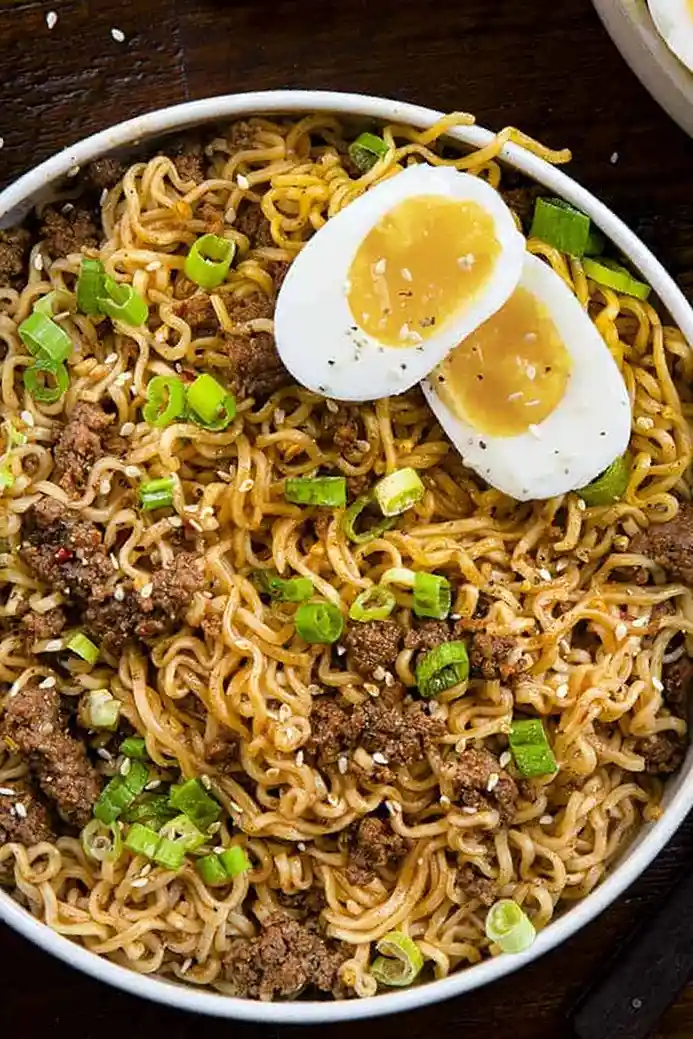
Transform standard instant noodles into a hearty meal with this spicy beef ramen. This recipe combines savory ground beef, pungent garlic, and a kick of chili heat for a satisfying dinner.
List of ingredients
- 1 pound ground beef – use a standard lean ratio for best results.
- 2 teaspoons garlic – minced finely for even distribution.
- ½ teaspoon salt – to enhance the natural beef flavor.
- ¼ teaspoon pepper – for a basic layer of seasoning.
- ¼ teaspoon crushed red pepper – provides the primary heat.
- 1 tablespoon chili garlic sauce – adds depth and spicy pungency.
- 1 tablespoon apple cider vinegar – provides necessary acidity to balance the richness.
- 3 large eggs – kept at room temperature for easier peeling.
- 4 packages beef ramen – including the flavor packets.
- ½ teaspoon sesame seeds – used for a nutty garnish.
- 2 teaspoons green onion – sliced thin for a fresh finish.
step-by-step instructions
- Brown the Beef: Place a skillet over medium heat and add the ground beef, salt, pepper, and crushed red pepper. Cook until the meat is browned completely, which takes about 8 minutes.
- Drain the Fat: Carefully drain the excess grease from the pan to prevent the final dish from being too oily.
- Sauté Garlic: Add the minced garlic to the skillet and cook for one additional minute until fragrant.
- Season the Meat: Reduce the heat to low, then stir in the chili garlic sauce and apple cider vinegar. Mix well to combine, remove the pan from the heat, and cover it to maintain warmth.
- Boil the Eggs: In a small saucepan, bring about 2 inches of water to a boil. Carefully add the eggs and boil for exactly 6 minutes.
- Chill the Eggs: Immediately remove the eggs from the boiling water and place them in a bowl of ice water. Once cooled, peel them carefully and set them aside.
- Cook the Noodles: Bring 4 quarts of salted water to a boil in a large saucepan. Add the ramen noodles but keep the flavor packets separate, cooking for three minutes or until tender.
- Prepare the Sauce Base: Reserve 1 cup of the starchy noodle water before draining the rest of the noodles.
- Combine Everything: Add the reserved noodle water, the beef ramen flavor packets, and the cooked noodles into the skillet with the beef mixture. Toss all components together until evenly coated.
- Plating: Divide the ramen among 6 bowls. Top each portion with sesame seeds, sliced green onions, and half of a soft-boiled egg. Serve immediately.
Beef Preparation Techniques
Choosing the Right Ground Beef Fat Ratio
For this recipe, an 80/20 or 85/15 lean-to-fat ratio works best. The fat provides flavor and helps brown the meat, but too much can make the ramen sauce feel greasy. If using very lean beef, add a teaspoon of oil to the pan first.
Achieving a Proper Brown
Avoid overcrowding the pan or stirring the meat too frequently at the start. Let the beef sit undisturbed for a few minutes to develop a brown crust. This process, known as the Maillard reaction, adds a deeper savory flavor to the final dish.
Managing Grease Drainage
Use a colander or a spoon to remove excess fat after browning. Removing the grease ensures that the chili garlic sauce and vinegar adhere directly to the meat rather than floating in oil. This results in a cleaner taste and a better texture.
Perfecting the Soft Boiled Eggs
The Benefit of Room Temperature Eggs
Using room temperature eggs prevents the shells from cracking when they hit the boiling water. If you only have cold eggs, you can place them in warm water for a few minutes before boiling. This minimizes the thermal shock to the eggshell.
Precision Timing for Yolks
The 6-minute mark is critical for achieving a jammy, custard-like yolk. If you prefer a slightly firmer yolk, extend the time to 7 minutes. Always use a timer to ensure consistency across different batches.
The Role of the Ice Bath
Placing eggs immediately into ice water stops the cooking process instantly. Without this step, the residual heat continues to cook the yolk, turning it hard-boiled. The cold water also helps contract the egg, making the shell easier to remove.
Tips for Easy Peeling
Older eggs are generally easier to peel than very fresh ones because the pH level of the white increases over time. To peel without tearing, gently crack the shell all over and peel under cool running water. Start peeling from the wider end of the egg.
Noodle and Sauce Optimization
Preventing Mushy Noodles
Cook the ramen noodles for exactly the time specified, or even 30 seconds less. Since the noodles will be tossed in a hot skillet with beef and water, they will continue to soften. Undercooking them slightly ensures a better al dente texture.
Using Starchy Noodle Water
Reserving a cup of the cooking water is essential for the sauce’s consistency. The starch released from the ramen helps emulsify the flavor packets and beef fats. This creates a glossy sauce that clings to the noodles instead of pooling at the bottom of the bowl.
Balancing the Flavor Packets
Ramen flavor packets can be very salty. Taste the mixture after adding the reserved water and packets before adding any extra salt. If the flavor is too intense, you can add a splash more water or a pinch of sugar to balance the salinity.
Customizing Spice and Flavor
Reducing the Heat Level
To make this dish milder, reduce the crushed red pepper to a pinch and use half the amount of chili garlic sauce. You can replace the spicy sauce with a mild soy-based stir-fry sauce. This retains the savory profile while removing the burn.
Increasing the Spicy Intensity
For more heat, add a teaspoon of sriracha or a dollop of gochujang to the beef mixture. You can also add sliced fresh jalapeños or bird’s eye chilies during the beef browning stage. Fresh chilies provide a different, sharper heat than dried flakes.
Adding Umami Depth
A teaspoon of toasted sesame oil added at the very end can enhance the nutty aroma. A small amount of Worcestershire sauce added to the beef can also increase the savory depth. These additions complement the beef and garlic profiles perfectly.
Vegetable Additions for Nutrition
Incorporating Sautéed Bok Choy
Bok choy adds a crisp texture and a mild bitterness that cuts through the rich beef. Sauté the greens in the skillet after the beef is browned but before adding the sauce. Cook them for 2-3 minutes until just wilted.
Adding Shredded Carrots and Cabbage
Finely shredded carrots and green cabbage can be tossed in with the noodles during the final mixing stage. These vegetables provide a crunch and vibrant color to the dish. They don’t require separate cooking if sliced thin enough.
Using Sliced Mushrooms
Shiitake or button mushrooms pair excellently with beef ramen. Sauté them with the garlic to allow them to brown and release their moisture. This adds an earthy element that balances the spicy chili garlic sauce.
Serving and Presentation Ideas
Layering the Bowl
For a professional look, place the noodles and beef in the bowl first, creating a small nest. Place the soft-boiled egg half neatly on top. Arrange the green onions and sesame seeds in a concentrated area rather than scattering them randomly.
Choosing the Right Bowl
Deep ceramic bowls are ideal for ramen because they retain heat longer. Pre-warming the bowls with hot water before serving prevents the noodles from cooling down too quickly. This is especially important for dishes with a sauce-based consistency.
Fresh Garnish Pairings
Beyond green onions, try adding thinly sliced radishes for a peppery crunch. A few leaves of fresh cilantro or Thai basil can add a bright, aromatic contrast. These fresh elements lift the heavy flavors of the beef and ramen packets.
Storage and Reheating Guide
Storing Components Separately
If you plan to eat the ramen later, store the cooked beef mixture and the cooked noodles in separate containers. Mixing them too early leads to the noodles absorbing all the sauce and becoming bloated. Store the boiled eggs in a separate airtight container.
Refrigeration Timelines
The beef and noodle mixture can be kept in the refrigerator for up to 3 days. Boiled eggs should be consumed within a week, though they are best within 2-3 days of boiling. Ensure all containers are airtight to prevent the beef from absorbing fridge odors.
Best Reheating Methods
To reheat, place the noodles and beef in a skillet over medium heat. Add a tablespoon of water or beef broth to loosen the sauce and restore the moisture. Avoid over-microwaving, as this can make the noodles rubbery and the beef dry.
Troubleshooting Common Issues
Fixing a Too-Salty Sauce
If the flavor packets make the dish too salty, stir in a teaspoon of brown sugar or a squeeze of lime juice. The acidity and sweetness help neutralize the excess sodium. Adding more steamed vegetables can also dilute the saltiness per bite.
Addressing Dry Noodles
If the noodles seem dry after mixing, add a small amount of additional hot water or unsalted beef broth. Stir gently over low heat until the desired consistency is reached. Be careful not to add too much, or the sauce will become watery.
Handling Broken Egg Yolks
If an egg breaks during peeling, you can still use it by stirring the yolk into the beef mixture. This will thicken the sauce and add a rich, creamy texture to the ramen. It changes the presentation but improves the flavor profile.
Frequently Asked Questions
Can I use a different type of noodle?
Yes, you can use fresh ramen noodles, udon, or even spaghetti in a pinch. If using fresh noodles, adjust the boiling time according to the package instructions. Fresh noodles typically have a denser chew than instant varieties.
What is a good substitute for ground beef?
Ground turkey or ground chicken can be used as a leaner alternative. Ground bison or lamb also works well, though lamb may require a bit more acidity from the vinegar to balance its gamey flavor.
Can I make this recipe in a slow cooker?
The beef can be browned in a slow cooker if it has a sear function, but the noodles must be cooked separately. Adding noodles to a slow cooker for an extended period will result in a mushy consistency. Always boil noodles on the stove.
How do I make it more authentic?
To move closer to a traditional style, replace the ramen flavor packets with a combination of soy sauce, miso paste, and beef broth. Adding a sheet of nori (dried seaweed) on the side of the bowl also adds authentic flavor and presentation.
Print
Spicy Ground Beef Ramen Bowls
- Total Time: 32 minutes
- Yield: 6 servings 1x
- Diet: General
Description
Spicy Beef Ramen takes Ramen noodles to a spicy level with added ground beef, crushed red pepper, and chili garlic sauce, all topped with a soft boiled egg.
Ingredients
- 1 pound ground beef
- 2 teaspoons garlic
- ½ teaspoon salt
- ¼ teaspoon pepper
- ¼ teaspoon crushed red pepper
- 1 tablespoon chili garlic sauce
- 1 tablespoon rice wine vinegar
- 3 large eggs, room temperature
- 4 packages beef ramen
- ½ teaspoon sesame seeds, for garnish
- 2 teaspoons green onion, for garnish
Instructions
- Step: In a skillet over medium heat, add the ground beef, salt, pepper, and crushed red pepper. Cook until browned (about 8 minutes).
- Step: Drain grease.
- Step: Add garlic and cook for one additional minute.
- Step: Reduce heat to low, add chili garlic sauce, and rice wine vinegar. Stir to combine. Remove the pan from heat. Cover to keep warm.
- Step: In a small saucepan, add about 2 inches of water and bring to a boil.
- Step: Add eggs and boil for 6 minutes. Remove eggs and place them in a bowl of ice to stop the cooking. Peel and set aside.
- Step: In a large saucepan, bring 4 quarts of salted water to a boil.
- Step: Add ramen noodles, reserving flavor packets. Cook for three minutes, or until the noodles are cooked through.
- Step: Reserve 1 cup of the noodle water, but drain the rest. Add the reserved water, flavor packets, and noodles to the beef mixture. Toss to combine.
- Step: Separate the ramen into 6 bowls, top with sesame seeds and green onions, and half a soft boiled egg. Serve warm.
Notes
You can adjust the amounts of the chili garlic sauce and crushed red pepper to fit your taste buds.
- Prep Time: 10 minutes
- Cook Time: 22 minutes
- Category: Dinner, Main Course
- Method: Stovetop
- Cuisine: American
Nutrition
- Serving Size: 1 bowl
- Calories: 424 kcal
- Sugar: 5 g
- Sodium: 1050 mg
- Fat: 18 g
- Saturated Fat: 7 g
- Unsaturated Fat: 11 g
- Trans Fat: 0.5 g
- Carbohydrates: 38 g
- Fiber: 2 g
- Protein: 24 g
- Cholesterol: 110 mg