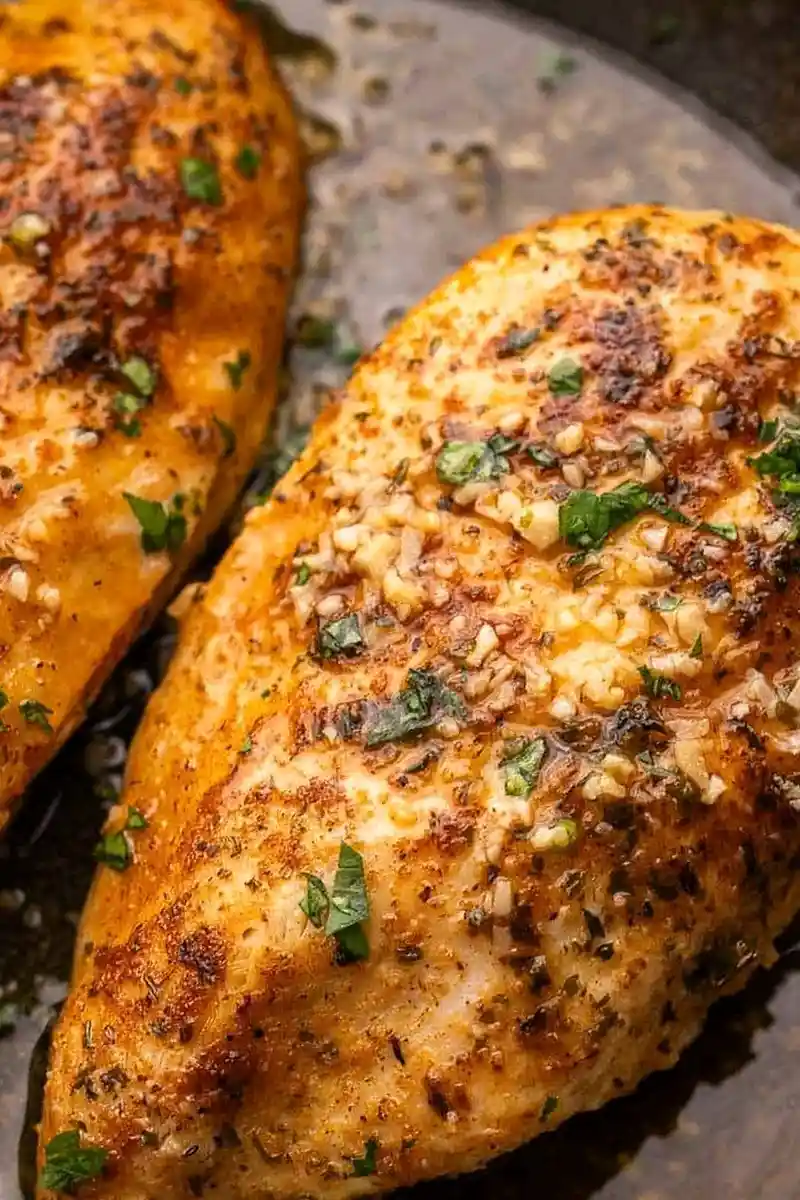
This quick dinner recipe delivers juicy and flavorful chicken breasts in just 20 minutes. By combining a custom spice blend with a rich garlic butter finish, you can create a professional-grade meal at home. It is an ideal base for various side dishes and meal prep.
List of ingredients
- 2 tablespoons canola oil, divided – used for searing and coating the meat.
- 3/4 teaspoon salt – enhances all the other spices.
- 1/2 teaspoon dried parsley – adds a touch of herbal flavor.
- 1/4 teaspoon black pepper – provides a mild, classic heat.
- 1/4 teaspoon onion powder – adds a savory, concentrated onion taste.
- 1/4 teaspoon garlic powder – provides deep aromatic notes.
- 1/4 teaspoon paprika – gives the chicken a beautiful golden-red color.
- 2 boneless skinless chicken breasts – the main protein source.
- 1-2 tablespoons butter – used for the final garlic butter sauce.
- 1/2 teaspoon minced garlic – creates a fragrant finish.
step-by-step instructions
- Heat the pan: Pour 1 tablespoon of oil into a small to medium skillet and heat it over medium heat.
- Prepare the seasoning: In a small bowl, stir together the salt, dried parsley, black pepper, onion powder, garlic powder, and paprika until well combined.
- Flatten the meat: Trim the chicken breasts and flatten them if necessary to ensure uniform thickness. Cover the meat with plastic wrap and use a smooth meat mallet or rolling pin to pound lightly until they are approximately 3/4 inch thick.
- Season the chicken: Dry the chicken breasts thoroughly with paper towels. Drizzle each breast with 1/2 tablespoon of oil, then sprinkle the seasoning blend evenly on both sides.
- Sear the chicken: Place the breasts in the hot skillet. Cook for 6-8 minutes without moving them until the first side is golden brown.
- Flip and finish: Flip the chicken and cook for another 6-8 minutes. Use a meat thermometer to ensure the thickest part of the meat reaches 165°F.
- Prevent burning: If the chicken browns too quickly before the center is cooked, add 1/4 cup of water to the pan. Continue adding 1/4 cup of water periodically if it evaporates before the chicken is done.
- Add garlic butter: Add the butter and minced garlic to the skillet. Allow the butter to melt and baste the chicken before serving.
Expert Pan-Searing Techniques
Select the Right Skillet
A stainless steel skillet is ideal for creating a deep brown crust due to its high heat conductivity. Non-stick pans are easier for cleanup, while cast iron provides the most consistent heat distribution across the surface. Ensure the pan is large enough so the chicken isn’t crowded, which prevents steaming.
Manage the Cooking Temperature
Maintain medium heat to avoid burning the spices while ensuring the interior cooks through. If the oil begins to smoke excessively, reduce the heat slightly. Using a meat thermometer is the only way to guarantee the chicken is safe to eat without overcooking it into a rubbery texture.
Achieve the Perfect Sear
Avoid flipping the chicken too frequently or moving it around the pan. Letting the meat sit undisturbed allows the proteins to caramelize and form a golden-brown crust. Only flip the chicken once it releases easily from the bottom of the pan.
Meat Preparation Guide
Using a Meat Mallet Effectively
Pounding the chicken ensures that the thin end doesn’t dry out while the thick end is still raw. Use a mallet or rolling pin through plastic wrap to avoid tearing the meat. Aim for a consistent thickness of about 3/4 inch across the entire breast.
The Importance of Drying the Meat
Moisture on the surface of the chicken creates steam, which prevents a proper sear. Use paper towels to pat the chicken completely dry before applying oil and seasonings. This ensures the spices stick and the meat browns quickly.
Trimming Excess Fat
Remove any silver skin or large pieces of excess fat from the edges of the breast. This prevents the meat from curling up in the pan, which helps maintain even contact with the heat. It also results in a cleaner presentation on the plate.
Seasoning and Flavor Variations
Taco-Style Seasoning
Replace the standard spice blend with a mixture of chili powder, cumin, and onion powder. Once cooked, slice the chicken into strips and serve over a taco salad or in warm tortillas. This variation pairs perfectly with avocado and fresh lime juice.
Barbecue Glaze Method
Skip the garlic butter step at the end of the cooking process. Instead, brush your favorite barbecue sauce onto the chicken during the last two minutes of searing. This allows the sugars in the sauce to caramelize without burning.
Spicy Heat Adjustment
To increase the heat, add a pinch of cayenne pepper or red pepper flakes to the dry seasoning mix. You can also add a dash of hot sauce to the butter at the end for an extra kick. Be careful not to overdo the cayenne, as it can mask the other flavors.
Fresh Herb Infusion
Substitute the dried parsley with freshly chopped rosemary, thyme, or oregano. Add these herbs to the butter and garlic during the final basting step. Fresh herbs provide a brighter, more aromatic profile than dried alternatives.
Optimal Oil and Butter Choices
High Smoke Point Oils
Canola oil is excellent because it has a neutral flavor and can withstand high temperatures without smoking. Avocado oil is another great choice due to its even higher smoke point. Avoid extra virgin olive oil for high-heat searing as it can burn and turn bitter.
Butter Substitutes for Basting
If you prefer not to use dairy butter, Ghee (clarified butter) is a superior choice because it doesn’t burn as easily. Plant-based butter alternatives also work well, provided they can withstand medium heat. These options still provide the richness needed for the garlic sauce.
The Role of the Fat Divide
Dividing the oil between the pan and the meat ensures a consistent sear. Drizzling oil directly on the chicken prevents the seasoning from clumping and ensures every inch of the meat is lubricated. This method reduces the amount of oil needed in the pan overall.
Pairing and Serving Suggestions
Light and Healthy Sides
Serve the chicken with air-fried green beans or a fresh broccoli salad for a nutrient-dense meal. A side of steamed asparagus or sautéed spinach also complements the garlic butter flavor. These options keep the meal light while providing a contrast in texture.
Comforting Starch Options
Pair these breasts with creamy mashed potatoes or homemade macaroni and cheese for a hearty dinner. Roasted carrots and potatoes provide a rustic feel and a natural sweetness. Polenta or a bed of wild rice can also absorb the extra garlic butter from the pan.
Grain Bowl Integration
Slice the cooked chicken and place it atop a bowl of baked brown rice or quinoa. Add toppings like sliced cucumbers, shredded carrots, and a drizzle of tahini or lemon vinaigrette. This transforms the recipe into a balanced, meal-prep-friendly lunch.
Storage and Reheating Instructions
Refrigerator Storage
Place leftover chicken in an airtight container once it has cooled to room temperature. It will stay fresh and safe to eat for up to 3 days in the refrigerator. Ensure the container is sealed tightly to prevent the meat from absorbing other odors.
Freezing for Later
Store the chicken in a freezer-safe bag, removing as much air as possible to prevent freezer burn. The chicken will maintain its quality for up to 3 months in the freezer. Always thaw the meat in the refrigerator overnight before attempting to reheat it.
Best Reheating Methods
The best way to reheat pan-fried chicken is in a skillet over medium heat. Add a splash of water or chicken broth to the pan and cover it with a lid to steam the meat back to juiciness. This restores the exterior crispness better than a microwave.
Microwave Reheating Tips
If using a microwave, place the chicken on a microwave-safe plate and cover it with a damp paper towel. Heat in short 30-second bursts to avoid overcooking the meat. Be aware that the microwave may make the exterior softer than the original sear.
Troubleshooting Common Issues
Why is my chicken rubbery?
Rubbery chicken is usually the result of overcooking or cooking at too high a temperature. Ensure you use a meat thermometer and remove the chicken as soon as it hits 165°F. Let the meat rest for a few minutes to allow juices to redistribute.
Preventing the Chicken from Sticking
Sticking happens when the pan isn’t hot enough or the meat is flipped too early. Wait for the chicken to develop a golden crust; it will naturally release from the pan when ready. Ensure your oil is shimmering before adding the meat.
Dealing with Uneven Cooking
If one side of the breast is thinner than the other, the thin part will overcook while the center remains raw. This is why pounding the meat to a uniform thickness is critical. If you skip this step, you may need to move the thinner sections away from the direct heat.
Fixing Burnt Garlic Butter
Garlic burns quickly and becomes bitter if left in the pan too long. Add the butter and garlic only at the very end of the process. If the garlic turns dark brown, it is best to wipe the pan and start the butter sauce over.
Frequently Asked Questions
Can I use chicken thighs instead of breasts?
Yes, boneless skinless chicken thighs can be used. However, thighs have more fat and a different structure, so they may require a slightly longer cooking time. You do not need to pound thighs as they are naturally more forgiving regarding thickness.
What is the best way to check if the chicken is done?
The most reliable method is using an instant-read digital meat thermometer. Insert it into the thickest part of the breast to ensure it has reached 165°F. Cutting into the meat to check the color can let precious juices escape.
Can I use a different type of seasoning?
Absolutely. You can use any all-purpose seasoning, lemon pepper, or Cajun spice blend you enjoy. Just ensure the seasoning does not contain too much sugar, as sugar can burn quickly in a hot skillet.
Do I have to use canola oil?
No, you can use any neutral oil with a high smoke point, such as vegetable, avocado, or grapeseed oil. Avoid using butter for the initial sear because the milk solids in butter burn at the temperatures required for a good crust.
Print
Perfect Pan Fried Chicken Breasts
- Total Time: 25 minutes
- Yield: 2 servings 1x
- Diet: General
Description
These Pan Fried Chicken Breasts are a quick and easy dinner option that’s full of flavor. With a simple seasoning mix and a garlic butter sauce, you can whip up a satisfying meal in 20 minutes!
Ingredients
- 2 tablespoons canola oil, divided
- ¾ teaspoon salt
- ½ teaspoon dried parsley
- ¼ teaspoon black pepper
- ¼ teaspoon onion powder
- ¼ teaspoon garlic powder
- ¼ teaspoon paprika
- 2 boneless skinless chicken breasts
- 1–2 tablespoons butter
- ½ teaspoon minced garlic
Instructions
- Step: Heat 1 tablespoon oil in a small to medium skillet over medium heat.
- Step: In a small bowl, stir together the salt, parsley, pepper, onion powder, garlic powder and paprika.
- Step: Trim chicken breasts and flatten if necessary so they are nearly the same thickness across.
- Step: Dry chicken breasts with paper towel, then drizzle each with 1/2 tablespoon oil and sprinkle with seasoning, dividing it between the two chicken breasts on both sides.
- Step: Place chicken breasts in hot pan and cook for 6-8 minutes, until golden brown on the first side. Flip chicken breasts and cook an additional 6-8 minutes, until a meat thermometer reads 165°F in the thickest part of the chicken.
- Step: If chicken is browning quickly but is not cooked through, add ¼ cup of water to the pan to prevent burning.
- Step: Add butter and garlic to the skillet. Let melt and serve with chicken.
Notes
To flatten chicken, cover with plastic wrap and use a smooth meat mallet or rolling pin to pound lightly until about ¾” thick. Store leftovers in an airtight container in the fridge for up to 3 days.
- Prep Time: 5 minutes
- Cook Time: 20 minutes
- Category: Main Course
- Method: Pan-Frying
- Cuisine: American
Nutrition
- Serving Size: 1 chicken breast
- Calories: 358 kcal
- Sugar: 1 g
- Sodium: 813 mg
- Fat: 28 g
- Saturated Fat: 9 g
- Unsaturated Fat: 19 g
- Trans Fat: 0 g
- Carbohydrates: 1 g
- Fiber: 0 g
- Protein: 24 g
- Cholesterol: 102 mg