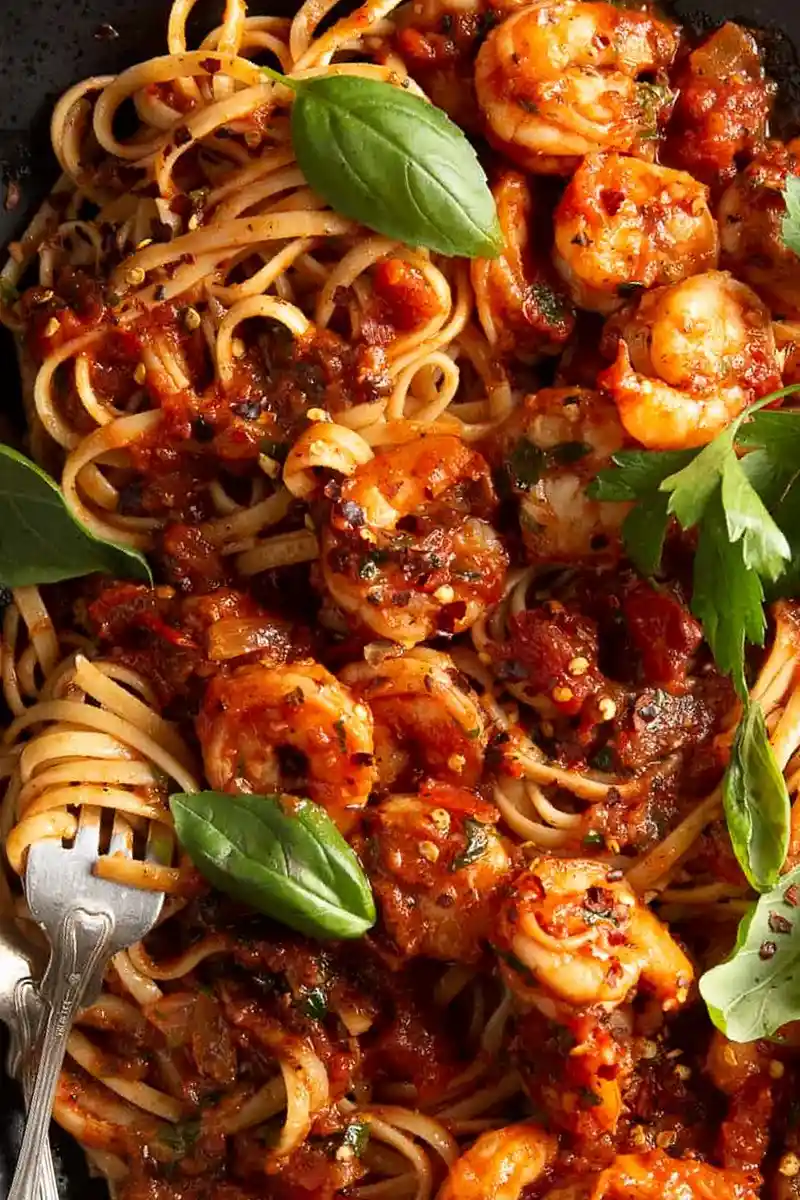
This spicy seafood pasta combines fire-roasted tomatoes and bold heat for a restaurant-quality meal. It is a quick-cooking dish that pairs perfectly with linguine or low-carb alternatives.
List of ingredients
- 1 lb shrimp (peeled and deveined) – use large shrimp for better texture.
- 14 oz fire roasted crushed tomatoes – provides a deep, smoky flavor.
- 2 tablespoons olive oil (divided) – used for searing and sautéing.
- 2 teaspoons red pepper flakes – adjust the amount based on your heat preference.
- 1 teaspoon salt – to enhance all flavors.
- 1/2 cup diced onion – finely chopped for a consistent sauce texture.
- 5 cloves garlic (minced) – adds a pungent, aromatic base.
- 1/2 teaspoon oregano – adds an earthy, herbal note.
- 1/2 cup vegetable broth – a savory alternative to white wine for deglazing.
- 1/2 teaspoon ground black pepper – for a subtle sharp spice.
- 2 tablespoons thinly sliced basil – fresh leaves added at the end.
- 2 tablespoons chopped parsley – adds brightness and color.
- 8 oz linguine – long pasta that holds the sauce well.
- Sliced red peppers (optional) – for added garnish and extra heat.
step-by-step instructions
- Season the seafood: Toss 1 tablespoon of olive oil, 2 teaspoons of red pepper flakes, and 1 teaspoon of salt with the shrimp in a bowl.
- Sear the shrimp: Set a large pan over high heat and add the seasoned shrimp. Cook for 2 minutes without adding extra fat to the pan.
- Finish searing: Flip each shrimp and cook for 1 more minute. Remove the shrimp from the pan and set them aside on a plate.
- Sauté the aromatics: Add the remaining 1 tablespoon of olive oil to the hot pan and reduce the heat to medium. Sauté the diced onion for about 8 minutes until translucent.
- Add garlic: Stir in the 5 minced cloves of garlic and sauté for exactly one minute to avoid burning.
- Deglaze the pan: Pour in 1/2 cup of vegetable broth. Use a spatula to scrape any browned bits stuck to the bottom of the pan.
- Build the sauce: Stir in 1/2 teaspoon of ground black pepper, 1/2 teaspoon of oregano, and the can of fire roasted crushed tomatoes.
- Simmer: Allow the sauce to simmer uncovered over medium-low heat for 10 minutes to thicken.
- Combine: Stir the cooked shrimp and any juices from their resting plate back into the sauce.
- Add herbs: Stir in the fresh basil and chopped parsley.
- Serve: Plate the mixture over cooked linguine.
- Garnish: Top with thinly sliced red peppers for an extra kick of heat.
Pro Cooking Techniques for Best Results
Preventing Rubbery Shrimp
Shrimp cook very quickly and can become tough if left on the heat too long. Remove them from the pan as soon as they turn opaque and form a slight C-shape. If they curl into a tight O-shape, they are likely overcooked.
Maximizing the Fond
The brown bits left in the pan after searing the shrimp are called the fond and contain concentrated flavor. When you add the vegetable broth, ensure you scrape these bits thoroughly. This process integrates the savory seafood essence into the tomato sauce.
Managing Heat Levels
Red pepper flakes vary in potency depending on the brand and freshness. If you are sensitive to spice, start with one teaspoon and taste the sauce during the simmering stage. You can always stir in more flakes at the end, but you cannot remove them once they are cooked in.
Selecting the Right Pasta Texture
Cook your linguine until it is just under al dente. Since the pasta will be tossed with a simmering hot sauce, it will continue to cook for another minute. This prevents the noodles from becoming mushy and allows them to absorb more of the sauce.
Ingredient Substitutions and Alternatives
Alternative Pasta Shapes
While linguine is traditional, spaghetti or fettuccine work equally well. For a different texture, try penne or rigatoni, which capture the chunks of tomato and garlic inside the pasta tubes.
Low-Carb Noodle Options
Replace the wheat pasta with zucchini noodles or spaghetti squash for a lighter version. Sauté zucchini noodles briefly in a separate pan before topping them with the shrimp sauce to avoid excess water release.
Replacing Fire Roasted Tomatoes
If fire roasted crushed tomatoes are unavailable, use regular crushed tomatoes and add a pinch of smoked paprika. This mimics the charred, smoky profile provided by the roasting process.
Using Different Seafood
You can swap the shrimp for scallops or sliced squid. Follow the same searing method, but be mindful that scallops require a very hot pan to get a proper golden-brown crust.
Flavor Variations to Try
Adding a Creamy Element
For a richer, milder sauce, stir in two tablespoons of heavy cream or full-fat coconut milk after the simmering process. This balances the acidity of the tomatoes and softens the intensity of the red pepper flakes.
Brightening with Citrus
Adding a squeeze of fresh lemon juice and a pinch of lemon zest at the very end enhances the seafood flavor. The acidity of the lemon cuts through the richness of the olive oil and adds a fresh top note.
Integrating Fresh Vegetables
Stir in a handful of fresh baby spinach or sautéed mushrooms during the last few minutes of simmering. These additions add nutritional value and a variety of textures to the final dish.
Increasing the Herb Profile
While basil and parsley are standard, adding a teaspoon of dried thyme or a pinch of red pepper paste can deepen the complexity. Fresh oregano added at the end provides a more punchy, Mediterranean aroma.
Serving and Pairing Suggestions
Complementary Side Dishes
Serve this dish with a side of crusty garlic bread to soak up the remaining spicy sauce. A crisp green salad with a light vinaigrette provides a refreshing contrast to the heat of the pasta.
Choosing the Right Cheese
Top the pasta with a sprinkle of grated Parmesan or Pecorino Romano made with microbial rennet. The salty, nutty flavor of the cheese complements the spicy tomato base perfectly.
Wine-Free Beverage Pairings
Pair this meal with a chilled sparkling water infused with lemon and cucumber. The bubbles and citrus help cleanse the palate between spicy bites of shrimp.
Plating for Presentation
Twirl the pasta into a high mound in the center of a wide bowl. Spoon the shrimp and sauce over the top, ensuring several shrimp are visible, and finish with a sprig of fresh basil.
Storage and Reheating Guidelines
Refrigeration and Shelf Life
Store leftover pasta in an airtight container in the refrigerator for up to two days. Keep the pasta and the shrimp sauce in separate containers if possible to prevent the noodles from absorbing all the liquid.
Best Reheating Methods
Avoid the microwave if you want to maintain the shrimp’s texture. Instead, reheat the sauce and shrimp in a small skillet over medium heat, adding a splash of water or broth to loosen the sauce.
Handling Frozen Leftovers
This dish is not ideal for freezing because the shrimp can become spongy upon thawing. However, you can freeze the tomato sauce alone and add fresh shrimp and pasta when you are ready to eat.
Preventing Dried-Out Pasta
When reheating pasta, add a tablespoon of water or olive oil before heating. This re-hydrates the starches and prevents the linguine from sticking together in clumps.
Make-Ahead Preparation Advice
Preparing the Sauce Base
You can make the tomato and garlic sauce base a day in advance. Store it in the fridge and simply simmer it for a few minutes before adding the fresh shrimp and herbs on the day of serving.
Prepping the Aromatics
Dice the onions and mince the garlic several hours before cooking. Store them in small containers to save time during the actual cooking process, as the searing phase happens very quickly.
Marinating the Shrimp
Toss the shrimp in the oil, salt, and red pepper flakes an hour before cooking. This allows the flavors to penetrate the seafood, resulting in a more consistent taste after searing.
Cooking Pasta in Batches
If serving a large crowd, cook the pasta al dente and toss it with a small amount of oil. Store it at room temperature for a short while before combining it with the hot sauce.
Troubleshooting Common Issues
Correcting an Overly Spicy Sauce
If the sauce is too hot, stir in a small amount of unsalted butter or a teaspoon of sugar. These ingredients help neutralize the capsaicin from the red pepper flakes without ruining the flavor profile.
Fixing a Thin Sauce
If the sauce appears too watery, increase the heat to medium-high and simmer uncovered for an additional 5 minutes. This evaporates excess moisture and concentrates the tomato flavor.
Addressing Bitter Garlic
If the garlic tastes bitter, it was likely burnt during the sauté process. To fix this, you may need to start the aromatic base over, ensuring the garlic is only cooked for one minute before the broth is added.
Managing Acidic Tomatoes
Some canned tomatoes can be overly acidic, leading to a sharp taste. A tiny pinch of baking soda or a teaspoon of honey can balance the pH level and create a smoother taste.
Frequently Asked Questions
Can I use frozen shrimp for this recipe?
Yes, but ensure they are completely thawed and patted dry with paper towels. Excess moisture on frozen shrimp will cause them to steam rather than sear, preventing the golden crust.
Which pasta shape is best for Fra Diavolo?
Linguine and spaghetti are the best choices because their long strands provide a great surface for the sauce to cling to. However, any pasta that complements a tomato-based sauce will work.
How can I make this dish milder for children?
Reduce the red pepper flakes to a quarter teaspoon or omit them entirely from the shrimp sear. You can add a touch of cream to the sauce to further mellow the flavor.
Can I use fresh tomatoes instead of canned?
Yes, but you will need to peel, seed, and dice them, then simmer them for a longer period. Fresh tomatoes contain more water, so you may need to reduce the simmering time for the broth.
Print
Spicy Garlic Shrimp Fra Diavolo Pasta
- Total Time: 40 minutes
- Yield: 4 servings 1x
- Diet: Seafood
Description
A firey, spicy shrimp pasta dish.
Ingredients
- 1 lb shrimp, peeled and deveined
- 14 oz fire roasted crushed tomatoes
- 2 T olive oil
- 2 teaspoons red pepper flakes
- 1 teaspoon salt
- 1/2 cup diced onion
- 5 cloves garlic, minced
- 1/2 teaspoon oregano
- 1/2 cup vegetable broth
- 1/2 teaspoon ground black pepper
- 2 Tablespoons thinly sliced basil
- 2 Tablespoons chopped parsley
- 8 oz linguine
- Red peppers (optional for garnish)
Instructions
- Step 1: Toss 1 Tablespoon olive oil, 2 teaspoons red pepper flakes, 1 teaspoon salt, and the shrimp. Set a large pan over high heat. Cook for 2 minutes, flip each shrimp, and cook for 1 more minute. Remove the shrimp from the pan and set aside.
- Step 2: Add 1 Tablespoon olive oil to the hot pan and reduce the heat to medium. Sauté the diced onion for 8 minutes. Stir in minced garlic and sauté for another minute. Stir in 1/2 cup vegetable broth and scrape any bits stuck to the pan. Stir in ground black pepper, oregano, and crushed tomatoes.
- Step 3: Simmer uncovered for 10 minutes over medium low heat.
- Step 4: Stir in the shrimp and any remaining liquid from the plate. Stir in the basil and parsley. Serve over cooked linguine and garnish with thinly sliced red peppers.
Notes
Use canned fire-roasted tomatoes for a richer, deeper flavor.
- Prep Time: 15 minutes
- Cook Time: 25 minutes
- Category: Main Course
- Method: Sautéing
- Cuisine: Italian-American
Nutrition
- Serving Size: 1 serving
- Calories: 420 kcal
- Sugar: 7 g
- Sodium: 880 mg
- Fat: 11 g
- Saturated Fat: 2 g
- Unsaturated Fat: 9 g
- Trans Fat: 0 g
- Carbohydrates: 38 g
- Fiber: 4 g
- Protein: 28 g
- Cholesterol: 175 mg