This creamy chicken stew is a comforting one-pot meal that simplifies your dinner routine. It combines tender meat and root vegetables in a rich broth for a satisfying and hearty feast.
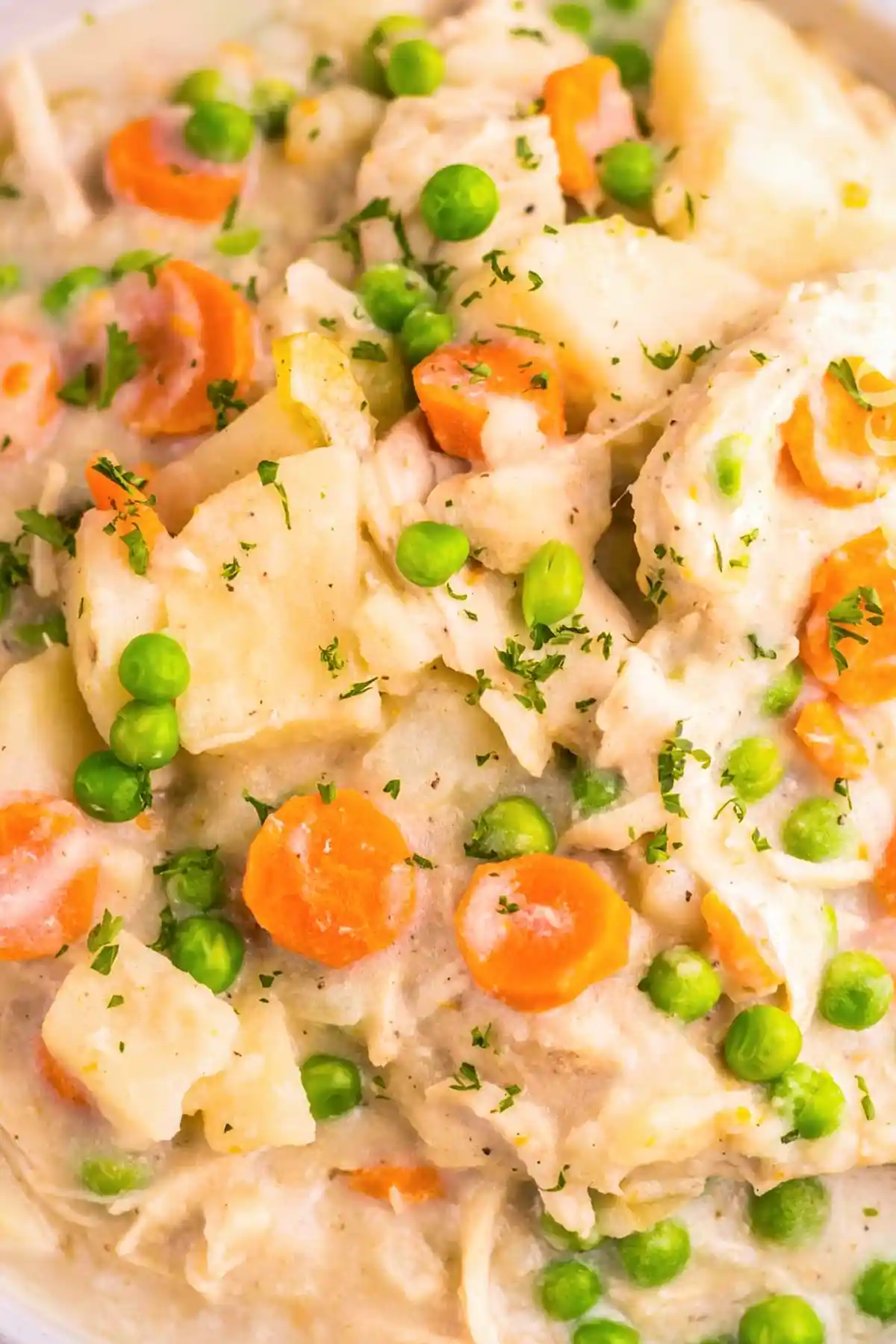
List of ingredients
- 4 chicken breasts (boneless, skinless) – ensures lean protein and easy shredding.
- 3 cups chicken broth – provides the savory liquid base for the stew.
- 2 carrots (sliced) – adds natural sweetness and vibrant color.
- 2 stalks celery (sliced) – provides a classic aromatic depth.
- 1 onion (small, diced) – the essential flavor foundation for the broth.
- 2 cups potatoes (peeled and diced) – adds thickness and heartiness to every bite.
- ½ teaspoon black pepper – provides a mild, warm spice.
- 1 teaspoon garlic powder – adds a concentrated savory garlic flavor.
- 1 teaspoon poultry seasoning – a blend of herbs that complements the chicken.
- 1 cup heavy cream – creates a velvety, rich texture in the final stage.
- 1 ½ cups peas (frozen) – adds a pop of color and fresh texture.
step-by-step instructions
- Prepare the Pot: Spray the slow cooker insert with cooking oil to prevent sticking.
- Combine Ingredients: Add the chicken, broth, carrots, celery, onion, potatoes, pepper, garlic, and poultry seasoning to the pot.
- Slow Cook: Cover and cook on low for 6 hours, or on high for 4 hours, until the potatoes are tender.
- Shred the Meat: Remove the chicken from the cooker and shred it using two forks. Return the shredded chicken back to the pot.
- Finish the Stew: Stir in the heavy cream and frozen peas.
- Final Simmer: Cover and cook for another 10-15 minutes until the peas have softened before serving.
Expert Cooking Tips for Best Results
Searing the Chicken First
For a deeper flavor profile, sear the chicken breasts in a pan with olive oil over medium-high heat before adding them to the slow cooker. This creates a Maillard reaction that adds caramelized notes to the broth. You do not need to cook the meat through, just brown the outside.
Selecting the Best Potato Variety
Yukon Gold potatoes are ideal because they hold their shape well while becoming creamy. Russet potatoes work if you prefer a thicker stew, as they break down more easily. Red potatoes are also a great choice for a firmer texture.
Uniform Vegetable Cutting
Cut your carrots, celery, and potatoes into equal, bite-sized pieces. This ensures that all the vegetables cook at the same rate. Uniform pieces prevent some vegetables from turning to mush while others remain hard.
Choosing High-Quality Chicken Broth
Use a low-sodium chicken broth to maintain control over the salt levels of your dish. If the stew tastes bland at the end, you can easily add salt, but you cannot remove it. Organic or bone-broth options can add extra richness and nutrition.
Maximizing Slow Cooker Heat
Using the low setting for 6 hours generally produces more tender meat and a more cohesive flavor. High heat is faster but can sometimes make chicken breasts dry out more quickly. Stick to low heat whenever your schedule allows.
Avoiding Frequent Lid Lifting
Every time you lift the lid of the slow cooker, you release a significant amount of heat and steam. This can add 15 to 20 minutes to your total cooking time. Keep the lid closed until the final steps to maintain a steady temperature.
Efficient Shredding Technique
Use two forks to pull the chicken apart along the natural grain of the meat. This creates a rustic texture that holds onto the creamy sauce better than cubed meat. Be sure to let the chicken rest for a few minutes after removing it from the pot.
Managing Liquid Levels
If you prefer a soupier consistency, add an extra half cup of broth at the start. If you want a very thick stew, ensure your potatoes are diced small so they release more starch. Always stir gently to avoid breaking the vegetables.
Ingredient Substitutions and Variations
Dairy-Free Creamy Alternatives
To make this recipe dairy-free, replace the heavy cream with full-fat coconut cream or cashew cream. These alternatives provide a similar richness and thickness without the milk proteins. Coconut cream adds a very subtle sweetness to the dish.
Using Chicken Thighs Instead
Substituting boneless, skinless chicken thighs for breasts results in a more succulent and flavorful stew. Thighs are more forgiving during long cook times and are less likely to become dry. They add a bit more fat, which enhances the overall mouthfeel.
Substituting Fresh Peas for Frozen
If using fresh peas, add them during the final 15 minutes just like the frozen ones. Frozen peas are often preferred because they maintain a bright green color and a snap. Fresh peas may require a few extra minutes of simmering.
Incorporating Hearty Mushrooms
Adding sliced cremini or button mushrooms provides an earthy, umami depth to the stew. Add them at the beginning with the other aromatics. They soak up the chicken broth and add a meaty texture to the meal.
Adding Green Beans for Extra Crunch
Fresh green beans can be added during the last hour of slow cooking. Cut them into one-inch pieces to match the other vegetables. This adds a different textural element and increases the nutritional value.
Integrating Broccoli Florets
Add small broccoli florets during the final cream-stirring phase. They only need a few minutes to steam through and stay vibrant. This is a great way to incorporate more greens into the dish.
Using Fresh Garlic
If you prefer a punchier flavor, swap the garlic powder for three to four minced fresh garlic cloves. Add the fresh garlic during the initial loading phase. Fresh garlic provides a sharper, more aromatic taste than the powder.
Enhancing the Base with Tomato Paste
Stir in one tablespoon of tomato paste at the start for a deeper, more complex broth. This adds a subtle acidity and a richer reddish-brown color. It helps balance the richness of the heavy cream added later.
Adding a Splash of Apple Cider Vinegar
A teaspoon of apple cider vinegar stirred in at the end can brighten the flavors of the stew. The acidity cuts through the heaviness of the cream and potatoes. This makes the overall taste more balanced and dynamic.
Incorporating Dijon Mustard
A tablespoon of Dijon mustard stirred into the broth adds a sophisticated tang. It pairs exceptionally well with the poultry seasoning and chicken. This is a great way to elevate the stew for a dinner party.
Best Ways to Serve Your Stew
Pairing with Crusty Sourdough
Serve the stew alongside warm, toasted sourdough bread. The acidity of the sourdough complements the creamy sauce perfectly. Use the bread to scoop up the tender vegetables and thick broth.
Serving over Egg Noodles
For a more filling meal, ladle the stew over a bed of cooked wide egg noodles. The noodles absorb the sauce and make the dish feel like a traditional chicken and dumplings. Toss the noodles with a bit of butter first.
Using Fluffy White Rice
White basmati or jasmine rice provides a neutral base that lets the flavors of the stew shine. The rice helps stretch the meal further, making it ideal for large families. Serve the stew directly on top of a rice mound.
Accompanied by Buttermilk Biscuits
Warm, flaky buttermilk biscuits are a classic pairing for any hearty stew. The buttery texture of the biscuits matches the richness of the heavy cream. Serve them hot from the oven on the side.
Adding a Side Green Salad
Balance the richness of the cream and potatoes with a crisp green salad. A simple vinaigrette with lemon and olive oil provides a refreshing contrast. This helps cleanse the palate between bites of the dense stew.
Fresh Parsley Garnish
Sprinkle freshly chopped flat-leaf parsley over each bowl before serving. The brightness of the parsley adds a visual pop of green. It also provides a clean, herbal finish to the savory dish.
Cilantro Finishing Touch
For a slightly different aromatic profile, use chopped cilantro as a garnish. This works particularly well if you have added a bit of lime or spice to the stew. It adds a fresh, citrusy note to the meal.
Comprehensive Storage Guidelines
Proper Refrigeration Methods
Store leftover stew in an airtight glass or plastic container in the refrigerator. It will stay fresh and delicious for up to four days. Ensure the stew is cooled slightly before sealing to prevent excess condensation.
Freezing for Long Term
This stew can be frozen for two to three months in freezer-safe containers. Leave a small amount of headspace at the top of the container to allow for expansion. Label the container with the date of preparation.
Omitting Potatoes for Freezing
If you plan to freeze the stew, consider leaving out the potatoes during the initial cook. Potatoes can develop a grainy or mealy texture after being frozen and thawed. You can add cooked potatoes when reheating instead.
Safe Thawing Process
Thaw frozen stew slowly in the refrigerator overnight. This maintains the quality of the cream and prevents the chicken from drying out. Avoid thawing on the counter to ensure food safety.
Preventing Sauce Separation
Cream-based stews can sometimes separate during storage or freezing. Simply stir the stew vigorously while reheating to bring the emulsion back together. Adding a tiny splash of milk can help smooth out the texture.
Reheating Your Chicken Stew
Stovetop Reheating Method
Transfer the stew to a Dutch oven or heavy-bottomed pot over medium-low heat. Stir frequently to ensure the bottom does not scorch. Simmer gently until the stew is heated through completely.
Microwave Heating Tips
Place individual portions in a microwave-safe bowl and cover with a lid. Heat in short 60-second intervals, stirring in between. This prevents hot spots and ensures the cream is heated evenly.
Thinning Out the Sauce
Stew tends to thicken as it sits in the fridge because the potatoes absorb liquid. Add a splash of chicken broth or milk during reheating to restore the original consistency. Stir slowly to avoid breaking the vegetables.
Avoiding Overcooking
Heat the stew only until it reaches a simmer. Overheating the cream can cause it to curdle or separate. Keeping the temperature moderate preserves the velvety texture of the sauce.
Troubleshooting Common Cooking Issues
Fixing a Too-Thin Stew
If the broth is too thin, create a cornstarch slurry by mixing one tablespoon of cornstarch with two tablespoons of cold water. Stir this into the boiling stew and cook for another 15 minutes. This will create a thick, glossy consistency.
Using Instant Potatoes to Thicken
A quick hack for thinning stew is stirring in a tablespoon of instant potato flakes. The flakes dissolve quickly and thicken the broth without changing the flavor. This is faster than using a cornstarch slurry.
Dealing with Mushy Vegetables
If your vegetables are too soft, try cutting them into larger chunks next time. You can also add the carrots and celery halfway through the cooking process. This ensures they maintain a slight bite.
Correcting Under-Seasoned Broth
If the stew tastes flat, add a pinch of salt or a dash of lemon juice. The acidity of the lemon enhances the other seasonings. Always taste the broth after adding the cream, as the dairy can mute flavors.
Reducing Excessive Fat
If you use chicken thighs and find the stew too oily, skim the fat from the surface with a spoon. You can also use a fat separator or chill the stew and lift the hardened fat off the top. This results in a cleaner taste.
Frequently Asked Questions
Can I put raw chicken in a crock pot?
Yes, you can put raw chicken in a slow cooker. However, ensure the chicken is handled safely and cooked to an internal temperature of 165 degrees Fahrenheit to ensure it is safe for consumption.
How do you thicken chicken stew in a crock pot?
You can thicken the stew by using a cornstarch or arrowroot slurry. Alternatively, mashing a few of the cooked potatoes directly into the broth will release starches that naturally thicken the sauce.
Do you have to brown chicken before putting in a crock pot?
No, browning is not required, but it is highly recommended. Searing the chicken adds a layer of complexity and color to the final dish that you cannot achieve with slow cooking alone.
Can I use a different protein?
While chicken is traditional, you can use turkey breasts or even tofu for a vegetarian version. If using tofu, replace the chicken broth with vegetable broth to maintain the flavor profile.
Is it okay to use frozen chicken?
It is best to thaw frozen chicken completely in the refrigerator before adding it to the slow cooker. Cooking frozen meat can increase the time it takes to reach a safe temperature, potentially leaving other ingredients overcooked.
Print
Slow Cooker Chicken Stew
- Total Time: 6 hours 15 minutes
- Yield: 6 servings 1x
- Diet: Gluten-free
Description
Warm up with this hearty Slow Cooker Chicken Stew! It’s an easy and comforting meal perfect for busy weeknights or cozy weekends.
Ingredients
- 4 boneless, skinless chicken breasts
- 3 cups chicken broth
- 2 carrots, sliced
- 2 stalks celery, sliced
- 1 small onion, diced
- 2 cups potatoes, peeled and diced
- ½ teaspoon black pepper
- 1 teaspoon garlic powder
- 1 teaspoon poultry seasoning
- 1 cup heavy cream
- 1 ½ cups frozen peas
Instructions
- Step 1: Spray the slow cooker insert with cooking oil.
- Step 2: Add the chicken, broth, carrots, celery, onion, potatoes, pepper, garlic, and poultry seasoning to the pot.
- Step 3: Cover and cook on low for 6 hours, or on high for 4 hours, or until the potatoes are tender.
- Step 4: Remove the chicken from the cooker and shred with two forks, then add it back to the cooker.
- Step 5: Add the heavy cream and peas, then stir.
- Step 6: Cover and cook for another 10-15 minutes or until the peas are softened before serving.
Notes
Keep leftovers in an airtight container in the refrigerator for up to 4 days. You can also add mushrooms, broccoli, or any other vegetables you like. If your stew is too thin, you can add a cornstarch slurry or some instant potatoes to thicken it up.
- Prep Time: 15 minutes
- Cook Time: 6 hours
- Category: Dinner
- Method: Slow Cooking
- Cuisine: American
Nutrition
- Serving Size: 1 serving
- Calories: 410 kcal
- Sugar: 3 g
- Sodium: 255 mg
- Fat: 19 g
- Saturated Fat: 10 g
- Unsaturated Fat: 9 g
- Trans Fat: 0 g
- Carbohydrates: 21 g
- Fiber: 3 g
- Protein: 38 g
- Cholesterol: 141 mg