This refreshing shrimp poke bowl combines tender protein with a vibrant mix of fresh fruits and vegetables. It is a nutrient-dense meal that is perfect for a quick lunch or a light dinner. The creamy spicy mayo adds a rich finish to the crunchy textures of the bowl.
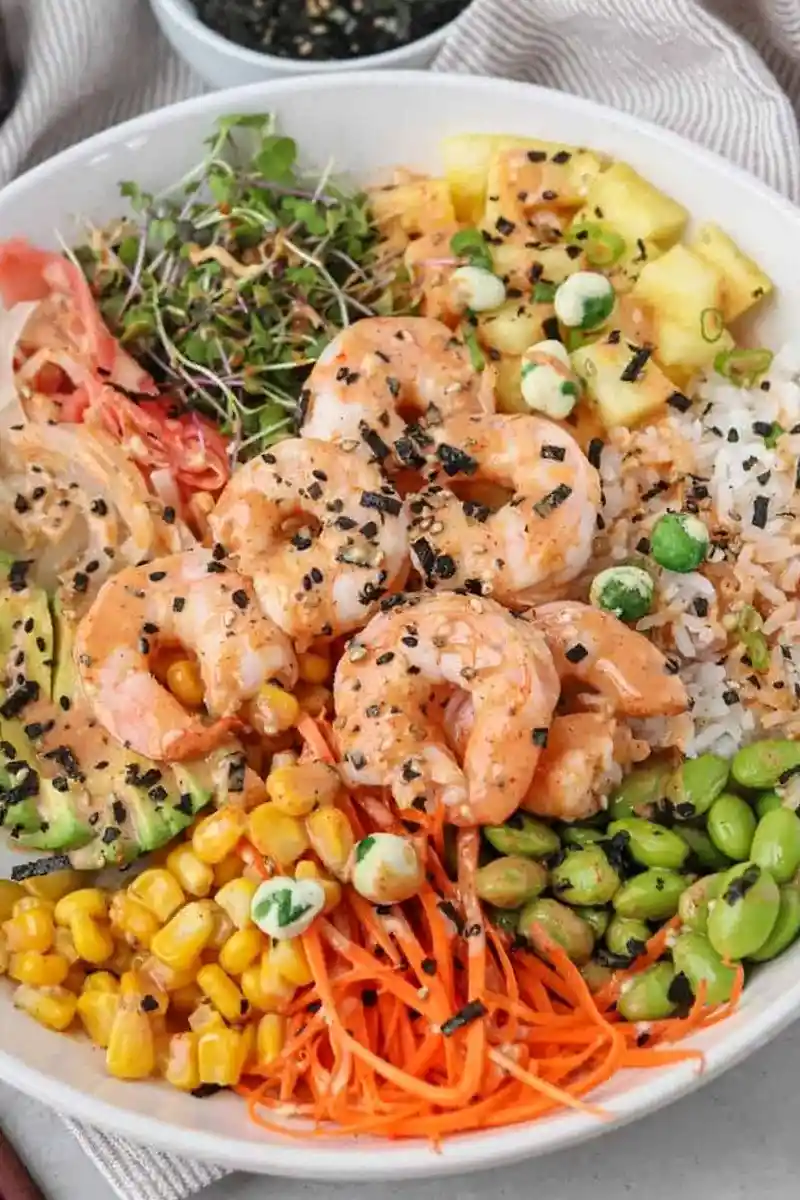
List of ingredients
- 1/3 cup cooked rice – serves as the hearty base.
- 6 pieces shrimp (cooked) – ensures a lean protein source.
- 1/3 cup fresh pineapple – adds a sweet tropical contrast.
- 1/4 cup yellow corn (cooked) – provides a pop of color and sweetness.
- 1/4 cup shredded carrot – adds a crisp texture and Beta-carotene.
- A couple wasabi peas – used for a spicy crunch.
- 2 tablespoons thinly sliced sweet onion (such as Vidalia) – offers a mild aromatic flavor.
- 1/2 medium avocado (sliced) – adds creamy healthy fats.
- 1/3 cup micro greens (or sprouts) – provides a fresh, earthy touch.
- A couple pieces pickled ginger (sushi ginger) – gives a tangy, palate-cleansing zing.
- 1/2 teaspoon black sesame seeds (or furikake seasoning) – adds a nutty finish.
- 1 tablespoon Sriracha – provides the spicy kick in the sauce.
- 1 1/2 tablespoon mayo – creates the creamy base for the dressing.
- 2 teaspoons coconut aminos or low sodium soy sauce – adds a savory umami depth.
- 1/2 teaspoon rice vinegar – balances the sauce with acidity.
step-by-step instructions
- Cool the components: Ensure that all ingredients are cold before assembly. The shrimp, rice, and corn should be fully cooked or steamed and then completely cooled in the refrigerator.
- Prepare the sauce: In a small mixing bowl, whisk together the mayo, Sriracha, coconut aminos (or soy sauce), and rice vinegar. Stir until the mixture is smooth and creamy, then set it aside.
- Assemble the bowl: Use a wide, shallow bowl to arrange the rice, julienned carrots, sliced onion, corn, microgreens (or sprouts), avocado, pickled ginger, and cooked shrimp in separate sections.
- Apply the dressing: Drizzle the prepared creamy spicy mayo sauce evenly over the top of the assembled ingredients.
- Add final garnishes: Sprinkle with black sesame seeds or furikake seasoning and place a few wasabi peas on top for extra texture.
Professional Protein Preparation
Boiling Shrimp to Perfection
When cooking shrimp from frozen, thaw them completely under cold running water. Boil them in lightly salted water only until they turn an opaque pink color, which usually takes 2-3 minutes. Overcooking will make them rubbery and less pleasant in a cold bowl.
Using an Ice Bath for Rapid Cooling
Immediately transfer cooked shrimp into a bowl of ice water to stop the cooking process. This prevents carry-over cooking and ensures the shrimp remain tender. Pat them dry with a paper towel before adding them to the bowl to avoid watering down the sauce.
Ensuring Food Safety
Always ensure shrimp reach an internal temperature of 145 degrees Fahrenheit. Since this is a cold dish, the cooling process must be fast to avoid the temperature danger zone. Store cooked shrimp in the coldest part of your refrigerator until assembly.
Optimizing Your Bowl Base
Preparing Seasoned Sushi Rice
For a more authentic taste, rinse your white rice several times to remove excess starch. Once cooked and cooled, fold in a small amount of rice vinegar and a pinch of sugar. This creates the signature tangy flavor found in traditional poke bowls.
Substituting with Brown Rice
Brown rice is an excellent alternative for those seeking more fiber and a nuttier flavor. Because brown rice has a firmer texture, ensure it is fully cooked so it doesn’t feel gritty when cold. It pairs well with the sweetness of the pineapple.
Low Carb Cauliflower Rice Option
To reduce carbohydrates, replace white rice with steamed cauliflower rice. Squeeze out excess moisture using a kitchen towel after steaming to prevent the bowl from becoming soggy. Season it with a drop of sesame oil for added depth.
Using Quinoa for Added Protein
Quinoa serves as a complete protein base and provides a slightly different texture than rice. Cook it in vegetable broth instead of water to enhance the flavor profile. Let it cool completely before layering the vegetables on top.
Vegetable and Fruit Selection
Choosing the Ripe Pineapple
Select a pineapple that smells sweet at the base and has a slight give when pressed. Cut the fruit into small, uniform 1/2-inch cubes for an even distribution of sweetness. Fresh pineapple is preferred over canned to avoid excess syrup.
Creating Perfect Carrot Julienne
Use a julienne peeler to create long, thin strips of raw carrot for the best visual appeal. If you don’t have a specialized peeler, use a sharp knife to cut the carrot into matchsticks. Raw carrots provide a necessary crunch that balances the soft avocado.
Selecting the Right Onion
Vidalia or other sweet onions are ideal because they lack the harsh bite of red or yellow onions. Slice them as thinly as possible to ensure the flavor is integrated without overpowering other ingredients. Soaking slices in cold water for ten minutes can further mellow the taste.
Selecting and Slicing Avocado
Choose an avocado that yields slightly to gentle pressure but is not mushy. Slice it into thin wedges and place them on top of the bowl at the last minute. To prevent browning, you can lightly brush the slices with a bit of rice vinegar.
Using Fresh Microgreens
Microgreens or sprouts add a delicate peppery flavor and a light texture. Use a mix of radish or alfalfa sprouts for variety. Place them in a distinct section of the bowl to maintain their crispness.
Sauce Modifications and Flavor Profiles
Adjusting the Heat Level
The amount of Sriracha determines the spice level of the bowl. For a milder sauce, reduce the Sriracha to a teaspoon and increase the mayo. If you prefer more heat, add a pinch of cayenne pepper or extra Sriracha.
Utilizing Coconut Aminos for Gluten-Free Needs
Coconut aminos are a great soy-free and gluten-free alternative to soy sauce. They are naturally sweeter and less salty, which complements the pineapple perfectly. If using coconut aminos, you may need a tiny pinch of salt to balance the flavor.
Selecting the Right Mayo
Avocado oil mayo provides a clean, creamy taste without the artificial additives found in some brands. For a vegan version, use a high-quality plant-based mayonnaise. Ensure the mayo is chilled before whisking it into the sauce.
Enhancing Umami with Tamari
Tamari is a richer, more concentrated version of soy sauce that adds a deeper savory note. It is generally gluten-free and provides a darker color to the dressing. Use it in a 1:1 ratio with soy sauce for a more robust flavor.
Garnishing for Texture and Taste
Incorporating Furikake Seasoning
Furikake is a Japanese blend of toasted sesame seeds, nori, and salt. It adds an authentic ocean flavor that bridges the gap between the shrimp and the rice. Sprinkle it liberally over the top of the bowl.
The Role of Wasabi Peas
Wasabi peas introduce a sharp, pungent heat and a hard crunch. They provide a stark contrast to the creamy avocado and soft rice. Add them as a final topping to keep them from softening.
Using Pickled Ginger for Balance
Pickled ginger acts as a palate cleanser between the different flavors of the bowl. Its acidity cuts through the richness of the spicy mayo. Place a small cluster of ginger on the side of the bowl.
Toasting Black Sesame Seeds
If you don’t have furikake, lightly toast black sesame seeds in a dry pan over medium heat. Toasting releases the natural oils and intensifies the nutty aroma. Sprinkle them on top for a professional finish.
Storage and Preservation Methods
Container Selection for Meal Prep
Use airtight glass containers to keep the ingredients fresh and prevent odors from transferring. Glass is preferable as it doesn’t stain from the spicy mayo or coconut aminos. Choose a wide container to minimize crushing the delicate greens.
Preventing Avocado Oxidation
To keep the avocado from turning brown during storage, toss the slices in a small amount of lemon or lime juice. Alternatively, store the sliced avocado in a separate small container with a piece of plastic wrap pressed directly against the surface.
Refrigeration Timelines
Assembled poke bowls can be stored in the refrigerator for up to 4 days. However, for the best quality, store the sauce and avocado separately. Combine them just before serving to maintain the texture of the vegetables.
Reheating and Serving Suggestions
Maintaining Temperature Contrast
The appeal of a poke bowl is the contrast between chilled ingredients and the fresh toppings. If you prefer warm rice, heat the rice separately and then top it with the cold shrimp and vegetables. Never microwave the entire bowl as it will wilt the greens and ruin the avocado.
Using Wide Shallow Bowls
A pasta-style bowl is ideal because it allows you to arrange the ingredients in a circular pattern. This presentation makes the dish more appetizing and prevents the ingredients from getting buried. It also makes it easier to dip each component into the sauce.
Troubleshooting Common Issues
Fixing Watery Bowls
Wateriness often happens if the corn or pineapple is not properly drained. Use a colander to drain all liquid from canned or frozen corn before adding it to the bowl. Pat the pineapple chunks dry with a paper towel to keep the sauce from thinning.
Balancing Excess Spice
If the spicy mayo is too hot, whisk in an extra tablespoon of mayonnaise or a drop of honey. The fats in the mayo and the sugars in the honey neutralize the capsaicin in the Sriracha. This creates a more balanced, creamy flavor.
Frequently Asked Questions
Is a poke bowl the same as a sushi bowl?
They are similar but have different origins. Poke bowls are Hawaiian and typically feature a wider variety of textures and toppings, while sushi bowls are Japanese and focus more on the traditional sushi combination of seasoned rice and fish.
Are poke bowls healthy?
Yes, this shrimp poke bowl is highly nutritious. It provides lean protein from the shrimp, healthy fats from the avocado, and a wide array of vitamins from the fresh carrots, corn, and microgreens.
Can I use a different protein instead of shrimp?
Absolutely. You can replace the shrimp with cubed cooked salmon, seared tuna, or even firm tofu for a vegetarian version. Ensure any replacement protein is cooked and cooled before adding it to the bowl.
How is “poke” pronounced?
The correct Hawaiian pronunciation is “po-kay”. While some people say “po-kee”, the traditional way reflects the word’s meaning, which is to slice or cut crosswise into pieces.
Can I use raw shrimp?
No, shrimp must be cooked to an internal temperature of 145 degrees Fahrenheit to be safe for consumption. If you prefer raw seafood, use sushi-grade tuna or salmon instead.
What is the best bowl for a poke bowl?
A wide and shallow bowl is the best choice. This allows you to showcase the colorful ingredients separately and makes the meal easier to mix together as you eat.
Print
Hawaiian Shrimp Poke Bowl
- Total Time: 15 minutes
- Yield: 2 servings 1x
- Diet: Pescatarian
Description
Crunchy and creamy Hawaiian Shrimp Poke Bowl is made with tender cooked shrimp, sweet fresh pineapple, crunchy veggies, creamy avocado and drizzled with the best spicy mayo sauce.
Ingredients
- ⅓ cup cooked rice
- 6 pieces shrimp (cooked)
- ⅓ cup fresh pineapple
- ¼ cup yellow corn (cooked)
- ¼ cup shredded carrot
- a couple wasabi peas
- 2 tablespoons thinly sliced sweet onion
- ½ medium avocado (sliced)
- ⅓ cup micro greens (or sprouts)
- a couple pieces pickled ginger (sushi ginger)
- ½ teaspoon black sesame seeds (or furikake seasoning)
- 1 tablespoon Sriracha
- 1 ½ tablespoon mayo
- 2 teaspoons coconut aminos (or low sodium soy sauce)
- ½ teaspoon rice vinegar
Instructions
- Step: Make sure that all of the ingredients are cold. Shrimp, rice, edamame and corn should be cooked (or steamed) and cooled.
- Step: Whisk together mayo, Sriracha, coconut aminos (or soy sauce) and rice vinegar in a small bowl until smooth and creamy. Set aside.
- Step: Arrange rice, julienned carrots, sliced onion, corn, edamame, microgreens (or sprouts), avocado, pickled ginger and shrimp in a wide shallow bowl.
- Step: Drizzle with creamy spicy mayo sauce.
- Step: Sprinkle with furikake or toasted sesame seeds and add a couple wasabi peas.
Notes
For the best presentation use a wide and shallow bowl, such as a pasta bowl. To save time, use frozen corn and edamame and steam them right in the bag. Turn regular cooked rice into sushi rice or mix in a splash of rice vinegar for a more authentic version.
- Prep Time: 15 minutes
- Cook Time: 0 minutes
- Category: Dinner
- Method: Assembling
- Cuisine: Hawaiian
Nutrition
- Serving Size: 1 bowl
- Calories: 336 kcal
- Sugar: 6 g
- Sodium: 441 mg
- Fat: 18 g
- Saturated Fat: 3 g
- Unsaturated Fat: 13 g
- Trans Fat: 0.02 g
- Carbohydrates: 40 g
- Fiber: 7 g
- Protein: 6 g
- Cholesterol: 9 mg