These sheet pan chipotle salmon tacos are a vibrant and efficient meal perfect for busy weeknights. By roasting the salmon and jalapeños together on one tray, you minimize cleanup while maximizing smoky and sweet flavors.

List of ingredients
- 4 (4-6 ounce) salmon filets, cut into bite size chunks – ensure they are uniform for even cooking.
- 1/4 cup extra virgin olive oil – used for roasting and preventing sticking.
- 1-2 tablespoons chopped chipotle in adobo – provides the primary smoky heat.
- 3 tablespoons honey – balances the spice with a touch of sweetness.
- 1 teaspoon smoked or regular paprika – adds depth and color.
- 1 teaspoon dried thyme – adds an earthy herbal note.
- kosher salt and black pepper – for essential seasoning.
- warm tortillas, shredded cabbage/lettuce, and avocado – fresh components for assembly.
- 1/4 cup crumbled cotija cheese – adds a salty, tangy finish.
- 1-2 jalapeños – used in the salsa for a spicy kick.
- 1 cup diced pineapple – provides tropical sweetness.
- 1/2 cup diced mango – adds a creamy, fruity layer.
- 1/2 cup cilantro, roughly chopped – brings a fresh, citrusy aroma.
- 2 teaspoons ginger, grated – adds a zesty, aromatic punch.
- 1 juice of a lime (about 2 tablespoons) – provides necessary acidity.
step-by-step instructions
- Preheat the oven: Set your oven to 450° F to ensure a high-heat roast.
- Season the salmon: On a large baking sheet, toss the salmon chunks with olive oil, chopped chipotle in adobo, honey, paprika, thyme, salt, and pepper. Spread the salmon in a single layer and add the whole jalapeños to the pan to roast alongside the fish.
- Roast and char: Roast for 10-15 minutes depending on your preferred doneness. During the final minute of cooking, switch the oven to broil to achieve a lightly charred exterior. Set the salmon aside.
- Prepare the salsa: De-seed the roasted jalapeño if you prefer less heat, then chop it finely. Combine the jalapeño in a bowl with the diced pineapple, mango, chopped cilantro, grated ginger, lime juice, and a pinch of salt.
- Assemble the tacos: Stuff warmed tortillas with shredded cabbage, avocado slices, the chipotle salmon, and a generous scoop of the fruit salsa. Top with crumbled cotija cheese and optional crema or yogurt.
Pro Tips for Roasting Salmon
Patting Salmon Dry for Better Searing
Moisture on the surface of the fish creates steam, which prevents the salmon from browning properly. Using a paper towel to pat the filets completely dry before adding the glaze helps achieve a caramelized crust.
Avoiding Overcrowding on the Pan
If the salmon chunks are touching, they will steam instead of roast, leading to a softer texture. Space the pieces at least a half-inch apart to allow hot air to circulate around each piece for an even roast.
Monitoring Internal Temperature
Salmon can overcook quickly at 450° F, becoming dry and chalky. Use an instant-read thermometer to pull the fish when the internal temperature reaches 135-145° F for a juicy result.
Using the Broiler Carefully
The broiler provides the final charred finish that mimics a grill. Stay by the oven during this final minute, as the honey in the glaze can burn quickly if left unattended.
Ingredient Customizations and Substitutes
Choosing the Right Tortilla
Corn tortillas provide a traditional flavor and firmer structure, while flour tortillas offer a softer, more flexible wrap. You can also use hard taco shells if you prefer a crunchy texture.
Substituting Cotija Cheese
If cotija is unavailable, crumbled feta or queso fresco are excellent replacements. Both provide the salty, tangy profile needed to cut through the sweetness of the pineapple.
Adjusting the Heat Level
For a milder taco, remove all seeds and membranes from the jalapeños and use only one tablespoon of chipotle. To increase the spice, add a pinch of cayenne pepper to the salmon glaze.
Swapping Mango for Other Fruits
If mangoes are out of season, diced peaches or nectarines work well. These fruits provide a similar sweetness and texture that complements the smoky salmon.
Enhancing the Tropical Salsa
Adding Red Bell Pepper for Crunch
Dicing a small amount of red bell pepper into the salsa adds a crisp texture and bright color. It complements the softness of the mango and pineapple perfectly.
Using Fresh Ginger for Zest
Freshly grated ginger provides a sharp, peppery bite that pre-ground ginger cannot match. Use a microplane to ensure the ginger is finely incorporated into the fruit mixture.
Balancing Acidity with Extra Lime
If the salsa tastes too sweet, add an extra squeeze of fresh lime juice. The acidity brightens the fruit flavors and balances the richness of the roasted salmon.
Incorporating Diced Red Onion
For an added layer of savoriness, add finely diced red onion to the salsa. This adds a sharp, pungent contrast to the sweet pineapple and mango.
Serving and Pairing Suggestions
Creating a Quick Cabbage Slaw
Instead of plain shredded cabbage, toss it with a bit of lime juice and salt. This creates a simple slaw that adds a tangy crunch to every bite of the taco.
Adding a Garlic Lime Crema
Roast a few cloves of garlic on the pan with the salmon, then mash them into sour cream or Greek yogurt. Mix in lime zest and juice for a cooling sauce that balances the heat.
Pairing with Cilantro Lime Rice
Serve the tacos with a side of fluffy white rice tossed with fresh cilantro and lime. This absorbs the extra salsa and provides a filling, aromatic accompaniment.
Adding Black Beans for Protein
A side of seasoned black beans provides a hearty contrast to the light fish. Simmer them with cumin and garlic for a complete Caribbean-inspired meal.
Storage and Reheating Guide
Proper Salmon Storage
Store leftover roasted salmon in an airtight container in the refrigerator for up to three days. Keep the salsa in a separate container to prevent the fish from getting soggy.
Maintaining Salsa Freshness
The lime juice in the salsa acts as a natural preservative, but it is best consumed within 48 hours. Stir the salsa before serving to redistribute the juices.
Reheating Salmon Gently
To avoid drying out the fish, reheat the salmon in a toaster oven or air fryer at 300° F for a few minutes. Avoid the microwave, as it can make the salmon rubbery.
Make-Ahead Preparation Steps
Preparing Salsa in Advance
The pineapple mango salsa can be made up to 24 hours in advance. This allows the ginger and lime to marinate the fruit, deepening the overall flavor.
Marinating the Salmon Chunks
Toss the salmon in the chipotle glaze 30 minutes before roasting. This ensures the flavors penetrate the fish, though you should avoid marinating for too long to prevent texture breakdown.
Pre-shredding Cabbage and Toppings
Shred the cabbage and dice the avocado shortly before serving. Store cabbage in a container with a damp paper towel to keep it crisp until assembly.
Troubleshooting Common Issues
Preventing Salmon from Sticking
Use a high-quality non-stick baking sheet or line your pan with parchment paper. Ensuring the pan is well-oiled also prevents the honey from sticking to the metal.
Fixing a Bland Salsa
If the salsa lacks punch, increase the salt or add a splash of apple cider vinegar. This enhances the natural sugars of the pineapple and mango.
Preventing Soggy Tortillas
Warm the tortillas on a dry skillet or directly over a gas flame for a few seconds. This creates a slight char and prevents them from tearing under the weight of the fillings.
Frequently Asked Questions
Can I use frozen salmon?
Yes, but ensure the filets are completely thawed and patted dry before seasoning. Cooking frozen salmon directly can lead to uneven roasting and excess water on the pan.
What is a good substitute for sour cream in the crema?
Plain Greek yogurt is a healthy and tangy alternative that provides a similar consistency. You can also use a cashew-based cream for a dairy-free option.
How do I make the tacos less spicy?
Remove the seeds and white membranes from the jalapeños before roasting and chopping. You can also reduce the amount of chipotle in adobo used in the glaze.
Can I use maple syrup instead of honey?
Yes, maple syrup provides a similar sweetness and works well with the smoky chipotle. Use the same quantity as the honey for a consistent glaze.
Which type of salmon is best for this recipe?
Atlantic or Sockeye salmon both work well due to their fat content. Sockeye has a bolder flavor, while Atlantic is milder and more buttery.
Print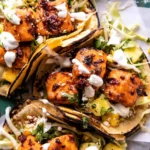
Sheet Pan Chipotle Salmon Tacos with Pineapple Jalapeño Salsa
- Total Time: 30 minutes
- Yield: 6 servings 1x
- Diet: General
Description
Made all on one sheet pan, these tacos are quick, vibrant, and so delicious!
Ingredients
- 4 (4-6 ounce) salmon filets, cut into bite size chunks
- 1/4 cup extra virgin olive oil
- 1–2 tablespoons chopped chipotle in adobo
- 3 tablespoons honey
- 1 teaspoon smoked or regular paprika
- 1 teaspoon dried thyme
- kosher salt and black pepper
- warm tortillas, shredded cabbage/lettuce, and avocado, for serving
- 1/4 cup crumbled cotija cheese
- 1–2 jalapeños
- 1 cup diced pineapple
- 1/2 cup diced mango
- 1/2 cup cilantro, roughly chopped
- 2 teaspoons ginger, grated
- 1 juice of a lime (about 2 tablespoons)
Instructions
- Preheat: Preheat the oven to 450° F.
- Roast: On a baking sheet, toss the salmon pieces with olive oil, chipotle in adobo, honey, paprika, thyme, and a pinch each of salt and pepper. Arrange in a single layer. Add the jalapeños. Roast 10-15 minutes or until the salmon is cooked to your liking. During the last minute, switch the oven to broil and broil until lightly charred. Set the salmon side.
- Salsa: De-seed the jalapeño (if desired), then chop and add to a bowl with the pineapple, mango, cilantro, ginger, lime juice, and a pinch of salt.
- Assemble: Stuff the avocado, cabbage, salsa, and salmon into the warmed tortillas. Top with crema or yogurt, cheese and additional salsa.
Notes
Garlic Lime Crema: roast 1-2 cloves of garlic with the salmon. Finely chop or grate the roasted garlic, then mix with 1/2 cup sour cream or yogurt, 1 tablespoon honey, 2 teaspoons lime zest, and 2 tablespoons lime juice. Season with salt.
- Prep Time: 20 minutes
- Cook Time: 10 minutes
- Category: Main Course
- Method: Roasting
- Cuisine: Caribbean
Nutrition
- Serving Size: 1 serving
- Calories: 349 kcal
- Sugar: 16 g
- Sodium: 620 mg
- Fat: 18 g
- Saturated Fat: 4 g
- Unsaturated Fat: 14 g
- Trans Fat: 0 g
- Carbohydrates: 26 g
- Fiber: 5 g
- Protein: 22 g
- Cholesterol: 65 mg