Create a nutrient-dense vegetable base using kitchen scraps and umami-rich plant ingredients. This savory broth serves as a versatile foundation for noodle soups or a standalone warm drink.
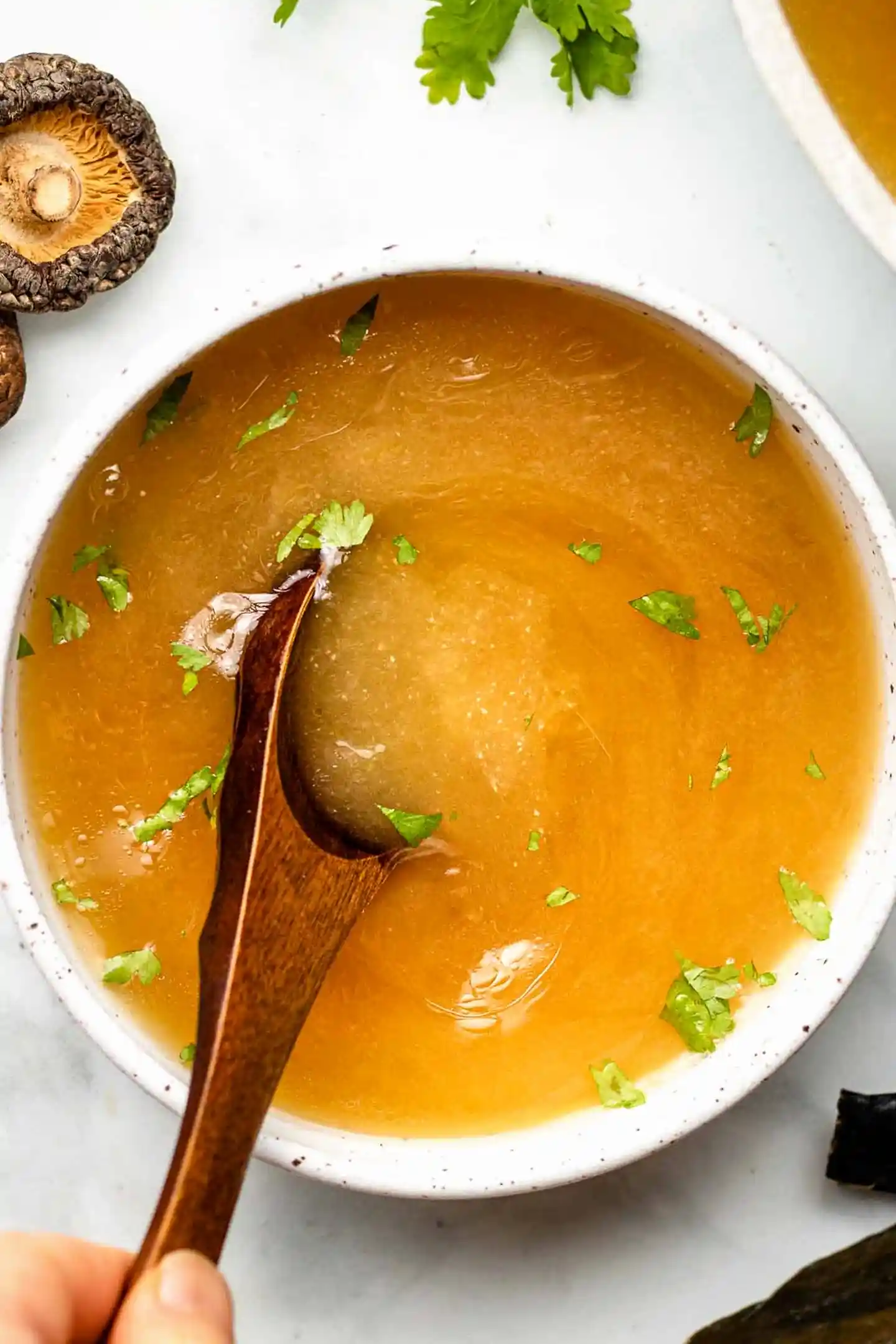
List of ingredients
- 1 thick knob of ginger – sliced thinly for flavor extraction.
- 1 head of garlic – halved crosswise.
- 8-10 spring onion bulbs – cleaned and trimmed.
- 4 cups of veggie scraps – use carrots, celery, kale stems, squash stems, or fresh leafy greens.
- 1 orange or lemon peel – avoid the white pith.
- 80g dried shiitake mushrooms – provides a deep earthy base.
- 40g kombu or wakame – adds sea-saltiness and depth.
- 10 cups of water – filtered water is preferred.
- handful of cilantro – adds a fresh herbal note.
- 2 tbsp miso paste (30g) – use koji or red miso.
- 1 tbsp turmeric – for color and warmth.
- 1 chili pepper – kept whole for mild heat.
- 1 tbsp peppercorn – whole black peppercorns.
- 1 tbsp sesame oil – adds a nutty aroma.
- 1 tbsp tamari – for gluten-free saltiness.
step-by-step instructions
- Combine and Boil: Add all the ingredients except the miso paste to a large pot and bring the liquid to a boil over medium-high heat.
- Simmer: Reduce the heat to low and allow the broth to simmer for 45 to 90 minutes, or until the liquid is very fragrant and concentrated.
- Strain: Use a strainer to remove all solids, then return the clear liquid to the pot.
- Incorporate Miso: To serve immediately, use a fine mesh sieve to dissolve the miso paste into the warm broth to avoid clumps.
- Season and Serve: Add any other desired flavorings or seasonings to the soup, then serve and enjoy.
Maximizing the Flavor of Vegetable Scraps
Collecting and Storing Produce Ends
To make the most of your ingredients, keep a designated bag or container in your freezer for vegetable scraps. Add clean ends of carrots, celery, and onion skins as you prep other meals throughout the week. Once the container is full, you can transfer the frozen scraps directly into the pot for brewing.
Selecting the Right Scraps
Focus on vegetables that provide sweetness and depth, such as carrot tops, parsley stems, and leek greens. Avoid using too many cruciferous vegetables like broccoli or cabbage stems, as they can create a sulfurous smell when simmered for long periods. Stick to root vegetables and hearty greens for the cleanest taste.
Cleaning Produce Before Simmering
Ensure all scraps are thoroughly rinsed to remove excess soil and grit. This prevents the broth from having a sandy texture or an overly earthy, dirty flavor. A quick soak in cold water followed by a rinse is usually sufficient for most vegetable ends.
Understanding the Umami Components
The Role of Dried Shiitake Mushrooms
Dried shiitake mushrooms are concentrated sources of guanylate, which enhances the savory profile of the broth. Using dried mushrooms instead of fresh provides a much more intense, woodsy depth. Ensure the mushrooms are fully hydrated during the simmering process to release all their flavor.
Using Kombu and Wakame for Depth
Seaweeds like kombu and wakame contribute glutamates, which are the primary building blocks of umami. They provide a subtle oceanic saltiness that mimics the richness of traditional bone broths. If the broth tastes too salty, reduce the amount of seaweed in your next batch.
Choosing Between Red and White Miso Paste
Red miso is fermented longer and has a stronger, saltier taste that stands up well in hearty soups. White miso is milder and sweeter, making it better for lighter, delicate broths. For this specific umami broth, a red or koji miso is recommended to provide a robust finish.
Refining the Brewing Process
Determining the Optimal Simmer Duration
A 45-minute simmer produces a light, clean broth suitable for clear soups. Extending the time to 90 minutes allows for a deeper extraction of nutrients and flavor, resulting in a richer, more concentrated liquid. Choose your duration based on whether you want a light tea-like broth or a heavy soup base.
Managing Heat to Prevent Cloudiness
Keep the heat on a low simmer rather than a rolling boil once the initial boil is complete. High heat can cause the fats and proteins to emulsify, resulting in a cloudy appearance. A gentle simmer ensures the liquid remains translucent and professional in quality.
Using a Fine Mesh Sieve for Miso
Miso paste is thick and can easily form clumps that are difficult to break apart with a spoon. By pressing the paste through a fine mesh sieve into the broth, you ensure a perfectly smooth consistency. This method distributes the fermented paste evenly throughout the liquid.
Creative Ways to Use the Broth
Using the Broth for Ramen and Pho
This umami broth serves as an excellent plant-based alternative to traditional pork or beef stocks in Asian noodle dishes. Pour the hot broth over cooked rice noodles or ramen noodles and top with tofu, bok choy, and sliced mushrooms. The deep savory notes provide the necessary foundation for these complex dishes.
Substituting Water with Broth for Grains
Instead of using plain water to cook quinoa, brown rice, or farro, use this umami broth. The grains will absorb the savory flavors and nutrients during the cooking process. This is an easy way to add depth to a side dish without adding extra sauces later.
Integrating Broth into Stews and Gratins
Replace standard vegetable stock with this broth when making hearty stews or potato gratins. The addition of miso and tamari adds a layer of complexity that standard store-bought broths lack. It pairs particularly well with root vegetable stews and mushroom-based casseroles.
Storage and Preservation
Proper Refrigeration and Shelf Life
Store the strained broth in an airtight glass jar or container in the refrigerator. When stored correctly, the broth will remain fresh for about 3 to 5 days. Glass is preferred over plastic to avoid any flavor transfer from other foods in the fridge.
Freezing the Broth for Long-Term Use
For long-term storage, freeze the broth in silicone ice cube trays or freezer-safe bags. This allows you to pop out small portions for sautéing vegetables or reheating a single cup of broth. Ensure you leave some headspace in the bags to allow for expansion during freezing.
Storing the Broth Without Miso Paste
If you plan to store the broth for several days, it is best to keep the miso paste separate until the moment of serving. This preserves the delicate flavor of the miso and makes the reheating process more flexible. Simply stir in the fresh miso paste once the broth is warmed up.
Reheating and Serving
Maintaining Probiotic Benefits During Heating
Miso contains beneficial probiotics that are destroyed by excessive heat. To preserve these nutrients, reheat your broth until it is hot but not boiling before stirring in the miso. Avoid boiling the broth once the miso has been added to keep the gut-healthy bacteria intact.
Enhancing Presentation with Fresh Toppings
When serving the broth as a drink, add a few drops of fresh sesame oil and a sprinkle of sliced green onions on top. For a more filling version, add toasted sesame seeds or a few strips of nori. These additions provide contrast in texture and visual appeal.
Troubleshooting and FAQs
Why is my broth too salty?
Excessive saltiness usually comes from too much tamari or a high concentration of kombu. To fix this, dilute the broth with a small amount of additional water or add a peeled, halved potato to the simmering pot to absorb some of the salt. In the future, add tamari at the end to taste.
Can I make this in a slow cooker?
Yes, you can adapt this for a slow cooker by adding all ingredients (except miso) and cooking on low for 8 hours or high for 4 hours. The slow extraction process often results in a very smooth flavor. Follow the same straining and miso-incorporation steps as the stove-top method.
What is the best substitute for tamari?
If you do not have tamari, coconut aminos are a great soy-free and gluten-free alternative, though they are slightly sweeter. Regular soy sauce can also be used if gluten is not a concern. Adjust the quantity slightly, as the saltiness varies between these options.
Can I use fresh mushrooms instead of dried?
You can use fresh mushrooms, but the flavor will be significantly milder. To compensate for the lack of concentration in fresh mushrooms, increase the quantity of mushrooms used. Dried shiitakes are highly recommended for the authentic umami punch.
How do I prevent the broth from tasting too earthy?
If the broth feels too heavy or earthy, increase the amount of ginger or add a squeeze of fresh lemon juice at the end. The acidity and spice of the ginger cut through the richness of the mushrooms and miso. Balancing the earthy tones with brightness is key to a well-rounded broth.
Print
Savory Vegan Umami Broth
- Total Time: 70 minutes
- Yield: 8 cups 1x
- Diet: Vegan, Gluten Free
Description
A flavorful, gut-healthy vegan ‘bone’ broth made from vegetable scraps and umami-rich ingredients, perfect for noodle soups, stews, or sipping.
Ingredients
- 1 thick knob of ginger, sliced thinly
- 1 head of garlic, halved crosswise
- 8–10 spring onion bulbs
- 4 cups of veggie scraps (carrots, celery, kale stems, squash stems or fresh leafy greens)
- 1 orange or lemon peel
- 80g dried shiitake mushrooms
- 40g kombu or wakame
- 10 cups of water
- handful of cilantro
- 2 tbsp miso paste (30g)
- 1 tbsp turmeric
- 1 chili pepper
- 1 tbsp peppercorn
- 1 tbsp sesame oil
- 1 tbsp tamari
Instructions
- Boil: Add all the ingredients except the miso paste to a pot and bring it to a boil.
- Simmer: Reduce heat to low and simmer for 45-90 minutes or until very fragrant.
- Strain: Strain the broth and return to pot.
- Serve: Use a fine mesh sieve and dissolve the miso paste to the broth. Add any other flavourings and seasonings to the soup, serve and enjoy!
- Store: Add just the flavourings if desired, stir and keep in the fridge in an airtight container or jar. When ready, re-heat the broth and use as is or dissolve the miso paste with a fine mesh sieve.
Notes
Helpful Equipment: fine mesh sieve, strainer, large pot, ladle. To preserve the nutrients and good bacteria in miso, do not boil it; dissolve it into the broth after heating.
- Prep Time: 10 minutes
- Cook Time: 60 minutes
- Category: Soups
- Method: Stove Top
- Cuisine: Japanese
Nutrition
- Serving Size: 1 cup
- Calories: 20 kcal
- Sugar: 1.5 g
- Sodium: 800 mg
- Fat: 0.4 g
- Saturated Fat: 0.1 g
- Unsaturated Fat: 0.2 g
- Trans Fat: 0 g
- Carbohydrates: 3.1 g
- Fiber: 0.2 g
- Protein: 1 g
- Cholesterol: 0 mg