This nourishing vegetable cabbage soup is a hearty one-pot meal packed with colorful produce and aromatic herbs. It is an excellent choice for weekly meal prep, providing a filling lunch or dinner that is both vegan and health-conscious.
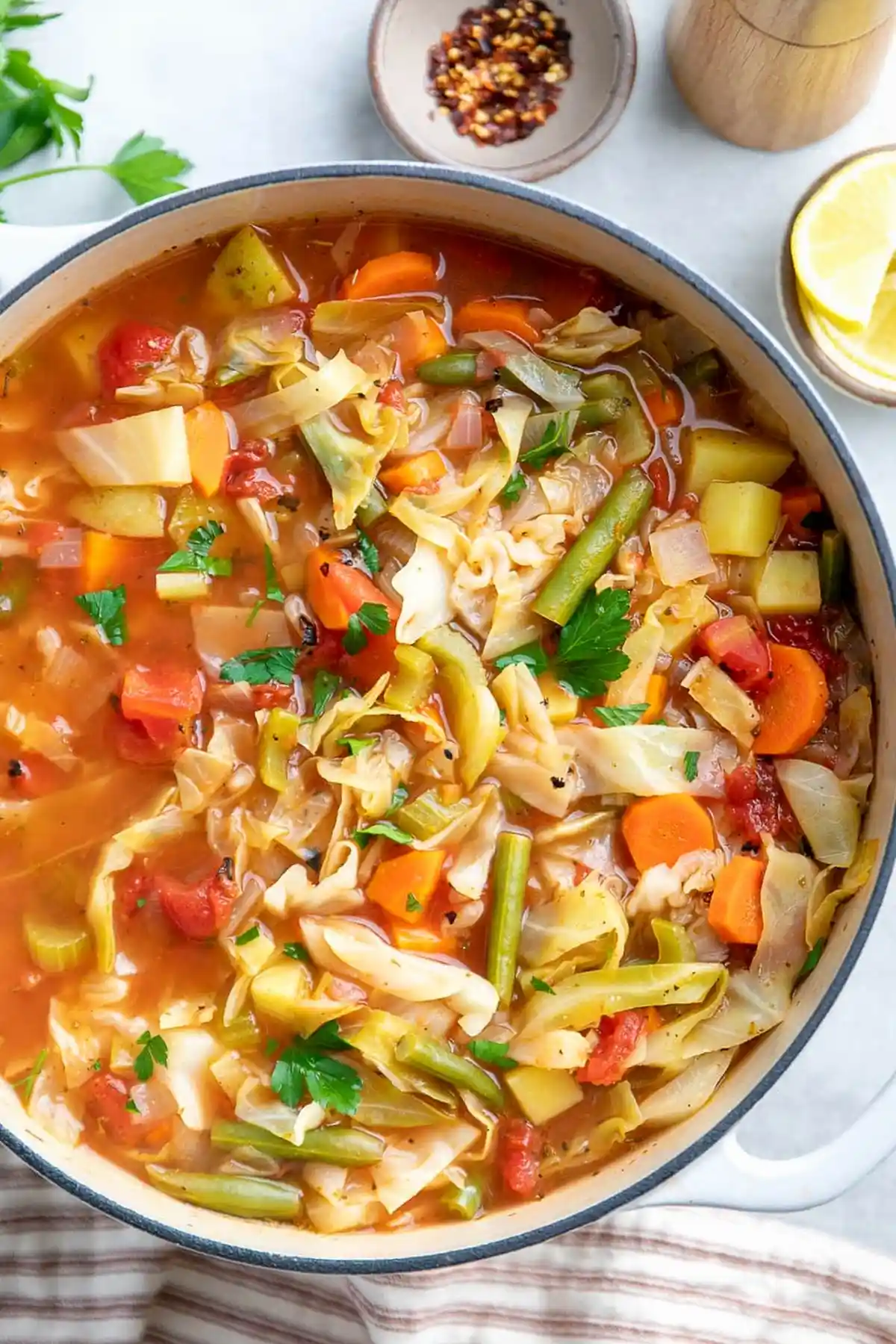
List of ingredients
- 1/4 cup water or 1 tablespoon olive oil – used for sautéing the aromatics.
- 1 medium onion, diced – provides a savory base.
- 2 garlic cloves, minced (optional) – adds pungent depth.
- 2 large carrots, peeled and sliced – adds sweetness and color.
- 2 celery sticks, sliced – contributes to the aromatic mirepoix.
- 2 Tablespoons Italian seasoning – the primary herb blend for flavor.
- 1 can (28oz) diced tomatoes with juices – adds acidity and body to the broth.
- 1 medium potato or 6 baby potatoes (about 1 cup), diced – adds heartiness and thickness.
- 1 1/2 cups green beans, sliced into 1-inch pieces – provides texture and nutrients.
- 1 head (2lbs.) of green cabbage (about 8-10 cups), cored and chopped – the main bulk of the soup.
- 5-6 cups low-sodium vegetable broth – the liquid base for simmering.
- salt + pepper, to taste – for final seasoning.
- splash of balsamic or white wine vinegar (or juice of small lemon) – used to brighten the overall flavor.
- chopped parsley – for a fresh garnish.
- lemon wedges – for serving.
- crusty bread – recommended side for dipping.
step-by-step instructions
- Sauté Aromatics: In a large 5qt. dutch oven or pot, heat the water or olive oil over medium heat. Add the diced carrots, celery, onions, and minced garlic, and sauté for approximately 4 minutes until they begin to soften.
- Toast Herbs: Stir in the Italian seasoning and continue to sauté for about 1 minute. This allows the dried herbs to release their essential oils and become more fragrant.
- Combine Ingredients: Add the sliced green beans, canned diced tomatoes with their juices, diced potatoes, chopped cabbage, and the vegetable broth to the pot.
- Initial Boil: Cover the pot with a lid and bring the mixture to a boil. Once boiling, remove the lid; the cabbage will have shrunk enough to allow you to stir the ingredients thoroughly.
- Simmer: Place the lid back on, reduce the heat to low, and simmer for 20 to 30 minutes. Stir the soup occasionally to ensure nothing sticks to the bottom of the pot.
- Final Seasoning: Add more water if the soup is too thick. Season with salt and pepper to taste, and stir in a splash of balsamic vinegar, white wine vinegar, or lemon juice to add a punch of flavor.
- Serve: Ladle the soup into bowls and garnish with fresh chopped parsley. Serve immediately with lemon wedges and crusty bread on the side.
Alternative Cooking Methods
Using a Pressure Cooker for Faster Results
If using a 6-quart Instant Pot, skip the sautéing step with oil if preferred, or use the sauté function. Add all ingredients except the oil/water to the bowl insert. Set the release valve to the sealed position, press the manual button, and set the timer for 3 minutes. Once the cycle is complete, use the quick release valve or allow for a natural pressure release for 20 minutes before opening the lid and adding final seasonings.
Slow Cooker Settings for Effortless Prep
For a set-and-forget approach, add all ingredients except the sautéing oil or water directly into your crockpot. Cover with a tight-fitting lid and cook on the high setting for 4 to 5 hours, or on the low setting for 8 to 10 hours. If the soup appears too thick toward the end of the cooking time, stir in a small amount of additional water or vegetable broth before serving.
Customizing Your Vegetable Base
Choosing the Best Cabbage Variety
While green cabbage is the standard choice for its crunch and mild flavor, Savoy cabbage is an excellent alternative. Savoy cabbage has crinkled leaves that hold onto the broth more effectively and tends to have a slightly more tender texture after simmering. Both varieties work well with the provided quantities.
Selecting the Right Potato Type
Yukon Gold, Russet, red, or white potatoes all work well in this recipe. Yukon Gold potatoes offer a buttery flavor and hold their shape well, while Russets will break down slightly more, naturally thickening the soup. For a more nutrient-dense version, replace the white potato with a diced sweet potato for a hint of sweetness.
Adjusting the Mirepoix Ratio
The combination of onion, carrot, and celery forms a classic mirepoix that builds the foundation of the soup. If you prefer a sweeter profile, increase the amount of carrots. If you want a more savory, earthy base, add an extra celery stick or increase the amount of minced garlic.
Flavor Enhancements and Substitutions
Swapping Italian Seasoning for Individual Herbs
If you do not have a pre-mixed Italian seasoning, you can create your own by combining 2 teaspoons each of dried oregano, basil, and thyme. This provides the same aromatic profile. For a different European flair, Herbes de Provence can be used as a direct replacement for the Italian blend.
Adding Smokiness with Paprika
To introduce a deeper, woodsy dimension to the broth, add between 1/2 and 1 teaspoon of sweet or smoked paprika. This works particularly well if you are adding plant-based sausages or beans to the soup. Add the paprika during the herb sautéing step to toast it slightly.
The Importance of Acidic Finishes
Adding a splash of balsamic vinegar, white wine vinegar, or fresh lemon juice at the very end of the cooking process is crucial. Acid cuts through the heartiness of the cabbage and potatoes, brightening the overall flavor profile and making the vegetable tastes more vivid.
Protein and Heartiness Additions
Incorporating Canned White Beans
To make the soup more filling, add one 14-ounce can of drained and rinsed cannellini, Great Northern, or chickpeas. These beans add plant-based protein and a creamy texture. Stir them in during the final 10 minutes of simmering to ensure they are heated through without becoming mushy.
Using Lentils for Earthy Texture
Canned and drained lentils are a fantastic addition for those seeking a more robust, earthy flavor. Lentils provide a significant amount of protein and fiber, making the soup a complete meal. Add them along with the other vegetables before the simmering process begins.
Adding Plant-Based Sausages
For a meatier experience, slice vegan sausages and add them to the pot during the last few minutes of cooking. Gently heating them through in the broth allows them to absorb the soup’s flavors while remaining firm. This addition transforms the soup into a very hearty dinner.
Including Pasta for Extra Calories
If you need more calories or a thicker consistency, stir in 8 ounces of cooked pasta. Small shapes like shells, elbows, macaroni, rotini, or fusilli are ideal as they fit easily on a spoon. To prevent the pasta from absorbing too much broth, cook it separately and add it to the bowls just before serving.
Expanding the Vegetable Variety
Adding Broccoli or Winter Squash
This recipe is highly flexible, and you can easily incorporate other vegetables to reduce waste or increase nutrition. Chopped broccoli florets or cubed butternut squash are excellent additions. Add these at the same time as the cabbage, though squash may require a few extra minutes of simmering to soften completely.
Increasing Green Bean Quantities
If you have a surplus of fresh green beans, feel free to increase the amount up to one pound. Extra green beans add a satisfying snap to the soup and increase the volume of the meal, which is particularly useful for those using the recipe for meal prep.
Storage and Make-Ahead Advice
Refrigeration for Weekly Meal Prep
This soup is ideal for meal prepping because the flavors often meld and improve overnight. Store leftovers in airtight containers in the refrigerator for 4 to 6 days. When prepping for the week, divide the soup into individual portions to make reheating easier and more consistent.
Freezer-Friendly Storage Tips
Vegetable cabbage soup freezes exceptionally well for up to 3 months. Use freezer-safe containers or heavy-duty freezer bags, leaving about 1/2 inch of headspace at the top to allow the liquid to expand as it freezes. This prevents the containers from cracking or the bags from bursting.
Thawing and Reheating Techniques
To reheat, thaw the soup in the refrigerator overnight before warming it on the stovetop over low heat. Alternatively, use a microwave in 30-second intervals, stirring after each segment to ensure the heat is distributed evenly. Add a small splash of water or broth if the soup has thickened too much during storage.
Serving and Pairing Suggestions
Complementary Breads for Dipping
Because the broth is light yet flavorful, serving the soup with a side of bread is highly recommended. Homemade artisan sourdough, vegan cornbread, or warm naan are excellent choices. These options help soak up the juices and make the meal more satisfying.
Fresh Garnishes for Presentation
Top each bowl with freshly chopped parsley to add a pop of color and a clean, herbal note. Serving the soup with fresh lemon wedges allows each person to adjust the acidity of their portion to their personal preference, adding a bright citrus finish.
Common Questions
Can I use water instead of vegetable broth?
Yes, you can use water if you do not have vegetable broth on hand. However, since water lacks the depth of broth, you should increase the salt and pepper. Adding 1 teaspoon each of onion powder and garlic powder can also help mimic the flavor of a commercial broth.
Which potato is best for this soup?
While any potato works, Yukon Gold is recommended for its creamy texture and ability to hold its shape. Red potatoes are also a great choice for those who prefer a firmer bite. Sweet potatoes are the best option for those wanting added vitamins and a different flavor profile.
How do I prevent the cabbage from becoming too mushy?
To keep the cabbage from overcooking, adhere strictly to the 20-30 minute simmering window. If you prefer a crispier texture, check the cabbage at the 20-minute mark and remove the pot from the heat immediately if the leaves have reached your desired tenderness.
Can this soup be made oil-free?
Absolutely. Instead of olive oil, use 1/4 cup of water for the initial sautéing process. Use a non-stick pot and add small splashes of water as needed to prevent the onions and carrots from sticking to the bottom. The final taste and nutritional value remain virtually identical.
Print
Hearty Vegetable Cabbage Soup
- Total Time: 40 minutes
- Yield: 4–6 servings 1x
- Diet: Vegan
Description
Brimming with colorful veggies, a whole head of cabbage, and flavorful herbs, Vegetable Cabbage Soup makes a delicious and healthy lunch, dinner, or meal prep idea! Vegan, oil-free option, and freezer friendly recipe.
Ingredients
- 1/4 cup water or 1 tablespoon olive oil
- 1 medium onion, diced
- 2 garlic cloves, minced (optional)
- 2 large carrots, peeled and sliced
- 2 celery sticks, sliced
- 2 Tablespoons Italian seasoning
- 1 can (28oz) diced tomatoes with juices
- 1 medium potato or 6 baby (about 1 cup), diced
- 1 1/2 cups green beans, sliced into 1-inch pieces
- 1 head (2lbs.) of green cabbage, cored and chopped
- 5 – 6 cups low-sodium vegetable broth
- salt and pepper, to taste
- splash of balsamic or white wine vinegar (or juice of small lemon)
- chopped parsley
- lemon wedges
- crusty bread
Instructions
- Step 1: In a large 5qt. dutch oven or pot, heat water/olive oil over medium heat. Add carrots, celery, onions and garlic, saute for 4 minutes.
- Step 2: Add the herbs and saute until fragrant, about 1 minute.
- Step 3: Add the green beans, tomatoes, potatoes, cabbage, and liquids, cover, bring to a boil.
- Step 4: Remove lid, stir once the cabbage has shrunk slightly. Cover, turn heat to low and simmer for 20 – 30 minutes, stirring occasionally.
- Step 5: Add more water if needed, and season with salt and pepper to taste. Add splash of vinegar or lemon juice for punch of flavor.
Notes
Potato: You can use white, red, or Yukon, or substitute with sweet potato. Broth: Low-sodium vegetable broth is recommended for best flavor. Protein: For extra heartiness, add a drained can of white beans or lentils.
- Prep Time: 10 minutes
- Cook Time: 30 minutes
- Category: Entree, Soup
- Method: Simmer
- Cuisine: Vegan
Nutrition
- Serving Size: 1 serving
- Calories: 130 kcal
- Sugar: 7 g
- Sodium: 580 mg
- Fat: 2 g
- Saturated Fat: 0.3 g
- Unsaturated Fat: 1.7 g
- Trans Fat: 0 g
- Carbohydrates: 24 g
- Fiber: 6 g
- Protein: 5 g
- Cholesterol: 0 mg