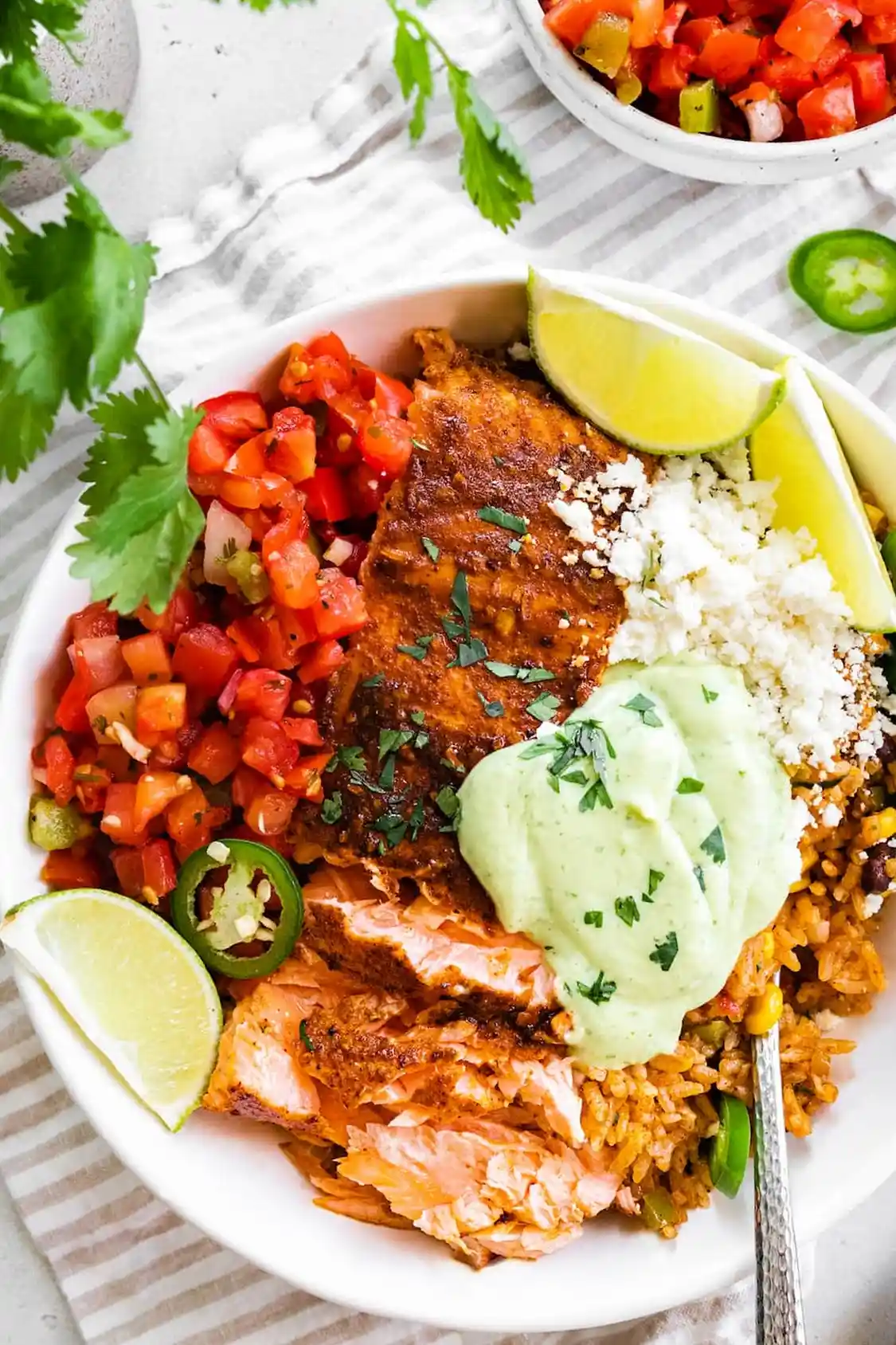
This nutrient-dense bowl combines taco-seasoned salmon with a flavorful Mexican-style rice base. It is an ideal option for healthy meal prep due to its balanced macros and ease of assembly.
List of ingredients
- 1 Tablespoon avocado or olive oil – for sautéing vegetables.
- 1 medium yellow onion, chopped – provides a savory base.
- 2 cloves garlic, minced – adds aromatic depth.
- 1 green bell pepper, finely chopped – adds crunch and color.
- 1 15 oz can black beans, drained and rinsed – for added plant protein.
- 1 ½ cups frozen sweet corn (or a 15 oz can, drained and rinsed) – adds a touch of sweetness.
- ¼ cup cilantro, chopped – for fresh herbal flavor.
- 2 Tablespoons Taco seasoning – to flavor the rice mixture.
- 1 15 oz can fire roasted tomatoes – adds smoky acidity.
- 3 cups cooked basmati or jasmine rice (from 1 cup uncooked rice) – the main grain base.
- 1 ½ lbs salmon – the primary protein source.
- 2 teaspoons avocado or olive oil – for coating the fish.
- 1 Tablespoon Taco seasoning – for seasoning the salmon.
- ½ lime – for fresh citrus juice.
- 1 large avocado – for the crema.
- ¼ cup Greek yogurt – creates a creamy texture.
- 3 Tablespoons fresh cilantro – for the crema.
- 3 Tablespoons fresh lime juice – adds tang to the sauce.
- ½ teaspoon salt – to balance flavors.
- 2 Tablespoons of water – to adjust crema consistency.
- Jalapeño slices – optional topping for heat.
- Pico de gallo or salsa – optional topping for freshness.
- Queso fresco or cotija cheese – optional topping for saltiness.
- Fresh cilantro – for garnish.
- Lime wedges – for serving.
step-by-step instructions
- Prepare the grain: Cook your basmati or jasmine rice according to the package directions if you have not already done so.
- Set up the oven: Preheat your oven to 400°F and line a baking sheet with parchment paper to prevent the fish from sticking.
- Mix spices: Combine all the taco seasoning ingredients in a small bowl and set them aside for later use.
- Sauté aromatics: Heat oil in a large skillet over medium heat. Add the chopped onion, minced garlic, and green bell pepper, sautéing for 5-6 minutes until the onion is translucent.
- Combine vegetables: Stir in the black beans, sweet corn, chopped cilantro, and taco seasoning. Cook for 2-3 minutes before adding the fire roasted tomatoes and cooked rice, stirring until fully integrated.
- Simmer and warm: Reduce the heat to low and cover the skillet to keep the rice mixture warm, stirring occasionally. Taste and add salt or pepper if needed.
- Season the fish: Place salmon fillets on the prepared baking sheet, skin side down. Drizzle with oil and taco seasoning, rubbing the spices in evenly, then finish with a drizzle of fresh lime juice.
- Bake: Bake for 15-18 minutes until the salmon is flaky and cooked through. The exact time will vary based on the thickness of the fillets.
- Blend the crema: Combine the avocado, Greek yogurt, cilantro, lime juice, salt, and water in a blender or food processor. Blend until the mixture is completely smooth.
- Assemble the bowls: Scoop approximately 1 cup of the rice mixture into each bowl. Top with the baked salmon, jalapeño slices, pico de gallo, queso fresco, fresh cilantro, and lime wedges, then drizzle with the avocado crema.
Pro Tips for Preparing Salmon
Choosing the Best Salmon Cut
Select center-cut fillets for the most consistent thickness across the board. This ensures that all pieces of fish cook at the same rate, preventing some from drying out while others remain undercooked. Skin-on fillets are recommended as the skin protects the flesh during high-heat baking.
How to Tell When Salmon is Perfectly Cooked
Use a fork to gently press into the thickest part of the fillet; the fish should flake easily along its natural lines. For absolute precision, use an instant-read thermometer to check for an internal temperature of 145°F. Avoid overcooking to maintain the moist, tender texture of the protein.
Proper Thawing Methods for Frozen Fillets
Thaw frozen salmon slowly in the refrigerator overnight to preserve the cellular structure of the fish. Avoid using the microwave defrost setting, as this can cook the outer edges of the fillet while the center remains frozen. If you are short on time, place the vacuum-sealed fish in a bowl of cold water, changing the water every 30 minutes.
Ensuring Even Seasoning Distribution
Pat the salmon fillets dry with paper towels before applying oil and taco seasoning. Removing excess surface moisture allows the oil to adhere better, which in turn helps the spices stick to the fish. Rub the seasoning firmly into the flesh to create a flavorful crust during the baking process.
Managing Skin Adhesion to the Pan
Always use parchment paper or a silicone baking mat to prevent the salmon skin from sticking to the metal sheet. If the fish still sticks, let it rest for 2-3 minutes after removing it from the oven. This allows the proteins to relax, making it easier to lift the fillet without tearing the flesh.
Customizing Your Rice Base
Substituting with Brown Rice
Brown rice is a great alternative for those seeking more fiber and a nuttier flavor profile. Keep in mind that brown rice requires a longer cooking time than jasmine or basmati. Ensure it is fully cooked and tender before stirring it into the sautéed vegetable mixture.
Preparing a Cauliflower Rice Version
For a lower-carbohydrate or grain-free option, use cauliflower rice. Sauté the cauliflower rice with the vegetables at the very end of the process to prevent it from becoming too mushy. This version absorbs the taco seasoning and tomato flavors efficiently.
Mixing in Quinoa for Extra Protein
Quinoa can be used alone or mixed 50/50 with white rice to increase the complete protein content of the bowl. Since quinoa cooks relatively quickly, it blends well with the other ingredients. Ensure you rinse the quinoa thoroughly before cooking to remove any bitter saponins.
Enhancing the Color with Natural Ingredients
If you want a more vibrant orange or red hue in your rice, add a teaspoon of tomato paste or a pinch of smoked paprika. These additions deepen the color and add a concentrated savory flavor. This helps the rice visually match the bold colors of the taco-seasoned salmon.
Adjusting the Moisture Level of the Rice
Depending on the brand of rice used, the final mixture may appear too dry or too wet. If it is too dry, stir in a tablespoon of vegetable broth or water during the final warming stage. If it is too wet, simmer the mixture uncovered for a few extra minutes to reduce the liquid.
Avocado Crema Variations and Substitutions
Using Sour Cream instead of Greek Yogurt
Sour cream can be used as a direct substitute for Greek yogurt to achieve a richer, more traditional taste. Sour cream typically has a higher fat content, which results in a thicker and creamier sauce. The tanginess is similar, making it a seamless swap for this recipe.
Adding Smoky Heat with Chipotle
To add a smoky depth to the crema, blend in one or two chipotle peppers in adobo sauce. This introduces a mild heat and a complex charred flavor that complements the fire-roasted tomatoes in the rice. Start with a small amount and adjust to your preferred spice level.
Making the Crema Dairy-Free
Substitute the Greek yogurt with an unsweetened cashew cream or a thick coconut yogurt. These plant-based alternatives provide the necessary creaminess and acidity. Ensure the substitute is completely unsweetened to avoid adding an unwanted sugary taste to the savory bowl.
Adjusting the Sauce Consistency
If the crema is too thick to drizzle, add water or lime juice one tablespoon at a time while blending. The goal is a smooth, pourable consistency that holds its shape on top of the salmon. Conversely, if it is too thin, add a small piece of extra avocado and blend again.
Using Fresh Herbs Beyond Cilantro
While cilantro is traditional, you can blend in fresh parsley or a small amount of basil for a different herbal profile. Parsley provides a cleaner, milder taste, while basil adds a subtle sweetness. These herbs still pair well with the citrus notes of the lime juice.
Complementary Topping Ideas
Adding Tropical Fruit for Sweetness
Diced fresh mango or pineapple provides a bright, sweet contrast to the savory and spicy elements of the bowl. These fruits pair exceptionally well with salmon and lime juice. You can toss the fruit with a pinch of chili powder for a sweet-and-spicy salsa effect.
Incorporating Fresh Leafy Greens
Adding a handful of shredded romaine lettuce, baby spinach, or kale increases the volume and nutritional value of the meal. Place the greens at the bottom of the bowl to create a fresh bed for the warm rice and salmon. This adds a crisp texture that balances the creaminess of the avocado.
Selecting the Right Mexican Cheese
Queso fresco is a mild, crumbly cheese that adds a subtle creaminess. For a saltier and firmer option, use Cotija cheese, which does not melt and provides a sharp contrast to the rich salmon. Both cheeses are excellent choices for adding authentic flavor.
Using Pickled Vegetables for Acidity
Pickled red onions or pickled jalapeños add a necessary vinegary punch that cuts through the richness of the salmon and avocado. The acidity helps brighten the overall flavor profile of the dish. You can easily make these at home with vinegar, salt, and a bit of sugar.
Adding Fresh Chili Peppers for Heat
For those who prefer more spice, add thinly sliced serrano peppers or diced habaneros to the top of the bowl. These provide a sharper heat than jalapeños. Always remove the seeds and membranes if you want a milder level of spiciness.
Meal Prep and Long-Term Storage
Organizing Components for Weekly Prep
To keep the ingredients fresh, store the Mexican rice and the cooked salmon in separate airtight containers. The toppings, such as pico de gallo and cheese, should also be kept in their own containers. This prevents the flavors from blending prematurely and keeps the textures intact.
Preventing Avocado Oxidation in the Fridge
Avocado crema can brown over time due to exposure to oxygen. To slow this process, add an extra squeeze of lime juice to the blend and press a piece of plastic wrap directly onto the surface of the sauce. This creates a seal that keeps the color bright green for longer.
Best Practices for Reheating Salmon
Reheat the salmon gently to avoid drying it out. Use a microwave on medium power for short bursts, or warm it in a covered pan over low heat with a teaspoon of water. Heating the fish too quickly can make the texture rubbery and tough.
Maintaining Rice Texture During Storage
Rice tends to dry out in the refrigerator. When reheating, add a splash of water or vegetable broth to the rice and cover it with a damp paper towel. This creates steam that re-hydrates the grains, restoring the original moist texture.
Recommended Containers for Freshness
Use glass airtight containers to store the components, as they keep food fresher longer than plastic. For the crema, a small glass jar with a tight-fitting lid is ideal. Label each container with the date to ensure you consume the salmon within 3-4 days.
Troubleshooting and Common Fixes
Fixing a Lumpy Avocado Crema
If your crema has small lumps, it is likely due to an underripe avocado or not blending long enough. Continue blending on high speed for another 30-60 seconds. If it remains lumpy, pass the sauce through a fine-mesh sieve to ensure a velvety smooth texture.
Preventing the Salmon from Drying Out
If you find your salmon is often dry, check your oven temperature with an external thermometer. Even a small increase in temperature can overcook the fish quickly. Reducing the bake time by 2 minutes and letting the fish carry-over cook while resting can also help.
Correcting Overly Salty Rice
If the taco seasoning or cheese makes the rice too salty, stir in a small amount of unsalted cooked rice or a splash of water. Adding a squeeze of fresh lime juice can also help mask excess salt by introducing acidity. Avoid adding more salt until the very end of the cooking process.
Dealing with Mushy Vegetables
To prevent the bell peppers and onions from becoming mushy, sauté them over medium-high heat rather than medium. This allows the water to evaporate more quickly, resulting in a better sear and a firmer texture. Do not overcook the vegetables before adding the other ingredients.
Adjusting for Different Fillet Thicknesses
If you are using fillets of varying sizes, remove the thinner pieces from the oven a few minutes before the thicker ones. Alternatively, you can gently press the thicker parts of the fillet to flatten them slightly for more even cooking. Always rely on the flakiness test rather than the timer.
Frequently Asked Questions
Can I use frozen salmon filets?
Yes, frozen salmon fillets work perfectly as long as they are completely thawed before cooking. Thawing them in the refrigerator ensures the best texture and prevents the fish from releasing too much water in the oven.
Should I leave the skin on the salmon?
Leaving the skin on is recommended because it acts as a barrier, preventing the fish from overcooking on the bottom. It also makes the fillet easier to handle and lift from the baking sheet after cooking.
What is a good substitute for fire roasted tomatoes?
Standard canned diced tomatoes can be used, but you can mimic the fire-roasted flavor by adding a pinch of smoked paprika or a drop of liquid smoke. Freshly diced tomatoes also work, though they provide more moisture and less concentrated flavor.
Can I make this recipe without an oven?
Yes, you can pan-sear the salmon over medium-high heat in a skillet. Cook for about 4-5 minutes per side until the salmon is cooked through and has a golden-brown crust.
How do I store the leftover crema?
Store the crema in an airtight glass jar in the refrigerator for up to 3 days. Ensure there is minimal air space at the top of the jar to prevent browning, and stir it well before using it again.
Print
Salmon Burrito Bowl
- Total Time: 40 minutes
- Yield: 6 servings 1x
- Diet: Gluten-Free
Description
This salmon burrito bowl has a base of Mexican rice and is topped with taco seasoned salmon, avocado, pico de gallo, queso fresco and drizzled with an avocado crema. Perfect for meal prep!
Ingredients
- 1 Tablespoon avocado or olive oil
- 1 medium yellow onion, chopped
- 2 cloves garlic, minced
- 1 green bell pepper, finely chopped
- 1 15 oz can black beans, drained and rinsed
- 1 ½ cups frozen sweet corn
- ¼ cup cilantro, chopped
- 2 Tablespoons Taco seasoning
- 1 15 oz can fire roasted tomatoes
- 3 cups cooked basmati or jasmine rice
- 1 ½ lbs salmon
- 2 teaspoons avocado or olive oil
- 1 Tablespoon Taco seasoning
- ½ lime
- 1 large avocado
- ¼ cup Greek yogurt
- 3 Tablespoons fresh cilantro
- 3 Tablespoons fresh lime juice
- ½ teaspoon salt
- 2 Tablespoons of water
- Jalapeno slices
- Pico de gallo or salsa
- Queso fresco or cotija cheese
- Fresh cilantro
- Lime wedges
Instructions
- Step: If you haven’t already, cook your rice according to the package.
- Step: Preheat oven to 400°F and line a baking sheet with parchment paper.
- Step: Make taco seasoning by combining all the spices in a small bowl. Set aside.
- Step: Make rice by adding oil to a large skillet and heating on medium heat. Add onion, garlic and green bell pepper and saute for about 5-6 minutes until onion is translucent and fragrant.
- Step: Add beans, corn, cilantro and taco seasoning and stir to combine. Cook for an additional 2-3 minutes then add fire roasted tomatoes and cooked rice and stir until fully combined. Reduce heat to low and cover to keep warm, stirring occasionally. Taste and season with additional salt + pepper if desired.
- Step: While rice is cooking, place salmon on prepared baking sheet, skin side down and drizzle with oil and taco seasoning. Rub seasoning into the salmon to coat evenly then drizzle with fresh lime juice.
- Step: Bake for 15-18 minutes until salmon is flaky and cooked throughout. Time will depend on the thickness of your salmon.
- Step: While salmon is cooking, make avocado crema by combining avocado, yogurt, cilantro, lime juice, salt and water in a blender or food processor and blend until smooth and combined. Set aside.
- Step: To make the bowls, add about 1 cup rice mixture to bowl and top with salmon, jalapeno slices, pico de gallo, queso fresco, fresh cilantro, lime wedges and a drizzle of avocado crema. Serve immediately.
Notes
Perfect for meal prep! Store components in separate airtight containers in the refrigerator for 3-4 days.
- Prep Time: 15 minutes
- Cook Time: 25 minutes
- Category: Lunch/Dinner
- Method: Baking
- Cuisine: Mexican
Nutrition
- Serving Size: 1 bowl
- Calories: 662 kcal
- Sugar: 8 g
- Sodium: 697 mg
- Fat: 13 g
- Saturated Fat: 2 g
- Unsaturated Fat: 11 g
- Trans Fat: 0 g
- Carbohydrates: 93 g
- Fiber: 8 g
- Protein: 35 g
- Cholesterol: 60 mg