This quick chopped salmon salad combines fresh vegetables and flaky fish with a zesty lemon dressing. It is an ideal option for a fast dinner or a healthy lunch meal prep for the week.
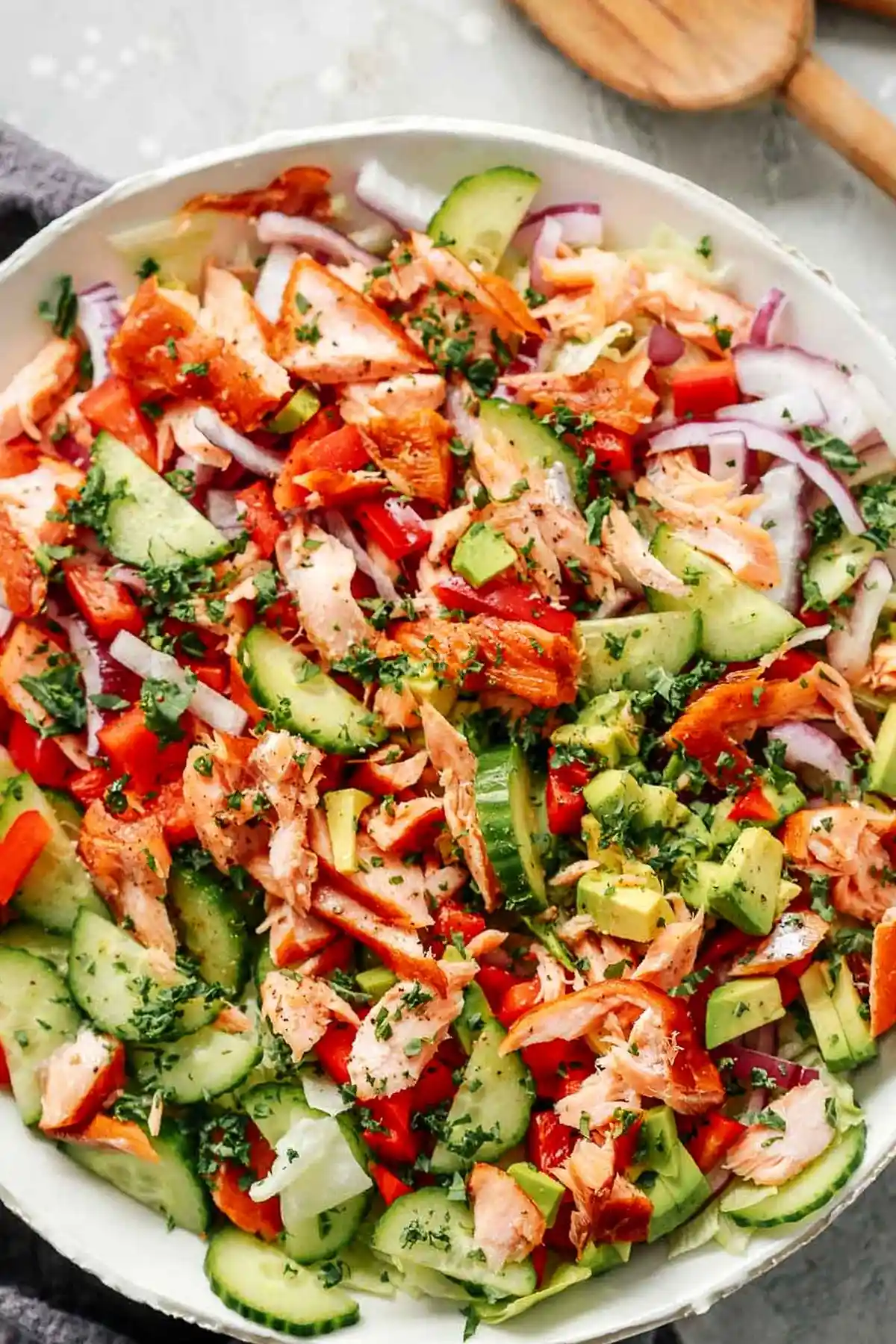
List of ingredients
- 8 oz. salmon, cooked and flaked – provides a rich, protein-packed base.
- 3 cups cucumber, chopped – adds a refreshing and cool crunch.
- 3 cups red bell peppers, chopped – brings a sweet flavor and vibrant color.
- ¾ cup red onions, chopped – introduces a sharp, savory contrast.
- 1 medium avocado, chopped – adds creaminess and essential healthy fats.
- 4 cups lettuce, chopped – serves as the crisp, fresh foundation.
- 1 tbsp fresh parsley, chopped – provides a bright, herbal finish.
- 1.5 tablespoons freshly squeezed lemon juice – gives the dressing its bright acidity.
- 3 tbsp extra virgin olive oil – creates a smooth and heart-healthy emulsion.
- Salt and fresh ground black pepper to taste – essential for enhancing all natural flavors.
step-by-step instructions
- Combine Base Ingredients: In a large salad bowl, add the cooked salmon, chopped cucumber, red bell peppers, red onions, avocado, and lettuce. Toss all the components together until they are evenly combined.
- Prepare the Dressing Base: Pour the freshly squeezed lemon juice and olive oil into a mason jar. Add salt and pepper to the mixture.
- Emulsify the Vinaigrette: Whisk the ingredients vigorously. Continue to whisk while slowly streaming in the olive oil to ensure the dressing is smooth and well-integrated.
- Final Assembly: Taste the dressing to check the seasoning levels. Pour the vinaigrette over the salad, toss gently to coat, and serve.
Salmon Preparation and Seasoning
Baking Salmon for the Perfect Texture
Preheat your oven to 400°F and line a baking sheet with parchment paper or a silicone mat. Place the salmon skin-side down and season with salt and pepper. Bake for 10 to 12 minutes until the fish flakes easily with a fork, then let it cool before adding it to the salad.
Utilizing Canned Salmon for Convenience
If you prefer not to cook fresh fillets, boneless canned salmon is a practical alternative. Drain the liquid thoroughly and flake the fish with a fork. This method significantly reduces prep time while maintaining the nutritional value of the dish.
Applying Cajun Seasoning for a Spicy Kick
For a bolder flavor, rub the salmon with Cajun seasoning before baking. This adds a layer of heat and smokiness that complements the fresh cucumber and avocado. It transforms the salad into a more savory meal.
Using Italian Seasoning for Mediterranean Flavor
Italian seasoning, containing oregano and basil, works well for a lighter, herbal profile. This approach pairs perfectly with the lemon dressing and red onions. It gives the dish a classic Mediterranean feel.
Incorporating Herb de Provence for Floral Notes
Herb de Provence adds a sophisticated, floral dimension to the salmon. This blend typically includes rosemary and thyme, which pair well with the sweetness of red bell peppers. Use it sparingly to avoid overpowering the fresh vegetables.
Adding Old Bay Seasoning for Coastal Taste
Old Bay is a classic seafood seasoning that brings a salty, celery-forward flavor to the fish. It creates a great contrast with the creaminess of the avocado. This is a great choice for those who enjoy a traditional seafood salad.
Using Garlic Butter for Added Richness
Dabbing the salmon with garlic butter before baking adds a luxurious richness to the protein. The savory garlic notes enhance the overall depth of the salad. Ensure the butter is melted and spread evenly across the fillet.
Applying Paprika and Garlic Powder for Color
A mixture of smoked paprika and garlic powder creates a beautiful golden-red crust on the salmon. This combination provides a mild sweetness and an earthy aroma. It is a family-friendly option that adds visual appeal to the bowl.
Vegetable Customizations and Swaps
Replacing Romaine with Baby Spinach
If you prefer a denser leaf, baby spinach is a nutrient-dense substitute for standard lettuce. It offers a milder taste and more iron. Ensure the leaves are washed and dried thoroughly to prevent the dressing from becoming watered down.
Adding Sliced Carrots for Extra Crunch
Shredded or thinly sliced carrots add an extra layer of sweetness and a satisfying snap. They also introduce a bright orange hue to the color palette. Carrots pair exceptionally well with the lemon-olive oil dressing.
Incorporating Kalamata Olives for Brininess
Pitted and sliced Kalamata olives introduce a salty, fermented flavor to the mix. This adds a Mediterranean depth that balances the richness of the salmon. Use them in moderation to avoid over-salting the entire salad.
Using Cherry Tomatoes for Juiciness
Halving cherry or grape tomatoes adds a burst of juiciness to every bite. The acidity of the tomatoes complements the lemon juice in the vinaigrette. They add a fresh, plump texture that contrasts with the chopped cucumbers.
Substituting Red Onion with Shallots
If red onions are too pungent, shallots provide a more delicate, sweet onion flavor. Finely dice them to ensure they distribute evenly throughout the salad. This is a better option for those with sensitive palates.
Adding Radishes for a Peppery Bite
Thinly sliced radishes introduce a crisp texture and a slight peppery heat. This helps cut through the creaminess of the avocado. They also add a pop of white and pink to the visual presentation.
Dressing Variations and Enhancements
Swapping Lemon Juice for Red Wine Vinegar
Red wine vinegar offers a sharper, more fermented acidity than fresh lemon juice. This change gives the salad a traditional vinaigrette taste. It is a great alternative if lemons are not available.
Adding Dijon Mustard for Better Emulsion
Adding a teaspoon of Dijon mustard to the mason jar helps the oil and lemon juice bind more effectively. It also introduces a tangy, pungent depth to the dressing. This results in a thicker consistency that clings better to the leaves.
Using Honey to Balance Acidity
A small drizzle of honey or maple syrup can balance the sharpness of the lemon and onion. This creates a slightly sweet and sour profile. It is particularly effective when using a higher-acidity vinegar substitute.
Incorporating Fresh Dill for Classic Pairing
Fresh dill is a traditional companion for salmon and lemon. Finely chop a tablespoon of dill and whisk it into the dressing or toss it with the vegetables. It adds a grassy, citrusy aroma that elevates the fish.
Adding Feta Cheese for Creamy Saltiness
Crumbling microbial-rennet feta cheese over the top adds a salty, tangy element. This complements the avocado and cucumber perfectly. It turns the salad into a more substantial meal by adding more protein and fat.
Using Avocado Oil for a Neutral Taste
While extra virgin olive oil is standard, avocado oil provides a more neutral flavor profile. This allows the taste of the fresh salmon and lemon to stand out more prominently. It also has a high smoke point if you use it for searing the fish.
Serving and Meal Prep Ideas
Adding Quinoa for a Hearty Main Dish
To make this salad more filling, mix in a cup of cooked and cooled quinoa. The grain absorbs the lemon dressing and adds a nutty flavor. This increases the fiber and protein content for a complete dinner.
Incorporating Cauliflower Rice for Low Carb
For a low-carbohydrate version, add sautéed or raw cauliflower rice to the mixture. This adds bulk to the salad without adding significant calories. It blends well with the chopped vegetables and salmon.
Turning the Salad into a Sandwich Filling
This chopped mixture works excellently as a filling for a sandwich or a wrap. Use a toasted baguette or a whole-grain wrap for the best results. The chopped nature of the ingredients ensures the filling stays inside the bread.
Serving in Lettuce Wraps
Use large Romaine or butter lettuce leaves as natural cups for the salad. This eliminates the need for bread and keeps the meal light. It is an excellent option for those avoiding gluten.
Pairing with Toasted French Bread
Serving the salad with a side of toasted French bread allows you to scoop up any remaining dressing. Brush the bread with a bit of olive oil and grill it until golden. This adds a satisfying crunch to the meal.
Using Crackers as a Side Accompaniment
Whole-grain or seed crackers provide a salty contrast to the fresh vegetables. They are a convenient side for a light lunch. This pairing makes the meal feel more like a platter or appetizer.
Storage and Preservation Guide
Preventing Avocado Oxidation
Avocados turn brown quickly due to oxidation when exposed to air. To prevent this, toss the avocado pieces in a bit of the lemon dressing before adding them to the salad. Alternatively, add the avocado only on the day you plan to eat the meal.
Storing Dressing and Salad Separately
To keep the lettuce and cucumbers crisp, store the vinaigrette in a separate mason jar. Pour the dressing over the salad immediately before serving. This prevents the vegetables from becoming soggy and limp.
Using Airtight Glass Containers
Store the chopped vegetables and salmon in airtight glass containers to preserve freshness. Glass is preferable to plastic as it does not absorb odors from the salmon. This ensures the salad tastes clean and fresh.
Refrigeration Timeframes for Fresh Salmon
When using fresh cooked salmon, the salad will stay fresh in the refrigerator for 3 to 4 days. Ensure the container is sealed tightly. Keep the salad in the coldest part of the fridge, away from the door.
Storage Lifespan for Canned Salmon
Salads made with canned salmon may last an additional day or two compared to fresh fish. However, the quality of the greens will still decline after 4 days. Always prioritize eating the salad within a week.
Freezing Cooked Salmon Fillets
If you have extra cooked salmon, freeze it in a freezer-safe bag once it reaches room temperature. It can be stored for up to 4 months. Thaw it in the refrigerator overnight before flaking it into a new salad.
Troubleshooting and FAQ
Can I use leftover cooked salmon?
Yes, leftover cooked salmon is ideal for this recipe. Simply flake the chilled fish with a fork and add it to the vegetable mix. This makes the salad an excellent way to reduce food waste.
Do you eat this salad cold?
Yes, this salmon salad is typically enjoyed cold for maximum refreshment. Chilling the vegetables enhances the crispness and makes the lemon dressing feel more bright. Some may prefer it at room temperature, but cold is recommended.
Should I cover the salmon when baking?
Covering the salmon with foil is optional and depends on your preference. Covering it keeps the fish very moist, but removing the foil for the last few minutes allows the surface to brown. Most prefer uncovered baking for a better texture.
Can I use canned salmon in this recipe?
Yes, canned salmon is a convenient and delicious alternative. Ensure you use a boneless variety and drain the liquid well before flaking. It provides a similar flavor profile and the same nutritional benefits.
How long will the salmon salad last in the fridge?
The salad typically lasts 3 to 4 days when stored in an airtight container. The dressing should be kept separate to maximize this duration. Add the avocado on the day of consumption to keep it green.
What should I do if the dressing separates?
It is normal for homemade vinaigrettes to separate over time. Simply shake the mason jar vigorously or whisk the mixture again before pouring. This reintegrates the oil and lemon juice into a smooth emulsion.
How do I get the perfect salmon flake?
Use a sturdy fork to gently pull the cooked salmon apart along its natural muscle lines. Avoid over-mixing or mashing the fish into a paste. You want distinct, flaky chunks of salmon for the best texture.
Print
Refreshing Chopped Salmon Salad with Lemon Vinaigrette
- Total Time: 10 minutes
- Yield: 4 servings 1x
- Diet: Pescatarian
Description
This chopped salmon salad is ready in 10 minutes with crisp vegetables, flaky salmon, and a bright lemon dressing. It’s wholesome and delicious! Make this for dinner tonight or as a lunch meal prep for the week!
Ingredients
- 8 oz. salmon, cooked and flaked
- 3 cups cucumber, chopped
- 3 cups red bell peppers, chopped
- ¾ cup red onions, chopped
- 1 medium avocado, chopped
- 4 cups lettuce, chopped
- 1 tbsp fresh parsley, chopped
- 1.5 tablespoons freshly squeezed lemon juice
- 3 tbsp extra virgin olive oil
- Salt and fresh ground black pepper to taste
Instructions
- Step: In a large salad bowl, add the salmon, cucumber, red bell peppers, red onions, avocado and lettuce. Mix everything together until combined.
- Step: In a mason jar, pour the freshly squeezed lemon juice and olive oil. Add salt and pepper and whisk everything. Continue to whisk while streaming in the olive oil.
- Step: Taste the dressing to check the seasoning and pour over the salad. Enjoy!
Notes
To bake the salmon: preheat the oven to 400°F. Line a baking sheet with parchment paper or a silicone mat. Place salmon on the baking sheet, skin-side down, season with salt and pepper, and bake for 10 to 12 minutes. Let it cool and flake. Canned boneless salmon can be used as an alternative. Store leftover salad in an airtight container for up to 4 days, but keep the dressing on the side to avoid sogginess.
- Prep Time: 10 minutes
- Cook Time: 0 minutes
- Category: Salad
- Method: Assembly
- Cuisine: American
Nutrition
- Serving Size: 1 serving
- Calories: 296 kcal
- Sugar: 7 g
- Sodium: 992 mg
- Fat: 21 g
- Saturated Fat: 4 g
- Unsaturated Fat: 17 g
- Trans Fat: 0 g
- Carbohydrates: 15 g
- Fiber: 6 g
- Protein: 15 g
- Cholesterol: 28 mg