This efficient lemon chicken dish provides juicy results with a bright, buttery sauce in under 20 minutes. It is an ideal weeknight meal that utilizes common pantry staples to create a professional presentation.
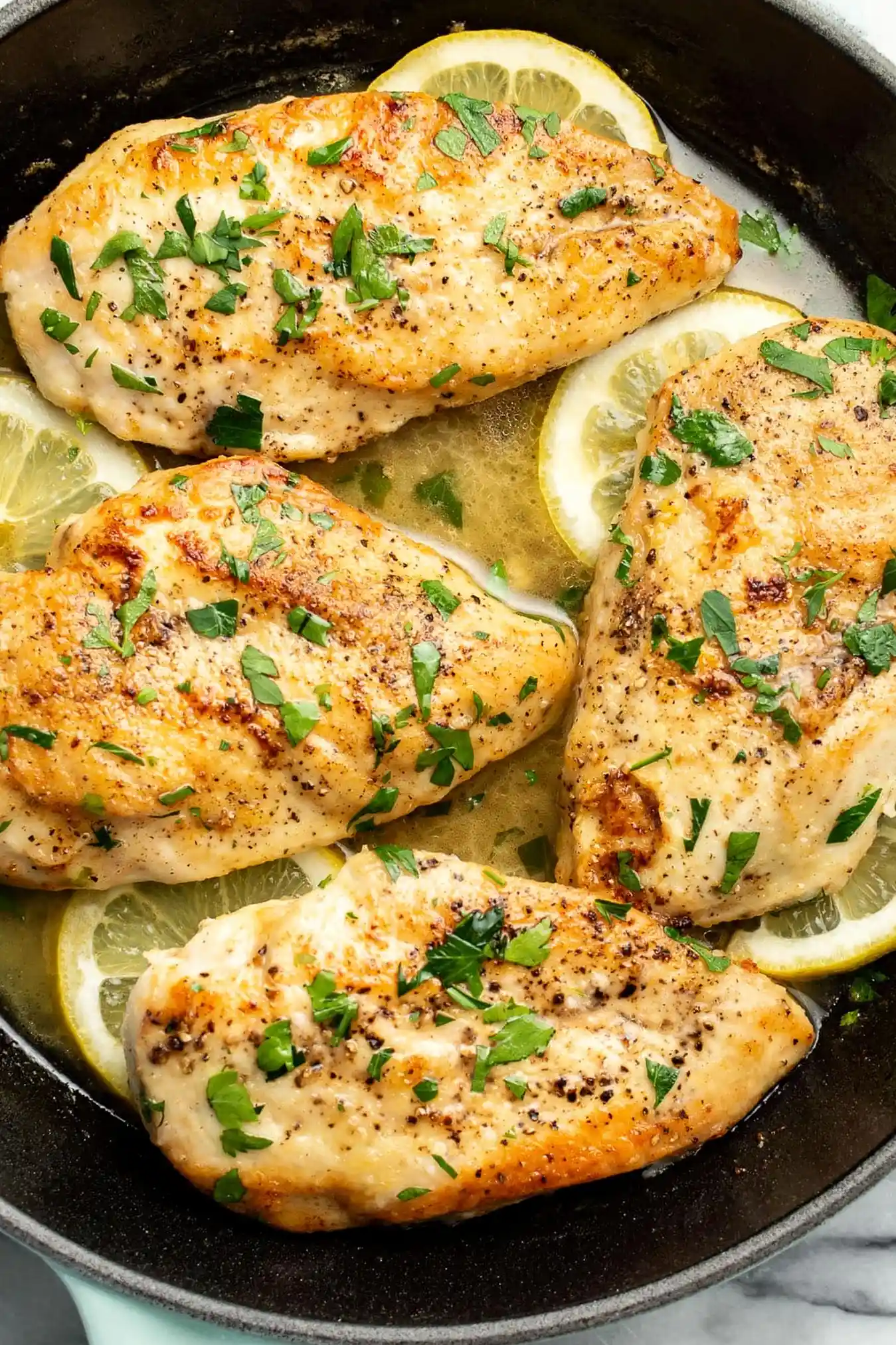
List of ingredients
- 2 large boneless skinless chicken breasts – cut into thinner cutlets for faster cooking.
- Salt & pepper (to taste) – used for primary seasoning of the meat.
- 1/4 teaspoon garlic powder – adds a concentrated savory depth to the crust.
- Flour (for dredging) – creates a golden exterior and helps thicken the sauce.
- 1 tablespoon olive oil – prevents butter from burning at high heat.
- 3 tablespoons butter (divided) – used for frying and creating the final emulsion.
- 1/2 cup chicken broth – provides the savory liquid base for the pan sauce.
- 2 tablespoons lemon juice + zest of 1/2 lemon – adds essential acidity and aromatic brightness.
- Chopped fresh parsley (optional, to taste) – provides a fresh finish and color contrast.
step-by-step instructions
- Prepare the chicken: Cut your chicken breasts in half lengthwise to create thinner cutlets. Sprinkle them evenly with salt, pepper, and the garlic powder, then dredge each piece in flour until they are fully coated.
- Sear the meat: Add the olive oil and 1 tablespoon of the butter to a skillet over medium-high heat. Once the pan is hot, add the chicken cutlets and cook for 4-5 minutes per side or until they are golden brown. Remove the chicken from the pan and set it aside on a plate.
- Deglaze the pan: Pour the chicken broth, lemon juice, lemon zest, and the remaining butter into the hot skillet. Let the mixture bubble for a couple of minutes to incorporate the browned bits from the bottom of the pan.
- Finish the dish: Return the chicken to the pan and cook for another few minutes until the meat is cooked through and the sauce has reduced to a glaze. Season with additional salt and pepper if needed, and sprinkle with fresh parsley before serving.
Cooking Mastery Tips
Ensuring Even Cooking
Cutting chicken breasts in half lengthwise, also known as butterflying, is the most effective way to ensure uniform cooking. This method removes the thickest part of the breast, allowing the heat to penetrate the center quickly without overcooking the outer edges. This results in a shorter cooking time and more consistent texture across all pieces.
Achieving a Golden Crust
To get a professional golden-brown crust, ensure the chicken is patted dry with paper towels before seasoning and dredging. Excess moisture on the surface of the meat creates steam, which prevents the flour from searing and can lead to a gummy texture. Press the flour firmly into the meat and shake off any excess to avoid clumps in the pan.
Managing Pan Temperature
Using a combination of olive oil and butter is a strategic choice for temperature control. Olive oil has a higher smoke point than butter, which prevents the butter solids from burning and turning bitter during the initial high-heat searing phase. Ensure the oil is shimmering before adding the chicken to prevent the meat from sticking to the skillet.
Using a Meat Thermometer
The only reliable way to ensure chicken is safe and juicy is by using an instant-read thermometer. Aim for an internal temperature of 165°F (74°C) at the thickest part of the cutlet. Removing the chicken just as it hits this mark prevents the fibers from tightening and squeezing out the juices, which leads to dry meat.
Ingredient Alternatives
Alternative Flour Options
For a gluten-free version, replace all-purpose flour with a 1:1 gluten-free flour blend or cornstarch. Cornstarch actually creates a slightly crispier exterior and produces a thicker, glossier sauce due to its higher thickening power. If using almond flour, be mindful that it browns more quickly and may require a slightly lower heat setting.
Using Different Broths
While chicken broth is standard, vegetable broth can be used for a lighter flavor profile. If you are using a low-sodium broth, you may need to increase the amount of salt added to the final sauce to maintain the flavor balance. For a deeper taste, a concentrated chicken stock can be used, but it should be diluted with a small amount of water to avoid over-salting.
Replacing Fresh Lemon
If fresh lemons are unavailable, bottled lemon juice is a functional substitute, though you will miss the aromatic oils found in the zest. You can replace the zest with a tiny pinch of lemon-flavored dried peel or a drop of lemon extract. Avoid using white vinegar as a direct replacement, as it lacks the fruitiness of lemon and can be overly harsh.
Butter Alternatives
Ghee is an excellent substitute for butter because it has a much higher smoke point, making it safer for high-heat searing. For a dairy-free option, use a plant-based butter or a neutral oil like avocado oil, though the sauce will be less creamy. To regain the richness in a dairy-free sauce, you can whisk in a teaspoon of coconut cream at the very end.
Pairing Suggestions
Pairing with Grains
The buttery lemon sauce pairs exceptionally well with grains that can absorb the liquid. Jasmine or basmati rice provides a neutral base that lets the acidity of the lemon shine. Alternatively, orzo pasta or buttered noodles are classic choices that complement the sauce’s consistency and richness.
Vegetable Side Dish Ideas
To balance the richness of the butter, pair this chicken with steamed or roasted green vegetables. Roasted asparagus, sautéed spinach, or steamed broccolini offer a slight bitterness that cuts through the fat. For a heartier side, roasted carrots or parsnips provide a natural sweetness that contrasts the lemon juice.
Salad Pairings
A fresh, crisp salad is a great way to lighten the meal. Arugula with a simple vinaigrette is ideal because the peppery notes of the greens align well with the citrus flavors. A classic Caesar salad also works well, though you may want to go light on the dressing to avoid overwhelming the palate with too much creaminess.
Preservation and Reheating
Refrigeration Guidelines
Store leftover chicken and sauce in an airtight glass or plastic container in the refrigerator. The chicken will remain safe to eat for 3 to 4 days. Keep the chicken submerged in the sauce during storage to prevent the meat from drying out during the refrigeration process.
Best Reheating Methods
The best way to reheat this dish is in a saucepan over low to medium heat. Add a tablespoon of water or chicken broth to the pan to loosen the sauce, which may have thickened or separated in the fridge. Gently simmer until the chicken is warmed through, avoiding high heat which can make the meat rubbery.
Freezing Advice
Freezing this specific recipe is not recommended because the flour-based crust loses its integrity and can become mushy upon thawing. Additionally, the butter emulsion in the sauce often breaks during the freeze-thaw cycle, resulting in an oily texture. For the best quality, consume this dish fresh or refrigerated.
Problem Solving
Sauce Too Thin
If the sauce is too watery after returning the chicken to the pan, increase the heat slightly and simmer for another 2-3 minutes without a lid. This allows the water to evaporate, concentrating the flavors and thickening the sauce. If it remains too thin, you can whisk in a tiny pinch of cornstarch mixed with water (a slurry) and simmer for one more minute.
Chicken Too Dry
Dry chicken is usually the result of overcooking or using breasts that were too thick. If the meat feels dry, ensure you are using the lengthwise cutlet method and checking the temperature with a thermometer. Adding an extra tablespoon of butter or broth to the final sauce can also help mask a slightly overcooked texture by adding external moisture.
Burnt Flour
If you notice the flour in the pan is turning dark brown or black, the pan temperature is too high. Immediately add the chicken broth to deglaze the pan; the liquid will lift the burnt particles and lower the temperature. In the future, ensure you add the olive oil first to buffer the heat before adding the butter and floured chicken.
Frequently Asked Questions
Can I use chicken thighs instead of breasts?
Yes, you can use boneless, skinless chicken thighs. Thighs are more forgiving and stay juicy longer, but they may require an extra 2-3 minutes of cooking time per side depending on their thickness. The lemon butter sauce works equally well with the richer flavor of dark meat.
How do I prevent the sauce from breaking?
A sauce breaks when the fat separates from the liquid. To prevent this, avoid boiling the sauce violently once the butter has been added. Keep the heat at a steady simmer and stir gently to maintain the emulsion of the butter and lemon juice.
Can I make this dish dairy-free?
Yes, you can replace the butter with a high-quality vegan butter or a mixture of olive oil and a splash of coconut milk. While the flavor will be slightly different, the dredging and searing process remains the same, and the acidity of the lemon will still provide a bright finish.
What is the best way to zest a lemon?
A Microplane or a fine grater is the best tool for zesting. Only grate the bright yellow outer layer of the peel, as the white part underneath (the pith) is very bitter and can ruin the flavor of the sauce. Stop grating as soon as the white pith becomes visible.
Print
Quick Pan-Seared Lemon Butter Chicken
- Total Time: 20 minutes
- Yield: 4 servings 1x
- Diet: General
Description
This 20-minute lemon chicken recipe has juicy chicken with a simple buttery lemon sauce. It’s the ideal dinner for when you don’t want to put in a lot of effort!
Ingredients
- 2 large boneless skinless chicken breasts
- Salt & pepper (to taste)
- 1/4 teaspoon garlic powder
- Flour (for dredging)
- 1 tablespoon olive oil
- 3 tablespoons butter (divided)
- 1/2 cup chicken broth
- 2 tablespoons lemon juice + zest of 1/2 lemon
- Chopped fresh parsley (optional, to taste)
Instructions
- Step: Cut your chicken breasts in half lengthwise so you have thinner cutlets. Sprinkle them with salt & pepper and the garlic powder. Dredge them in flour so they’re nicely coated.
- Step: Add the olive oil and 1 tablespoon of the butter to a skillet over medium-high heat. Once the pan is hot, add the chicken cutlets and cook them for 4-5 minutes/side or until they’re nice and golden. Take them out of the pan and set aside.
- Step: Add the chicken broth, lemon juice + zest, and remaining butter to the pan and let it bubble for a couple of minutes.
- Step: Add the chicken back in and cook for another few minutes until it’s cooked through and the sauce is further reduced. Season with salt & pepper as needed and sprinkle the fresh parsley over top if using.
Notes
If you buy particularly small chicken breasts, you can skip the step of cutting them in half lengthwise – just ensure they’re cooked through.
- Prep Time: 5 minutes
- Cook Time: 15 minutes
- Category: Main Course
- Method: Pan Frying
- Cuisine: American
Nutrition
- Serving Size: 1 serving
- Calories: 188 kcal
- Sugar: 0.3 g
- Sodium: 242 mg
- Fat: 14 g
- Saturated Fat: 6 g
- Unsaturated Fat: 6 g
- Trans Fat: 0.4 g
- Carbohydrates: 4 g
- Fiber: 0.1 g
- Protein: 13 g
- Cholesterol: 59 mg