This roasted chicken and vegetable meal is a practical solution for healthy weeknight dinners. It minimizes cleanup by utilizing a single baking sheet for both the protein and the produce.
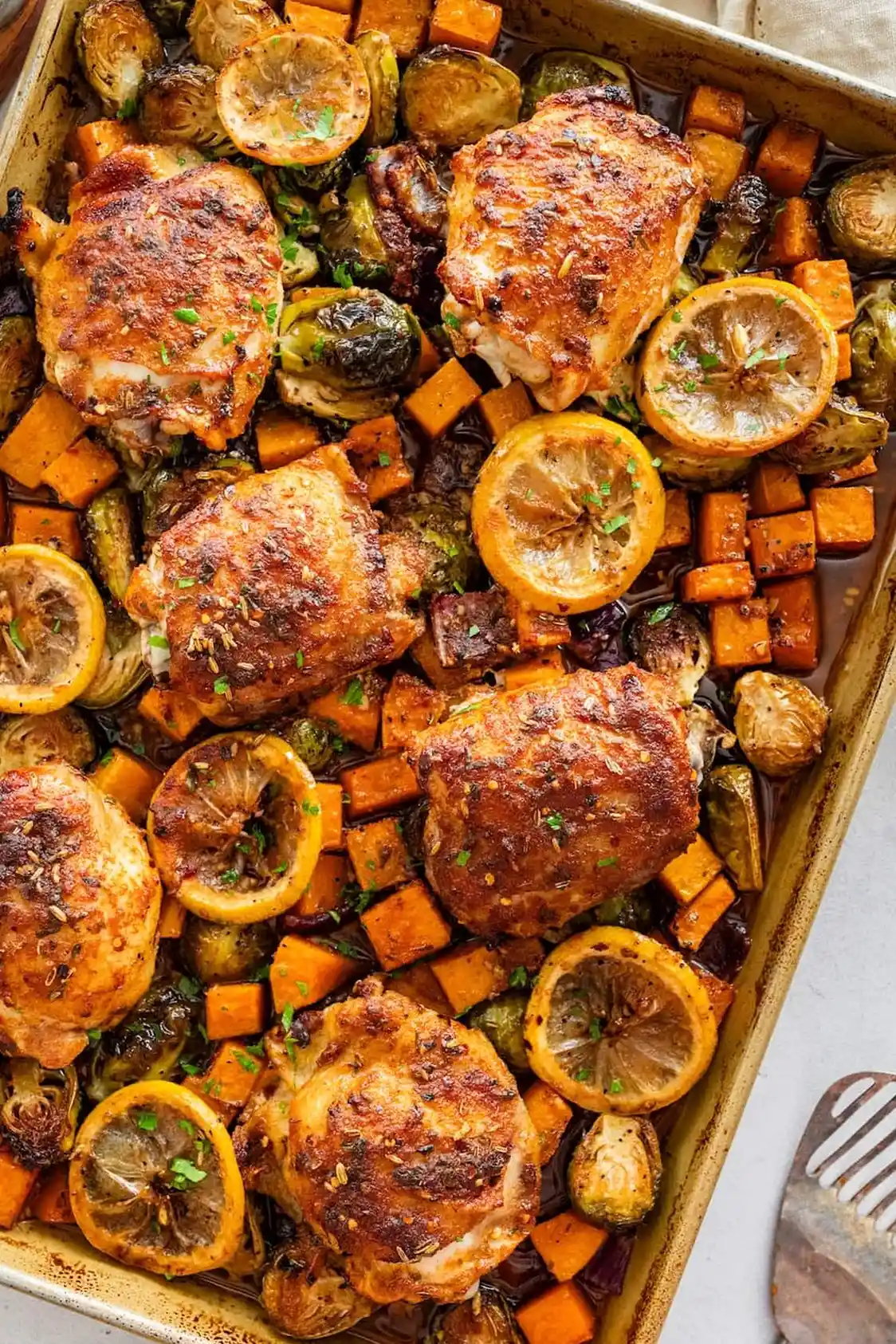
List of ingredients
- 1 lb Brussels sprouts – trimmed and halved for even roasting.
- 1 lb butternut squash – cut into bite-sized pieces to match cooking time.
- ½ red or yellow onion – chopped into medium chunks.
- 1 lemon – thinly sliced to add brightness and acidity.
- 3 large garlic cloves – minced for aromatic flavor.
- 4 Tablespoons olive oil – divided between the vegetables and the chicken.
- 2 Tablespoons balsamic vinegar – used to caramelize the vegetables.
- 1 ½ teaspoon sea salt – divided between the two marinades.
- 1 ½ teaspoon ground pepper – divided between the two marinades.
- pinch of nutmeg – adds a subtle warmth to the squash.
- 4-6 chicken thighs – bone-in or boneless based on preference.
- 1 Tablespoon apple cider vinegar – helps tenderize the meat.
- 1 teaspoon fennel seeds – provides a distinct savory note.
- 1 teaspoon crushed red pepper – adds a mild spicy kick.
- 1 teaspoon ground paprika – enhances the color and smokiness.
- 1 teaspoon garlic powder – provides deep savory flavor.
- 4 fresh sage leaves – chopped for an earthy aroma.
step-by-step instructions
- Prepare the oven: Preheat your oven to 450°F to ensure a hot surface for roasting.
- Season the vegetables: In a large bowl, combine the Brussels sprouts, squash, onion, lemon slices, and minced garlic. Add 2 Tablespoons of olive oil, balsamic vinegar, 1 teaspoon salt, 1 teaspoon pepper, and nutmeg, then toss until evenly coated.
- Arrange the pan: Spread the seasoned vegetable mixture in a single layer onto a large baking sheet.
- Create the chicken marinade: In a small bowl, whisk together the remaining 2 Tablespoons of olive oil, apple cider vinegar, fennel seeds, red pepper, paprika, garlic powder, ½ teaspoon sea salt, ½ teaspoon pepper, and chopped sage.
- Coat the chicken: Thoroughly coat the chicken thighs with the marinade and place them directly on top of the vegetable mixture.
- Roast: Bake for 30-40 minutes or until the chicken is cooked through and the vegetables are tender and browned.
- Final touch: Portion the meal onto plates and squeeze any remaining juice from the roasted lemon slices over the chicken and vegetables before serving.
Vegetable Substitution Guide
Root Vegetable Alternatives
If you do not have butternut squash, you can use carrots, parsnips, or sweet potatoes. Ensure these are cut into 1-inch chunks so they roast at the same rate as the Brussels sprouts. These vegetables provide a similar natural sweetness and hearty texture.
Cruciferous Vegetable Options
Cauliflower florets or chopped broccoli can easily replace Brussels sprouts in this recipe. If using broccoli, add it 10 minutes after the start of roasting to prevent the florets from charring too quickly. Cauliflower can be added at the beginning and will roast beautifully.
Quick-Cooking Veggie Tips
Bell peppers, zucchini, or asparagus are great additions but cook much faster than squash. Cut these into larger pieces or add them to the pan during the last 15-20 minutes of cooking. This prevents them from becoming mushy or burning while the chicken finishes.
Chicken Selection and Preparation
Bone-in vs Boneless Thighs
Bone-in chicken thighs generally stay juicier and have more flavor due to the bone and skin. They may require the full 40 minutes of cook time. Boneless thighs cook faster and should be checked for doneness around the 30-minute mark.
Using Chicken Breast
If you prefer chicken breast, cut them into large, equal-sized chunks to prevent them from drying out. Since breast meat cooks faster than thighs, reduce the total roasting time or add the chicken to the pan later. Use a meat thermometer to ensure they reach 165°F without overcooking.
Preparing Skin-on Chicken
For the crispiest skin, pat the chicken thighs dry with a paper towel before applying the marinade. Ensure the skin side is facing up and not covered by vegetables. The high oven temperature will render the fat and create a golden-brown crust.
Technical Roasting Tips
Avoiding Pan Crowding
Use the largest baking sheet available to ensure the ingredients are spread out. If the pan is too crowded, the vegetables will steam rather than roast, resulting in a softer texture. If you are doubling the recipe, use two separate baking sheets.
Ensuring Uniform Vegetable Cuts
Consistency in size is key for even cooking. Aim for 1-inch cubes for the squash and consistent halves for the Brussels sprouts. This ensures that nothing is left raw while other pieces become overdone.
Monitoring Meat Temperature
The most accurate way to determine if the chicken is done is by using an instant-read meat thermometer. Insert it into the thickest part of the thigh, avoiding the bone. Remove the chicken when it reaches an internal temperature of 165°F.
Flavor and Seasoning Variations
Herbal Tweaks
While sage provides a classic earthy flavor, you can substitute it with fresh rosemary or thyme. These herbs pair exceptionally well with root vegetables and chicken. Use about 1 teaspoon of chopped fresh herbs to maintain the flavor balance.
Adjusting the Heat Level
If you prefer a milder dish, reduce the crushed red pepper to a pinch or omit it entirely. For those who enjoy more spice, increase the red pepper or add a pinch of cayenne pepper to the chicken marinade. This adds a sharp heat that cuts through the richness of the thighs.
Sweet and Tangy Adjustments
For a sweeter profile, add one tablespoon of maple syrup or honey to the vegetable mixture. This enhances the caramelization of the butternut squash and Brussels sprouts. Balance this sweetness by adding an extra squeeze of fresh lemon juice at the end.
Serving Suggestions
Pairing with Whole Grains
This meal is complete on its own, but serving it over quinoa or brown rice can make it more filling. The grains soak up the juices from the roasted chicken and balsamic glaze. Farro or wild rice are also excellent options for added texture.
Fresh Salad Accompaniments
Contrast the roasted flavors with a crisp side salad. A simple spinach salad with a lemon-tahini dressing or a garlicky kale salad complements the richness of the chicken. The acidity in the salad helps cleanse the palate between bites.
Adding a Finishing Sauce
While the pan juices are flavorful, you can drizzle a bit of extra balsamic glaze over the final plating. A dollop of Greek yogurt mixed with lemon and dill also adds a creamy, refreshing element to the dish.
Storage and Reheating
Refrigerator Storage Duration
Store leftovers in an airtight container in the refrigerator for up to five days. Keep the chicken and vegetables together to maintain moisture. Ensure the food is cooled slightly before sealing the container to avoid excess condensation.
Oven Reheating for Best Texture
To maintain the crispness of the vegetables and skin, reheat leftovers in the oven. Spread them on a baking sheet and heat at 350°F for 10-15 minutes. This method prevents the ingredients from becoming soggy.
Microwave Reheating Tips
If you are in a rush, the microwave is a viable option. Heat the food in short intervals, stirring gently to avoid overcooking the edges. Note that the vegetables will lose their roasted texture and become softer.
Meal Prep Strategies
Pre-Cutting Vegetables
You can chop the squash, onion, and Brussels sprouts up to two days in advance. Store them in separate containers or together in a large airtight bag. This reduces the active prep time on the evening you intend to cook.
Marinating the Chicken in Advance
Coat the chicken in the marinade and let it sit in the refrigerator for 2 to 24 hours. This allows the apple cider vinegar and spices to penetrate deeper into the meat. Ensure the chicken is stored in a sealed container or bag to prevent cross-contamination.
Portioning for Work Lunches
Divide the roasted meal into four equal glass containers immediately after cooking. Include a side of grains in each container for a balanced lunch. These meals are easy to transport and reheat efficiently at the office.
Troubleshooting Common Issues
Vegetables are Too Mushy
Mushy vegetables usually result from overcrowding the pan or cutting them too small. Ensure there is space between the pieces on the baking sheet. If using high-moisture vegetables like zucchini, add them later in the cooking process.
Chicken is Undercooked but Veggies are Burnt
This often happens if the oven temperature is too high or the vegetables are cut too small. Check your oven calibration with a thermometer. If the vegetables brown too quickly, cover them loosely with foil while the chicken finishes.
Lack of Caramelization
If the vegetables look pale, you may not have used enough olive oil or the oven temperature was too low. Ensure the oven is fully preheated to 450°F before adding the pan. Do not stir the vegetables too often during the roasting process.
Frequently Asked Questions
Can I use frozen vegetables?
It is not recommended to use frozen vegetables for this specific sheet pan method. Frozen vegetables release significantly more water, which will steam the chicken and prevent the vegetables from caramelizing. If you must use them, thaw and pat them very dry first.
What size baking sheet is best?
A standard large rimmed baking sheet (roughly 13×18 inches) is ideal. The rim prevents the olive oil and balsamic vinegar from dripping into the oven, while the size ensures the food is not overcrowded.
How do I prevent the lemon slices from burning?
Tuck the lemon slices underneath the chicken thighs or scatter them among the heartier vegetables like squash. This shields them from direct high heat and allows them to soften and release their juice without charring.
Print
One-Pan Roasted Chicken and Vegetables
- Total Time: 50 minutes
- Yield: 4 servings 1x
- Diet: Gluten-Free, Dairy-Free
Description
This sheet pan chicken and veggies recipe is an easy, healthy dinner made with juicy chicken thighs, roasted vegetables, and simple seasoning. Everything cooks on one pan, making it perfect for busy weeknights with minimal cleanup.
Ingredients
- 1 lb Brussels sprouts (trimmed and halved)
- 1 lb butternut squash (cut into bite-sized pieces)
- ½ red or yellow onion (chopped)
- 1 lemon (thinly sliced)
- 3 large garlic cloves (minced)
- 4 Tablespoons olive oil (divided)
- 2 Tablespoons balsamic vinegar
- 1 ½ teaspoon sea salt (divided)
- 1 ½ teaspoon ground pepper (divided)
- pinch of nutmeg
- 4–6 chicken thighs (bone-in or boneless)
- 1 Tablespoon apple cider vinegar
- 1 teaspoon fennel seeds
- 1 teaspoon crushed red pepper
- 1 teaspoon ground paprika
- 1 teaspoon garlic powder
- 4 fresh sage leaves (chopped)
Instructions
- Step: Preheat oven to 450°F.
- Step: Combine the Brussels sprouts, squash, onion, lemon slices and minced garlic in a large bowl.
- Step: Add 2 Tablespoons of olive oil, balsamic vinegar, 1 teaspoon salt, 1 teaspoon pepper and nutmeg and toss to combine.
- Step: Spread veggie mixture onto a large baking sheet.
- Step: Combine remaining olive oil, apple cider vinegar, fennel seeds, red pepper, paprika, garlic powder, ½ teaspoon sea salt, ½ teaspoon pepper and sage in a small bowl. Coat chicken with the marinade and arrange chicken on top of the Brussels sprouts and squash mixture.
- Step: Bake for 30-40 minutes or until both the veggies and chicken are cooked through.
- Step: Portion onto plates, squeeze any remaining juice from the lemon over each serving and enjoy!
Notes
Leftovers will last up to five days in the refrigerator. To reheat, I recommend spreading the leftovers on a sheet pan and reheating in the oven.
- Prep Time: 20 minutes
- Cook Time: 30 minutes
- Category: Dinner
- Method: Roasting
- Cuisine: American
Nutrition
- Serving Size: 1 serving
- Calories: 415 kcal
- Sugar: 12 g
- Sodium: 1050 mg
- Fat: 20 g
- Saturated Fat: 3 g
- Unsaturated Fat: 11 g
- Trans Fat: 0 g
- Carbohydrates: 29 g
- Fiber: 14 g
- Protein: 33 g
- Cholesterol: 131 mg