This rich and velvety Italian-style pasta dish is ready in just 20 minutes. It utilizes a combination of reduced cream, butter, and aged Parmesan to create a luxurious sauce that clings perfectly to the noodles.
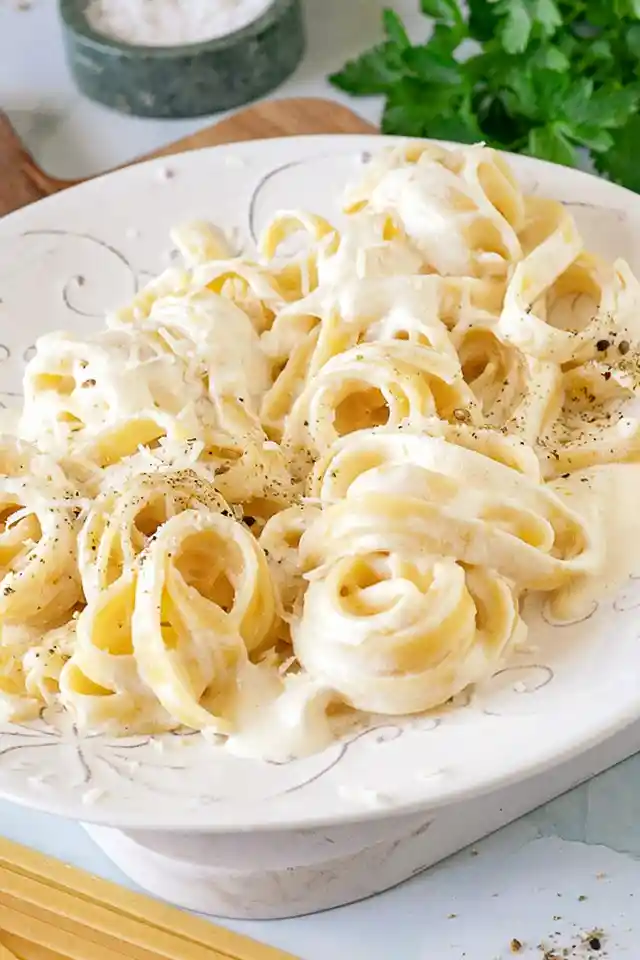
List of ingredients
- 200 g Fettuccine – wide ribbons are ideal for holding heavy sauces.
- 400 ml Heavy cream – used to create the creamy base.
- 60 g Parmesan cheese, grated – divided into 50 g for the sauce and 10 g for garnish.
- 40 g Butter – adds richness and sautés the garlic.
- 1 Garlic clove, thinly sliced – provides a subtle aromatic depth.
- Salt – essential for seasoning both the pasta water and the sauce.
- Freshly ground black pepper – used for a sharp, spicy finish.
step-by-step instructions
- Reduce the cream: Pour the heavy cream into a pot, bring it to a boil, and then let it simmer on low heat until the volume has reduced by half.
- Incorporate the cheese: Add 50 g of the grated Parmesan to the reduced cream over low heat, stirring constantly until melted. Remove the pot from the heat immediately to ensure the cheese does not separate.
- Sauté the garlic: In a large pan that can accommodate all the pasta, melt the butter over medium heat and sauté the garlic slices until they become translucent.
- Cook the pasta: Boil the fettuccine in heavily salted water until al dente. Before draining, reserve 2 to 3 ladles of the starchy pasta water.
- Combine ingredients: Pour the prepared cream mixture into the pan with the garlic. Add the drained fettuccine while still wet, tossing to coat thoroughly.
- Final adjustments: If the sauce is too thick, stir in small amounts of the reserved pasta water until the desired creaminess is achieved. Season generously with black pepper and sprinkle with the remaining Parmesan before serving.
Technical Secrets for a Perfect Sauce
Reducing Cream for Maximum Density
Reducing the cream by half evaporates excess water and concentrates the milk fats. This process creates a thicker, more stable emulsion that prevents the sauce from becoming watery on the plate. It also intensifies the natural sweetness of the cream.
Utilizing Starchy Pasta Water
Pasta water contains released starches that act as a natural thickening agent. When stirred into the sauce, these starches help bind the fats from the butter and cheese to the pasta. This ensures the sauce adheres to the noodles rather than pooling at the bottom of the bowl.
Managing Cheese Temperature
Parmesan cheese contains proteins that can clump or separate if exposed to boiling temperatures. By removing the sauce from the heat before adding the cheese and keeping the flame low, you maintain a smooth, homogeneous texture. This prevents the sauce from becoming grainy.
Precise Garlic Sautéing
Sautéing garlic until translucent rather than brown preserves its sweet, aromatic properties. Browned garlic can introduce a bitter flavor that clashes with the richness of the cream. Using thinly sliced garlic ensures even cooking and a consistent distribution of flavor.
Ingredient Substitutions and Alternatives
Alternative Pasta Shapes
If fettuccine is unavailable, linguine or tagliatelle are excellent substitutes. Tagliatelle, often made with egg, provides a richer flavor and a slightly porous surface that grips the sauce well. Avoid using very thin pastas like angel hair, as they cannot support the weight of a heavy cream sauce.
Cheese Variations for Different Profiles
While Parmigiano Reggiano is traditional, Pecorino Romano can be used for a saltier, sharper taste. Grana Padano is another option that offers a milder, more subtle flavor. For a blend, mixing Parmesan and Pecorino provides a balanced profile of nuttiness and tang.
Dairy-Free Cream Alternatives
For a plant-based version, use full-fat coconut cream or a cashew-based cream. To replicate the flavor of Parmesan, use nutritional yeast combined with a pinch of salt and lemon juice. Ensure the substitute has a high fat content to maintain the signature velvet texture.
Butter Substitutes for Richness
Unsalted butter is preferred to control the sodium levels, but salted butter works if you reduce the salt in the pasta water. For a dairy-free option, a high-quality vegan butter block or refined coconut oil can be used, though the flavor profile will shift slightly.
Ways to Expand the Recipe
Incorporating Sautéed Mushrooms
Sauté cremini or shiitake mushrooms in a separate pan with butter until browned and the moisture has evaporated. Fold the mushrooms into the pasta at the final stage of mixing. This adds an earthy, umami depth that complements the creamy sauce.
Adding Fresh Baby Spinach
Add two handfuls of fresh baby spinach to the pan immediately after adding the pasta to the sauce. The residual heat will wilt the spinach in about 30 seconds without overcooking it. This adds color and a slight bitterness to balance the richness.
Adding Seared Chicken Breast
Season chicken breast with salt and pepper, then sear in a pan until fully cooked and golden brown. Slice the chicken into strips and place them on top of the plated pasta. This transforms the dish into a complete, high-protein meal.
Using Frozen Peas or Broccoli
Blanch frozen peas or small broccoli florets in the pasta water during the last two minutes of cooking. Drain them along with the fettuccine and toss them into the sauce. This provides a fresh, crisp texture and essential vitamins.
Serving and Presentation Guide
Garnishing with Fresh Herbs
Finely chopped flat-leaf parsley or chives added at the end provide a bright visual contrast. These herbs also introduce a fresh, grassy note that cuts through the heavy fats of the cream and butter. Always add herbs after the heat is turned off to preserve their color.
Pairing with Crusty Garlic Bread
Serve the pasta alongside toasted baguette slices brushed with garlic butter and herbs. The crunch of the bread provides a textural contrast to the softness of the noodles. It also serves as a tool for cleaning any remaining sauce from the plate.
Balancing with an Acidic Side Salad
A simple arugula salad with a lemon-olive oil vinaigrette is the ideal accompaniment. The acidity of the lemon and the peppery nature of the arugula cleanse the palate between bites. This prevents the richness of the Alfredo sauce from becoming overwhelming.
Storage and Reheating Advice
Refrigeration and Shelf Life
Store leftover Fettuccine Alfredo in an airtight container in the refrigerator for up to three days. Because the sauce is dairy-based, ensure it is cooled quickly before sealing to prevent bacterial growth. Keep the container tightly sealed to avoid the pasta absorbing refrigerator odors.
Restoring the Sauce During Reheating
Cream sauces tend to thicken and separate when chilled. When reheating in a pan over low heat, add a tablespoon of milk or water to loosen the sauce. Stir gently and constantly to re-emulsify the fats and return the dish to its original creaminess.
Avoiding the Microwave for Reheating
Microwaving often leads to uneven heating, which can cause the cheese to break and the sauce to become oily. If a microwave must be used, heat in 30-second intervals and stir in between. Adding a splash of water helps maintain the moisture level.
Troubleshooting Common Issues
Fixing a Grainy Texture
A grainy sauce usually occurs when the cheese was added to boiling cream, causing the proteins to clump. To fix this, you can try whisking in a small amount of warm milk or passing the sauce through a fine-mesh strainer. In extreme cases, a quick pulse with an immersion blender can smooth it out.
Correcting a Sauce That Is Too Thin
If the sauce is too runny, it likely means the cream was not reduced enough or too much pasta water was added. Continue to simmer the sauce on low heat for a few more minutes before adding the pasta. Alternatively, stir in a small amount of extra grated Parmesan to thicken it instantly.
Managing Overpowering Garlic
If the garlic flavor is too dominant, it may have been sautéed too long or the clove used was too large. You can balance this by adding a small squeeze of fresh lemon juice or extra black pepper. The acidity and spice help neutralize the pungent notes of the garlic.
Frequently Asked Questions
Who invented Fettuccine Alfredo?
The dish was created by Alfredo di Lelio in Rome during the early 20th century. He originally developed it for his wife, Ines, to provide a nutrient-dense and appetizing meal during her recovery after childbirth.
Can I make this without using cream?
Yes, the traditional Roman version uses only high-quality butter and Parmesan cheese. The creaminess is achieved by vigorously emulsifying the melted butter and cheese with starchy pasta water, though the result is less heavy than the cream-based version.
What is the best type of Parmesan for this recipe?
Parmigiano Reggiano is the gold standard due to its controlled production and aged flavor. For the best results, buy a wedge of cheese and grate it yourself, as pre-grated cheeses often contain anti-clumping agents that prevent them from melting smoothly.
Print
Creamy Fettuccine Alfredo
- Total Time: 20 minutes
- Yield: 2 servings 1x
- Diet: General
Description
This Italian classic is cooked in 20 minutes and is irresistibly delicious. It is prepared with Parmesan, butter, and cream and is extra creamy. Fettuccine Alfredo is the perfect everyday cuisine: simple, fast, and delicious.
Ingredients
- 200 g fettuccine
- 400 ml cream
- 60 g microbial-rennet Parmesan, grated
- 40 g butter
- 1 garlic clove, finely sliced
- salt
- freshly ground black pepper
Instructions
- Step: Put the cream in a pot, bring to a boil, and let it reduce by half over low heat.
- Step: Add 50 g of Parmesan and melt over low heat while stirring. Do not let it boil again and remove from the stove!
- Step: In a large pan that fits the pasta, melt the butter over medium heat and sauté the garlic slices until translucent.
- Step: Meanwhile, cook the fettuccine in heavily salted water until al dente and reserve 2-3 ladles of the cooking water before draining.
- Step: Pour the cream into the pan with the garlic. Drain the fettuccine and mix in while still wet. If necessary, add some of the cooking water to the sauce if it is too thick and not creamy enough.
- Step: Season the Fettuccine Alfredo with plenty of freshly ground pepper, sprinkle with the remaining Parmesan, and serve.
Notes
Reducing the cream by half provides a richer taste and creamier consistency. Using a bit of the starchy pasta water helps the sauce bind better to the noodles.
- Prep Time: 5 minutes
- Cook Time: 15 minutes
- Category: Main Course
- Method: Stove-top
- Cuisine: Italian
Nutrition
- Serving Size: 1 serving
- Calories: 1260 kcal
- Sugar: 8 g
- Sodium: 1100 mg
- Fat: 95 g
- Saturated Fat: 60 g
- Unsaturated Fat: 35 g
- Trans Fat: 2 g
- Carbohydrates: 110 g
- Fiber: 4 g
- Protein: 35 g
- Cholesterol: 210 mg