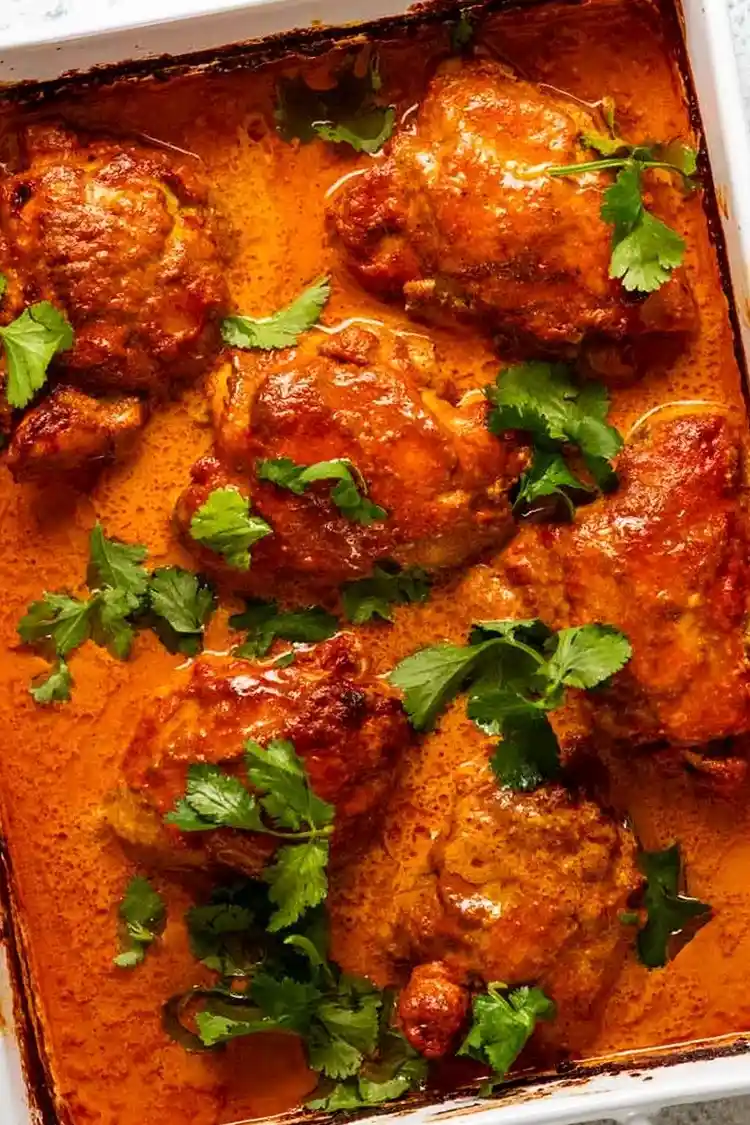
This one-pan oven method simplifies the traditional butter chicken process without sacrificing the rich depth of flavor. It is a convenient approach that produces juicy chicken and a creamy sauce with minimal active effort.
List of ingredients
- 1.2 kg (2.4lb) bone-in chicken thighs, skin removed – provides maximum juiciness during baking.
- 1/2 cup plain yoghurt, full fat – helps spices adhere to the meat.
- 1 tbsp lemon juice – adds a necessary touch of acidity.
- 1 tbsp ginger, finely grated – fresh is preferred for a pungent kick.
- 2 cloves garlic, finely grated or crushed – ensures flavor is evenly distributed.
- 1 tsp turmeric powder – gives the dish its characteristic golden hue.
- 2 tsp garam masala – a warming Indian spice blend.
- 1/2 tsp chilli powder or cayenne pepper powder – provides mild heat; use pure powder, not a blend.
- 1 tsp ground cumin – adds an earthy depth to the marinade.
- 1/2 tsp cooking salt or kosher salt – seasons the meat during the bake.
- 2 tbsp (30g) melted ghee or butter – provides the signature buttery richness.
- 1 cup tomato passata (tomato puree) – creates a smooth, thick sauce base.
- 3/4 cup heavy cream, regular cream, or coconut milk – thickens the sauce and adds creaminess.
- 1 1/2 tsp white sugar – balances the acidity of the tomatoes.
- 3/4 tsp cooking salt or kosher salt – seasons the final sauce.
- 1/2 cup coriander leaves (cilantro) – used as an optional fresh garnish.
- Basmati rice or other plain rice – the ideal base for serving.
- Naan bread – perfect for scooping up the creamy sauce.
step-by-step instructions
- Preheat Oven: Set your oven to 200°C / 400°F (or 180°C if using a fan-forced oven).
- Coat Chicken: Combine all marinade ingredients in a mixing bowl, add the chicken pieces, and toss until they are thoroughly coated.
- Optional Marinating: While not required, you may leave the chicken to marinate overnight in the refrigerator for deeper flavor infusion.
- Assemble Dish: Mix the sauce ingredients directly in a 23 x 33cm (9 x 13 inch) baking dish. Place the chicken in the sauce, smooth side up, and dab any remaining marinade from the bowl onto the chicken.
- Bake and Baste: Bake for 45 minutes. Use a spoon to baste the chicken with the sauce at the 30-minute and 40-minute marks to keep it moist and promote browning.
- Rest and Serve: Let the chicken rest for 5 minutes after removing it from the oven. Serve over steamed basmati rice and garnish with fresh coriander and naan.
Optimizing Meat Selection
Why Bone-In Thighs Are Recommended
Bone-in chicken thighs are the ideal choice for this oven-baked method. They contain more fat and connective tissue than breasts, allowing them to remain succulent over the 45-minute cook time. This ensures the meat does not dry out while the sauce reduces.
Using Chicken Drumsticks
Drumsticks are an excellent alternative to thighs as they also benefit from the slower bake time. You may need to add one or two extra pieces to maintain the overall volume. Ensure they are arranged in a single layer to cook evenly.
Adjustments for Boneless Thighs
Boneless thighs cook faster than bone-in versions and can overcook if left for the full duration. To avoid this, bake the sauce alone for about 20 minutes first. Then, add the chicken and bake for an additional 15 to 20 minutes until just cooked through.
Guidelines for Using Chicken Breast
Chicken breast is very lean and prone to drying out in the oven. If you prefer breasts, cut them into large, bite-sized chunks. Follow the boneless thigh timing, baking them for only 15 to 20 minutes after the sauce has pre-heated.
Removing Skin to Prevent Greasiness
Removing the skin from the chicken is highly recommended for this recipe. Since the chicken bakes in a creamy sauce, leaving the skin on can release excess fat, making the final curry too oily. Peeling the skin off allows the marinade to penetrate the meat directly.
Mastering the Spice Profile
The Importance of Garam Masala
Garam masala is a blend of ground spices that provides the warm, aromatic base of the dish. It is widely available in most grocery stores and is essential for the authentic butter chicken taste. Do not substitute this with a generic curry powder, as the flavor profile differs significantly.
Controlling the Heat Level
This recipe is designed to be mild and family-friendly. The small amount of cayenne or pure chilli powder provides a subtle warmth rather than intense heat. If you are cooking for very sensitive palates, you can omit the chilli powder entirely without ruining the dish.
Using Fresh Ginger and Garlic
Freshly grated ginger and garlic provide a bright, sharp flavor that is lost in jarred pastes. Jarred versions often contain preservatives or vinegar that can alter the taste of the sauce. Take a few extra minutes to grate these fresh for a professional result.
Adding Salt to the Marinade
Unlike stovetop butter chicken where meat is seared, the baked version requires salt directly in the marinade. This ensures the surface of the chicken is well-seasoned as it cooks. Without this step, the meat can taste bland even if the sauce is flavorful.
Creating the Perfect Sauce
Choosing the Right Tomato Passata
Tomato passata is a smooth, strained tomato puree that ensures the sauce has a velvety texture. If you cannot find passata, you can use plain tomato puree or finely blended canned tomatoes. Avoid chunky crushed tomatoes, as they will disrupt the smoothness of the curry.
Heavy Cream versus Coconut Milk
Heavy cream provides the classic, rich mouthfeel associated with butter chicken. For a dairy-free alternative, full-fat coconut milk works exceptionally well. While coconut milk adds a slight coconut flavor, it maintains the required thickness and creaminess.
Using Ghee for Authentic Flavor
Ghee is clarified butter that has a higher smoke point and a more intense nutty flavor than regular butter. It is a staple in Indian cooking and adds a professional depth to the sauce. If you do not have ghee, unsalted butter is a perfectly acceptable substitute.
Balancing Acidity with Sugar
A small amount of white sugar is used to balance the natural acidity of the tomato passata. This does not make the dish sweet, but rather rounds out the flavors. It creates the harmonious taste that characterizes high-quality butter chicken.
Baking and Cooking Techniques
The Role of Basting
Basting is the process of spooning the sauce over the chicken during the baking process. This prevents the top of the meat from drying out in the oven’s heat. It also helps the chicken develop a rich, golden-brown color on the surface.
Monitoring Sauce Color Changes
When first mixed, the sauce may look pale or pinkish. As it bakes and the cream and tomato concentrate, it will transform into a deep orangey-red. This color shift is a visual indicator that the flavors are developing and the sauce is thickening.
Oven Temperature Consistency
Different ovens distribute heat differently, which can affect how quickly the sauce reduces. If you are using a fan-forced oven, ensure you drop the temperature by 20°C to prevent the edges of the sauce from burning. Always rely on the internal temperature of the chicken for safety.
Troubleshooting Sauce Consistency
Fixing a Watery Sauce
If the sauce is too thin after the 45-minute bake, it is usually due to the juiciness of the chicken or oven variations. Remove the chicken pieces and set them aside to rest. Return the baking dish to the oven for another 5 to 10 minutes to reduce the sauce further.
Dealing with Brined Chicken
Some commercial chicken is pumped with brine, which releases excess water during cooking. This can dilute the sauce and prevent it from thickening. If you notice too much liquid, use the reduction method mentioned above to concentrate the flavors.
Impact of Baking Dish Materials
Ceramic and glass dishes retain heat longer than metal pans, which can affect the sauce reduction rate. Glass dishes may take longer to heat up but keep the food warm longer after leaving the oven. Adjust your reduction time based on the material you use.
Serving and Side Dish Ideas
Preparing Perfect Basmati Rice
Basmati rice is the traditional pairing because its long grains and floral aroma complement the rich sauce. Rinse the rice thoroughly under cold water to remove excess starch before steaming. This ensures the grains remain separate and fluffy rather than sticky.
Pairing with Homemade Naan
Naan bread is essential for mopping up the remaining sauce from the plate. Warm the naan in a pan or oven just before serving to keep it soft and pliable. Garlic naan is a particularly popular choice for adding an extra layer of flavor.
Adding Fresh Garnish
Fresh coriander leaves add a pop of color and a bright, citrusy contrast to the heavy cream sauce. Chop the leaves roughly or leave them whole for a more rustic look. Adding the herbs at the very end preserves their fresh flavor and vibrant green color.
Storage and Meal Planning
Refrigeration and Freezing
Leftover butter chicken keeps well in the refrigerator for 3 to 4 days in an airtight container. For longer storage, the dish can be frozen for up to 3 months. Let the curry cool completely before freezing to maintain the texture of the cream.
Reheating for Best Quality
To reheat, place the chicken and sauce in a pan over low heat on the stove. Add a splash of water or cream if the sauce has thickened too much during storage. Avoid overheating in the microwave, as this can cause the cream to separate.
Overnight Assembly Advice
This recipe is excellent for meal prep because it can be assembled a day in advance. Mix the marinade and sauce, place the chicken in the dish, and refrigerate overnight. This allows the flavors to meld and makes the final cooking process even faster.
Frequently Asked Questions
Can I use a slow cooker for this recipe?
No, this specific recipe is designed for the dry heat of the oven to reduce the sauce and brown the chicken. A slow cooker would produce a different consistency and would not achieve the same caramelized flavor on the meat.
Is this butter chicken spicy?
This version is very mild and suitable for children or those who dislike heat. The spice comes from aromatic garam masala rather than hot chillies. You can easily adjust the heat by adding more cayenne pepper if you prefer a spicier kick.
Can I make this recipe dairy-free?
Yes, you can make this dish dairy-free by replacing the butter/ghee with coconut oil and the heavy cream with full-fat coconut milk. Use a dairy-free plain yogurt alternative for the marinade to maintain the same consistency.
What if I don’t have a baking dish?
You can use any oven-safe pan that is deep enough to hold the sauce without overflowing. A cast-iron skillet or a deep roasting tray will work well. Ensure the pan is not too crowded so the sauce can reduce effectively.
Print
One-Pan Oven-Baked Butter Chicken
- Total Time: 55 minutes
- Yield: 5–6 servings 1x
- Diet: General
Description
The miraculous, easy way to make butter chicken in the oven! Just put everything in a pan and pop it in the oven. That sauce is to-die for! Just like the real-thing, with a fraction of the effort.
Ingredients
- 1.2 kg bone-in chicken thighs, skin removed
- 1/2 cup full fat plain yoghurt
- 1 tbsp lemon juice
- 1 tbsp finely grated ginger
- 2 cloves garlic, finely grated or crushed
- 1 tsp turmeric powder
- 2 tsp garam masala
- 1/2 tsp chilli powder or cayenne pepper powder
- 1 tsp ground cumin
- 1/2 tsp salt
- 2 tbsp melted ghee or butter
- 1 cup tomato passata
- 3/4 cup heavy cream
- 1 1/2 tsp white sugar
- 3/4 tsp salt
- 1/2 cup coriander leaves, for garnish (optional)
- Basmati rice
- Naan
Instructions
- Step: Preheat oven to 200°C / 400°F (180°C fan-forced).
- Step: Coat chicken – Mix the marinade ingredients in a bowl, then add the chicken and toss to coat.
- Step: Optional marinade – overnight.
- Step: Assemble – Mix Sauce ingredients in a 23 x 33cm / 9 x 13″ baking dish. Place chicken in, smooth side up. Scrape residual marinade out of bowl and dab onto chicken surface.
- Step: Bake 45 minutes, basting with sauce at the 30 minute and 40 minute mark.
- Step: Serve – Rest for 5 minutes. Then serve over basmati rice, garnished with coriander if desired!
Notes
Remove chicken skin to prevent the sauce from getting too greasy. If the sauce is not thick enough after baking, remove the chicken and return the sauce to the oven for a few additional minutes.
- Prep Time: 10 minutes
- Cook Time: 45 minutes
- Category: Main
- Method: Baking
- Cuisine: Indian
Nutrition
- Serving Size: 1 serving
- Calories: 545 kcal
- Sugar: 5 g
- Sodium: 721 mg
- Fat: 44 g
- Saturated Fat: 17 g
- Unsaturated Fat: 23 g
- Trans Fat: 0.3 g
- Carbohydrates: 8 g
- Fiber: 1 g
- Protein: 30 g
- Cholesterol: 213 mg