This robust gumbo is a traditional thick stew featuring a rich, deep-brown roux combined with shrimp and savory beef sausage. Served over white rice, it offers a complex blend of flavors that develop through a slow simmering process.
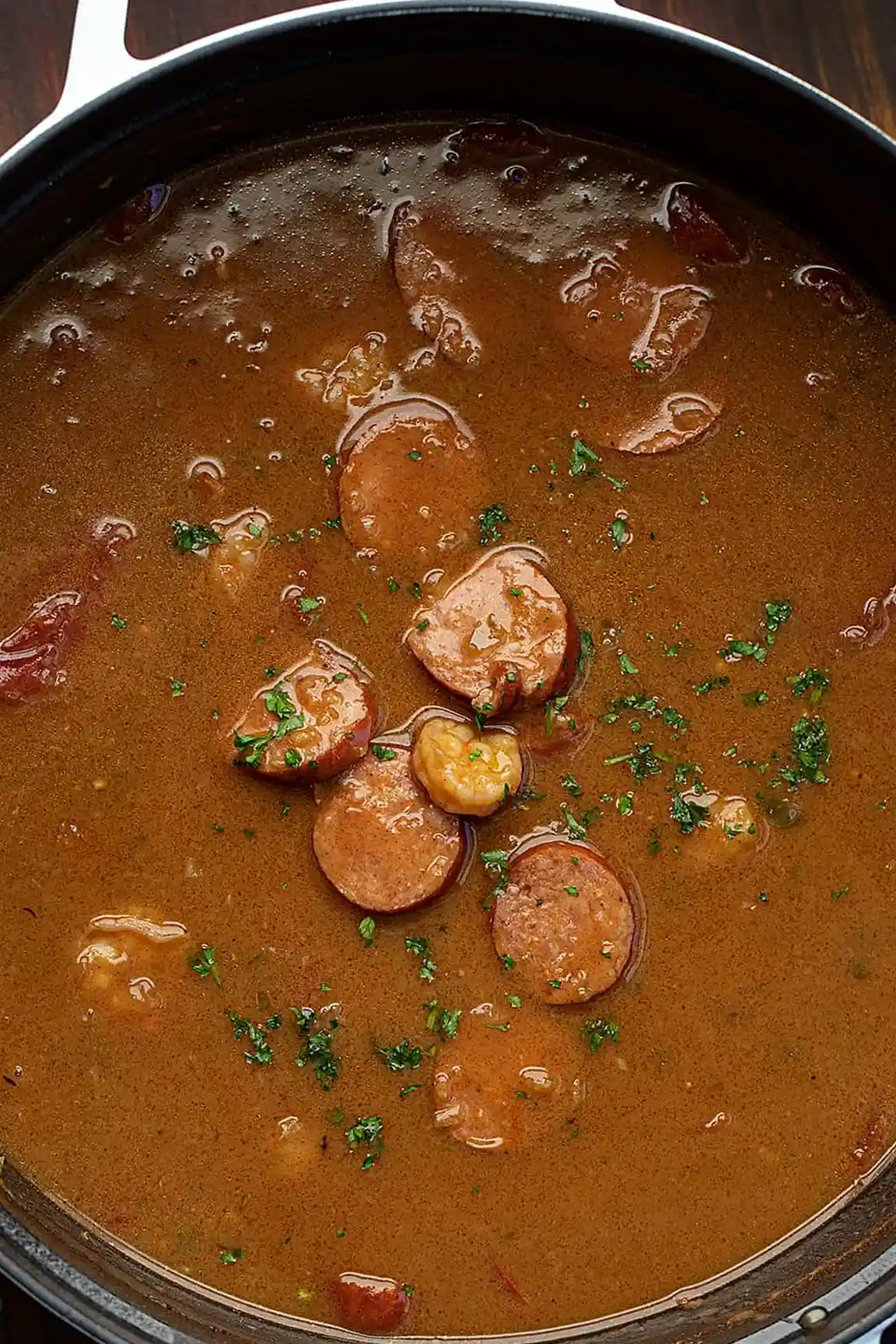
List of ingredients
- 3/4 cup (170 g) unsalted butter – used to create the roux base.
- 1 cup (125 g) all-purpose flour – the thickening agent for the stew.
- 2 ribs celery, roughly chopped (about 1 cup) – part of the aromatic trinity.
- 1 large yellow onion, roughly chopped (about 1 cup) – adds a sweet, savory base.
- 1 large green bell pepper, roughly chopped, seeds removed (about 1 cup) – provides a characteristic pepper flavor.
- 2 teaspoons garlic, minced – for aromatic depth.
- 10 cups (2.41 kg) beef broth – the liquid base of the stew.
- 1 ring (14 ounces) beef sausage, sliced into rounds – a hearty, smoky protein substitute for andouille.
- 1 can (14.5 ounces) stewed tomatoes – adds acidity and texture.
- 1 can (6 ounces) tomato sauce – thickens and colors the base.
- 2 tablespoons hot sauce – for a spicy kick.
- 1 tablespoon white sugar – balances the acidity of the tomatoes.
- 1/2 teaspoon Cajun seasoning – adds traditional regional spices.
- 1/2 teaspoon dried thyme leaves – provides an earthy herbal note.
- 4 teaspoons gumbo filé powder, divided – a thickener and flavor enhancer made from sassafras.
- 4 bay leaves – adds a subtle floral aroma.
- 3 pounds uncooked medium shrimp, peeled and deveined – the primary seafood protein.
- 2 tablespoons Worcestershire sauce – enhances the umami profile.
- Cooked white rice – used for serving the final dish.
step-by-step instructions
- Prepare the Roux: Melt butter in a large 6-quart pot over medium-low heat. Whisk in the flour until smooth and continue cooking, whisking constantly for 30-40 minutes until the mixture reaches a deep brown color. Avoid burning the flour.
- Cool the Base: Remove the pot from the heat. Keep whisking the mixture until it has cooled slightly before moving to the next step.
- Process Vegetables: While the roux cools, place the chopped celery, onion, green bell pepper, and minced garlic into a food processor. Process until all vegetables are finely chopped.
- Sauté and Deglaze: Stir the processed vegetable mixture into the roux. Return the pot to medium-low heat and cook for 8-12 minutes until the vegetables are tender. Slowly whisk in the beef broth and bring the mixture to a boil over 15-20 minutes.
- Simmer with Aromatics: Reduce the heat to low. Stir in the sliced beef sausage, stewed tomatoes, tomato sauce, hot sauce, sugar, Cajun seasoning, and thyme. Add the bay leaves and simmer uncovered for 45 minutes.
- First Thickening: Stir in 2 teaspoons of gumbo filé powder. Continue to simmer the stew for an additional 15 minutes.
- Add Protein: Remove and discard the bay leaves. Add the peeled shrimp and Worcestershire sauce. Cook over low heat for 45-60 minutes to allow the flavors to meld thoroughly.
- Final Touch: Stir in the remaining 2 teaspoons of gumbo filé powder.
- Serve: Ladle the hot gumbo over bowls of cooked white rice.
Mastering the Roux Technique
Maintaining Consistent Temperature
The roux is the foundation of the gumbo’s texture and flavor. Keep the heat on medium-low to ensure the flour browns evenly without scorching. If the mixture begins to bubble too violently, lower the heat immediately to prevent the flour from burning.
Achieving the Correct Color
A proper gumbo roux should resemble the color of dark chocolate or peanut butter. This deep browning process creates a nutty flavor and a thinner consistency than a white roux. Be patient and stir constantly to reach this specific shade.
Preventing Flour Scorching
Use a heavy-bottomed pot or a cast-iron Dutch oven to distribute heat evenly. A whisk is essential for reaching the corners of the pot, ensuring no pockets of flour sit still long enough to burn. If you see black specks, the roux has burnt and should be restarted.
The Cooling Phase
Allowing the roux to cool slightly before adding vegetables prevents the flour from clumping. This temperature drop helps the vegetables integrate more smoothly into the fat and flour mixture. Whisking during this phase ensures a uniform consistency.
Essential Ingredient Guidance
Choosing the Right Beef Sausage
Since traditional andouille often contains pork, choose a high-quality smoked beef sausage. Look for options with a strong smoky profile and a spicy kick to mimic the original flavor. Slicing the sausage into uniform rounds ensures even cooking and distribution.
Managing Shrimp Texture
Adding shrimp toward the end of the cooking process is critical to avoid a rubbery texture. Medium shrimp cook quickly, and the 45-60 minute simmer allows them to absorb the stew’s flavor without overcooking. Ensure they are peeled and deveined for the best eating experience.
Using Gumbo Filé Powder
Filé powder is made from dried sassafras leaves and serves as both a thickener and a seasoning. It should be added toward the end of the cooking process because boiling it for too long can make the stew stringy. Divide the addition to control the final thickness.
The Role of the Holy Trinity
The combination of onion, celery, and green bell pepper is the aromatic base of the dish. Processing them finely ensures that they break down and integrate into the roux, creating a thick, cohesive body. This mixture provides the essential savory depth required for a traditional stew.
Advanced Cooking Tips
Balancing Acidity and Sweetness
The stewed tomatoes and tomato sauce add a bright acidity that cuts through the richness of the roux. Adding a tablespoon of white sugar neutralizes excessive tartness, creating a balanced flavor profile. Taste the stew before the final simmer to adjust the sugar if needed.
Optimizing Broth Integration
Adding beef broth slowly and whisking constantly prevents the roux from separating. Bringing the liquid to a boil before reducing the heat helps stabilize the emulsion. This step ensures the stew remains smooth rather than oily.
Enhancing Umami with Worcestershire
Worcestershire sauce adds a layer of fermented saltiness and depth that complements the beef broth and sausage. Adding it alongside the shrimp helps the seafood blend with the meatier elements of the dish. It acts as a flavor bridge between the different proteins.
Controlling Spice Levels
The heat in this recipe comes from the hot sauce and Cajun seasoning. To increase the spice, use a vinegar-based Louisiana-style hot sauce or add a pinch of cayenne pepper. For a milder version, reduce the hot sauce by half.
Storage and Preservation
Refrigeration Best Practices
Allow the gumbo to cool completely before transferring it to an airtight container. Store it in the refrigerator for up to 3 days. The flavors often improve after 24 hours as the spices and proteins continue to meld.
Freezing for Long Term Storage
Gumbo freezes well for up to 3 months if stored without the rice. Leave a small amount of headspace at the top of the container to allow for expansion during the freezing process. Label each container with the date of preparation for freshness tracking.
Reheating Procedures
Reheat the stew slowly on the stovetop over medium-low heat. Add a small splash of beef broth or water if the stew has thickened too much during storage. Avoid microwaving on high heat to prevent the shrimp from becoming tough.
Preparing in Advance
This recipe is ideal for make-ahead meals because the flavors deepen over time. You can complete the simmering process a day early and simply add the shrimp and final filé powder on the day of serving. This reduces the active cooking time on the final day.
Troubleshooting Common Issues
Correcting a Too-Thick Stew
If the gumbo becomes overly thick due to the roux and filé powder, stir in additional beef broth one cup at a time. Simmer for a few minutes to ensure the liquid is fully incorporated. This will loosen the texture while maintaining the rich flavor.
Fixing an Overly Spicy Base
If the Cajun seasoning or hot sauce makes the dish too spicy, add a small amount of extra sugar or a splash of heavy cream. These additions help neutralize the capsaicin. Alternatively, serving the gumbo over a larger portion of plain white rice can dilute the heat.
Recovering from a Slightly Burnt Roux
If the roux smells slightly scorched but is not black, you may be able to save it by transferring the unburnt top portion to a clean pot. Do not scrape the bottom of the original pot, as this will introduce burnt particles into the stew. If the roux is completely black, it must be discarded and restarted.
Preventing Shrimp Overcooking
If you are reheating the gumbo, remove the shrimp first and add them back only during the last few minutes of warming. This prevents the seafood from cycling through high temperatures multiple times. This preserves the tender, succulent texture of the shrimp.
Frequently Asked Questions
What is the purpose of Gumbo Filé?
Gumbo Filé is a powder made from the dried leaves of the sassafras tree. It acts as a secondary thickening agent and adds a unique, slightly citrusy and earthy flavor to the stew. It is traditionally added at the end of the cooking process.
Can I substitute beef broth for chicken broth?
Yes, chicken broth is a common alternative that provides a lighter flavor profile. If using chicken broth, consider adding a teaspoon of soy sauce or Worcestershire sauce to maintain the deep umami characteristic of the beef version.
How does gumbo differ from jambalaya?
Gumbo is a stew or soup that is served over cooked rice, whereas jambalaya is a one-pot dish where the rice is cooked directly in the stew. Gumbo relies on a roux for thickening, which is not used in the preparation of jambalaya.
Can this recipe be made in a slow cooker?
The roux must be made on the stovetop as a slow cooker cannot reach the temperatures necessary to brown flour. Once the roux and vegetables are sautéed and the broth is added, the remaining ingredients can be transferred to a slow cooker for the simmering stages.
Is it possible to make this recipe without tomatoes?
Yes, omitting the tomatoes creates a brown gumbo, which is a common variation. If you remove the tomatoes, you may want to add an extra cup of broth and a bit more Cajun seasoning to compensate for the lost acidity and volume.
Print
Hearty Shrimp and Beef Sausage Gumbo
- Total Time: 3 hours 25 minutes
- Yield: 16 servings 1x
- Diet: General
Description
Gumbo is a flavorful thick stew made with beef andouille sausage, shrimp, tomatoes, and vegetables served over a bed of rice.
Ingredients
- ¾ cup (1½ sticks / 170 g) unsalted butter
- 1 cup (125 g) all-purpose flour
- 2 ribs celery, roughly chopped (about 1 cup)
- 1 large yellow onion, roughly chopped (about 1 cup)
- 1 large green bell pepper, roughly chopped, seeds removed (about 1 cup)
- 2 teaspoons garlic, minced
- 10 cups (2.41 kg) beef broth
- 1 ring (14 ounces) beef andouille sausage (or beef kielbasa), sliced into rounds
- 1 can (14.5 ounces) stewed tomatoes
- 1 can (6 ounces) tomato sauce
- 2 tablespoons hot sauce
- 1 tablespoon white sugar
- ½ teaspoon Cajun seasoning
- ½ teaspoon dried thyme leaves
- 4 teaspoons gumbo file powder, divided
- 4 bay leaves
- 3 pounds uncooked medium shrimp, peeled, deveined
- 2 tablespoons Worcestershire sauce
- cooked white rice, for serving
Instructions
- Step: In a large 6-quart pot over medium-low heat, melt butter. Once melted, add flour and whisk together until smooth. Continue cooking, whisking constantly until the roux is a deep brown color (about 30-40 minutes). Be careful not to let it burn.
- Step: Remove from heat. Continue whisking until the mixture is cooled slightly. Set aside.
- Step: While the roux is cooling, add the chopped celery, onion, pepper, and garlic to the bowl of a food processor. Process until finely chopped.
- Step: Add the vegetable mixture to the roux and stir to combine. Place the pot over medium-low heat and continue to heat until vegetables are tender (8-12 minutes). Slowly whisk in broth and heat to boiling (15-20 minutes).
- Step: Reduce heat to low. Add sausage, stewed tomatoes, tomato sauce, hot sauce, sugar, Cajun seasoning, and thyme. Stir to combine. Add bay leaves and simmer, uncovered for 45 minutes.
- Step: After simmering for 45 minutes, add 2 teaspoons of gumbo filé powder, stirring to combine. Continue to simmer for 15 more minutes.
- Step: Remove the bay leaves. Then, add shrimp and Worcestershire sauce. Continue to cook over low heat for 45-60 minutes to give the flavors ample time to meld.
- Step: Stir in the remaining gumbo filé powder.
- Step: Serve over cooked white rice.
Notes
The roux is the main thickening agent and requires constant stirring for about 40 minutes. If filé powder is unavailable, cornstarch or tapioca powder can be used as a substitute.
- Prep Time: 15 minutes
- Cook Time: 3 hours 10 minutes
- Category: Dinner, Main Course
- Method: Simmering
- Cuisine: American
Nutrition
- Serving Size: 1 serving
- Calories: 282 kcal
- Sugar: 4 g
- Sodium: 980 mg
- Fat: 16 g
- Saturated Fat: 9 g
- Unsaturated Fat: 7 g
- Trans Fat: 0 g
- Carbohydrates: 18 g
- Fiber: 3 g
- Protein: 21 g
- Cholesterol: 95 mg