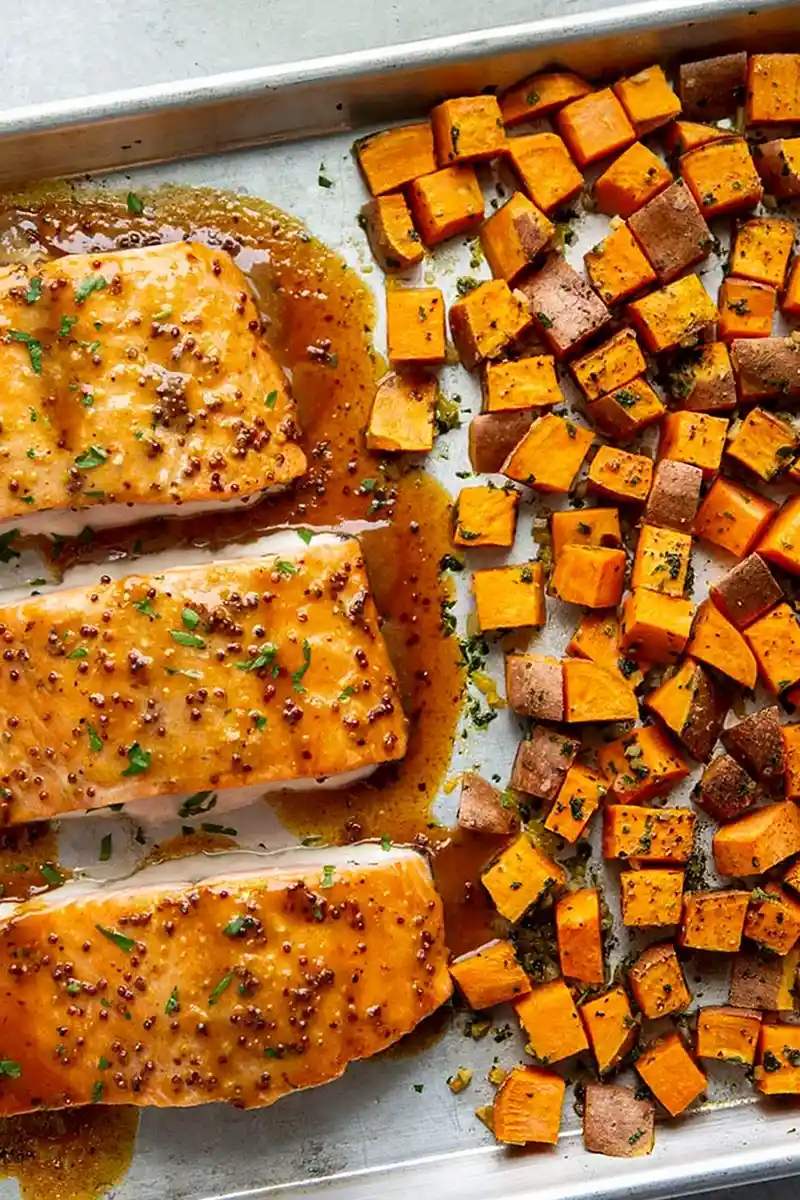
This sheet pan meal combines sweet and savory flavors for a quick, healthy dinner. It simplifies cleanup by roasting both the protein and vegetables on a single tray for maximum efficiency.
List of ingredients
- 3 tablespoons unsalted butter – used for the potato glaze.
- 3 medium cloves garlic, minced – provides aromatic depth.
- 2 tablespoons minced fresh parsley – adds freshness and color.
- 2 medium sweet potatoes, cut into 1/2-in cubes – the hearty vegetable base.
- Salt and pepper to taste – for seasoning the potatoes.
- 1/4 cup honey – provides natural sweetness to the glaze.
- 2 tablespoons whole-grain mustard – adds texture and a tangy kick.
- 2 tablespoons Dijon mustard – contributes a sharp, smooth flavor profile.
- 1 tablespoon apple cider vinegar – balances the sweetness with acidity.
- 1/2 teaspoon paprika – adds a mild, smoky note.
- 1/2 teaspoon salt – enhances the salmon marinade.
- 1/4 teaspoon ground black pepper – provides a subtle heat.
- 1-1/2 lbs salmon fillets (about 4 six-ounce fillets) – the primary protein source.
step-by-step instructions
- Set up the oven: Preheat your oven to 400°F and lightly grease a large sheet pan to prevent the food from sticking.
- Sauté the aromatics: Melt the unsalted butter in a small saucepan over medium heat, then add the minced garlic and sauté for 1-2 minutes until it becomes fragrant.
- Finish the garlic butter: Remove the pan from the heat and stir in the minced fresh parsley.
- Season the vegetables: Toss the cubed sweet potatoes with the garlic butter mixture on the sheet pan and arrange them in a single layer on one half of the pan. Season with salt and pepper.
- Initial roasting: Roast the sweet potatoes at 400°F for 20 minutes until they are nearly tender, then briefly remove the pan from the oven.
- Prepare the glaze: In a small bowl, whisk together the honey, whole-grain mustard, Dijon mustard, apple cider vinegar, paprika, salt, and black pepper until the mixture is smooth.
- Add the protein: Place the salmon fillets on the remaining half of the sheet pan and spoon the honey mustard glaze evenly over the top of each fillet.
- Final bake: Return the pan to the oven and bake for 10-12 minutes until the sweet potatoes are tender and the salmon reaches an internal temperature of 125-130°F.
- Serve: Remove the pan from the oven and serve the salmon and sweet potatoes immediately while warm.
Cooking Optimization and Performance
Use a Digital Meat Thermometer
Salmon can overcook in a matter of minutes, leading to a dry texture. Using a digital thermometer to hit 125-130°F ensures the fish remains moist and tender. The temperature will rise slightly while resting, reaching a perfect medium finish.
Maintain Uniform Potato Cubes
Cut the sweet potatoes into consistent 1/2-inch cubes to ensure they all cook at the same rate. If some pieces are significantly larger, they will remain hard while the others soften. Consistency is key for a uniform texture across the pan.
Avoid Overcrowding the Sheet Pan
Ensure the sweet potatoes and salmon are spread out in a single layer with space between them. Overcrowding creates steam, which prevents the potatoes from browning and the glaze from caramelizing. A larger pan prevents the ingredients from boiling rather than roasting.
Selecting the Right Salmon Cut
Center-cut fillets are ideal because they have a uniform thickness from end to end. This ensures the fish cooks evenly throughout the fillet. If using a side of salmon, slice it into equal 6-ounce portions before seasoning.
Managing Oven Hot Spots
Every oven has slightly different heat distributions that can lead to uneven browning. Rotate the sheet pan halfway through the final 10-minute bake. This ensures both the salmon and potatoes receive equal exposure to the heat source.
Ingredient Substitutions and Swaps
Alternative Root Vegetables
If you do not have sweet potatoes, butternut squash or carrots work well as substitutes. These vegetables have similar roasting times and pair perfectly with garlic butter. Keep the dice size consistent to maintain the timing of the recipe.
Using Maple Syrup Instead of Honey
Pure maple syrup is an excellent alternative for those who prefer a woodier sweetness. Use the same measurement as the honey to keep the glaze consistency. This swap provides a slightly different flavor profile that still complements the mustard.
Adapting the Recipe for Chicken
Boneless, skinless chicken breasts can be used instead of salmon. Be aware that chicken requires a significantly longer cooking time than fish. Roast the chicken until it reaches an internal temperature of 165°F.
Vinegar Alternatives for Acidity
If apple cider vinegar is unavailable, fresh lemon juice or white wine vinegar are suitable replacements. These provide the necessary acidity to cut through the richness of the honey and butter. Lemon juice adds a brighter, citrusy note to the salmon.
Substituting Fresh Parsley
Dried parsley can be used if fresh is not available, though the flavor is less vibrant. Use one tablespoon of dried parsley for every two tablespoons of fresh. Add the dried herbs to the butter during the sauté process for better integration.
Meal Planning and Storage
Advanced Vegetable Preparation
You can cut the sweet potatoes up to four days in advance. Store them in a container filled with cold water in the refrigerator to prevent oxidation. Drain and pat them dry thoroughly before tossing them in garlic butter.
Prepping the Salmon Fillets
Cut your salmon into fillets and store them in an airtight container for up to four days. Keep them chilled until the moment you are ready to glaze and roast. This reduces the active prep time on the night of the meal.
Making Sauces Ahead of Time
Both the garlic butter and the honey mustard glaze can be prepared up to six days in advance. Store them in separate airtight jars in the refrigerator. Note that the garlic butter will solidify and will need 30-60 seconds in the microwave to liquefy.
Refrigerating the Cooked Meal
Store leftovers in airtight containers in the refrigerator for up to three days. Keep the salmon and potatoes in separate compartments if possible to maintain their individual textures. Allow the food to cool slightly before sealing the lid.
Best Reheating Practices
To avoid rubbery salmon, reheat leftovers in the oven at 300°F until warmed through. Avoid using a high-power microwave setting, as this often overcooks the fish. A low and slow approach preserves the moisture of the protein.
Serving Suggestions and Pairings
Adding a Side of Leafy Greens
Sautéed spinach or steamed kale provides a nutrient-dense contrast to the sweetness of the potatoes. The bitterness of dark leafy greens balances the honey mustard glaze. Add these to the plate just before serving.
Incorporating Roasted Asparagus
Asparagus can be added to the sheet pan during the final 10-12 minutes of cooking. Place the spears in the gaps between the salmon fillets. They roast quickly and absorb some of the garlic butter from the pan.
Choosing a Grain Accompaniment
For a more filling meal, serve the dish alongside a portion of quinoa or brown rice. The grains can soak up any extra honey mustard glaze left on the pan. This adds a nutty flavor and extra fiber to the plate.
Adding Fresh Garnish
A sprinkle of fresh chives or a squeeze of fresh lemon juice over the finished dish enhances the flavors. The acidity of the lemon brightens the richness of the butter. Fresh herbs add a professional visual finish to the meal.
Troubleshooting Common Issues
Fixing Hard or Underdone Potatoes
If the salmon is cooked but the potatoes are still too firm, remove the fish from the pan. Return the potatoes to the oven for another 5-10 minutes. This prevents the salmon from overcooking while the vegetables finish.
Correcting a Glaze That is Too Sweet
If the honey flavor is overpowering, whisk in an extra teaspoon of Dijon mustard or apple cider vinegar. This increases the tanginess and balances the sugar levels. Adjust the acidity in small increments until the taste is balanced.
Preventing Salmon from Sticking
If your fillets frequently stick to the pan, use a sheet of parchment paper or a silicone baking mat. This provides an extra non-stick barrier. It also makes the final cleanup significantly easier.
Managing Albumin on Salmon
White beads appearing on the salmon surface are called albumin and are harmless proteins. They often appear when the fish is cooked too quickly at high heat. To minimize this, ensure the oven temperature is accurate and avoid overcooking.
Handling Burned Glaze
Because honey has a high sugar content, it can burn if the oven is too hot. If you notice the glaze darkening too quickly, tent the salmon loosely with foil. This protects the surface while allowing the interior to finish cooking.
Frequently Asked Questions
Can I use frozen salmon fillets?
Yes, but you must thaw them completely in the refrigerator before cooking. Pat the fillets dry with paper towels to remove excess moisture. This ensures the honey mustard glaze adheres properly to the fish.
Which cut of salmon is best for roasting?
Center-cut fillets are recommended for the most consistent cooking results. They provide a uniform thickness that prevents the thin tail end from drying out. This makes it easier to track the internal temperature.
Can I make this in a convection oven?
Yes, but you should reduce the oven temperature by 25°F to 375°F. Convection ovens circulate air more efficiently, which speeds up the cooking process. Check the salmon’s internal temperature a few minutes earlier than usual.
Is it okay to leave the skin on the salmon?
Leaving the skin on is perfectly fine and can help protect the fillet from direct heat. If you prefer a skinless finish, remove it before applying the glaze. The skin does not significantly affect the flavor of the honey mustard.
How do I prevent the garlic from burning?
Sauté the garlic only until it becomes fragrant, which usually takes 1-2 minutes. Do not let it turn dark brown, as burnt garlic becomes bitter. Immediately remove the pan from the heat before adding the parsley.
Can I use a different type of butter?
Any unsalted butter will work, but you can use salted butter if you reduce the added salt in the recipe. This prevents the dish from becoming overly salty. Ensure the butter is melted thoroughly before tossing with potatoes.
What is the best way to cut the sweet potatoes?
Use a sharp chef’s knife to cut the potatoes into 1/2-inch cubes. Aim for a uniform square shape to ensure even roasting. Avoid cutting them too small, or they may mush during the initial 20-minute roast.
How can I make this recipe dairy-free?
Replace the unsalted butter with a plant-based butter alternative or olive oil. Olive oil works well for roasting the potatoes and provides a healthy fat. The flavor remains savory and complements the garlic and parsley.
Print
One-Pan Honey Mustard Salmon and Garlic Butter Sweet Potatoes
- Total Time: 45 minutes
- Yield: 4 servings 1x
- Diet: General
Description
This honey mustard salmon roasts up completely on one sheet pan with lots of tender garlic butter sweet potatoes on the side. – the easiest mess-free dinner!
Ingredients
- 3 tablespoons unsalted butter
- 3 medium cloves garlic, minced
- 2 tablespoons minced fresh parsley
- 2 medium sweet potatoes, cut into 1/2-in cubes
- Salt and pepper to taste
- 1/4 cup honey
- 2 tablespoons whole-grain mustard
- 2 tablespoons Dijon mustard
- 1 tablespoon apple cider vinegar
- 1/2 teaspoon paprika
- 1/2 teaspoon salt
- 1/4 teaspoon ground black pepper
- 1–1/2 lbs salmon fillets (about 4 six-ounce fillets)
Instructions
- Step: Preheat oven to 400F.
- Step: Lightly grease a large sheet pan and set aside.
- Step: In a small saucepan over medium heat, melt butter.
- Step: Add garlic and saute 1-2 minutes until fragrant.
- Step: Remove from heat and add parsley.
- Step: Toss sweet potatoes and garlic butter together on sheet pan and arrange in a single layer on half of pan.
- Step: Season with salt and pepper to taste.
- Step: Roast sweet potatoes at 400F 20 minutes until sweet potatoes are nearly tender, then remove from oven for a moment. Keep oven on.
- Step: In a small bowl, whisk honey, mustards, vinegar, paprika, salt, and pepper until smooth.
- Step: Arrange salmon fillets on remaining half of sheet pan and spoon honey mustard on top of each fillet.
- Step: Return sheet pan to oven and bake salmon and sweet potatoes 10-12 minutes until sweet potatoes are tender and salmon registers 125-130F.
- Step: Serve salmon and sweet potatoes warm and enjoy!
Notes
Par-cook sweet potatoes for 20 minutes before adding salmon. Use both Dijon and whole-grain mustard for balanced flavor. Avoid overcooking salmon; aim for an internal temperature of 125-130F.
- Prep Time: 20 minutes
- Cook Time: 25 minutes
- Category: Dinner
- Method: Roasting
- Cuisine: American
Nutrition
- Serving Size: 1 salmon fillet with 6 oz sweet potatoes
- Calories: 407 kcal
- Sugar: 22.3 g
- Sodium: 736 mg
- Fat: 16.1 g
- Saturated Fat: 6.5 g
- Unsaturated Fat: 9.6 g
- Trans Fat: 0 g
- Carbohydrates: 41.8 g
- Fiber: 3.9 g
- Protein: 24.5 g
- Cholesterol: 73 mg