This one-pan meal combines succulent salmon with a medley of roasted vegetables and a savory teriyaki glaze. It is designed for maximum efficiency, making it an ideal choice for busy weeknights or organized meal prepping.
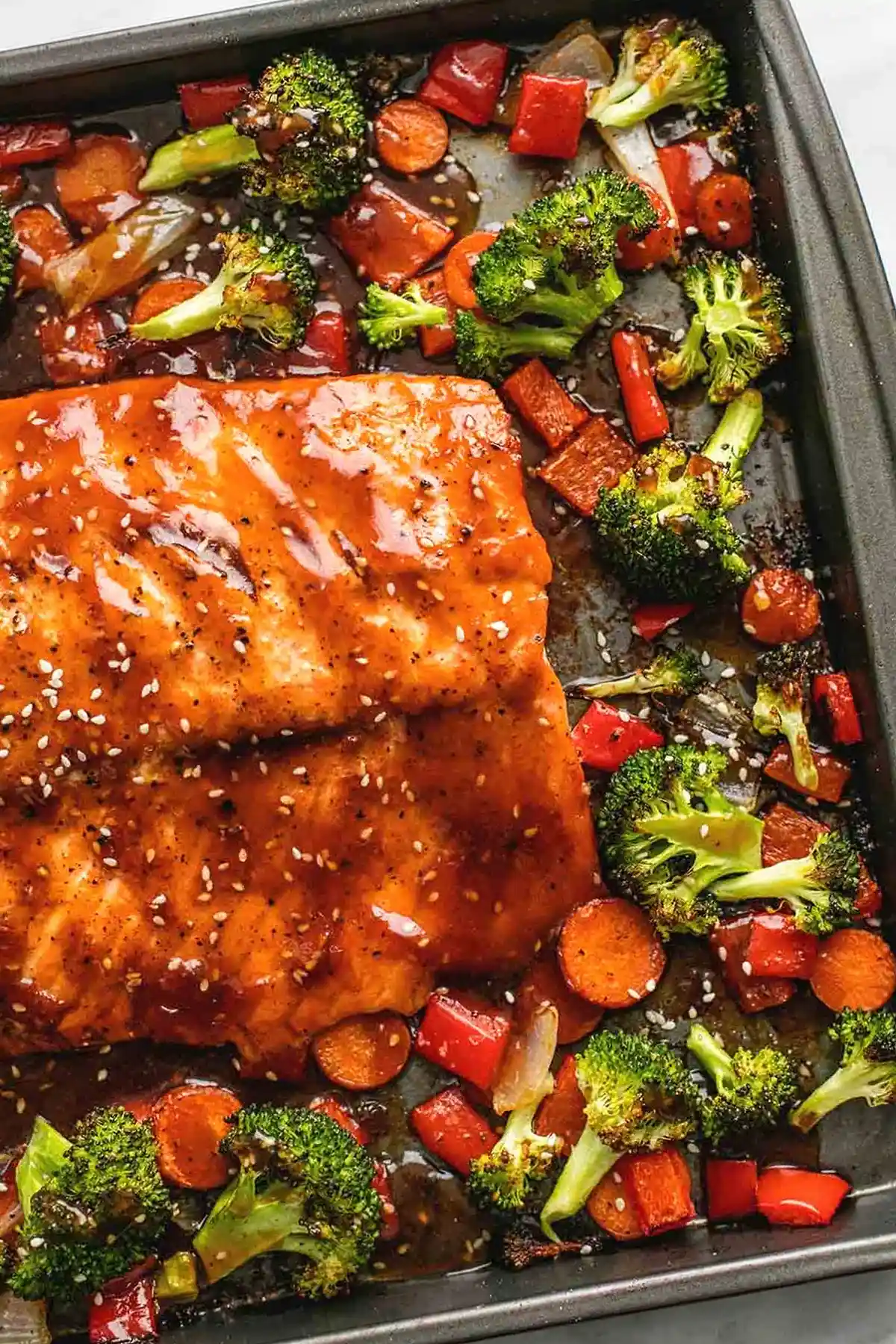
List of ingredients
- 1 large salmon fillet (or 4 6-ounce fillets) – center-cut fillets provide the most even cooking.
- 2 bell peppers (red or green), chopped – cut into 1-inch pieces for uniform roasting.
- 1/2 white or red onion, chopped – red onion adds a slightly sweeter profile.
- 1 cup carrots, chopped or sliced – slice thinly to ensure they soften at the same rate as the broccoli.
- 2 cups broccoli florets – keep florets small to maximize surface area for the sauce.
- Salt and pepper to taste – used for basic seasoning before adding the glaze.
- 2 tablespoons oil – any neutral oil like avocado or canola works best.
- 1 1/2 cups teriyaki sauce – use a store-bought variety or follow the homemade recipe below.
- 1 cup water – base for the homemade sauce.
- 1/4 cup soy sauce – provides the primary salty, umami flavor.
- 2 teaspoons minced garlic – fresh garlic is preferred for a sharper taste.
- 1/4 teaspoon ground ginger – adds a traditional warm spice.
- 1/4 cup packed brown sugar – creates the characteristic syrupy thickness.
- 2 tablespoons honey – adds a glossy finish and natural sweetness.
- 1/4 cup cold water mixed with 2 tablespoons corn starch – creates the thickening slurry.
- 2 teaspoons sesame seeds – used for texture and visual garnish.
- 4 resealable containers – essential for those using the meal prep method.
- 2-3 cups steamed white rice – serves as the hearty base for the dish.
step-by-step instructions
- Prepare the Teriyaki Sauce: Combine the water, soy sauce, garlic, ginger, brown sugar, and honey in a medium saucepan. Whisk well and bring to a boil over medium-high heat.
- Thicken the Glaze: While the sauce boils, stir together the cold water and cornstarch until completely dissolved. Whisk this slurry into the boiling sauce, reduce heat to medium-low, then remove from heat and stir in the sesame seeds. Let the sauce cool slightly.
- Set Up the Oven: Preheat your oven to 400 degrees Fahrenheit. Grease a large baking sheet with butter or cooking spray to prevent sticking.
- Arrange the Salmon: Place the large salmon fillet or individual fillets directly in the center of the prepared baking sheet.
- Prepare the Vegetables: In a large mixing bowl, toss the chopped bell peppers, onion, carrots, and broccoli with oil until evenly coated.
- Position the Vegetables: Transfer the oiled vegetables to the baking sheet, arranging them around the salmon fillets. Ensure the vegetables are not piled on top of the fish.
- Season and Glaze: Season both the salmon and the vegetables with salt and pepper. Drizzle approximately two-thirds of the prepared teriyaki sauce over the fish and the surrounding vegetables.
- Bake the Dish: Place the sheet in the oven and bake for 15-20 minutes. The salmon is ready when it is flaky and tender, and the vegetables should be easily pierced with a fork.
- Prepare the Base: While the salmon is baking, steam your white rice according to your preferred cooking method.
- Final Touch: Immediately drizzle the remaining one-third of the sauce over the cooked salmon and vegetables. Serve immediately or proceed to meal prep steps.
- Meal Prep Assembly: If saving for later, divide the rice, salmon, and vegetables evenly between four resealable containers. Store the remaining sauce in a separate small container.
- Store and Reheat: Refrigerate the containers for up to one week. To reheat, remove the lid and microwave for 2-4 minutes until hot. Serve with the reheated sauce.
Pro Tips for Perfect Results
Choose Fresh, Firm Salmon
Select salmon fillets that have a vibrant color and firm flesh that springs back when touched. Avoid fillets with any gaping or bruising, as these will not hold together as well during the roasting process.
Maintain Uniform Vegetable Cuts
Cut the carrots and broccoli into small, consistent pieces to ensure they cook through in 20 minutes. If carrots are cut too thick, they may remain hard while the salmon becomes overcooked.
Prevent Salmon Overcooking
Check the internal temperature of the salmon with a meat thermometer to ensure it reaches 145 degrees Fahrenheit. Removing the fish just as it becomes opaque prevents it from becoming dry or rubbery.
Use a Heavy-Duty Baking Sheet
A rimmed, heavy-duty baking sheet prevents the teriyaki sauce from bubbling over the edges. This keeps your oven clean and ensures the sauce stays in contact with the food for better caramelization.
Ingredient Substitutions and Options
Alternative Vegetable Combinations
You can swap the broccoli and carrots for asparagus, cauliflower, or zucchini. If using zucchini, add it halfway through the cooking time since it softens much faster than root vegetables.
Substitute Soy Sauce with Coconut Aminos
For those seeking a lower-sodium option, replace the soy sauce with coconut aminos. This provides a similar savory flavor with a slightly sweeter undertone and no soy.
Replace Brown Sugar with Maple Syrup
Maple syrup can be used in place of brown sugar for a different kind of sweetness. This creates a thinner glaze but adds a rich, woody flavor to the teriyaki sauce.
Honey Alternatives for Sweetening
If you do not have honey, agave nectar or a small amount of maple syrup works well. These alternatives maintain the glossy appearance of the sauce while providing the necessary sweetness.
Using Different Rice Varieties
While white rice is standard, you can use brown rice or quinoa for added fiber. Note that brown rice takes significantly longer to cook, so start it well before the salmon enters the oven.
Serving and Presentation Ideas
Enhance with Fresh Garnishes
Top the finished dish with sliced green onions or fresh cilantro. These add a bright, fresh contrast to the deep, salty-sweet flavors of the teriyaki glaze.
Pair with a Crisp Side Salad
Serve this meal alongside a simple cucumber salad with rice vinegar and sesame oil. The acidity of the salad helps cut through the richness of the salmon and the sugar in the sauce.
Experiment with Different Bases
Instead of rice, try serving the salmon and vegetables over cauliflower rice or sautéed spinach. This reduces the carbohydrate content while keeping the meal filling and nutritious.
Storage and Food Safety
Optimal Refrigeration Methods
Store the meal in airtight, BPA-free containers to maintain freshness. Keeping the sauce in a separate small container prevents the vegetables from becoming overly soggy during storage.
Maximum Storage Duration
This dish remains safe and tasty in the refrigerator for up to seven days. Ensure the containers are sealed tightly to prevent the salmon from absorbing other odors in the fridge.
Avoid Freezing Salmon
It is not recommended to freeze cooked salmon and vegetables. Freezing can alter the texture of the fish, making it mushy, and may cause the vegetables to lose their structure.
Reheating for Maximum Quality
Utilize a Microwave Splatter Guard
Cover the container with a plastic splatter guard during reheating. This prevents sauce from splashing and acts as a steamer to keep the fish moist.
Prevent Drying During Reheating
Reheat the salmon on medium power rather than high. This slower process prevents the proteins from tightening and keeps the fillet tender.
Reheating the Rice Base
Add a teaspoon of water over the rice before microwaving. This creates steam that re-hydrates the grains, preventing them from becoming hard or chewy.
Advanced Make-Ahead Strategies
Prepare the Sauce in Advance
The teriyaki sauce can be made several days ahead of time and stored in a glass jar. Simply shake or stir the sauce before use to reintegrate the sesame seeds and cornstarch.
Pre-Cut the Vegetable Medley
Chop the peppers, onions, and carrots and store them in a sealed bag. This reduces your active prep time on the day of cooking to just a few minutes.
Organize Containers for the Week
Assemble your meal prep containers immediately after the salmon has cooled. Dividing the portions accurately ensures you have a balanced meal for every day of the work week.
Common Troubleshooting Guide
Fixing a Sauce That Is Too Thin
If the sauce does not thicken sufficiently, whisk in a small amount of additional cornstarch slurry. Bring it back to a simmer for one minute to activate the thickening agent.
Preventing Burnt Vegetables
If your vegetables are browning too quickly, lower the oven temperature to 375 degrees. You can also add a small splash of water to the pan to create steam.
Handling Undercooked Salmon
If the vegetables are done but the salmon is still raw in the center, move the vegetables to a plate. Return the salmon to the oven for another 3-5 minutes.
Frequently Asked Questions
Can I use frozen salmon fillets?
Yes, but you must thaw them completely in the refrigerator before baking. Baking frozen salmon directly can lead to uneven cooking and an excessive amount of released water on the pan.
How do I know when the salmon is perfectly done?
The salmon is done when the flesh changes from translucent to opaque and flakes easily with a fork. An internal temperature of 145 degrees Fahrenheit is the official safety standard.
Can I bake the rice on the same pan as the salmon?
No, rice requires simmering in water and cannot be roasted. It must be cooked separately in a pot, rice cooker, or steamer to reach the correct texture.
Is homemade sauce better than store-bought?
Homemade sauce allows you to control the sugar and salt levels. It typically tastes fresher and avoids the artificial preservatives found in many commercial teriyaki brands.
Print
One Pan Baked Teriyaki Salmon and Vegetables
- Total Time: 30 minutes
- Yield: 4 servings 1x
- Diet: General
Description
Easy and healthy One Pan Baked Teriyaki Salmon and Vegetables is a quick, 30-minute meal chock full of hearty vegetables and topped with a tasty homemade teriyaki sauce.
Ingredients
- 1 large salmon fillet (or 4 6-ounce salmon fillets)
- 2 bell peppers (red or green), chopped
- ½ white or red onion, chopped
- 1 cup chopped or sliced carrots
- 2 cups broccoli florets
- salt and pepper to taste
- 2 tablespoons oil
- 1 cup water
- ¼ cup soy sauce
- 2 teaspoons minced garlic
- ¼ teaspoon ground ginger
- ¼ cup packed brown sugar
- 2 tablespoons honey
- ¼ cup cold water + 2 tablespoons corn starch
- 2 teaspoons sesame seeds
- 2–3 cups steamed white rice
Instructions
- Step: Combine water, soy sauce, garlic, ginger, brown sugar, and honey in a medium sauce pan and whisk to combine.
- Step: Bring to a boil over medium-high heat.
- Step: Stir together cold water and corn starch until dissolved, then whisk into boiling sauce and reduce heat to medium-low.
- Step: Remove from heat, stir in sesame seeds, and allow to cool.
- Step: Preheat oven to 400 degrees.
- Step: Grease a large baking sheet and arrange salmon in the center.
- Step: Combine vegetables in a large bowl along with oil and toss to coat.
- Step: Transfer vegetables to baking sheet, arranging them around the salmon.
- Step: Season vegetables and salmon with salt and pepper to taste.
- Step: Drizzle 2/3 of the sauce over the salmon and veggies.
- Step: Bake for 15-20 minutes until salmon is flaky and tender and veggies are easily pierced with a fork.
- Step: Steam or cook the rice while the salmon is baking.
- Step: Drizzle with remaining sauce and serve.
Notes
You can swap out suggested veggies for cauliflower, asparagus, or zucchini. For reheating, use a plastic splatter guard to act as a steamer and keep the food moist.
- Prep Time: 10 minutes
- Cook Time: 20 minutes
- Category: Main Course
- Method: Baking
- Cuisine: Asian
Nutrition
- Serving Size: 1 serving
- Calories: 379 kcal
- Sugar: 28 g
- Sodium: 877 mg
- Fat: 11 g
- Saturated Fat: 1 g
- Unsaturated Fat: 9 g
- Trans Fat: 1 g
- Carbohydrates: 57 g
- Fiber: 4 g
- Protein: 15 g
- Cholesterol: 23 mg