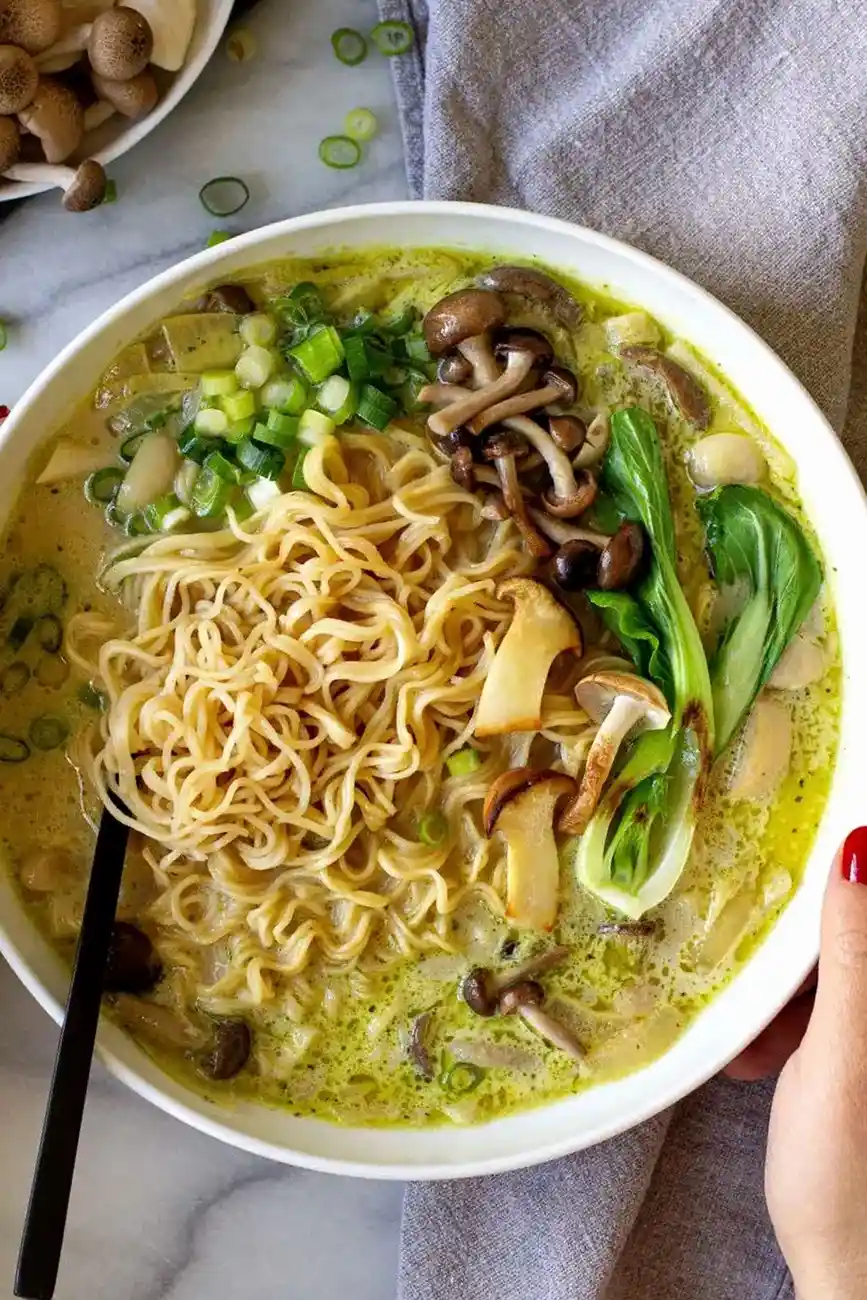
This mushroom miso ramen noodle soup is a comforting, umami-packed meal that brings the heart of a ramen bar into your home kitchen. By combining earthy mushrooms with a creamy, fermented miso broth, you achieve a depth of flavor that is both satisfying and entirely plant-based. This recipe is designed for ease, allowing you to whip up a restaurant-quality bowl in just thirty minutes using simple ingredients you likely already have on hand.
List of ingredients
- 2 tablespoons neutral oil
- 0.5 cup onion, sliced
- 3 garlic cloves, thinly sliced
- 1 cup mushrooms, roughly chopped
- 1 teaspoon mushroom powder
- 0.5 teaspoon sea salt
- 1 vegetable stock cube
- 4 cups water
- 1 cup full fat coconut milk
- 2 tablespoons white miso paste
- 4 ounces ramen noodles
- 1 tablespoon soy sauce or coconut aminos
- 1 green onion, finely chopped
- 1 baby bok choy, steamed or sautéed
step-by-step instructions
- Prep: Wipe mushrooms, trim ends, and chop. Thinly slice the onion and garlic. Wash and prepare the bok choy separately by steaming or sautéing. Thinly slice the green onion.
- Sauté: Heat oil in a large pot over high heat. Add onion, garlic, and mushrooms. Sauté for 4-5 minutes.
- Season: Stir in the mushroom powder and salt to coat the vegetables.
- Simmer: Add vegetable stock cube and water, bringing to a simmer.
- Combine: Stir in the coconut milk and miso paste until fully dissolved.
- Cook Noodles: Add the ramen noodles, cover, and bring to a gentle boil. Remove the lid and cook for about 4 minutes until noodles are tender.
- Finish: Turn off the heat and stir in the soy sauce or coconut aminos to taste.
- Serve: Ladle into bowls and garnish with green onion and prepared baby bok choy.
Refining your mushroom selection
Exploring forest floor varieties
While standard white button mushrooms work in a pinch, incorporating a variety of mushrooms dramatically elevates the quality of this soup. Shiitake mushrooms offer a meaty texture, while oyster mushrooms add a delicate, velvety mouthfeel. Combining at least two different types ensures a complex flavor profile that mimics long-simmered restaurant broths.
The role of rehydration
If you have access to dried porcini or shiitake mushrooms, try soaking a small handful in hot water for twenty minutes before adding them to your pot. The soaking liquid is essentially concentrated mushroom essence, which you can use in place of a portion of the water for an even more intense savory punch.
Perfecting the broth balance
Managing the miso paste
Miso paste is a living, fermented product and should never be boiled vigorously for an extended time. Adding the miso toward the end of the cooking process preserves the beneficial enzymes and prevents the flavor from becoming overly acidic. Always whisk it into a small amount of warm broth in a separate bowl before adding it to the main pot to prevent lumps.
Balancing the coconut creaminess
Full-fat coconut milk is essential for providing that signature creamy ramen mouthfeel, but it can sometimes dominate with a strong coconut flavor. If you find the coconut notes too forward, try adding a squeeze of fresh lime juice or a small pinch of ginger during the sautéing stage. These bright elements cut through the richness and ground the sweetness of the milk.
Mastering noodle consistency
Avoiding overcooked strands
Ramen noodles continue to soften as they sit in the hot broth. To ensure the best texture, monitor the noodles closely during the final four minutes of cooking and remove the pot from the heat as soon as they reach an al dente state. If you are preparing this for a larger group, you can cook the noodles separately and divide them into bowls, pouring the hot soup over them just before serving.
Selecting the right noodle type
For this specific recipe, fresh or air-dried ramen noodles hold up best to the coconut-miso base. Avoid overly processed instant ramen noodles that come with flavor packets, as they often contain ingredients that may affect the purity of your homemade broth. If you cannot find ramen noodles, thick wheat-based udon noodles also pair beautifully with this savory liquid.
Frequently Asked Questions
Can I use other vegetables instead of bok choy?
Yes, spinach or kale are excellent alternatives that provide a similar nutrient profile. Simply wilt them in the hot soup during the final minute of cooking rather than sautéing them separately.
Is it possible to make the broth thinner?
If you prefer a lighter, clearer broth, simply reduce the amount of coconut milk by half and increase the water accordingly. This will change the texture from creamy to a more traditional translucent soup base.
How should I store leftover soup?
Store the noodles and the broth in separate containers if possible, as the noodles will absorb too much liquid and become mushy overnight. The broth itself will last for up to three days in the refrigerator and actually develops more flavor as the ingredients meld.
Can I add protein to this dish?
While this is a plant-based recipe, you can easily add pan-seared tofu cubes or edamame for extra protein. These additions should be prepared separately and added to the bowl during the final plating stage to keep their texture distinct.
Practical handling of aromatics
Maximizing garlic flavor
When slicing your garlic, the thickness of the slices affects the final intensity of the broth. Thinner slices tend to dissolve slightly, thickening the broth and distributing the garlic flavor more evenly. If you prefer distinct bites of garlic, cut the cloves into slightly thicker slivers and add them to the pot a minute after the onions have started to soften.
Caramelizing the onion base
Take the time to properly sauté the onions until they become translucent and slightly golden. This initial step builds the foundation of the soup’s sweetness, which is crucial for balancing the salty miso and the savory mushroom powder. If you rush this step, the soup may lack that necessary base note of depth and complexity.
Print
Mushroom Miso Ramen Noodle Soup
- Total Time: PT30M
- Yield: 2 servings 1x
- Diet: Vegan, Vegetarian, Dairy Free
Description
A savory, creamy, umami-packed mushroom miso ramen noodle soup that is entirely plant-based and prepared in one pot.
Ingredients
- 2 tablespoons neutral oil
- 0.5 cup onion, sliced
- 3 garlic cloves, thinly sliced
- 1 cup mushrooms, roughly chopped
- 1 teaspoon mushroom powder
- 0.5 teaspoon sea salt
- 1 vegetable stock cube
- 4 cups water
- 1 cup full fat coconut milk
- 2 tablespoons white miso paste
- 4 ounces ramen noodles
- 1 tablespoon soy sauce or coconut aminos
- 1 green onion, finely chopped
- 1 baby bok choy, steamed or sautéed
Instructions
- Prep: Wipe mushrooms, trim ends, and chop. Thinly slice the onion and garlic. Wash and prepare the bok choy separately by steaming or sautéing. Thinly slice the green onion.
- Sauté: Heat oil in a large pot over high heat. Add onion, garlic, and mushrooms. Sauté for 4-5 minutes.
- Season: Stir in the mushroom powder and salt to coat the vegetables.
- Simmer: Add vegetable stock cube and water, bringing to a simmer.
- Combine: Stir in the coconut milk and miso paste until fully dissolved.
- Cook Noodles: Add the ramen noodles, cover, and bring to a gentle boil. Remove the lid and cook for about 4 minutes until noodles are tender.
- Finish: Turn off the heat and stir in the soy sauce or coconut aminos to taste.
- Serve: Ladle into bowls and garnish with green onion and prepared baby bok choy.
Notes
Using wild mushrooms can enhance the depth of flavor. Ensure the miso is stirred in thoroughly after the heat is reduced or at a gentle simmer to preserve its probiotic benefits.
- Prep Time: PT10M
- Cook Time: PT20M
- Category: Dinner
- Method: Stovetop
- Cuisine: Japanese inspired
Nutrition
- Serving Size: 1 bowl
- Calories: 380 kcal
- Sugar: 4 g
- Sodium: 850 mg
- Fat: 18 g
- Saturated Fat: 12 g
- Unsaturated Fat: 5 g
- Trans Fat: 0 g
- Carbohydrates: 45 g
- Fiber: 4 g
- Protein: 9 g
- Cholesterol: 0 mg