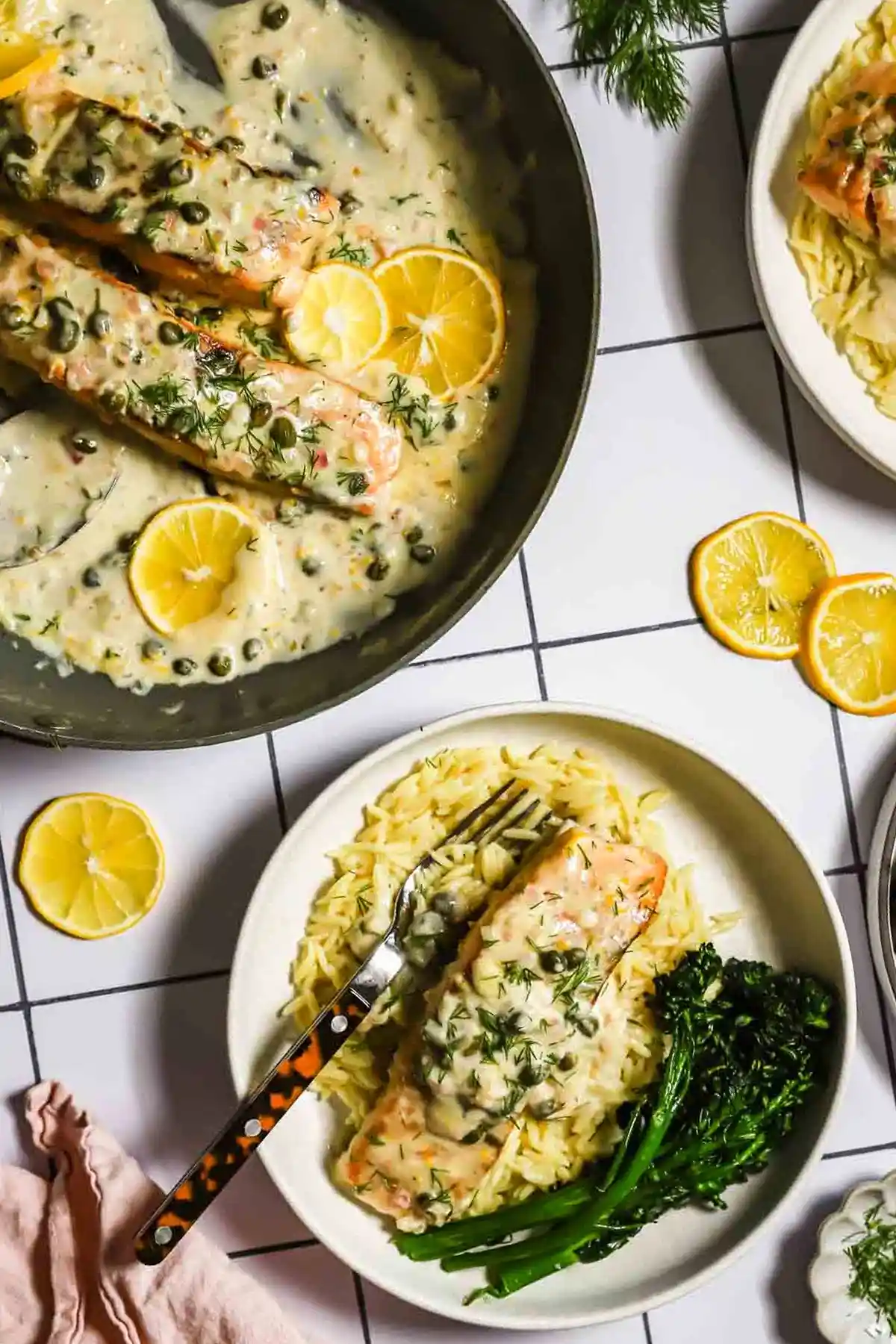
This vibrant salmon piccata offers a sophisticated dining experience that fits perfectly into a busy weeknight schedule. By combining delicate, flour-dusted fillets with a bright and velvety lemon-caper reduction, you create a restaurant-quality meal in under twenty minutes. It is an ideal solution for those seeking a balance between fresh, healthy protein and rich, comforting flavor profiles.
List of ingredients
- 1 tablespoon olive oil
- 1 ½ pounds salmon (cut into 4 equal pieces)
- ½ teaspoon kosher salt (more to taste)
- ½ teaspoon garlic powder
- ¼ cup all purpose flour
- 2 tablespoons unsalted butter
- 1 medium shallot (finely chopped)
- ½ cup vegetable broth
- 1 lemon (zested and juiced)
- 3 tablespoons capers (drained)
- 1 cup heavy cream
- 1 tablespoon dill (finely chopped for serving)
step-by-step instructions
- Step: Cut the salmon into 4 equal pieces. Sprinkle it with ½ teaspoon of garlic powder and ½ teaspoon of salt on all sides. Dredge each piece in flour on all sides.
- Step: Heat a pan to medium heat, add the oil. Then add the salmon. Cook for 2 minutes, then flip and cook for another 2 minutes. Be sure not to overcook the fish; it shouldn’t be cooked fully yet. Remove the salmon to a plate and set aside.
- Step: Add the chopped shallot, butter and remaining 1 teaspoon of salt and cook for 2-3 minutes or until soft.
- Step: Then add the capers, lemon juice, vegetable broth and lemon zest. Let it cook for about 2 minutes (or until it reduces by half).
- Step: Pour in the heavy cream. Taste and adjust seasoning to your liking. Simmer on low for 3-4 minutes.
- Step: Add the salmon back into the pan. Cook for an additional 3-4 minutes, spooning the sauce over the salmon on medium-low heat or until it’s cooked through and it flakes easily with a fork and the sauce has thickened more.
- Step: Sprinkle the fresh dill over top and tuck in the lemon slices (optional). Serve with mashed potatoes, orzo pasta, with a side of veggies or salad and enjoy.
Refining your cooking technique
Selecting the right pan for even heat distribution
Using a heavy-bottomed stainless steel or non-stick skillet is vital for this recipe because it ensures consistent heat transfer. A thin pan can lead to hot spots where the flour coating might burn before the salmon is properly cooked. Always allow the skillet to reach the target medium heat before adding the oil to ensure the fish creates a crisp barrier immediately upon contact.
Achieving the perfect golden flour crust
The secret to a great sear is applying a very light coating of flour and shaking off any excess. If the layer of flour is too thick, it will become gummy and absorb too much of the pan juices, preventing the desired crust from forming. Press the fish into the flour gently and ensure you have shaken the fillet before placing it into the hot oil.
Managing internal fish temperatures
Because salmon continues to cook even after you remove it from the direct heat source, pulling it from the skillet at precisely the right moment is essential. Aim to pull the fillets when the internal temperature is just approaching the desired level, as the final simmering stage in the sauce will complete the cooking process perfectly without drying out the delicate protein.
Expanding flavor profiles
Balancing acidity and richness
If you find that the lemon juice is too sharp for your personal preference, you can increase the amount of broth slightly or add a tiny pinch of sugar to mellow the tang. Conversely, if the sauce feels too heavy, brighten it up by adding an extra teaspoon of freshly grated lemon zest during the final minute of simmering. Always perform a final taste test of the sauce before returning the fish to the pan, as this is your last opportunity to adjust the salt levels.
Adding secondary aromatic elements
While shallots are the traditional choice for a piccata sauce, you can experiment with finely minced leeks for a earthier tone. If you want a slight bite without using heat-sensitive garlic, stir in a quarter teaspoon of finely grated ginger during the final simmer. These subtle modifications can help customize the dish to match the specific sides you intend to serve alongside the salmon.
Managing and serving the dish
Effective storage for busy schedules
Leftover salmon piccata should be stored in an airtight container within the refrigerator for no longer than three days to ensure the quality of the cream-based sauce remains high. When storing, try to keep the fish submerged in the sauce to prevent the edges of the salmon from drying out in the cold air. Never attempt to freeze this dish, as the heavy cream and broth emulsion will likely break and separate upon thawing.
Gentle reheating strategies
To reheat, use a small saucepan over very low heat rather than a microwave, which can cause the proteins in the salmon to toughen rapidly. If the sauce has thickened too much in the fridge, whisk in a tablespoon of warm water or additional broth to restore the silky texture. Only heat the sauce until it is just warm enough to serve, which prevents the cream from curdling or separating.
Creative pairings for a complete meal
This dish is incredibly versatile and pairs beautifully with starches that can absorb the extra lemon-caper sauce. Consider serving the salmon over a bed of al dente orzo, creamy mashed potatoes, or even roasted asparagus to add a crisp, vegetal crunch. Because the sauce is quite rich, a side of lightly steamed green beans with a squeeze of fresh lemon creates a balanced and vibrant contrast on the plate.
Common questions and answers
Why did my cream sauce curdle?
Curdling usually happens if the sauce is boiled vigorously while the cream is being incorporated or if the lemon juice is added too quickly to high heat. Always add the cream slowly while whisking on low heat and never let the finished sauce reach a rolling boil to maintain a stable, velvety consistency.
Can I substitute other citrus fruits?
While lemon is the defining flavor of a traditional piccata, a mix of lemon and lime can provide a unique floral twist. Avoid using orange as it is generally too sweet and lacks the necessary acidity to balance the richness of the butter and heavy cream in this recipe.
Is it necessary to use heavy cream?
Heavy cream is used here to create a stable, thick sauce that adheres to the fish, but you can use full-fat coconut milk for a different flavor profile. Note that the final consistency may be slightly thinner than a dairy-based sauce, so you might need to reduce the liquid for a minute longer.
Should I remove the skin before cooking?
Yes, skinless salmon fillets are highly recommended for this recipe as they allow for better searing and a more uniform texture when biting into the finished dish. If your salmon still has skin attached, carefully remove it with a sharp knife or use a pair of kitchen shears before starting the dredging process.
Print
Creamy Lemon Caper Salmon Piccata
- Total Time: PT20M
- Yield: 4 servings 1x
- Diet: Pescatarian
Description
Try this Salmon Piccata for an easy yet elegant meal that’s ready in just 20 minutes! Tender salmon fillets are lightly dredged in flour, pan-seared to perfection, and bathed in a creamy lemon-caper sauce that’s tangy, savory, and indulgent.
Ingredients
- 1 tablespoon olive oil
- 1 ½ pounds salmon (cut into 4 equal pieces)
- ½ teaspoon kosher salt (more to taste)
- ½ teaspoon garlic powder
- ¼ cup all purpose flour
- 2 tablespoons unsalted butter
- 1 medium shallot (finely chopped)
- ½ cup vegetable broth
- 1 lemon (zested and juiced)
- 3 tablespoons capers (drained)
- 1 cup heavy cream
- 1 tablespoon dill (finely chopped for serving)
Instructions
- Step: Cut the salmon into 4 equal pieces. Sprinkle it with ½ teaspoon of garlic powder and ½ teaspoon of salt on all sides. Dredge each piece in flour on all sides.
- Step: Heat a pan to medium heat, add the oil. Then add the salmon. Cook for 2 minutes, then flip and cook for another 2 minutes. Be sure not to overcook the fish; it shouldn’t be cooked fully yet. Remove the salmon to a plate and set aside.
- Step: Add the chopped shallot, butter and remaining 1 teaspoon of salt and cook for 2-3 minutes or until soft.
- Step: Then add the capers, lemon juice, vegetable broth and lemon zest. Let it cook for about 2 minutes (or until it reduces by half).
- Step: Pour in the heavy cream. Taste and adjust seasoning to your liking. Simmer on low for 3-4 minutes.
- Step: Add the salmon back into the pan. Cook for an additional 3-4 minutes, spooning the sauce over the salmon on medium-low heat or until it’s cooked through and it flakes easily with a fork and the sauce has thickened more.
- Step: Sprinkle the fresh dill over top and tuck in the lemon slices (optional). Serve with mashed potatoes, orzo pasta, with a side of veggies or salad and enjoy.
Notes
Opt for fresh, high-quality salmon for the best flavor and texture. If the sauce is too thin, let it simmer for a few extra minutes to reduce further. If too thick, thin it out with a little more broth or cream. Dairy-free version can use coconut cream. Parsley, chives or tarragon can also complement the flavors if dill isn’t your favorite.
- Prep Time: PT5M
- Cook Time: PT15M
- Category: Main Course
- Method: Pan-Seared
- Cuisine: Italian
Nutrition
- Serving Size: 1 fillet with sauce
- Calories: 570 kcal
- Sugar: 3 g
- Sodium: 659 mg
- Fat: 42 g
- Saturated Fat: 19 g
- Unsaturated Fat: 19 g
- Trans Fat: 0.2 g
- Carbohydrates: 12 g
- Fiber: 1 g
- Protein: 37 g
- Cholesterol: 176 mg