This vibrant and light Thai cabbage soup offers a clean, soothing profile that centers on a clear, flavorful broth teeming with tender vegetables. Perfectly balanced and adaptable, this recipe provides a nourishing bowl that can be prepared with savory protein additions or kept as a completely plant-based meal. It is a fantastic option for a quick weeknight dinner that relies on simple, wholesome pantry ingredients to achieve a classic Southeast Asian flavor profile without any heavy fats.
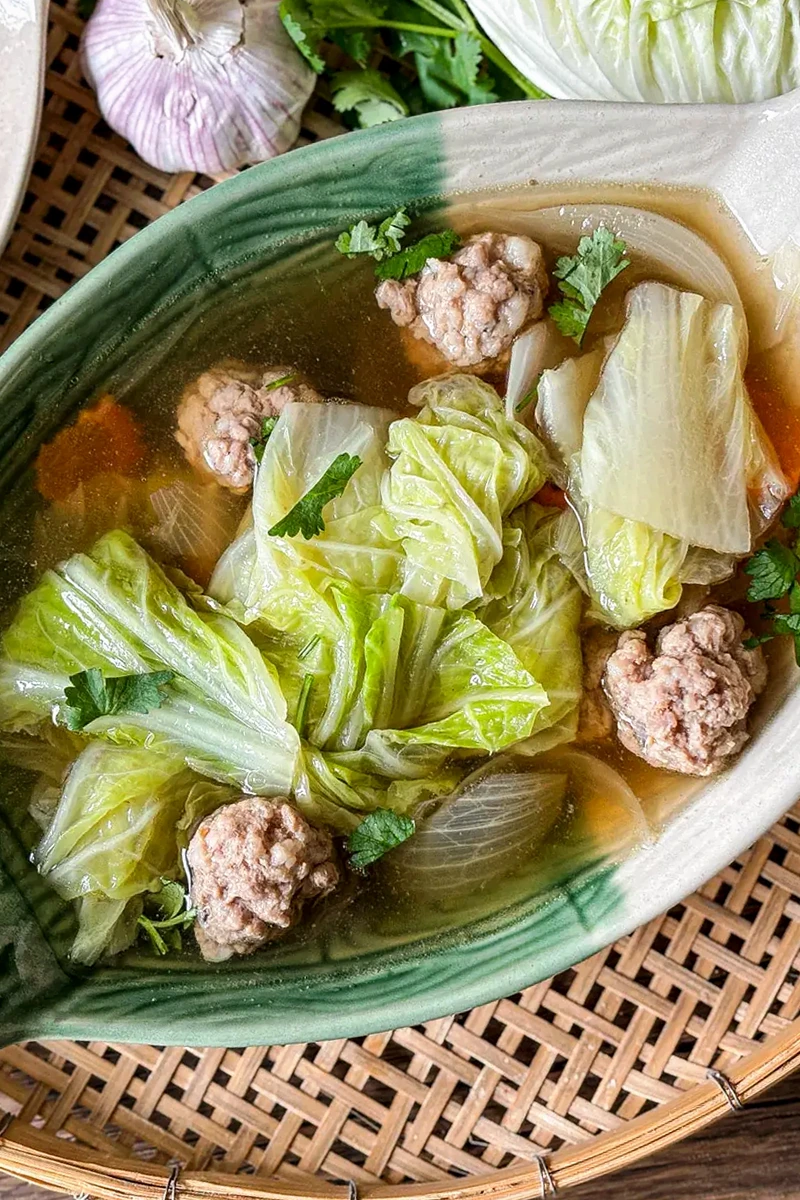
List of ingredients
- 150 g ground chicken
- Black pepper (season to taste)
- Salt (season to taste)
- 1 l water
- 1 tbsp light soy sauce
- ½ tsp salt
- 1 bouillon cube
- 1 onion (sliced or chopped)
- 2 cloves of garlic (lightly crushed)
- ½ carrot (thinly sliced)
- 200 g cabbage (sliced into bite-sized chunks)
step-by-step instructions
- Step: Thinly slice the carrot, chop the cabbage into bite-sized chunks, lightly crush the garlic, and slice the onion.
- Step: Bring water to a boil, then add soy sauce, bouillon cube, salt, onion, and garlic. Cook until fragrant and the onion softens.
- Step: Season the ground chicken with salt and black pepper, then roll into small meatballs.
- Step: Drop them into the simmering broth and let them cook until they float to the surface.
- Step: Add the carrot and cabbage. Simmer until tender, then serve hot.
Practical tips for clear broth success
Managing the heat for clarity
When preparing a clear-style broth, the most important factor is maintaining a gentle simmer rather than a violent boil. A heavy, rapid boil can emulsify the fat from the meat and make the soup appear cloudy rather than translucent. By keeping the heat low, you ensure the liquid remains bright and clear, which is the hallmark of a high-quality light Thai soup.
Maximizing aromatic extraction
To get the most flavor out of the garlic and onion, you should add them to the water before the broth reaches a full boil. This allows the water to slowly draw out the volatile oils from the garlic, creating a much more layered taste than if they were tossed in at the end. Crushing the garlic, rather than chopping it, provides enough surface area for flavor while making it easier to fish out or leave in depending on your preference for texture.
Substitutions and protein alternatives
Choosing the right protein density
If you prefer a meatless version, you can substitute the ground meat with firm tofu or extra-firm pressed tempeh. Simply cut the tofu into small cubes and slide them into the pot at the same stage you would add the meatballs. Because tofu is already cooked in terms of food safety, you only need to heat it through until it absorbs the flavor of the broth.
Selecting alternative cabbage varieties
Napa cabbage is ideal because of its high water content and delicate leaf structure that softens rapidly in hot broth. However, if you have Savoy cabbage, you can use it by thinly shredding the leaves; this helps it match the cooking time of the carrots. Avoid using tightly packed winter green cabbage unless you are willing to let it simmer for an extra five minutes to reach a palatable tenderness.
Serving ideas for a complete meal
Adding refreshing garnishes
While the soup is excellent on its own, finishing each bowl with a sprinkle of chopped fresh cilantro or green onions adds a bright, fresh contrast to the warm broth. A squeeze of fresh lime juice right before eating can also brighten the umami profile of the soy sauce and bouillon, mirroring the flavor balancing act found in many traditional Southeast Asian dishes. If you enjoy a bit of heat, a dash of white pepper or a sprinkle of dried chili flakes can provide a gentle warmth that builds without overwhelming the subtlety of the cabbage.
Storage and reheating best practices
Managing leftovers for freshness
If you have leftovers, store the soup in an airtight glass container to prevent any flavor migration from other items in your refrigerator. It is best to consume the soup within three days, as the cabbage will continue to soften and may lose its structural integrity over longer periods. When reheating, avoid high heat in the microwave, which can cause the meat protein to become rubbery; instead, warm the soup on the stovetop over medium-low heat until it is just simmering again.
Make-ahead advice
You can prepare the soup base and the meatballs in advance, but for the best texture, add the fresh vegetables only when you are ready to serve. If you prepare the entire soup and store it, the cabbage will become very soft. By keeping the broth and meatballs in one container and adding fresh cabbage during the final reheating stage, you can replicate the experience of a freshly made batch.
Troubleshooting common issues
Balancing the salt levels
If you find that the soup is too salty after adding the bouillon cube, simply add an extra half cup of water or a few extra leaves of cabbage. The cabbage acts as a natural sponge and will absorb some of the excess salt from the broth as it wilts. Always taste the broth before adding the final seasoning, as different brands of bouillon have varying levels of sodium.
Ensuring the meatballs stay tender
The secret to tender meatballs is to handle the meat as little as possible while mixing in the salt and pepper. Overworking the meat causes the proteins to bind too tightly, resulting in a dense and chewy texture. If you want even lighter meatballs, you can add a tablespoon of cold water or a small amount of finely grated ginger into the meat mixture before rolling them.
Frequently asked questions
Can you freeze this soup for later?
Yes, but you should freeze it without the cabbage and carrots if possible, as these vegetables become very mushy after freezing and thawing. The broth and meatballs will freeze perfectly for up to two months in a sealed freezer-safe container. When you are ready to eat, thaw the mixture in the refrigerator overnight and then add fresh cabbage and carrots while you bring the soup to a boil.
Why is my broth cloudy?
Cloudiness is usually caused by excessive fat or boiling the ingredients too aggressively. If you are using meat, ensure you skim any foam that rises to the surface during the first few minutes of boiling. This foam contains impurities and proteins that can contribute to a cloudy appearance. Using a fine-mesh strainer to remove this layer early on will guarantee a clear, professional-looking result every time.
Print
Light Thai Cabbage Soup
- Total Time: PT20M
- Yield: 2 1x
- Diet: Low Carb
Description
This easy Thai cabbage soup recipe features a clear, savory broth, healthy vegetables, and optional tender poultry meatballs for a light and comforting meal.
Ingredients
- 150 g ground chicken
- Black pepper (season to taste)
- Salt (season to taste)
- 1 l water
- 1 tbsp light soy sauce
- ½ tsp salt
- 1 bouillon cube
- 1 onion (sliced or chopped)
- 2 cloves of garlic (lightly crushed)
- ½ carrot (thinly sliced)
- 200 g cabbage (sliced into bite-sized chunks)
Instructions
- Step: Thinly slice the carrot, chop the cabbage into bite-sized chunks, lightly crush the garlic, and slice the onion.
- Step: Bring water to a boil, then add soy sauce, bouillon cube, salt, onion, and garlic. Cook until fragrant and the onion softens.
- Step: Season the ground chicken with salt and black pepper, then roll into small meatballs.
- Step: Drop them into the simmering broth and let them cook until they float to the surface.
- Step: Add the carrot and cabbage. Simmer until tender, then serve hot.
Notes
Use the nutrition card in this recipe as a guideline. This soup is a low-carb, diet-friendly option.
- Prep Time: PT10M
- Cook Time: PT10M
- Category: Soup
- Method: Simmering
- Cuisine: Thai
Nutrition
- Serving Size: 1 bowl
- Calories: 245 kcal
- Sugar: 7 g
- Sodium: 1678 mg
- Fat: 8 g
- Saturated Fat: 2 g
- Unsaturated Fat: 5 g
- Trans Fat: 0 g
- Carbohydrates: 14 g
- Fiber: 4 g
- Protein: 22 g
- Cholesterol: 65 mg