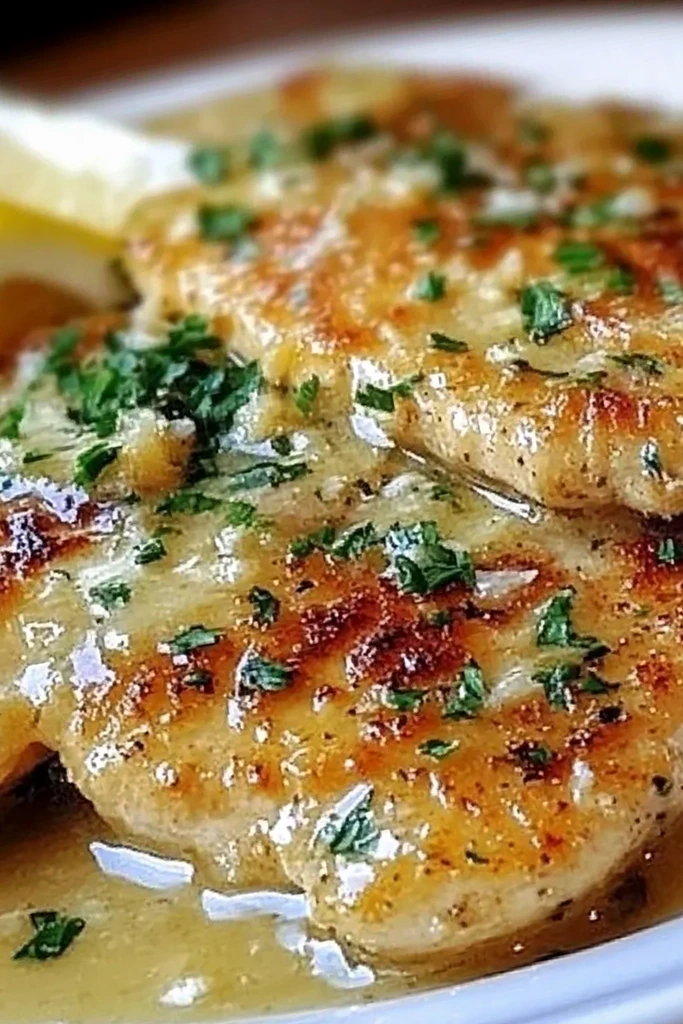
This recipe features tender chicken breasts coated in a savory Romano cheese crust and finished with a bright lemon sauce. It is a practical, high-protein meal that balances salty and acidic notes for a sophisticated flavor profile.
List of ingredients
- 4 boneless, skinless chicken breasts – ensure they are trimmed of excess fat.
- 1 cup all-purpose flour – used for the initial dredging layer.
- 2 large eggs – beaten well to act as a binder.
- 1 cup grated Romano cheese – provides a sharp, salty crust.
- 1 teaspoon garlic powder – adds depth to the breading.
- 1 teaspoon salt – adjusts the seasoning of the meat.
- ½ teaspoon black pepper – provides a mild spicy contrast.
- ½ cup lemon juice – freshly squeezed for maximum acidity.
- ¼ cup olive oil – used for searing the chicken.
- 2 tablespoons butter – adds richness to the pan sauce.
- Fresh parsley – finely chopped for the final garnish.
step-by-step instructions
- Prepare the meat: Place the chicken breasts between two sheets of plastic wrap. Pound them to an even thickness of about ½ inch to ensure uniform cooking.
- Organize the breading: Set up three separate bowls. Fill the first with flour, the second with beaten eggs, and the third with a mixture of Romano cheese, garlic powder, salt, and pepper.
- Coat the chicken: Dip each breast into the flour and shake off the excess. Dip it into the egg mixture, allowing the excess to drip off, and then press it firmly into the cheese mixture until fully coated.
- Heat the skillet: Place a large skillet over medium heat and add the olive oil and butter. Heat until the butter is melted and bubbling.
- Sear the chicken: Add the chicken breasts to the pan. Cook for 5-7 minutes per side until the crust is golden brown. Use a meat thermometer to confirm an internal temperature of 165°F.
- Deglaze the pan: Remove the chicken from the pan and keep it warm. Pour the lemon juice into the skillet, stirring constantly to incorporate the browned bits from the bottom of the pan.
- Combine: Return the chicken breasts to the skillet for one minute to let them absorb a small amount of the lemon sauce.
- Finish and serve: Place the chicken on a platter, drizzle the remaining sauce over the top, and garnish with fresh parsley.
Pro Techniques for Better Results
Pounding Meat for Even Cooking
Using a meat mallet or rolling pin ensures the chicken is the same thickness across the entire piece. This prevents the edges from overcooking while the center remains raw. Plastic wrap protects the meat from tearing during this process.
The Dry-Hand Wet-Hand Method
To avoid clumps of breading on your fingers, use one hand for dry ingredients (flour and cheese) and the other for the wet egg wash. This keeps the breading station clean and ensures a smoother coating on the chicken.
Controlling Pan Temperature
Maintain a steady medium heat to prevent the Romano cheese from burning. Because cheese contains proteins and fats that brown quickly, too high a heat will char the crust before the chicken reaches 165°F.
Deglazing for Maximum Flavor
Adding lemon juice to the hot pan creates a process called deglazing. This lifts the caramelized bits of cheese and chicken proteins, integrating them into the sauce for a more intense flavor profile.
Ingredient Substitutions and Swaps
Alternative Hard Cheeses
If Romano cheese is unavailable, you can use Parmesan or Pecorino Romano. Parmesan is slightly nuttier and milder, while Pecorino is made from sheep’s milk and is saltier than Romano.
Gluten-Free Flour Options
To make this dish gluten-free, replace the all-purpose flour with a 1:1 gluten-free flour blend or almond flour. Cornstarch can also be used for a crispier, lighter crust.
Using Chicken Thighs
Boneless, skinless chicken thighs can be used instead of breasts for a juicier result. Thighs have a higher fat content and are more forgiving if slightly overcooked, though they may require an extra minute of searing.
Adding a Spicy Element
For those who prefer heat, add ¼ teaspoon of crushed red pepper flakes to the cheese mixture. Alternatively, a pinch of cayenne pepper can be added to the flour for a subtle, underlying warmth.
Serving Suggestions and Pairings
Complementary Vegetable Sides
Serve this chicken with steamed broccoli, sautéed spinach, or roasted asparagus. The bitterness of these greens balances the richness of the cheese crust and the acidity of the lemon sauce.
Starch Pairings for Sauce
Pair the dish with garlic mashed potatoes, buttered noodles, or a creamy risotto. These starches are effective at absorbing the excess lemon butter sauce from the platter.
Light Salad Options
An arugula salad with a simple vinaigrette is an excellent pairing. The peppery notes of arugula complement the salty Romano cheese and the citrusy sauce without overwhelming the palate.
Fresh Herb Variations
While parsley is traditional, fresh basil or thyme can be used as a garnish. Thyme works particularly well if you add a few sprigs to the butter while searing the chicken.
Storage and Reheating Guidelines
Refrigeration Limits
Store leftover chicken in an airtight container in the refrigerator for up to three days. Keep the lemon sauce in a separate container if possible to prevent the breading from becoming too soggy.
Freezing Instructions
You can freeze cooked chicken by wrapping individual pieces tightly in foil and placing them in a freezer bag for up to three months. For best results, bread the chicken and freeze it raw, then fry it directly from frozen.
Maintaining Texture During Reheating
Avoid using a microwave for reheating, as it will make the cheese crust rubbery. Instead, use an oven or toaster oven at 350°F until heated through to preserve the crispiness of the crust.
Reviving the Sauce
The lemon sauce may separate or thicken in the fridge. Gently reheat it in a small saucepan over low heat, adding a teaspoon of water or butter to restore the emulsion.
Common Troubleshooting
Preventing Breading from Peeling
If the cheese crust falls off, it is usually because the chicken was too wet before flouring. Pat the chicken breasts dry with paper towels before starting the dredging process to ensure a strong bond.
Fixing Overly Tart Sauce
If the lemon juice makes the sauce too acidic, whisk in a small knob of cold butter or a pinch of sugar. This neutralizes the sharp acidity and creates a smoother, more balanced taste.
Managing Burnt Cheese
If the cheese burns quickly, lower the heat and add a tablespoon of olive oil. The additional fat helps distribute heat more evenly and prevents the cheese from sticking and scorching to the pan.
Ensuring Juiciness
Overcooking is the most common cause of dry chicken. Always use a meat thermometer and remove the chicken from the pan as soon as it hits 165°F, allowing it to carry over cook while resting.
Frequently Asked Questions
Can I bake this recipe instead of frying?
Yes, you can place the breaded chicken on a parchment-lined baking sheet and bake at 400°F for 15-20 minutes. However, the crust will not be as golden or crisp as the pan-seared version.
Do I need to peel the lemons?
No, you only need the juice. However, you can zest the lemon before juicing and add the zest to the cheese mixture for a more intense citrus flavor.
Can I use bottled lemon juice?
Bottled juice can be used, but fresh lemon juice provides a brighter, cleaner taste. If using bottled juice, reduce the amount by one tablespoon as it is often more concentrated.
Is it okay to skip the flour?
The flour is essential because it dries the surface of the meat, allowing the egg to adhere. Without it, the egg and cheese mixture are more likely to slide off during the cooking process.
How do I know when the butter is ready for the chicken?
The butter should be melted and just starting to foam. If the butter turns brown immediately, the pan is too hot; remove it from the heat for a moment before adding the chicken.
Print
Lemon Chicken Romano
- Total Time: 35 minutes
- Yield: 4 servings 1x
- Diet: General
Description
A zesty and savory dish combining tender breaded chicken with bright lemon and rich Romano cheese for a 5-star flavor experience.
Ingredients
- 4 boneless, skinless chicken breasts
- 1 cup all-purpose flour
- 2 large eggs
- 1 cup grated microbial-rennet Romano cheese
- 1 teaspoon garlic powder
- 1 teaspoon salt
- ½ teaspoon black pepper
- ½ cup freshly squeezed lemon juice
- ¼ cup olive oil
- 2 tablespoons butter
- Fresh parsley for garnish
Instructions
- Prepare Chicken: Place the chicken breasts between two sheets of plastic wrap and pound them to an even thickness, about ½ inch.
- Set Up Breading Station: In one bowl, place the flour. In a second bowl, beat the eggs. In a third bowl, combine the Romano cheese, garlic powder, salt, and pepper.
- Bread the Chicken: Dip each chicken breast into the flour, then the egg, and finally coat with the cheese mixture, pressing gently to adhere.
- Heat the Pan: In a large skillet, heat the olive oil and butter over medium heat until hot.
- Cook the Chicken: Cook the breaded chicken for 5-7 minutes on each side until golden brown and the internal temperature reaches 165°F.
- Add Lemon Juice: Remove the chicken from the skillet and pour in the lemon juice, stirring to combine with the pan drippings.
- Plate the Chicken: Return the chicken to the skillet, allowing it to soak up the lemon sauce for one minute.
- Garnish and Serve: Transfer the chicken to a serving platter, drizzle with the remaining sauce, and garnish with fresh parsley.
Notes
For a gluten-free option, use gluten-free flour. You can also add lemon zest to the breading for extra citrus flavor.
- Prep Time: 15 minutes
- Cook Time: 20 minutes
- Category: Main Course
- Method: Pan-frying
- Cuisine: Italian
Nutrition
- Serving Size: 1 chicken breast
- Calories: 350 kcal
- Sugar: 4 g
- Sodium: 820 mg
- Fat: 15 g
- Saturated Fat: 6 g
- Unsaturated Fat: 9 g
- Trans Fat: 0 g
- Carbohydrates: 18 g
- Fiber: 1 g
- Protein: 30 g
- Cholesterol: 145 mg