Create professional-grade lasagna sheets at home using a food processor for fast kneading. These fresh noodles eliminate the need for pre-boiling, saving time and improving the final texture of your dish.
List of ingredients
- 2 cups (272g) all-purpose flour – provides the necessary structure for the sheets.
- 1 teaspoon kosher salt – enhances the flavor of the dough.
- 3 large eggs – binds the flour and provides richness.
- 1 tablespoon olive oil – ensures a supple texture and easier rolling.
step-by-step instructions
- Combine Dry Ingredients: Place the all-purpose flour and kosher salt into the bowl of a food processor. Pulse a few times until the salt is evenly distributed throughout the flour.
- Prepare Wet Mixture: In a separate medium bowl, whisk the large eggs and olive oil with a fork until they are just combined. Pour this liquid mixture directly over the flour in the food processor.
- Process the Dough: Pulse the mixture several times until all dry flour has disappeared. Continue processing for approximately 1 minute. The dough should gather into a ball, break into small bead-like fragments, and gather again once or twice. If the dough sticks to the sides, stop the machine, nudge the dough with a spatula, and resume processing.
- Rest the Dough: Remove the dough from the processor and shape it into a smooth ball using your hands. Cover the ball tightly with plastic wrap and let it rest at room temperature for 30 to 60 minutes. For a softer dough that is easier to roll, allow it to rest for the full hour. Alternatively, you can refrigerate the dough for up to 24 hours.
- Prepare the Surface: Generously dust a rimmed baking sheet with flour to prevent the finished noodles from sticking.
- Divide the Dough: On a floured work surface, divide the dough into six equal portions. Keep the five unused portions covered with plastic wrap to prevent them from drying out.
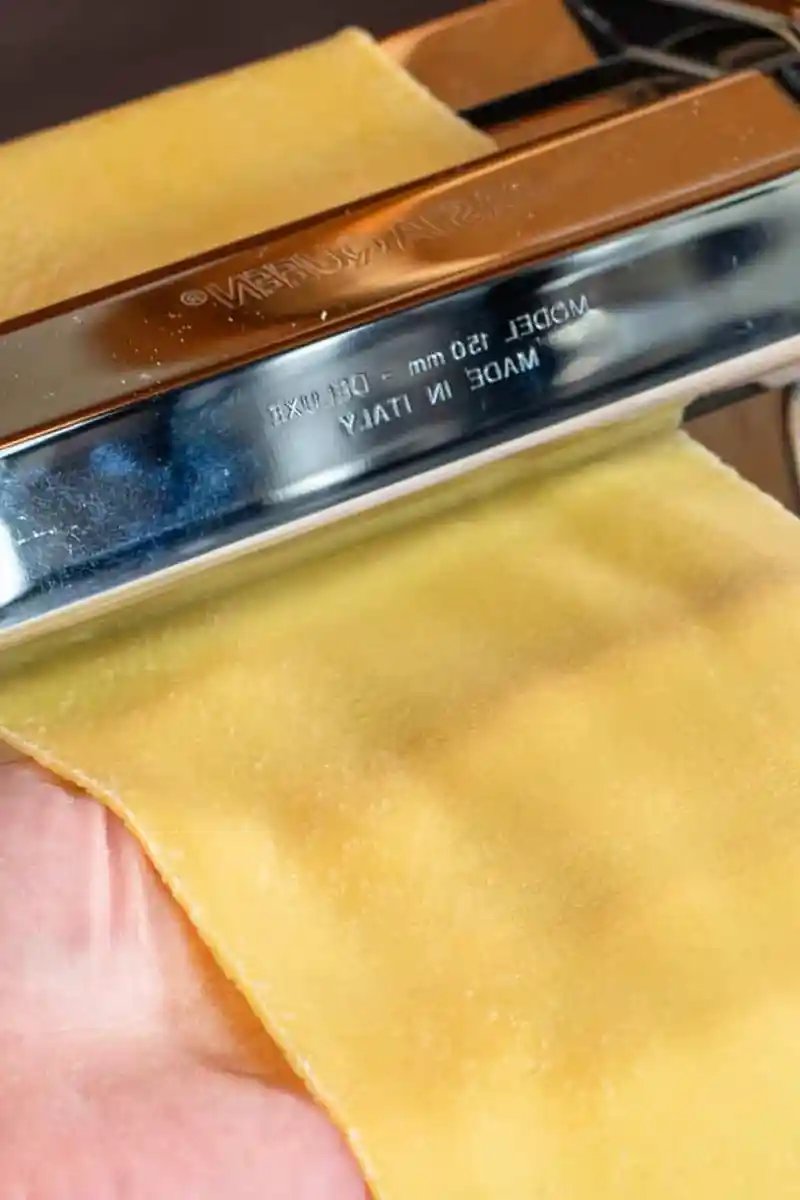
- Initial Rolling and Lamination: Flatten one piece of dough into a rough rectangle about 1/2-inch thick with your palm and dust it with flour. Feed one end through a manual pasta machine starting at the widest setting (Setting 1). Fold the rolled dough into thirds like a letter, then feed the narrow end back through the rollers. Repeat this folding and rolling process three times, applying flour as needed.
- Thinning the Sheets: Gradually decrease the thickness by turning the dial to the next setting (Setting 2). Feed the narrow side through first. Continue this process through settings 3, 4, 5, and 6. Stop at the second-to-last setting to achieve the correct thickness for no-boil noodles.
- Cutting and Finishing: Cut the long sheets into two equal pieces or your preferred length. Place them in a single layer on the floured baking sheet and lightly dust the tops with flour. Repeat the entire rolling and cutting process for the remaining five pieces of dough.
- Usage: Use these fresh noodles immediately in your preferred lasagna assembly.
Optimizing Your Pasta Machine Process
Executing the Letter-Fold Technique
The process of folding the dough into thirds and rolling it through the machine multiple times is called lamination. This step aligns the gluten proteins and creates a more uniform, stronger sheet of pasta. Without this step, the noodles may lack the structural integrity needed to hold up heavy layers of cheese and sauce.
Selecting the Correct Thickness Setting
Thickness settings vary by brand, but for no-boil lasagna noodles, you generally want a thickness of about 1mm. On most manual machines, this is the second-to-last setting (often #6). If the noodles are too thick, they will remain doughy after baking; if they are too thin, they may dissolve into the sauce.
Supporting the Emerging Dough
As the dough becomes thinner and longer, it becomes more fragile. Use your hands to gently support the sheet as it emerges from the rollers to prevent it from sagging or tearing. Ensure the dough remains centered in the rollers to maintain a consistent width across the entire sheet.
Rolling Pasta Without a Machine
Using a Traditional Rolling Pin
If you do not own a pasta machine, you can achieve similar results with a heavy rolling pin. Start from the center of the dough and roll outward, rotating the dough frequently to ensure an even thickness. Aim for a translucency where you can almost see the surface beneath the dough.
Increasing Resting Time for Hand-Rolling
Rolling by hand requires more physical effort and puts more stress on the gluten. To make the dough more compliant, increase the resting time to a full hour at room temperature. This allows the gluten to relax completely, preventing the dough from shrinking back as you roll it.
Verifying Thickness Manually
Without numbered settings, use a ruler or a thin piece of cardboard as a guide. Your goal is to reach a thickness of approximately 1mm. Consistently check the edges of the dough, as they tend to be thicker than the center during the manual rolling process.
Baking and Cooking Guidelines
Implementing the No-Boil Method
Fresh pasta is pliable and porous, allowing it to cook directly in the oven by absorbing moisture from the sauce. To ensure success, avoid using overly thick or dry sauces. The noodles will act as a sponge, drawing liquid from the filling to soften and cook through during the baking process.
Managing Sauce Moisture for Fresh Pasta
Since the noodles absorb liquid, increase the moisture content of your meat or vegetable sauce slightly. If your sauce is very reduced and thick, add a small amount of water or vegetable broth before layering. This prevents the lasagna from becoming dry and ensures the pasta is tender.
Using Aluminum Foil for Steam Retention
Cover your lasagna baking dish tightly with aluminum foil for the first two-thirds of the baking time. This traps the steam inside the dish, which helps the fresh noodles cook evenly. Remove the foil for the final 15-20 minutes to brown the cheese on top.
Instructions for Pre-Boiling Fresh Sheets
If you prefer the traditional texture of boiled pasta, cook the fresh sheets in a large pot of salted boiling water. Boil for only about 1 minute, as fresh pasta cooks much faster than dried. Immediately transfer them to a colander, rinse with cold water, and lay them flat on clean kitchen towels to prevent sticking.
Storage and Long-Term Preservation
Short-Term Refrigeration Techniques
You can store raw fresh noodles in the refrigerator for up to 24 hours. Line an airtight container with parchment paper and place the noodles in single layers, adding a sheet of parchment and a dusting of flour between each layer. This prevents the noodles from fusing together into a single block.
Air-Drying for Room Temperature Storage
To dry the noodles for longer storage, lay them in a single layer on a floured surface or a clean towel. Let them sit at room temperature for 12 to 24 hours depending on your kitchen’s humidity. A low-speed fan directed at the noodles can accelerate this process. They are ready when the noodle snaps cleanly instead of bending.
Freezing and Thawing Fresh Pasta
Fresh noodles can be frozen for up to one month. Arrange them in single layers on a parchment-lined baking sheet, separated by additional parchment sheets, and freeze until solid. When ready to use, move the frozen sheets to the refrigerator for several hours to thaw slowly before assembling your lasagna.
Troubleshooting Common Pasta Issues
Correcting Dry or Crumbly Dough
If the dough remains crumbly and refuses to form a ball in the food processor, it may be too dry. Add water one teaspoon at a time, pulsing after each addition, until the dough just comes together. Be careful not to over-hydrate, as overly wet dough will be sticky and difficult to roll.
Managing Sticky Dough and Sheets
If the dough sticks to the rollers or your hands, you are likely using too little flour. Dust the dough and the work surface generously with all-purpose flour. However, avoid over-flouring the final sheets, as excess flour can create a powdery residue in the finished lasagna.
Preventing Dough Oxidation
Fresh pasta dough can oxidize and turn a grey or greenish tint if left in the refrigerator for too long. This is a natural chemical reaction and does not affect the safety of the pasta, but it is visually unappealing. Use the dough within 24 hours or freeze it to maintain the bright yellow color.
Frequently Asked Questions
Can I use a different type of flour?
While all-purpose flour works well, you can use ’00’ flour for a more traditional, silky Italian texture. ’00’ flour is more finely milled and produces a softer noodle. If using a different flour, you may need to adjust the water or egg amount slightly to achieve the correct consistency.
Why does my dough spring back when rolling?
Spring-back is caused by tight gluten bonds that have not had enough time to relax. This usually happens if the dough was not rested long enough after kneading. Cover the dough and let it rest for another 15-30 minutes, and it will become much easier to roll thin.
How many lasagna layers does this recipe provide?
This recipe typically yields enough noodles for a standard 9x13x3 inch baking dish. Depending on how many layers you prefer, this usually covers 3 to 4 layers of pasta. If you are making a deeper pan or more lasagnas, simply double the ingredients.
Do I need to use a food processor?
A food processor is recommended for speed and efficiency, but you can mix the ingredients by hand. Create a flour well, add the eggs and oil, and incorporate the flour gradually with a fork. Once a shaggy mass forms, knead the dough by hand for 8-10 minutes until smooth.
Can I make these noodles vegan?
To make a vegan version, replace the eggs with a combination of flaxseeds and water or a commercial egg replacer. Note that without eggs, the dough will have less elasticity and may be more prone to tearing during the rolling process.
Print
Homemade Lasagna Noodles
- Total Time: 1 hour 10 minutes
- Yield: 12 servings 1x
- Diet: Vegetarian
Description
Delicate, supple lasagna noodles are easy to make from scratch. No pre-boiling required!
Ingredients
- 2 cups all-purpose flour (272g)
- 1 teaspoon kosher salt
- 3 large eggs
- 1 tablespoon olive oil
Instructions
- Step 1: Add flour and salt to the bowl of a food processor; pulse a few times to combine.
- Step 2: In a medium bowl, mix eggs and olive oil with a fork until just combined. Pour over flour mixture in food processor.
- Step 3: Pulse several times until no dry flour remains. Process for about 1 minute, or until dough has gathered into a ball then broken into bead-like fragments and gathered into once or twice more.
- Step 4: Remove the pasta dough from the food processor, shape with your hands into a smooth ball, and cover with plastic wrap. Let rest for 30 minutes to 1 hour at room temperature.
- Step 5: Dust a rimmed baking sheet generously with flour.
- Step 6: Divide dough into six equal pieces on floured work surface and cover five pieces loosely with plastic wrap.
- Step 7: Flatten one piece into a rough rectangle about 1/2-inch thick; rub all over with flour. Feed one end through a manual pasta machine, beginning at the widest / lowest setting (1).
- Step 8: Fold rolled dough into thirds and roll it through again, feeding the narrow end through the machine; repeat this folding / rolling process three times, dusting with flour as needed.
- Step 9: Run the dough through progressively narrowing settings (2, 3, 4, 5, 6) without folding, stopping on the second to last setting.
- Step 10: Cut noodle into 2 equal pieces or your desired length and place in a single layer on prepared baking sheet. Lightly dust with flour. Repeat with remaining dough portions.
Notes
No pre-boiling is required; ensure your sauce has enough moisture and cover the lasagna with aluminum foil during baking. Dough can be refrigerated for up to 1 day.
- Prep Time: 40 minutes
- Cook Time: 0 minutes
- Category: Main Course
- Method: Food Processor
- Cuisine: Italian
Nutrition
- Serving Size: 1 serving
- Calories: 104 kcal
- Sugar: 1 g
- Sodium: 212 mg
- Fat: 3 g
- Saturated Fat: 1 g
- Unsaturated Fat: 2 g
- Trans Fat: 1 g
- Carbohydrates: 16 g
- Fiber: 1 g
- Protein: 4 g
- Cholesterol: 47 mg