This quick canned salmon pasta combines nutrient-dense ingredients for a satisfying 30-minute meal. It uses pantry staples and fresh greens to create a bright, balanced dish suitable for busy weeknights.
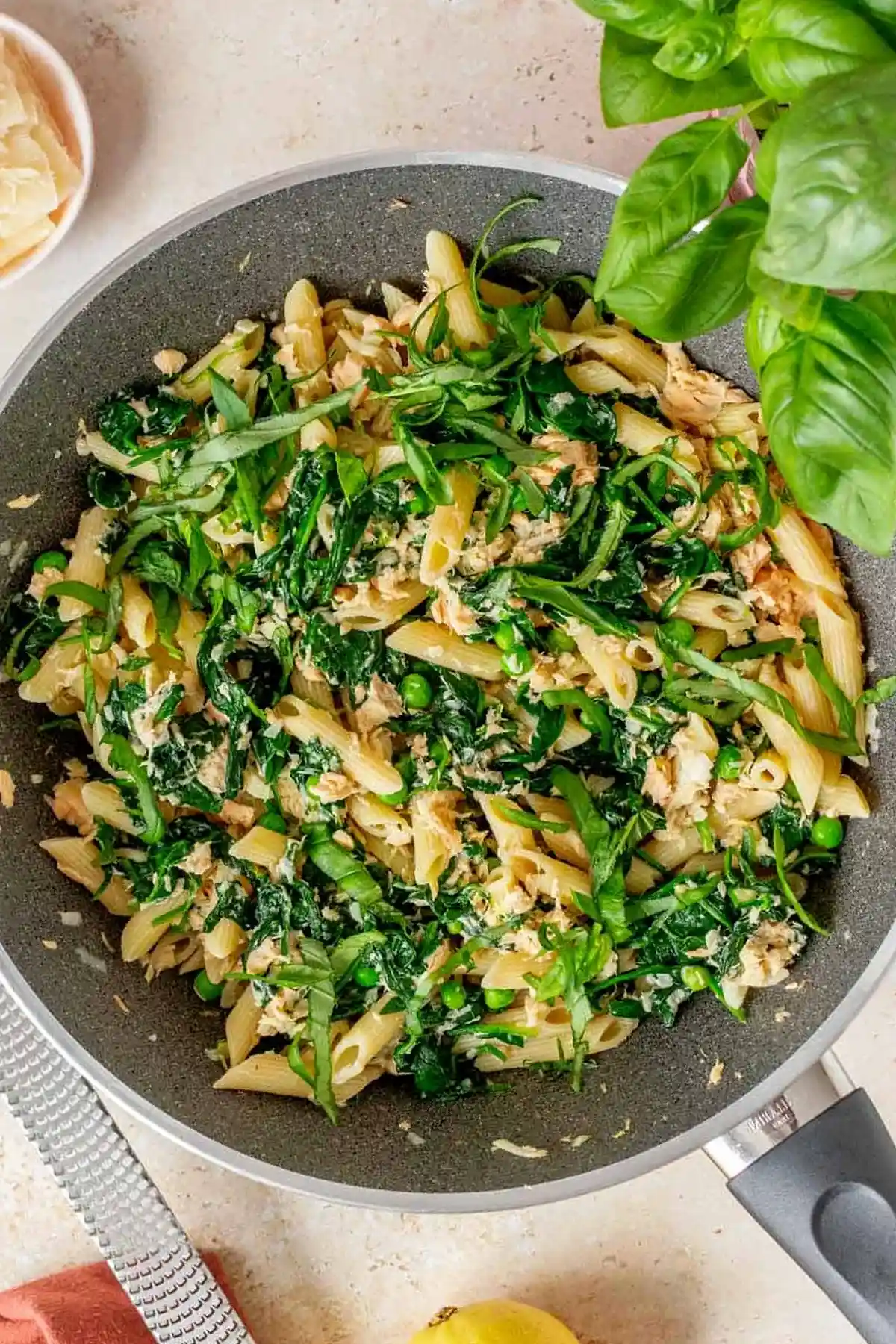
List of ingredients
- 3 cups rigatoni – a sturdy pasta that holds sauce well.
- 2 tablespoons olive oil – used for sautéing and finishing.
- 2 tablespoons minced garlic – adds a pungent aromatic base.
- 312 grams baby spinach (11 ounces, 1 container) – provides a tender, nutritious green base.
- salt and pepper – added to taste for seasoning.
- 2 cans salmon (150 grams per can) – skinless and boneless, no salt added, drained.
- 1 lemon – both juiced and zested for brightness.
- 1 cup frozen peas – adds sweetness and texture.
- 1/4 cup grated parmesan – or more depending on preference for saltiness.
- 1/4 cup fresh basil – ribboned for a fresh herbal finish.
step-by-step instructions
- Sauté Garlic: Heat a large skillet with a tablespoon of oil over medium heat. Add the garlic and saute for a minute or until fragrant.
- Cook Spinach: Add the baby spinach to the skillet and saute until wilted, for around 2 to 3 minutes. Season with a bit of salt and pepper, to taste.
- Boil Pasta: Meanwhile, bring a large pot of salted water to a boil. Cook the pasta under al dente, stirring occasion, according to package instructions. Drain when finished, making sure to reserve at least 1 cup of pasta water.
- Combine Ingredients: Add the pasta, drained canned salmon, lemon zest, lemon juice, parmesan, peas, half a cup of pasta water, and the last tablespoon of oil to the skillet.
- Finish and Serve: Toss until well combined. Add more pasta water as needed to reach the desired consistency. Finish with some basil before serving and top with more parmesan if desired.
Pro Cooking Techniques for Better Pasta
Reserve Starchy Pasta Water for Sauce Binding
Always save a cup of the water used to boil the pasta before draining. The starch released from the rigatoni acts as a natural emulsifier, helping the olive oil, lemon juice, and parmesan bind into a silky sauce that clings to the noodles.
Prevent Garlic from Burning
Sauté garlic quickly over medium heat and remove it from the heat the moment it becomes fragrant. Overcooked garlic can turn bitter and overpower the delicate flavors of the salmon and lemon.
Master the Al Dente Texture
Cook your pasta for one to two minutes less than the package instructions suggest. Since the pasta is tossed in a hot skillet with other ingredients at the end, undercooking it slightly prevents it from becoming mushy.
Wilt Spinach Quickly over Medium Heat
Add spinach to the pan only when the oil is hot and the garlic is ready. Sautéing quickly ensures the leaves wilt without losing their vibrant green color or releasing too much moisture.
Ingredient Swaps and Alternatives
Select Pasta Shapes That Hold Sauce
While rigatoni is excellent, penne or fusilli are great alternatives. Choose short, tubular, or spiral pastas because their ridges and holes trap the peas and salmon flakes more effectively than long strands.
Utilize Alternative Neutral Cooking Oils
If you do not have olive oil, use avocado oil or grapeseed oil. These neutral oils have high smoke points and will not alter the bright, citrusy flavor profile of the dish.
Integrate Fresh Salmon Fillets
You can replace canned salmon with fresh or frozen fillets. Poach or sear the fillets separately, flake them into bite-sized pieces, and fold them in during the final step to avoid breaking the fish too much.
Replace Parmesan with Other Hard Cheeses
Pecorino Romano is a sharp alternative to parmesan, though it is saltier, so reduce the added salt. For a non-dairy option, use nutritional yeast to provide a similar nutty, cheesy flavor.
Use Different Leafy Greens
If baby spinach is unavailable, use chopped kale or Swiss chard. Note that these heartier greens require a few extra minutes of sautéing to soften properly before adding the other ingredients.
Alternative Legumes to Frozen Peas
Edamame or chopped steamed broccoli florets work well as substitutes for peas. These additions maintain the nutritional value and provide a similar pop of color and texture.
Flavor Enhancements and Recipe Variations
Create a Creamier Texture with Heavy Cream
For a richer sauce, stir in two to three tablespoons of heavy cream during the final tossing stage. This emulsifies with the parmesan and pasta water to create a velvety coating.
Add Heat with Red Pepper Flakes
Stir in a pinch of crushed red pepper flakes when sautéing the garlic. This adds a subtle spicy kick that cuts through the richness of the salmon and cheese.
Incorporate Additional Garden Vegetables
Adding diced bell peppers, sliced mushrooms, or onions can increase the volume and nutrition of the meal. Sauté these vegetables before the garlic to ensure they are fully cooked.
Increase Citrus Brightness
If you prefer a more tart profile, add a teaspoon of lemon zest extra or a small splash of white grape juice. This enhances the acidity, which balances the oils and the salmon.
Add Sun-Dried Tomatoes for Depth
Chopped sun-dried tomatoes add a concentrated, sweet-tart flavor to the pasta. Stir them in with the spinach for a more complex Mediterranean flavor profile.
Serving and Pairing Suggestions
Pair with a Crisp Arugula Salad
Serve this pasta alongside a simple arugula salad dressed with lemon and olive oil. The peppery notes of the arugula complement the richness of the salmon.
Serve with Toasted Garlic Baguette
Warm, toasted baguette slices rubbed with a raw garlic clove provide a crunchy contrast to the soft pasta. This is ideal for soaking up any remaining lemon-parmesan sauce.
Garnish with Fresh Microgreens
Top the final plated dish with a handful of microgreens or sprouts. This adds a professional look and a fresh, raw contrast to the cooked vegetables.
Complement with Sliced Cucumbers
A side of thinly sliced cucumbers marinated in rice vinegar and dill provides a refreshing palate cleanser between bites of the savory pasta.
Storage and Preservation Guide
Use Airtight Containers for Freshness
Store leftovers in glass or BPA-free plastic airtight containers. This prevents the pasta from absorbing refrigerator odors and keeps the salmon from drying out.
Optimal Refrigeration Timeframes
This dish remains safe and tasty in the refrigerator for up to four days. Ensure the pasta has cooled slightly before sealing the lid to avoid excess condensation.
Avoid Freezing This Dish
Freezing is not recommended for this recipe. The texture of the cooked spinach and the structure of the pasta degrade significantly when frozen and thawed.
Reheating and Refreshing Leftovers
Use the Microwave with Added Moisture
When reheating in the microwave, add a tablespoon of water or a small knob of butter to the bowl. This creates steam that re-hydrates the pasta and prevents it from becoming rubbery.
Reheating on the Stovetop
For the best texture, reheat the pasta in a skillet over low heat. Add a splash of water or broth and toss gently to warm the salmon through without overcooking it.
Refreshing the Lemon Flavor
Citrus flavors fade during refrigeration. Squeeze a fresh wedge of lemon over the reheated pasta to restore the bright, zesty notes.
Make-Ahead Preparation Strategies
Pre-chop Garlic and Herbs
Mince your garlic and ribbon your basil a day in advance. Store them in small containers in the fridge to reduce active prep time on the day of cooking.
Par-boil Pasta for Faster Assembly
Cook the pasta until it is very firm (about 3 minutes under the package time). Drain and toss with a drop of oil; then, simply finish cooking it in the skillet during the final step.
Store Sauce Components Separately
If prepping for the week, store the cooked salmon, peas, and lemon juice in one container and the pasta in another. Combine and heat them together just before eating to maintain the best texture.
Troubleshooting Common Issues
Fixing Dry or Clumping Pasta
If the pasta seems dry or the noodles are sticking together, add more pasta water one tablespoon at a time. Continue tossing over low heat until the sauce becomes fluid and glossy.
Managing Overcooked Spinach
If the spinach becomes too mushy, reduce the sautéing time in future batches. Once the leaves have just collapsed, they are ready; do not let them brown or shrink excessively.
Balancing Strong Fish Flavors
If the canned salmon taste is too dominant, increase the amount of lemon juice or add a pinch of dried oregano. These acidic and herbal notes neutralize strong fishy aromas.
Adjusting Salt Levels
Since canned salmon and parmesan both contain sodium, taste the dish before adding extra salt. If it is too salty, add a handful of fresh spinach or a squeeze of lemon to balance it.
Frequently Asked Questions
Can I use canned salmon with skin and bones?
Yes, skin-on and bone-in canned salmon are safe to eat as the bones are softened during the canning process. They provide extra calcium, though you may want to flake the fish carefully to remove any larger pieces if you prefer a smoother texture.
Is it possible to make this recipe vegan?
Yes, replace the salmon with chickpeas or canned artichoke hearts. Use nutritional yeast instead of parmesan and ensure your oil is plant-based to keep the dish entirely vegan.
Can I use tuna instead of salmon?
Canned tuna is a suitable substitute and follows the same preparation steps. Tuna has a milder flavor than salmon, so you may want to add a bit more lemon zest for extra punch.
How do I prevent the salmon from breaking apart?
Add the canned salmon at the very end of the process. Use a folding motion with your spatula rather than stirring vigorously to keep the salmon in larger, more appealing flakes.
Print
Easy Canned Salmon Pasta with Spinach and Peas
- Total Time: 25 minutes
- Yield: 4 servings 1x
- Diet: General
Description
This simple canned salmon with pasta is full of fresh, bright flavors while using kitchen staples. Loads with canned salmon, spinach, and peas, this is a quick and easy recipe you can whip up on a busy weeknight night or prepare for a tasty make-ahead lunch for the week.
Ingredients
- 3 cups rigatoni
- 2 tablespoons olive oil
- 2 tablespoons minced garlic
- 312 grams baby spinach
- salt and pepper to taste
- 2 cans salmon (skinless and boneless, no salt added, drained, 150 grams per can)
- 1 lemon, juiced and zested
- 1 cup frozen peas
- ¼ cup grated parmesan (microbial rennet)
- ¼ cup fresh basil, ribboned
Instructions
- Saute Garlic: Heat a large skillet with a tablespoon of oil over medium heat. Add the garlic and saute for a minute or until fragrant.
- Wilt Spinach: Add the baby spinach to the skillet and saute until wilted, for around 2 to 3 minutes. Season with a bit of salt and pepper, to taste.
- Cook Pasta: Meanwhile, bring a large pot of salted water to a boil. Cook the pasta under al dente, stirring occasion, according to package instructions. Drain when finished, making sure to reserve at least 1 cup of pasta water.
- Combine: Add the pasta, canned salmon (drained), lemon zest, lemon juice, parmesan, peas, half a cup of pasta water, and the last tablespoon of oil.
- Finish: Toss until well combined. Add more pasta water as needed. Finish with some basil before serving. Top with more parmesan, if desired.
Notes
The pasta water helps create a silky smooth sauce that evenly coats the pasta. For some extra greens, you can top the pasta with microgreens. Other recommended vegetable additions include broccoli, cauliflower, onions, bell peppers, mushrooms, or cherry tomatoes.
- Prep Time: 10 minutes
- Cook Time: 15 minutes
- Category: Main Course
- Method: Stovetop
- Cuisine: American
Nutrition
- Serving Size: 1 serving
- Calories: 420 kcal
- Sugar: 4 g
- Sodium: 472 mg
- Fat: 14 g
- Saturated Fat: 3 g
- Unsaturated Fat: 9 g
- Trans Fat: 0.02 g
- Carbohydrates: 46 g
- Fiber: 6 g
- Protein: 30 g
- Cholesterol: 68 mg