This one-pot vegetable orzo soup combines a light tomato-based broth with a variety of fresh and frozen vegetables. It is a nutrient-dense meal that is efficient to prepare and stores well for weekly meal planning.
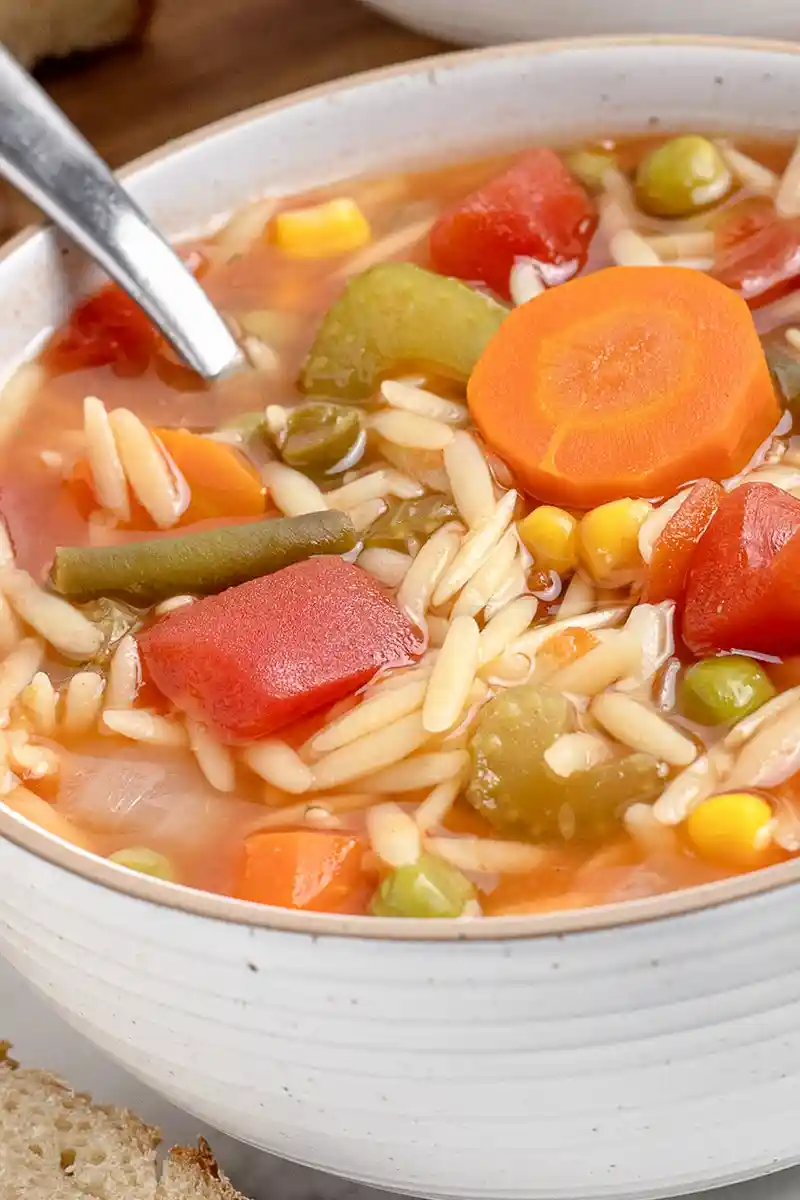
List of ingredients
- 1 yellow onion, finely diced – provides the aromatic base.
- 3 carrots, peeled and diced – adds natural sweetness and color.
- 3 ribs celery, diced – contributes an earthy, savory note.
- 3 cloves garlic, grated or minced – adds pungent flavor depth.
- 3 14.5 ounce cans diced tomatoes with juice – forms the body of the broth.
- 10-12 cups vegetable stock or low sodium vegetable broth – the liquid base for the soup.
- 3 bay leaves – adds a subtle herbal aroma.
- 1 teaspoon salt, or to taste – enhances all other flavors.
- ½ teaspoon black pepper, or to taste – adds a mild spicy heat.
- ½ teaspoon red pepper flakes – provides a warm, subtle kick.
- 1 cup green beans, frozen and diced – adds texture and nutrients.
- 1 cup sweet corn, frozen – adds sweetness and a pop of color.
- 1 cup peas, frozen – adds a fresh, green flavor.
- 1 ½ cups orzo pasta, uncooked – the hearty, rice-shaped pasta element.
step-by-step instructions
- Sauté Aromatics: Heat oil in a large pot or Dutch oven over medium heat. Add the diced onion, carrots, celery, and garlic, sautéing for about 5 minutes until the onions are soft and translucent.
- Create the Broth: Stir in the diced tomatoes with their juice, vegetable stock, bay leaves, salt, black pepper, and red pepper flakes. Bring the mixture to a rolling boil.
- Cook Frozen Vegetables: Add the frozen green beans, sweet corn, and peas to the pot. Reduce the heat to a simmer and let the frozen vegetables cook for 5 minutes to maintain their texture.
- Simmer the Orzo: Stir in the uncooked orzo pasta. Simmer for 10 minutes, stirring occasionally to prevent the pasta from sticking to the bottom of the pot, until the pasta has swelled and is fully cooked.
- Finish and Serve: Remove the pot from the heat. Discard the bay leaves and serve the soup warm.
Essential Cooking Techniques
Use a High-Capacity Pot
A 7-quart Dutch oven or a large stockpot is ideal for this recipe to accommodate the volume of broth and vegetables. This prevents the soup from boiling over and ensures there is enough room for stirring the pasta without splashing.
Manage the Sauté Process
Sautéing the onion, carrots, and celery first creates a flavor base known as a mirepoix. Ensure the heat is medium so the garlic does not burn, which would introduce a bitter taste to the entire broth.
Maintain a Consistent Simmer
Once the broth reaches a boil, reducing it to a simmer is crucial for the frozen vegetables. Simmering prevents the peas and corn from breaking down too much, keeping them intact and vibrant.
Prevent Pasta Clumping
Orzo releases starch as it cooks, which can cause it to stick to the bottom of the pan. Stirring every few minutes ensures the pasta is evenly distributed and does not form a scorched layer on the pot floor.
Identify Finished Orzo
The orzo is done when it has expanded to more than twice its original size. The broth will also appear slightly cloudier due to the starch release, and the pasta should be tender but not mushy.
Ingredient Substitutions and Alternatives
Swap Yellow Onions for Other Varieties
While yellow onions are standard, white onions offer a sharper taste, and sweet onions provide a milder flavor. Shallots can be used for a more delicate, sophisticated aromatic profile.
Choose the Right Vegetable Stock
Low-sodium vegetable stock is recommended to control the salt levels of the final dish. If using a standard broth, reduce the added salt in the recipe to avoid an overly salty result.
Alternative Tomato Options
Diced tomatoes are best for maintaining texture in the soup. Avoid using crushed or stewed tomatoes, as these will thicken the broth too much and change the consistency from a soup to a stew.
Substitute Pasta Shapes
If orzo is unavailable, small pasta shapes like ditalini or acini di pepe can be used. Adjust the cooking time based on the specific pasta’s package instructions to avoid overcooking.
Use Different Fresh Aromatics
Fresh garlic is superior to powdered garlic for this recipe. If you prefer a milder garlic flavor, you can slice the cloves thinly instead of mincing or grating them.
Customizing Your Soup
Add Plant-Based Proteins
To increase the protein content, add one can of drained cannellini beans or kidney beans during the simmering stage. Chickpeas are also an excellent addition for added texture and nutrition.
Incorporate Fresh Leafy Greens
Fresh spinach, kale, or Swiss chard can be stirred in during the last two minutes of cooking. The residual heat will wilt the greens without overcooking them, adding more vitamins to the meal.
Add Root Vegetables for Heartiness
Diced potatoes, parsnips, or turnips can be added during the sauté phase. These root vegetables add a thicker consistency and more substance to the soup.
Experiment with Cheese Garnishes
Topping each bowl with grated Parmesan, Pecorino Romano, or shredded mozzarella adds a salty, creamy element. An Italian cheese blend works well to complement the tomato and garlic flavors.
Modify the Spice Level
The red pepper flakes provide a gentle warmth. For more heat, increase the amount of flakes or add a pinch of cayenne pepper during the boiling phase.
Storage and Preservation Guide
Refrigerated Storage Limits
Store leftover soup in airtight glass or plastic containers in the refrigerator. It remains fresh for up to 4 days, and the flavors often meld and improve by the second day.
The Pasta Freezing Problem
Do not freeze the soup with the orzo pasta already inside. The pasta will absorb excess liquid and become mushy and bloated upon thawing, ruining the texture of the dish.
Freezing the Soup Base
To freeze, prepare the soup without the orzo. Store the vegetable and broth mixture in freezer-safe containers for up to 3 months, leaving space at the top for expansion.
Thawing Frozen Soup
Thaw the frozen base in the refrigerator overnight before reheating. This ensures the vegetables maintain their structure and the broth reheats evenly.
Using Fresh Containers
Always use BPA-free plastic or tempered glass containers for storage. This prevents chemicals from leaching into the acidic tomato broth and ensures a tighter seal against odors.
Reheating and Serving Methods
Stovetop Reheating
Reheat leftovers in a small pot over low to medium heat. Stir occasionally and add a splash of water or vegetable stock if the orzo has absorbed too much liquid and the soup is too thick.
Microwave Reheating Tips
Place the soup in a microwave-safe bowl and cover it with a lid or damp paper towel. Heat in 1-minute intervals, stirring in between to distribute the heat evenly and avoid cold spots.
Adding Pasta to Frozen Base
When reheating a frozen base, bring the liquid to a simmer on the stove. Add freshly cooked orzo to the pot just before serving to ensure the pasta has the perfect texture.
Serving Pairings
Serve this soup with crusty dinner rolls, cornbread, or a side of toasted garlic bread. The bread helps soak up the tomato broth and makes the meal more filling.
Temperature Control
Serve the soup piping hot for the best experience. Use warmed bowls to keep the soup at an ideal temperature for a longer period during the meal.
Slow Cooker Instructions
Preparing the Slow Cooker Base
Combine the onion, carrots, celery, garlic, diced tomatoes, vegetable stock, bay leaves, and seasonings in the slow cooker. Set the device to the low heat setting for 4 hours.
Timing the Pasta and Frozen Veg
Do not add the orzo or frozen vegetables at the start, as they will overcook. Add the cooked orzo, frozen green beans, corn, and peas during the final 20 minutes of the cooking cycle.
Using Pre-Cooked Orzo
For the slow cooker method, use orzo that has been cooked separately according to package directions. Adding uncooked pasta to a slow cooker often results in a gummy texture.
Adjusting Liquid for Slow Cooking
Slow cookers lose less liquid to evaporation than stovetop pots. You may choose to reduce the vegetable stock by one cup to maintain a thicker consistency.
Slow Cooker Temperature Settings
Avoid using the high setting for this specific vegetable mix, as it can cause the carrots and celery to lose their structure. The low setting provides a gentler cook that preserves the vegetable integrity.
Troubleshooting Common Issues
Managing Soup Thickness
If the soup becomes too thick after sitting, it is likely because the orzo has absorbed the broth. Stir in additional vegetable stock or water until the desired consistency is restored.
Adjusting Over-Salted Broth
If the soup tastes too salty, add a splash of water or a bit more unsalted diced tomatoes. A small amount of lemon juice or vinegar can also help balance out excessive saltiness.
Preventing Mushy Vegetables
Ensure frozen vegetables are added only during the simmering stage and not the boiling stage. Overcooking frozen peas and corn leads to a loss of color and a soft, unappealing texture.
Dealing with Cloudy Broth
A slightly cloudy broth is normal due to the starch from the orzo. However, if it is too thick, avoid stirring the pasta too vigorously, which releases more starch into the liquid.
Correcting a Lack of Flavor
If the soup tastes bland, increase the salt or add a teaspoon of lemon juice. The acidity of the lemon enhances the tomato base and brings out the flavors of the aromatic vegetables.
Frequently Asked Questions
How do I know when the orzo pasta is fully cooked in the soup?
The orzo is cooked when it swells to more than double its size and is tender to the bite. The broth will also become slightly cloudy, indicating that the pasta’s starch has been released.
Can I use dried herbs instead of bay leaves?
Yes, you can use a mix of dried thyme, oregano, and parsley as a substitute. Use about a teaspoon of the dried herb mix to replace the three bay leaves.
Is it possible to make this soup gluten-free?
To make this recipe gluten-free, replace the standard orzo pasta with a gluten-free orzo alternative. Ensure the vegetable stock used is also certified gluten-free.
Why should I use frozen vegetables instead of canned?
Frozen vegetables generally retain more nutrients and have a better texture than canned versions. Canned vegetables are often too soft and can turn into mush during the simmering process.
Can I add meat to this vegetable soup?
Yes, you can add cooked shredded chicken, browned ground beef, or ground turkey. Add the cooked meat at the very end of the process just to warm it through.
Print
Hearty Vegetable Orzo Soup
- Total Time: 30 minutes
- Yield: 10 servings 1x
- Diet: Vegetarian
Description
This hearty Vegetable Orzo Soup contains a mix of vegetables and orzo pasta in a light tomato broth. It’s a one pot recipe that is easy to make and great for leftovers.
Ingredients
- 1 yellow onion, finely diced
- 3 carrots, peeled and diced
- 3 ribs celery, diced
- 3 cloves garlic, grated or minced
- 3 14.5 ounce cans diced tomatoes with juice
- 10–12 cups vegetable stock
- 3 bay leaves
- 1 teaspoons salt
- ½ teaspoon black pepper
- ½ teaspoon red pepper flakes
- 1 cup frozen green beans, diced
- 1 cup frozen sweet corn
- 1 cup frozen peas
- 1 ½ cups uncooked orzo pasta
Instructions
- Step 1: To a large oiled pot or Dutch oven, add the yellow onion, carrots, celery, and garlic. Saute over medium heat for about 5 minutes or until the onions are soft and translucent.
- Step 2: Add diced tomatoes, vegetable stock, bay leaves, salt, black pepper, and red pepper flakes. Bring to a rolling boil.
- Step 3: Add the frozen green beans, frozen sweet corn, and frozen peas. Reduce heat to a simmer and allow the frozen vegetables to cook for 5 minutes.
- Step 4: Add the uncooked orzo and simmer for 10 minutes, or until the pasta has swelled and is fully cooked. Stir the soup every few minutes so the orzo does not stick to the bottom of the pan.
- Step 5: Remove from heat and serve warm.
Notes
Store in an airtight container in the refrigerator for up to 4 days. For freezing, store without the orzo for up to 3 months; add cooked orzo when reheating. Slow Cooker: Set to low for 4 hours; add cooked orzo and frozen vegetables in the last 20 minutes.
- Prep Time: 5 minutes
- Cook Time: 25 minutes
- Category: Main Course, Soup
- Method: Simmering
- Cuisine: American
Nutrition
- Serving Size: 1 bowl
- Calories: 121 kcal
- Sugar: 4 g
- Sodium: 480 mg
- Fat: 2 g
- Saturated Fat: 0.3 g
- Unsaturated Fat: 1.7 g
- Trans Fat: 0 g
- Carbohydrates: 21 g
- Fiber: 3 g
- Protein: 4 g
- Cholesterol: 0 mg