This grilled lemon herb chicken provides a reliable, flavor-packed solution for busy evenings when you want a nutritious meal that feels both gourmet and approachable. By combining fresh citrus notes with earthy, dried herbs and pungent aromatics, the marinade transforms standard chicken breasts into something exceptionally juicy and fragrant. This recipe is designed to be versatile, serving as a perfect standalone protein or a foundational element for sophisticated grain bowls and crisp salads.
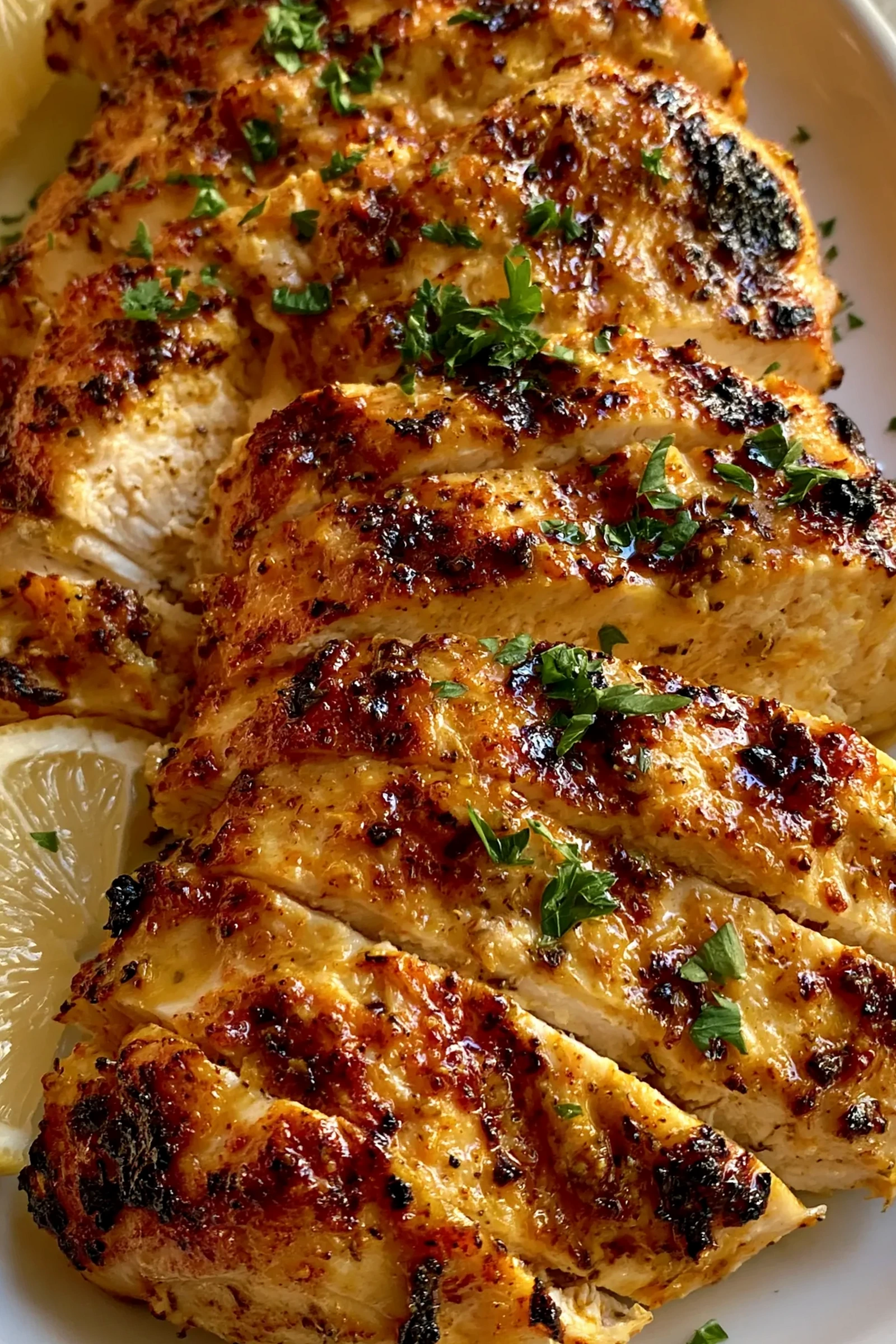
List of ingredients
- 4 medium boneless skinless chicken breasts, about 6 ounces each
- 1/4 cup olive oil
- 3 tbsp fresh lemon juice
- 1 tsp lemon zest
- 3 cloves garlic, minced
- 1 tsp Dijon mustard
- 2 tbsp fresh parsley, chopped
- 1 tsp dried oregano
- 1/2 tsp dried thyme
- 1 tsp kosher salt
- 1/2 tsp black pepper
step-by-step instructions
- Step: In a bowl or zip-top bag, mix the olive oil, lemon juice, lemon zest, garlic, Dijon mustard, parsley, oregano, thyme, salt, and black pepper.
- Step: Pound the chicken breasts to an even thickness if needed.
- Step: Add the chicken to the marinade and turn to coat. Cover and refrigerate for at least 30 minutes, or up to 8 hours.
- Step: Preheat the grill to medium-high heat and lightly oil the grates.
- Step: Remove the chicken from the marinade and discard the used marinade.
- Step: Grill the chicken for 5 to 7 minutes per side, until lightly charred and the thickest part reaches 165°F.
- Step: Transfer to a clean plate and rest for 5 minutes before slicing and serving.
Refining your grilling technique
Ensuring consistent surface contact for even browning
Achieving a uniform golden-brown exterior depends entirely on how well the surface of the chicken interacts with the heat of the grill. By ensuring your chicken is pounded to an even thickness, you remove the physical disparity that usually causes the thin edges of a chicken breast to overcook before the thick center reaches safety. When the surface is uniform, the entire piece of meat makes continuous contact with the grates, leading to an even distribution of the Maillard reaction, which is responsible for that savory, caramelized crust.
Managing grill temperature for juicy results
Medium-high heat is the sweet spot for chicken breasts, as it provides enough intensity to sear the outside while maintaining enough control to cook the interior without drying it out. If your grill runs particularly hot, consider setting up a two-zone fire by keeping one side of the grill burner off or having fewer coals on one side. If the chicken begins to show signs of burning before it has reached the target internal temperature, slide it over to the cooler zone to finish cooking gently with indirect heat.
Flavor enhancement and marinade adjustments
The role of mustard in marinade stability
Dijon mustard acts as much more than just a flavor component in this recipe; it is a functional ingredient that helps stabilize the emulsion of oil and lemon juice. Without an emulsifier, your marinade would quickly separate into two distinct layers, making it difficult to coat the chicken evenly. The mustard keeps the herbs suspended in the oil, ensuring that every bite of your chicken receives an equal distribution of garlic, thyme, and oregano throughout the cooking process.
Selecting the right herbs for high-heat cooking
When cooking with dried herbs like oregano and thyme, it is helpful to rub them between the palms of your hands before adding them to the bowl. This friction releases the essential oils trapped within the dried leaves, which helps them hydrate more quickly in the oil-based marinade. By waking up these dried components before they even touch the chicken, you ensure that the deep, woody notes of the thyme are present in every bite, balancing the sharp, top-heavy brightness of the fresh lemon zest.
Maximizing ingredient utility
Properly zesting citrus for maximum aromatic output
When collecting the lemon zest, always prioritize removing only the thin, colored outermost layer of the peel while avoiding the white, spongy pith underneath. The pith contains intense bitter compounds that can negatively alter the taste of your dish when heated. Using a microplane grater allows you to capture those aromatic essential oils with high efficiency, which are far more potent than the juice itself and essential for providing the backbone of the lemon flavor.
Maximizing the efficiency of the marinating time
While 30 minutes is sufficient for a quick weeknight dinner, allowing the chicken to marinate for up to 4 hours significantly improves the final texture. Because lemon juice is acidic, it works to subtly break down the protein structure of the meat, leading to a much more tender bite after grilling. However, do not exceed the 8-hour window, as prolonged exposure to the acid will eventually turn the exterior of the chicken slightly mushy rather than tender, which detracts from the desired mouthfeel.
Practical storage and reheating methods
Managing leftovers for maximum quality
If you have extra cooked chicken, store it in an airtight container immediately after it has cooled down to room temperature. Keeping the chicken in an airtight environment prevents it from absorbing other odors in your refrigerator and helps retain whatever moisture remains within the fibers. When stored properly, this cooked chicken remains safe and flavorful for up to 4 days, making it an ideal candidate for meal prep routines.
Refreshing the texture when reheating
The biggest challenge when reheating cooked chicken breast is preventing it from drying out further. To combat this, always introduce a small amount of moisture before applying heat, such as a tablespoon of water or low-sodium chicken broth. If using a skillet, cover it with a tight-fitting lid to trap the steam, which gently warms the meat through without turning the edges into tough, leather-like strips. If using a microwave, always use a lower power setting and cover the dish to trap the humidity inside.
Frequently asked questions
Is it necessary to use an instant-read thermometer for this recipe?
Using an instant-read thermometer is the only truly reliable way to ensure your chicken is safe to eat without overcooking it. Visual cues like clear juices are helpful, but they can be deceptive depending on the lighting or the age of the chicken. A thermometer removes all guesswork, allowing you to pull the meat from the heat the exact moment it hits 165°F, which guarantees maximum juiciness.
Can I freeze this chicken after it has been cooked?
Yes, you can certainly freeze the cooked chicken for up to 2 months. To maintain the best quality, wrap the cooled chicken breasts tightly in plastic wrap before placing them into a heavy-duty freezer bag to minimize exposure to air. When you are ready to use the chicken, move it to the refrigerator to thaw overnight, which ensures it stays as moist as possible compared to rapid thawing methods.
How can I substitute dried herbs if I only have fresh ones?
If you choose to use fresh oregano or thyme instead of dried, keep in mind that dried herbs are significantly more potent because their flavor is concentrated. As a rule of thumb, you should triple the quantity of the fresh herbs to achieve a similar impact to the dried versions. Additionally, add the fresh herbs toward the very end of your prep time, as their delicate leaves can burn quickly if exposed to the high heat of the grill for too long.
What is the benefit of resting the chicken for five minutes?
Resting the meat is a critical step because it allows the internal pressure of the juices to subside and the fibers to reabsorb the liquid that migrated toward the center during the high-heat cooking process. If you cut into the chicken immediately after pulling it off the grill, these juices will simply flow out onto the cutting board, resulting in a drier dining experience. Patience during this short waiting period is the final component in achieving a professional, juicy outcome.
Print
Grilled Lemon Herb Chicken
- Total Time: 59 minutes
- Yield: 4 servings 1x
- Diet: Gluten-Free
Description
Juicy grilled lemon herb chicken breasts marinated with olive oil, fresh lemon juice, garlic, Dijon mustard, parsley, oregano, thyme, salt, and black pepper, then grilled until lightly charred and perfectly cooked.
Ingredients
- 4 medium boneless skinless chicken breasts, about 6 ounces each
- 1/4 cup olive oil
- 3 tbsp fresh lemon juice
- 1 tsp lemon zest
- 3 cloves garlic, minced
- 1 tsp Dijon mustard
- 2 tbsp fresh parsley, chopped
- 1 tsp dried oregano
- 1/2 tsp dried thyme
- 1 tsp kosher salt
- 1/2 tsp black pepper
Instructions
- Step: In a bowl or zip-top bag, mix the olive oil, lemon juice, lemon zest, garlic, Dijon mustard, parsley, oregano, thyme, salt, and black pepper.
- Step: Pound the chicken breasts to an even thickness if needed.
- Step: Add the chicken to the marinade and turn to coat. Cover and refrigerate for at least 30 minutes, or up to 8 hours.
- Step: Preheat the grill to medium-high heat and lightly oil the grates.
- Step: Remove the chicken from the marinade and discard the used marinade.
- Step: Grill the chicken for 5 to 7 minutes per side, until lightly charred and the thickest part reaches 165°F.
- Step: Transfer to a clean plate and rest for 5 minutes before slicing and serving.
Notes
Marinate the chicken for at least 30 minutes, or up to 8 hours for deeper flavor. Pound the chicken breasts to an even thickness so they cook evenly. Always discard the used marinade and let the grilled chicken rest for 5 minutes before slicing and serving.
- Prep Time: 10 minutes
- Cook Time: 14 minutes
- Category: Main Course
- Method: Grilling
- Cuisine: American
Nutrition
- Serving Size: 1 breast
- Calories: 315 kcal
- Sugar: 1 g
- Sodium: 620 mg
- Fat: 14 g
- Saturated Fat: 2 g
- Unsaturated Fat: 12 g
- Trans Fat: 0 g
- Carbohydrates: 3 g
- Fiber: 1 g
- Protein: 39 g
- Cholesterol: 125 mg