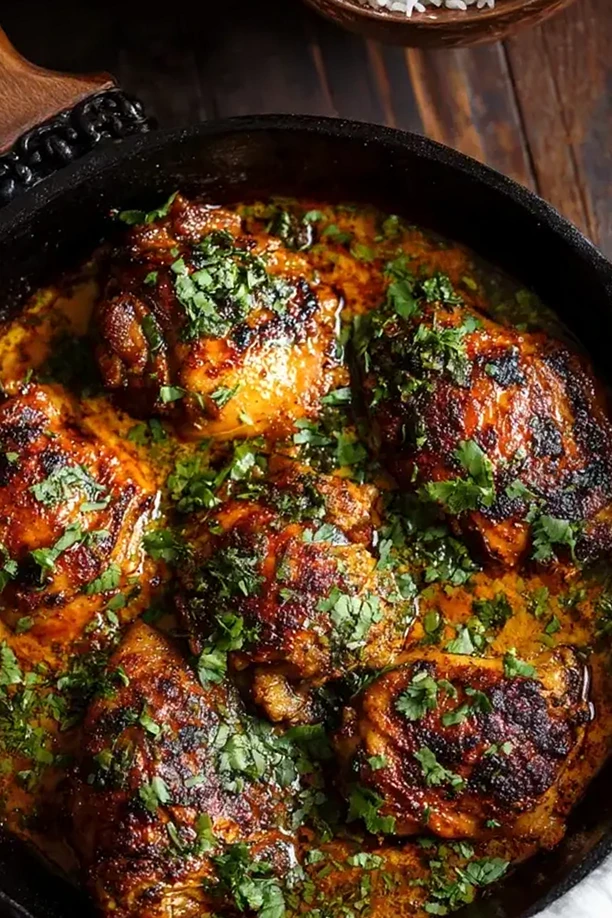
These aromatic chicken thighs are seared for a crispy finish and finished in a creamy, spiced sauce. This one-pan meal is designed for efficiency without sacrificing deep, complex flavor. It pairs exceptionally well with basmati rice or warm naan.
List of ingredients
- 4-6 bone-in, skin-on chicken thighs (about 1.5 lbs / 680 g) – bone-in ensures juiciness.
- 1 ½ tbsp garam masala, divided – used for both the rub and the sauce.
- 1 tsp kosher salt – essential for seasoning the meat.
- ½ tsp freshly ground black pepper – adds a subtle heat.
- 2 tbsp olive oil or ghee – for high-heat searing.
- 3 garlic cloves, minced – provides a sharp, aromatic base.
- 1 small yellow onion, finely chopped – adds sweetness and body to the sauce.
- ½ cup chicken broth or stock – used to deglaze the pan.
- ¼ cup plain full-fat yogurt or heavy cream – creates a rich, creamy texture.
- 1 tbsp fresh lemon juice – cuts through the richness with acidity.
- 2 tbsp fresh cilantro, chopped – used as a fresh finishing garnish.
step-by-step instructions
- Season the Meat: Pat the chicken thighs completely dry with paper towels. In a small bowl, mix together 1 tablespoon of the garam masala, the kosher salt, and black pepper. Rub this spice mixture evenly over both sides of the chicken thighs, making sure to get it under the skin a little bit if you can. Let them sit at room temperature for about 15-20 minutes while you prep your other ingredients to allow the seasoning to penetrate and ensure even cooking.
- Sear the Thighs: Preheat your oven to 375°F (190°C). Place your large oven-safe skillet over medium-high heat and add the olive oil or ghee. Once the oil is shimmering hot, carefully place the chicken thighs in the pan, skin-side down. Let them cook undisturbed for 6-8 minutes until the skin is a deep golden brown and super crispy. Flip them over and cook for another 2-3 minutes on the flesh side, then transfer the chicken to a clean plate.
- Sauté the Aromatics: Reduce the heat to medium. In the same skillet, add the chopped onion and sauté for 4-5 minutes until soft and translucent. Add the minced garlic and the remaining ½ tablespoon of garam masala. Stir constantly for about 60 seconds until the garlic is fragrant, taking care not to burn the garlic.
- Develop the Sauce: Pour the chicken broth into the skillet, using a spoon or spatula to scrape up all the browned bits from the bottom of the pan. Let it simmer for a minute to reduce slightly. Turn off the heat and stir in the yogurt or heavy cream. Stir in the fresh lemon juice to brighten the overall flavor profile.
- Finish in the Oven: Nestle the seared chicken thighs back into the skillet, skin-side up. Spoon a small amount of the sauce over the top of each piece. Transfer the entire skillet to the preheated oven. Bake for 15-20 minutes, or until the chicken reaches an internal temperature of 165°F (74°C) at the thickest part.
- Rest and Garnish: Remove the skillet from the oven and transfer the chicken to a serving platter. Let the meat rest for 5 minutes to allow juices to redistribute. Give the sauce in the pan a final stir and pour it around the chicken. Garnish generously with fresh chopped cilantro before serving.
Secrets to Perfect Chicken Texture
Thoroughly Dry the Skin to Prevent Steaming
Moisture on the surface of the chicken creates steam when it hits the hot oil. This prevents the skin from browning and results in a rubbery texture. Use heavy-duty paper towels to pat the skin completely dry before applying the spice rub.
Avoid Overcrowding the Skillet
Placing too many chicken thighs in the pan at once drops the oil temperature rapidly. This causes the chicken to release juices and boil in its own liquid rather than searing. Cook in two batches if necessary to ensure each piece has enough space to crisp.
Resist the Urge to Move the Meat
When the chicken first hits the pan, it bonds with the metal. If you try to flip the meat too early, the skin will tear and stick to the pan. Wait for the chicken to naturally release from the surface, which happens once a proper golden-brown crust has formed.
Use the Broiler for Maximum Crispiness
If the skin is not as crispy as desired after the oven stage, switch to the broiler for 1-2 minutes. The direct high heat will blister the skin quickly. Watch the pan closely to prevent the spices in the rub from burning.
Essential Cooking Equipment
Heavy-Bottomed Oven-Safe Skillet
A cast iron or stainless steel skillet is ideal because it retains heat consistently during the searing process. It also allows for a seamless transition from the stovetop to the oven. This minimizes the risk of temperature drops that could affect the cooking time.
Instant-Read Meat Thermometer
Relying on visual cues or timing can lead to overcooked or undercooked meat. A digital thermometer ensures the chicken hits exactly 165°F (74°C). This guarantees the meat is safe to eat while remaining juicy.
Sturdy Kitchen Tongs
Tongs provide the necessary grip to flip bone-in thighs without damaging the crispy skin. They allow you to move the meat precisely without pushing it around, which preserves the seared crust.
Ingredient Substitutions and Alternatives
Using Boneless Skinless Chicken Thighs
You can use boneless thighs, but you must adjust the baking time. Reduce the oven time to 10-12 minutes to prevent the meat from drying out. Note that the absence of skin and bone will result in a less rich flavor and a different texture.
Dairy-Free Creamy Sauce Options
For a dairy-free version, replace the yogurt or heavy cream with full-fat canned coconut milk. Coconut milk provides a similar thickness and richness. It also complements the Indian-inspired spices of the garam masala.
Substituting Garam Masala
If you lack a pre-made blend, mix equal parts ground cumin and coriander. Add a small pinch of cinnamon, ground cloves, and cardamom to mimic the warmth of garam masala. While not identical, this blend provides the necessary aromatic profile.
Replacing Ghee with Oil
Ghee offers a nutty flavor and high smoke point, but olive oil or avocado oil work well as substitutes. Avocado oil is particularly useful for high-heat searing due to its stability. Ensure the oil is shimmering before adding the chicken.
Ways to Customize the Flavor
Increasing the Heat Level
Garam masala is aromatic rather than spicy. To add a kick, mix in ½ to 1 teaspoon of cayenne pepper or Kashmiri red chili powder with the initial rub. Alternatively, sauté one finely chopped serrano pepper with the onions.
Adding Fresh Greens for Nutrition
Stir two handfuls of fresh baby spinach or chopped kale into the sauce immediately after removing the skillet from the oven. The residual heat will wilt the greens in about 60 seconds. This adds color and nutrients to the meal.
Incorporating Fresh Ginger
Adding one tablespoon of freshly grated ginger along with the minced garlic enhances the brightness of the dish. Ginger provides a zesty contrast to the earthy notes of the cumin and cinnamon in the garam masala.
Best Side Dish Pairings
Fragrant Rice Options
Basmati rice is the traditional choice due to its long grains and light aroma. For more flavor, prepare Jeera rice by sautéing cumin seeds in butter before adding the rice and water. This helps soak up the creamy sauce.
Traditional Flatbreads
Warm naan or roti are excellent for scooping up the sauce and chicken. Brush the bread with melted butter and a pinch of garlic salt before warming. The soft texture of the bread balances the richness of the creamy sauce.
Refreshing Cold Salads
A simple cucumber salad with red onion, lemon juice, and salt provides a necessary cooling element. The acidity and crispness of the raw vegetables cut through the heavy cream and spices. This cleanses the palate between bites.
Storing and Preserving Leftovers
Refrigeration Guidelines
Store leftover chicken and sauce in an airtight container in the refrigerator for up to 3 days. Ensure the chicken is fully cooled before sealing the container to prevent excess condensation. This keeps the meat from becoming mushy.
Freezing for Long-Term Storage
Freeze the chicken and the sauce in separate airtight containers for up to 2 months. Freezing them separately prevents the sauce from breaking during the freezing and thawing process. Thaw in the refrigerator overnight before reheating.
Proper Reheating Methods
Reheat the chicken gently in a covered skillet over low heat. Add a splash of chicken broth or water to loosen the sauce and prevent it from scorching. Avoid high heat, which can make the chicken tough and the dairy separate.
Common Cooking Challenges
Fixing a Curdled Sauce
Curdling happens if the yogurt is added to a boiling liquid. If the sauce separates, remove it from the heat and whisk in a tablespoon of cold yogurt or a splash of broth. An immersion blender can also be used to re-emulsify the sauce into a smooth consistency.
Preventing Burnt Garlic
Garlic burns quickly and becomes bitter. Only add it to the pan for 60 seconds before adding the liquid broth. Constant stirring is required to ensure the garlic cooks evenly without sticking to the bottom of the skillet.
Managing Excess Fat
Depending on the chicken thighs, you may find too much rendered fat in the pan after searing. Spoon out any excess oil before sautéing the onions. This prevents the final sauce from appearing greasy or separating.
Frequently Asked Questions
Can I use boneless, skinless chicken thighs?
Yes, but reduce the oven baking time to 10-12 minutes. Boneless thighs cook faster and lack the protective barrier of skin and bone, making them more prone to drying out if overcooked.
My sauce broke or curdled. What happened?
This occurs when dairy is added to a pan that is too hot, causing the proteins to seize. To fix it, whisk in a bit of cold yogurt off the heat or use an immersion blender to smooth the texture.
How do I store and reheat leftovers?
Store in an airtight container for up to 3 days. Reheat gently in a covered skillet over low heat with a small amount of added broth to maintain the sauce’s consistency.
What is a good substitute for garam masala?
Mix equal parts ground cumin and coriander, then add a pinch of cinnamon, cardamom, and cloves. This creates a warm, aromatic profile similar to the commercial blend.
Can I make this dish spicier?
Add ½ to 1 teaspoon of cayenne pepper to the rub, or sauté a finely chopped fresh chili pepper with the onions and garlic to increase the heat level.
Print
Garam Masala Chicken Thighs
- Total Time: 40 minutes
- Yield: 4 servings 1x
- Diet: General
Description
Make juicy, flavorful Garam Masala Chicken Thighs in one pan! This easy recipe features crispy skin and a creamy, aromatic sauce.
Ingredients
- 4–6 bone-in, skin-on chicken thighs
- 1 ½ tbsp garam masala
- 1 tsp kosher salt
- ½ tsp freshly ground black pepper
- 2 tbsp olive oil or ghee
- 3 garlic cloves, minced
- 1 small yellow onion, finely chopped
- ½ cup chicken broth or stock
- ¼ cup plain full-fat yogurt or heavy cream
- 1 tbsp fresh lemon juice
- 2 tbsp fresh cilantro, chopped
Instructions
- Season: Pat the chicken thighs completely dry with paper towels. In a small bowl, mix together 1 tablespoon of the garam masala, the kosher salt, and black pepper. Rub this spice mixture evenly over both sides of the chicken thighs, making sure to get it under the skin. Let them sit at room temperature for 15-20 minutes.
- Sear: Preheat oven to 375°F (190°C). Place a large oven-safe skillet over medium-high heat and add olive oil or ghee. Once hot, place chicken thighs skin-side down. Cook undisturbed for 6-8 minutes until golden brown and crispy. Flip and cook for 2-3 minutes on the flesh side. Transfer chicken to a plate.
- Sauté: Reduce heat to medium. In the same skillet, add chopped onion and sauté for 4-5 minutes until soft. Add minced garlic and the remaining ½ tablespoon of garam masala, stirring for 60 seconds until fragrant.
- Sauce: Pour chicken broth into the skillet, scraping up the browned bits. Simmer for a minute. Turn off the heat and stir in the yogurt or heavy cream and fresh lemon juice.
- Bake: Nestle seared chicken thighs back into the skillet, skin-side up. Spoon some sauce over each piece. Bake for 15-20 minutes, or until the chicken registers 165°F (74°C).
- Rest: Remove from oven and let the chicken rest for 5 minutes. Pour the remaining sauce around the chicken and garnish with fresh chopped cilantro.
Notes
Don’t skip the yogurt/cream—it makes the sauce creamy and balances the spices. Use fresh, good-quality garam masala for best aroma. Store in an airtight container for up to 3 days.
- Prep Time: 10 minutes
- Cook Time: 30 minutes
- Category: chicken thigh recipes
- Method: Searing and Baking
- Cuisine: Indian, fusion
Nutrition
- Serving Size: 1 serving
- Calories: 385 kcal
- Sugar: 3 g
- Sodium: 820 mg
- Fat: 29 g
- Saturated Fat: 8 g
- Unsaturated Fat: 21 g
- Trans Fat: 0 g
- Carbohydrates: 5 g
- Fiber: 1 g
- Protein: 28 g
- Cholesterol: 125 mg