This quick stir-fry combines tender shrimp and crisp vegetables with a savory-sweet glaze. It is an efficient meal for busy weeknights that delivers the flavors of a classic takeout dish in under 20 minutes.
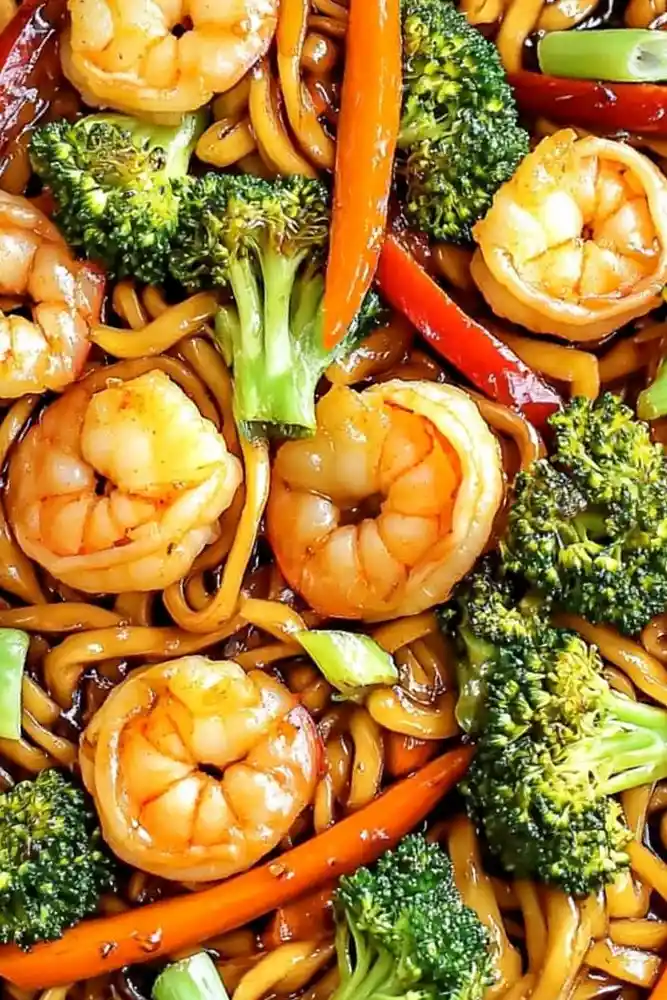
List of ingredients
- 1 lb large shrimp, peeled and deveined – pat dry for best results.
- 14 oz lo mein noodles – cook according to package.
- 3 tbsp vegetable oil, divided – used for searing and stir-frying.
- 2 cups broccoli florets – cut into bite-sized pieces.
- 1 red bell pepper, thinly sliced – adds color and sweetness.
- 1 medium carrot, julienned or shredded – provides a crisp texture.
- 2 cloves garlic, minced – for aromatic base.
- 1 tsp freshly grated ginger – adds warmth and depth.
- 2 scallions, sliced, white and green parts separated – used for both cooking and garnish.
- 3 tbsp hoisin sauce – provides sweetness and thickness.
- 2 tbsp reduced sodium soy sauce – for salty, umami flavor.
- 1 tbsp sesame oil – adds a toasted nuttiness.
- 1/4 cup reduced sodium chicken broth – thins the sauce and adds richness.
- 1 tbsp honey – balances the soy sauce saltiness.
- 1 tsp cornstarch – used to thicken the sauce glaze.
step-by-step instructions
- Prepare the noodles: Cook the noodles according to package directions until al dente. Drain and toss with a small amount of oil to prevent sticking, then set aside.
- Whisk the sauce: In a small bowl, combine the hoisin sauce, soy sauce, sesame oil, chicken broth, honey, and cornstarch. Whisk until the cornstarch is fully dissolved and the mixture is smooth.
- Sear the shrimp: Heat 1 tbsp of oil in a large wok or skillet over medium-high heat. Add the shrimp in a single layer and cook for 2-3 minutes per side until they are pink and opaque, then remove them to a plate.
- Stir-fry the vegetables: Add the remaining 2 tbsp of oil to the same pan. Stir-fry the broccoli, bell pepper, and carrots for 2-3 minutes until they are crisp-tender. Stir in the garlic, ginger, and scallion whites, cooking for only 30 seconds until fragrant.
- Thicken the sauce: Pour the prepared sauce into the pan and bring it to a simmer. Let it cook for about 1 minute until it begins to thicken and glaze the vegetables.
- Combine everything: Add the cooked noodles and seared shrimp back into the pan. Toss everything together for 1-2 minutes until the noodles and shrimp are well coated and heated through.
- Final touch: Garnish the dish with the reserved scallion greens and serve immediately.
Cooking Success Strategies
Pat Shrimp Dry for Better Searing
Use paper towels to remove all surface moisture from the shrimp before they hit the pan. This prevents the shrimp from steaming in their own juices, allowing them to develop a golden-brown sear and better flavor.
Practice Mise en Place
Prepare all chopping and measuring before turning on the stove. Stir-frying happens very quickly, and having the garlic, ginger, and sauce ready prevents the vegetables from overcooking while you prep other items.
Maintain High Heat in the Pan
Ensure your wok or skillet is shimmering hot before adding the oil and ingredients. High heat is essential for achieving the signature stir-fry texture where vegetables remain crisp on the outside but tender on the inside.
Avoid Overcrowding the Pan
Cook the shrimp in a single layer to ensure they sear rather than boil. If your pan is too small, sear the shrimp in two batches to maintain the temperature of the oil.
Ingredient Substitutions and Tweaks
Substituting Tofu for Shrimp
For a plant-based version, use extra-firm tofu that has been pressed to remove excess water. Cut the tofu into cubes and sear them until golden brown using the same method as the shrimp.
Alternative Noodle Options
If you do not have lo mein noodles, you can use udon for a thicker chew or rice noodles for a gluten-free alternative. Be sure to adjust the cooking time according to the specific noodle type to avoid mushiness.
Varying the Vegetable Mix
You can replace the broccoli and carrots with bok choy, snap peas, or sliced mushrooms. These vegetables cook at similar rates and complement the savory hoisin-soy sauce profile.
Making the Sauce Gluten-Free
To make this recipe gluten-free, swap the soy sauce for tamari or coconut aminos. Ensure your hoisin sauce is also certified gluten-free, as some brands use wheat-based thickeners.
Serving and Presentation Ideas
Adding Toasted Sesame Seeds
Sprinkle toasted white or black sesame seeds over the final dish. This adds a subtle crunch and professional visual appeal to the plated meal.
Pairing with Asian-Style Side Dishes
Serve this stir-fry alongside vegetable spring rolls or steamed dumplings. A refreshing cucumber salad with rice vinegar and sesame oil also balances the richness of the stir-fry sauce.
Incorporating Fresh Chili for Heat
If you prefer a spicy dish, add sliced red bird’s eye chilies or a drizzle of sriracha at the end. This provides a sharp contrast to the sweetness of the honey and hoisin.
Proper Storage and Reheating
Refrigeration Guidelines
Allow the stir-fry to cool completely before transferring it to an airtight glass container. Store it in the refrigerator for up to 3 days to maintain the quality of the shrimp and vegetables.
Best Reheating Method for Texture
Reheat the dish in a skillet over medium heat with a splash of water or chicken broth. This restores the moisture to the noodles and prevents the shrimp from becoming rubbery.
Microwave Reheating Tips
If using a microwave, heat the food in 30-second intervals. Stir the noodles between each interval to ensure the heat is distributed evenly and the sauce is re-emulsified.
Preventing Noodle Clumping
When storing, ensure the noodles are well-coated in sauce. If they seem dry upon reheating, add a teaspoon of sesame oil to loosen the strands without altering the flavor profile.
Troubleshooting Common Issues
Fixing a Sauce That is Too Thick
If the sauce becomes too gummy or thick, stir in a tablespoon of chicken broth or water. Heat the mixture gently while stirring until the desired consistency is reached.
Preventing Rubberly Shrimp
Shrimp cook very quickly and can become tough if overdone. Remove them from the pan the moment they turn opaque and curl into a ‘C’ shape; they will finish heating when added back at the end.
Dealing with Soggy Vegetables
Soggy vegetables usually result from cooking on too low a heat or crowding the pan. Increase the temperature and cook the vegetables in smaller batches if necessary to ensure they sear quickly.
Balancing Too Much Saltiness
If the sauce tastes too salty due to the soy sauce, add a small squeeze of fresh lime juice or an extra teaspoon of honey. The acidity and sweetness will neutralize the excess salt.
Frequently Asked Questions
Can I use frozen shrimp for this recipe?
Yes, you can use frozen shrimp. Thaw them completely in the refrigerator overnight or under cold running water, and most importantly, pat them very dry with paper towels before cooking.
What can I use if I do not have hoisin sauce?
You can create a similar flavor by mixing two tablespoons of soy sauce, one tablespoon of honey, and one teaspoon of peanut butter or plum sauce. This mimics the sweet, thick, and savory profile of hoisin.
Can I prepare this meal ahead of time?
You can prep the vegetables and whisk the sauce up to 24 hours in advance. However, the actual stir-frying and combining with noodles should be done immediately before serving for the best texture.
Which oil is best for stir-frying?
Vegetable oil, canola oil, or peanut oil are best because they have high smoke points. Avoid using extra virgin olive oil for the high-heat searing phase as it can burn and taste bitter.
Can I add other proteins like chicken or beef?
Yes, you can use thinly sliced chicken breast or flank steak. Ensure you sear them first and remove them from the pan before cooking the vegetables, just as you did with the shrimp.
Essential Equipment for Stir-Frying
The Benefits of a Carbon Steel Wok
A carbon steel wok is ideal because it heats up and cools down rapidly. Its sloped sides allow you to toss ingredients easily, ensuring they are evenly coated in the sauce without breaking the noodles.
Using a Large Non-Stick Skillet
If you do not own a wok, a wide non-stick skillet is a great alternative. It provides a large surface area to prevent overcrowding, which is key to keeping the vegetables crisp.
Importance of a Fine Mesh Strainer
Use a fine mesh strainer when draining the lo mein noodles. This allows you to quickly rinse off excess starch, which prevents the noodles from sticking together in the pan.
Print
Easy Shrimp Stir-Fry with Noodles
- Total Time: 20 minutes
- Yield: 4 servings 1x
- Diet: General
Description
Skip takeout and make this shrimp stir-fry with noodles at home! It’s savory, filling, and full of so much delicious flavor.
Ingredients
- 1 lb large shrimp, peeled and deveined
- 14 oz lo mein noodles
- 3 tbsp vegetable oil, divided
- 2 cups broccoli florets
- 1 red bell pepper, thinly sliced
- 1 medium carrot, julienned or shredded
- 2 cloves garlic, minced
- 1 tsp freshly grated ginger
- 2 scallions, sliced, white and green parts separated
- 3 tbsp hoisin sauce
- 2 tbsp reduced sodium soy sauce
- 1 tbsp sesame oil
- 1/4 cup reduced sodium vegetable broth
- 1 tbsp honey
- 1 tsp cornstarch
Instructions
- Step 1: Cook the noodles according to package directions until al dente. Drain and toss with a small amount of oil to prevent sticking. Set aside.
- Step 2: In a small bowl, whisk together the sauce ingredients until well combined. Set aside.
- Step 3: Heat 1 tbsp of oil in a large wok or skillet over medium-high heat. Add the shrimp in a single layer and cook for 2-3 minutes on each side until pink and opaque. Remove to a plate.
- Step 4: Add the remaining 2 tbsp of oil to the pan. Stir-fry the broccoli, bell pepper, and carrots for 2-3 minutes until crisp-tender. Add the garlic, ginger, and scallion whites. Cook for 30 seconds until fragrant.
- Step 5: Pour the sauce into the pan and bring to a simmer. Let it thicken slightly, about 1 minute.
- Step 6: Add the cooked noodles and shrimp to the pan. Toss everything together until well coated in the sauce and heated through, for about 1-2 minutes.
- Step 7: Garnish with scallion greens and serve immediately.
Notes
Pat the shrimp dry with paper towels before cooking to ensure a better sear. Make sure the wok or skillet is very hot before adding ingredients to achieve the best stir-fry texture.
- Prep Time: 10 minutes
- Cook Time: 10 minutes
- Category: Main Course
- Method: Stir-fry
- Cuisine: Asian
Nutrition
- Serving Size: 1 serving
- Calories: 513 kcal
- Sugar: 12 g
- Sodium: 850 mg
- Fat: 16 g
- Saturated Fat: 3 g
- Unsaturated Fat: 13 g
- Trans Fat: 0 g
- Carbohydrates: 62 g
- Fiber: 5 g
- Protein: 30 g
- Cholesterol: 165 mg