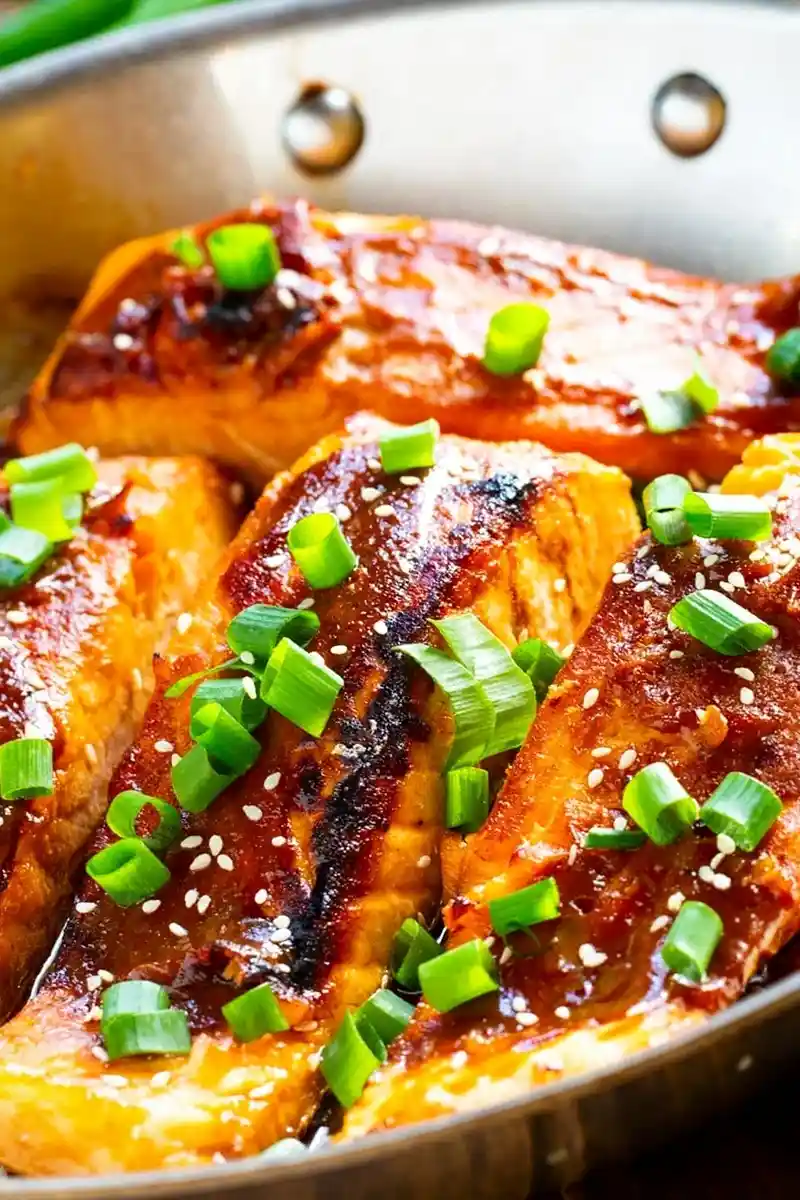
This homemade teriyaki salmon offers a perfect balance of savory and sweet flavors, achieved by marinating the fish before a quick sear and oven finish. The method ensures a caramelized exterior while keeping the center of the salmon tender and moist. It is a reliable, flavorful main course that works beautifully for weeknight dinners.
List of ingredients
- 2 tablespoons sesame oil
- 2 tablespoons rice vinegar
- 1/4 cup soy sauce
- 3 tablespoons packed brown sugar
- 1 clove garlic, minced
- 1 teaspoon ground mustard
- 1 teaspoon ground ginger
- 1/4 teaspoon red pepper flakes
- 4 salmon fillets
- 2 tablespoons vegetable oil
- 1/2 teaspoon cornstarch
- 2 green onions, sliced
- sesame seeds
step-by-step instructions
- Step: Mix together sesame oil, rice vinegar, soy sauce, brown sugar, garlic, ground mustard, ground ginger, and red pepper flakes and pour into a large ziptop bag.
- Step: Add salmon to bag and refrigerate 2 to 6 hours.
- Step: Remove salmon from marinade and pat dry with paper towels.
- Step: Pour marinade into a small saucepan. Whisk in cornstarch. Bring to a boil for 1 minute and remove from heat.
- Step: Heat vegetable oil in an oven-proof skillet. Add salmon with skin facing up. Cook until seared and flip over. Baste with sauce and place in 300 degree oven for 10 to 12 minutes.
- Step: Baste with more sauce and sprinkle with green onions and sesame seeds.
Refining Your Marination Process
The Importance of Drying the Fish
Before the salmon touches the hot pan, patting the surface dry with paper towels is critical. Any residual liquid on the exterior will cause the fish to steam rather than sear, resulting in a pale, soft crust instead of the desired golden-brown finish.
Selecting the Right Marinade Duration
Marinating between 2 and 6 hours allows the salt and sugar in the teriyaki base to work into the muscle fibers of the salmon. Avoid leaving the fish in the acidic environment of the vinegar and soy sauce for much longer than 6 hours, as it may cause the delicate texture of the protein to become overly soft or mushy.
Mastering the Pan-to-Oven Technique
Choosing Your Oven-Proof Skillet
A heavy-duty cast iron or stainless steel skillet is ideal for this cooking method. These pans conduct heat evenly, which is necessary to get the initial sear on the stovetop before the salmon finishes in the gentle heat of the 300-degree oven.
Why Low Heat Finishes Work Best
Using a 300-degree oven ensures the fish cooks gently after the initial searing process. This low temperature prevents the proteins from tightening too quickly, which is the most effective way to ensure the salmon stays flaky and moist throughout the entire thickness of the fillet.
Customizing Your Salmon Experience
Substituting Aromatics for New Flavors
If you prefer a different profile, you can substitute the minced garlic with a teaspoon of garlic powder, or replace the ground ginger with freshly grated ginger root for a sharper, more vibrant heat. Ensure any fresh aromatics are finely minced so they distribute evenly across the surface of the salmon during the cooking process.
Adjusting the Heat Levels
The red pepper flakes add a background warmth that offsets the sweetness of the brown sugar. If you are serving this to guests who prefer no heat at all, you can omit the flakes entirely. Conversely, for those who enjoy a spicier dish, consider adding a pinch of cayenne or a small amount of chili paste to the marinade.
Tips for Successful Serving
Selecting Accompaniments for Balance
Because the teriyaki glaze is rich and sweet, it pairs well with light, neutral sides. Steamed jasmine or basmati rice acts as a clean canvas for the sauce, while quick-blanched snow peas or stir-fried baby bok choy provide a fresh, crisp contrast to the buttery texture of the salmon.
Presentation Techniques for Plating
For an elevated look, place the salmon fillet slightly off-center on the plate. Pour an extra spoonful of the thickened glaze over the top just before serving, and ensure your green onions are sliced at a sharp diagonal angle for a professional, clean aesthetic.
Maintaining Ingredient Freshness and Storage
Storing Leftover Salmon Properly
If you have leftover salmon, allow it to cool completely before placing it in an airtight container. It can be stored in the refrigerator for up to two days. When storing, ensure you keep any leftover sauce in a separate container to prevent the salmon from becoming soggy.
Effective Reheating for Best Texture
To avoid drying out the fish, avoid the microwave if possible. Instead, reheat the salmon in a small oven-safe dish at 275 degrees Fahrenheit until just warmed through. Adding a tiny splash of water or broth to the bottom of the dish can create enough steam to keep the fillet succulent.
Addressing Common Cooking Hurdles
What if the Glaze is Too Thin?
If the glaze does not reach your desired consistency after one minute of boiling, create a secondary slurry by whisking a tiny bit more cornstarch with a teaspoon of cold water. Add this mixture to the bubbling sauce slowly, stirring constantly until the sauce coats the back of a spoon.
Preventing the Fish from Sticking
If your salmon is sticking to the pan during the searing phase, it is likely that the pan was not hot enough or the fish was moved too early. Wait until the underside releases naturally from the pan surface, which typically happens once a proper crust has formed.
Managing Variations in Fillet Size
Salmon fillets often vary in thickness, even if they are sold as standard cuts. If your pieces are unusually thin, start checking for doneness at the 8-minute mark in the oven. For very thick, center-cut fillets, you may need to extend the time by an additional 2 or 3 minutes.
Can I Use Frozen Salmon Fillets?
Yes, but the fish must be completely thawed and thoroughly patted dry before it encounters the marinade. Moisture is the enemy of a good sear, and any ice crystals remaining in the fish will dilute your flavorful marinade.
Print
Easy Savory Teriyaki Salmon
- Total Time: 142 minutes
- Yield: 4 servings 1x
- Diet: Pescatarian
Description
Salmon filets are marinated in an easy teriyaki marinade and then seared to get the outside crispy. They finish cooking in the oven to keep the inside moist.
Ingredients
- 2 tablespoons sesame oil
- 2 tablespoons rice vinegar
- 1/4 cup soy sauce
- 3 tablespoons packed brown sugar
- 1 clove garlic, minced
- 1 teaspoon ground mustard
- 1 teaspoon ground ginger
- 1/4 teaspoon red pepper flakes
- 4 salmon fillets
- 2 tablespoons vegetable oil
- 1/2 teaspoon cornstarch
- 2 green onions, sliced
- sesame seeds
Instructions
- Step: Mix together sesame oil, rice vinegar, soy sauce, brown sugar, garlic, ground mustard, ground ginger, and red pepper flakes and pour into a large ziptop bag.
- Step: Add salmon to bag and refrigerate 2 to 6 hours.
- Step: Remove salmon from marinade and pat dry with paper towels.
- Step: Pour marinade into a small saucepan. Whisk in cornstarch. Bring to a boil for 1 minute and remove from heat.
- Step: Heat vegetable oil in an oven-proof skillet. Add salmon with skin facing up. Cook until seared and flip over. Baste with sauce and place in 300 degree oven for 10 to 12 minutes.
- Step: Baste with more sauce and sprinkle with green onions and sesame seeds.
Notes
A cast iron pan or a stainless steel pan both work really well for this recipe.
- Prep Time: 130 minutes
- Cook Time: 12 minutes
- Category: Main Course
- Method: Sear and Bake
- Cuisine: American
Nutrition
- Serving Size: 1 fillet
- Calories: 416 kcal
- Sugar: 9 g
- Sodium: 891 mg
- Fat: 25 g
- Saturated Fat: 4 g
- Unsaturated Fat: 19 g
- Trans Fat: 0 g
- Carbohydrates: 11 g
- Fiber: 0.5 g
- Protein: 36 g
- Cholesterol: 94 mg