This creamy taco beef pasta combines bold Mexican flavors with a rich cheese sauce for a satisfying weeknight meal. It is a quick, one-pan dish that delivers a hearty blend of protein and pasta in under 30 minutes.
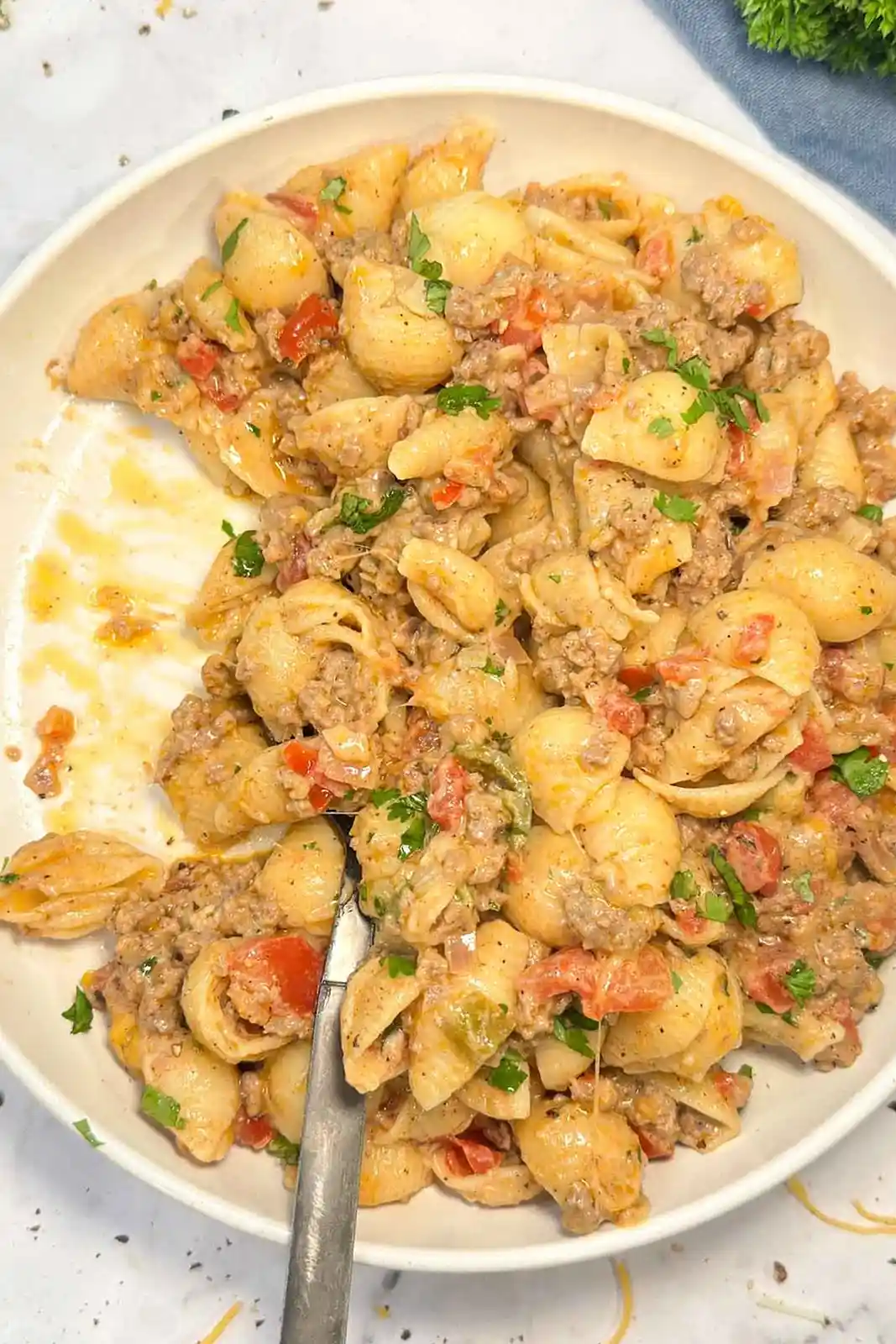
List of ingredients
- 12 oz medium pasta shells – these hold the sauce efficiently.
- 1 lb ground beef – use 80/20 for optimal flavor.
- 1/2 medium onion – finely chopped for uniform distribution.
- 3 minced garlic cloves – fresh is preferred for better aroma.
- 10 oz canned Rotel tomatoes – includes diced tomatoes and green chilies.
- 2 Tbsp taco seasoning – store-bought or homemade.
- 1/2 tsp salt – adjust based on the saltiness of the taco seasoning.
- 1/4 tsp ground black pepper – for a mild spicy undertone.
- 3 oz cream cheese – softened for easier mixing.
- 3/4 cup shredded cheese – a Mexican blend or sharp cheddar works best.
step-by-step instructions
- Cook the pasta: Boil the pasta shells in a large pot of salted water according to the package instructions. Once tender, drain the water and cover the pot to keep the pasta warm.
- Brown the beef: Heat a small amount of oil in a large deep skillet over medium-high heat. Add the ground beef and chopped onion, sautéing for 3-4 minutes until the meat is fully browned.
- Add aromatics: Stir in the minced garlic, taco seasoning, salt, and black pepper. Cook for another minute until the garlic becomes fragrant.
- Simmer the sauce: Mix in the Rotel tomatoes and cream cheese. Let the mixture simmer for 3-4 minutes until the cream cheese is melted and the sauce is cohesive.
- Melt the cheese: Stir in the shredded cheese until it is completely melted and incorporated into the sauce. Taste the sauce and adjust salt or pepper if needed.
- Combine and finish: Turn off the heat and fold in the cooked pasta, chopped cilantro, and a bit of additional shredded cheese. Mix until every shell is well coated.
- Serve: Plate the pasta immediately and garnish with extra cheese and fresh cilantro.
Optimizing Your Ingredient Choices
Selecting the Best Pasta Shape
Medium pasta shells are the ideal choice because their concave shape acts as a scoop for the beef and creamy sauce. If shells are unavailable, rotini or fusilli are excellent alternatives as their spirals trap the sauce well. Avoid long noodles like spaghetti or linguine, as they do not integrate effectively with the chunky meat mixture.
Choosing the Right Ground Beef
An 80/20 lean-to-fat ratio provides the best flavor and prevents the meat from becoming too dry during the browning process. If you prefer a leaner option, such as 90/10, add a tablespoon of olive oil to the pan to maintain moisture. You can also substitute ground turkey or ground chicken for a lighter protein profile.
Comparing Shredded Cheese Varieties
A Mexican blend cheese typically provides a balanced flavor and a smooth melt for this dish. For a sharper taste, use aged sharp cheddar, or for a creamier stretch, incorporate Monterey Jack or Mozzarella. Freshly grated cheese is recommended over pre-shredded versions to avoid anti-caking agents that can make the sauce grainy.
Using Fresh vs. Jarred Garlic
Freshly minced garlic provides a pungent, aromatic punch that enhances the taco seasoning. If using jarred minced garlic, reduce the amount slightly as it is often preserved in oil or salt. Ensure the garlic is added after the beef is browned to prevent it from burning and becoming bitter.
Adjusting the Heat Level of Rotel Tomatoes
Rotel tomatoes come in mild and hot varieties, allowing you to customize the spice level for your family. For those who prefer more heat, the hot variety adds a noticeable kick from the green chilies. If you lack Rotel, you can combine a can of diced tomatoes with a small can of diced green chilies.
Pro Cooking Techniques for Better Flavor
Achieving a Perfect Sear on Ground Beef
Ensure the skillet is hot before adding the beef to create a proper sear, which develops a deeper flavor through the Maillard reaction. Avoid crowding the pan too much, as this can cause the meat to steam in its own juices rather than brown. Drain excess grease before adding the garlic to keep the sauce from becoming oily.
Preventing Pasta from Overcooking
Cook your pasta for one minute less than the package instructions for an ‘al dente’ texture. Since the pasta will be mixed into a simmering sauce, it will continue to cook slightly during the final step. This prevents the shells from becoming mushy and helps them hold their shape.
Integrating Cream Cheese for a Smooth Texture
To avoid lumps in your sauce, ensure the cream cheese is at room temperature before adding it to the skillet. Stir it in consistently over medium heat until it completely emulsifies with the tomatoes and beef juices. If the sauce seems too thick, a tablespoon of pasta water can help smooth it out.
Balancing the Taco Seasoning Profile
Different brands of taco seasoning have varying salt levels, so taste the sauce before adding the final 1/2 tsp of salt. If the sauce tastes too acidic from the tomatoes, a tiny pinch of brown sugar can balance the flavor. Adding a squeeze of fresh lime juice at the end can brighten the heavy flavors.
Hearty Variations and Add-ins
Incorporating Black Beans and Corn
For a more filling meal, stir in a half-cup of rinsed black beans and a half-cup of frozen corn. Add these during the simmering stage with the Rotel tomatoes so they heat through. These additions add texture and increase the nutritional value of the dish.
Adding Fresh Jalapeños for Extra Heat
Finely dice fresh jalapeños and sauté them along with the onions at the beginning of the process. Removing the seeds and membranes will provide a mild flavor, while keeping them in will increase the spicency. This adds a fresh, crisp heat that complements the cream cheese.
Substituting Ground Turkey or Chicken
Ground turkey or chicken is a leaner alternative to beef and works well with these seasonings. Because these meats have less fat, you may need to add an extra tablespoon of oil or butter to the pan. The flavor profile remains similar, though the dish becomes slightly lighter.
Using Vegetable-Based Protein Alternatives
To make this dish vegetarian, replace the ground beef with cooked brown lentils or crumbled extra-firm tofu. Increase the amount of taco seasoning slightly to ensure the plant-based proteins are well-flavored. Ensure you use a microbial-rennet cheese to keep the dish strictly plant-based or vegetarian.
Serving and Presentation Ideas
Fresh Toppings for Added Texture
Garnish each bowl with sliced avocado or a dollop of sour cream to add a cool contrast to the warm spices. Finely diced red onions or sliced green onions provide a sharp, fresh crunch. Fresh cilantro leaves should be added at the very end to preserve their bright color and flavor.
Complementary Side Dish Pairings
Serve this pasta with a crisp green salad tossed in a lime-vinaigrette to cut through the richness of the cheese. Cornbread or a side of tortilla chips and salsa also pair perfectly with the taco flavor profile. Steamed broccoli or roasted zucchini can add a healthy vegetable component to the meal.
Plating for Family-Style Meals
For a family dinner, serve the pasta in a large shallow bowl or a cast-iron skillet to keep the food warm. Sprinkle a generous layer of extra shredded cheese over the top and use a torch or broiler for a minute to melt it. Place toppings in small bowls around the center for a customizable experience.
Storage and Meal Prep Guidance
Proper Refrigeration Methods
Once the pasta has cooled to room temperature, transfer it to an airtight container. Store it in the refrigerator for up to 3-4 days. Keeping the lid tight prevents the pasta from drying out and absorbing too many odors from other foods.
Freezing and Thawing Procedures
This dish can be frozen for up to 3 months in a freezer-safe bag or container. To thaw, move the pasta to the refrigerator overnight before heating. Avoid thawing at room temperature to maintain food safety and texture.
Maintaining Creaminess During Reheating
When reheating in a skillet, add 2-3 tablespoons of milk or water to restore the creamy consistency of the sauce. Heat over medium-low heat and stir frequently to avoid burning the cheese. Adding a small handful of fresh shredded cheese during reheating helps recreate the original texture.
Troubleshooting Common Issues
Fixing a Sauce That Is Too Thick
If the sauce becomes too thick or clumpy after adding the pasta, stir in a small amount of reserved pasta water. The starch in the water helps emulsify the sauce and makes it glide over the pasta shells. Add the liquid one tablespoon at a time until the desired consistency is reached.
Correcting Over-Salted Pasta
If the dish tastes too salty due to the taco seasoning, add an extra ounce of cream cheese or a splash of heavy cream. The fats in the dairy help neutralize the perception of salt on the palate. Adding a bit more unsalted cooked pasta can also dilute the salt concentration.
Preventing the Cheese from Breaking or Oiling
To prevent the cheese from separating into oil, avoid boiling the sauce after the shredded cheese has been added. Keep the heat on medium-low and stir gently until melted. High heat can break the protein structure of the cheese, leading to a greasy appearance.
Frequently Asked Questions
Can I substitute the cream cheese with a lighter option?
Yes, you can use plain Greek yogurt or sour cream as a substitute for cream cheese. Greek yogurt provides a similar tang and creaminess while adding more protein. Stir these in at the end over low heat to prevent them from curdling.
Should I drain the liquid from the Rotel tomatoes?
Do not drain the Rotel tomatoes. The liquid contains the acidity and spice necessary to create the base of the sauce. This liquid combines with the cream cheese and beef juices to coat the pasta shells evenly.
Can I make this recipe in a slow cooker?
This recipe is designed for a skillet, but you can cook the beef and sauce in a slow cooker on low for 4-6 hours. However, you must cook the pasta separately and stir it in just before serving to avoid the noodles becoming overcooked and mushy.
How do I prevent the pasta from sticking together?
Immediately after draining the pasta, toss it with a small amount of oil or return it to the pot and cover it. If the pasta sticks before mixing, a splash of warm water or a stir with the sauce will easily separate the shells.
Print
Creamy Taco Beef Pasta
- Total Time: 20 minutes
- Yield: 5 servings 1x
- Diet: General
Description
This cheesy taco pasta is the ultimate comfort food! Bold ground beef tacos flavors combined with cheese and tender pasta, a unique and delicious pasta dish.
Ingredients
- 12 oz medium pasta shells
- 1 lb ground beef
- 1/2 medium onion, finely chopped
- 3 minced garlic cloves
- 10 oz canned rotel tomatoes
- 2 Tbsp taco seasoning
- 1/2 tsp salt
- 1/4 tsp ground black pepper
- 3 oz cream cheese
- 3/4 cup shredded cheese
Instructions
- Step: Cook the pasta in a large pot, according to package instructions. Once cooked, drain, cover and set side.
- Step: In a large deep skillet, heat oil on medium high heat. Once hot, add the ground beef and chopped onion and sauté for about 3-4 minutes, or until browned.
- Step: Once the beef has browned, add the minced garlic, taco seasoning, salt and pepper and cook until garlic is fragrant.
- Step: Add the rotel tomatoes and cream cheese to the skillet and simmer for 3-4 minutes. Add the shredded cheese and mix.
- Step: Turn off the heat, add the cooked pasta, chopped cilantro, and additional shredded cheese to the skillet and mix until well combined.
- Step: Serve immediately with additional cheese and cilantro.
Notes
You can swap the cream cheese for sour cream or plain Greek yogurt for a lighter version. To reheat, add 2-3 tablespoons of milk and extra shredded cheese in a skillet.
- Prep Time: 5 minutes
- Cook Time: 15 minutes
- Category: Main Course
- Method: Stovetop
- Cuisine: American, Mexican, Italian
Nutrition
- Serving Size: 1 serving
- Calories: 620 kcal
- Sugar: 10 g
- Sodium: 1150 mg
- Fat: 32 g
- Saturated Fat: 16 g
- Unsaturated Fat: 12 g
- Trans Fat: 0 g
- Carbohydrates: 48 g
- Fiber: 4 g
- Protein: 34 g
- Cholesterol: 95 mg