This salmon salad spread is a budget-friendly and versatile alternative to traditional tuna salad. It serves as an excellent filling for sandwiches, a topping for bagels, or a savory appetizer dip.
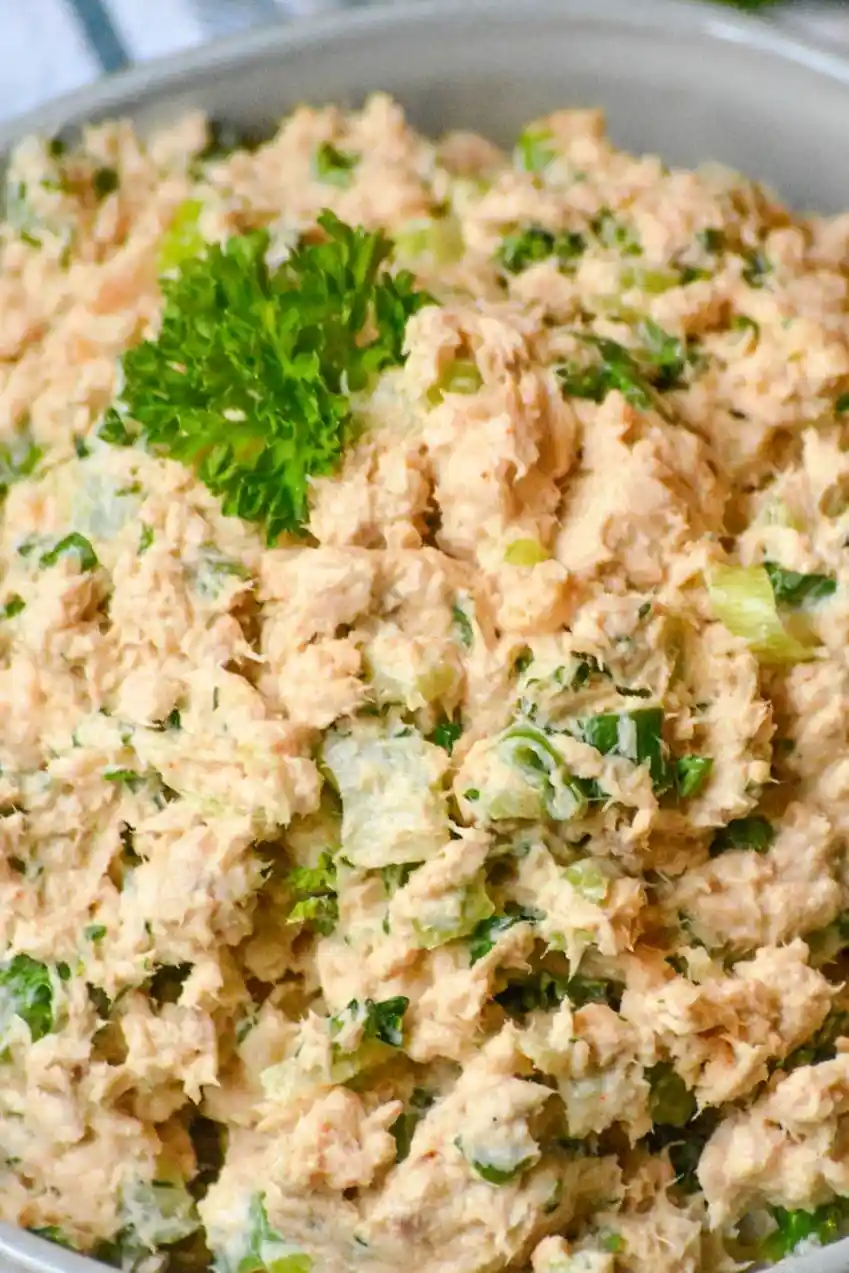
List of ingredients
- 3 6 oz cans boneless, skinless salmon – ensure they are labeled boneless and skinless.
- 1 bunch green onions – thinly sliced for a mild onion flavor.
- 3 tbsp fresh dill – chopped finely to add a bright, herbal note.
- 3 stalks celery – finely chopped to provide a necessary crunch.
- 3 tbsp chopped fresh parsley leaves – adds freshness and color.
- heaping 1/3 cup mayonnaise – full fat is recommended for the best texture.
- scant 1/2 tsp smoked paprika – provides a subtle woody depth.
- 1/4 tsp cayenne pepper – adds a very slight kick of heat.
- 2 1/4 tbsp lemon juice – provides acidity to balance the richness.
- 2 tsp Dijon mustard – adds a sharp, tangy bite.
- salt & pepper – added to taste for final seasoning.
step-by-step instructions
- Prepare the salmon: Open and drain the canned fish, then add it to a medium sized mixing bowl.
- Mash the fish: Using a sturdy potato masher, break up the salmon until it reaches the desired consistency.
- Add aromatics: To the bowl add the onions, celery, dill, & parsley. Mix gently to combine evenly.
- Prepare the dressing: In a separate, smaller mixing bowl add the remaining ingredients. Whisk them evenly to combine and form the dressing.
- Combine and adjust: Pour the dressing into the salmon mixture, and stir until evenly combined. Add additional mayonnaise 1 tablespoon at a time ONLY if a creamier consistency is desired.
- Serve or chill: Serve immediately, or cover and chill the salmon salad before serving.
Creative Serving Suggestions
Toasted Bagels and Croissants
Toasted bagels provide a chewy and sturdy base that supports the weight of the salmon spread. Croissants offer a buttery, flaky contrast that pairs well with the creamy texture of the salad. Use a generous layer and add a slice of cucumber for extra freshness.
Fresh Vegetable Dippers
Using this spread as a dip is a great way to incorporate more vegetables into your meal. Slice red bell peppers, carrots, and cucumbers into thick batons for dipping. Celery sticks are also a classic choice that complements the existing celery in the recipe.
Hearty Grain Bowls
For a more filling dinner option, serve a scoop of the salmon salad over cooked grains. Quinoa, barley, or brown rice provide a nutty flavor and a satisfying structure. You can add steamed spinach or roasted broccoli to the bowl to make it a complete meal.
Avocado or Tomato Vessels
Hollow out a ripe avocado half and fill the center with the salmon spread for a nutrient-dense snack. Alternatively, core a large beefsteak tomato and stuff it with the mixture. These options eliminate the need for bread and offer a refreshing flavor profile.
Ingredient Customizations and Substitutions
Using Fresh Salmon Fillets
If you prefer not to use canned fish, you can use fresh salmon that has been poached or baked. Once cooked, let the fish cool completely and flake it with a fork. This method is a great way to use up leftover salmon from a previous meal.
Replacing Mayonnaise with Greek Yogurt
To reduce the fat content or add a tangier flavor, substitute the mayonnaise with plain Greek yogurt. Keep in mind that yogurt is more acidic and thinner than mayo, so you may need to adjust the lemon juice quantity. This swap increases the protein content of the spread.
Adding Capers for Briny Flavor
Capers are a traditional pairing for salmon and add a salty, pungent pop to the salad. Add one to two tablespoons of drained capers during the mixing process. This helps cut through the richness of the mayonnaise and adds complexity.
Omitting or Swapping Fresh Dill
If you do not have fresh dill, you can omit it entirely without ruining the recipe. For a different herbal profile, try using a small amount of fresh cilantro or mint. Dried dill can be used as a replacement, but use only one tablespoon as dried herbs are more concentrated.
Preparation and Storage Guidelines
Chilling the Salad Before Serving
While this spread can be eaten immediately, chilling it for one to two hours allows the flavors to meld. The acidity of the lemon juice and the sharpness of the mustard penetrate the salmon more deeply during this time. Store it in the refrigerator in a sealed container to prevent odor absorption.
Using Airtight Containers for Storage
Store leftover salmon salad in a glass airtight container to maintain freshness. Plastic containers can sometimes retain smells or allow air to seep in, which may degrade the quality of the fresh herbs. Ensure the lid is pressed firmly to keep the spread from drying out.
Understanding the Refrigerated Shelf Life
Because this recipe uses fresh herbs and mayonnaise, it should be consumed within two days. After 48 hours, the celery may lose its crunch and the herbs may begin to wilt. Always smell the product before consuming to ensure it remains fresh.
Avoiding Reheating of the Spread
This is a cold salad and should not be reheated in a microwave or oven. Heating mayonnaise-based spreads can cause the emulsion to break, resulting in an oily and unappealing texture. If the salad is too cold, let it sit at room temperature for 10 minutes before serving.
Professional Cooking Tips
Utilizing a Potato Masher for Texture
Using a potato masher instead of a fork allows for a more consistent flake size. It breaks down the larger chunks of canned salmon quickly without turning the fish into a paste. This ensures that every bite has a balanced ratio of fish to dressing.
Verifying Boneless and Skinless Labels
Always check that your canned salmon is specifically labeled as boneless and skinless. Some traditional canned salmon contains small bones and skin which are edible but can be unpleasant for some. If your cans contain bones, manually remove them before mashing.
Controlling the Creaminess Level
The amount of mayonnaise can vary based on how much liquid was left in the canned salmon. Add the initial heaping 1/3 cup, then taste for consistency. Adding more mayo one tablespoon at a time prevents the salad from becoming overly soupy.
Mimicking Smoked Salmon Flavor
If you enjoy the taste of smoked salmon but only have plain canned salmon, add a few drops of liquid smoke. This provides a campfire aroma and depth that mimics expensive smoked fillets. Be cautious with the amount, as liquid smoke is very potent.
Troubleshooting Common Issues
Fixing a Watery Consistency
If the spread seems too thin, it is usually because the salmon wasn’t drained sufficiently. You can fix this by stirring in an extra tablespoon of mayonnaise or adding a small amount of finely crushed crackers. Ensure you drain the cans thoroughly using a mesh strainer in the future.
Reducing a Strong Fishy Taste
Canned salmon can sometimes have a stronger scent and taste than fresh fish. To neutralize this, increase the amount of lemon juice by a teaspoon. The citric acid breaks down the amines responsible for the fishy odor and brightens the overall flavor.
Balancing Excessive Acidity
If the lemon juice and Dijon mustard make the spread too tart, balance the flavor with a pinch of sugar. A tiny amount of sweetener neutralizes the sharp edges of the acid without making the salad taste sweet. Alternatively, add another tablespoon of mayonnaise to mellow the taste.
Frequently Asked Questions
Can I use frozen salmon for this recipe?
Yes, you can use frozen salmon, but it must be fully thawed and cooked first. Poach the fillet in water or steam it until it flakes easily with a fork. Once cooled, follow the recipe as written, treating the cooked fish like the canned version.
Is this salmon spread freezer friendly?
No, this recipe is not suitable for freezing. The mayonnaise and fresh vegetables will separate and lose their texture during the freezing and thawing process. The celery will become mushy and the emulsion in the dressing will break.
How do I store the leftovers safely?
Keep the leftovers in a sealed container in the coldest part of your refrigerator, away from the door. This prevents temperature fluctuations that could lead to spoilage. Use a clean spoon every time you scoop from the container to avoid cross-contamination.
Print
Creamy Salmon Salad Spread
- Total Time: 10 minutes
- Yield: 8 servings 1x
- Diet: General
Description
Salmon salad spread is a versatile alternative to tuna salad. This yummy spread is the perfect, budget friendly filling for sandwiches, spread for bagels or appetizer dip!
Ingredients
- 3 6 oz cans boneless, skinless salmon
- 1 bunch green onions, thinly sliced
- 3 tbsp fresh dill, chopped
- 3 stalks celery, finely chopped
- 3 tbsp chopped fresh parsley leaves
- heaping 1/3 cup mayonnaise
- scant 1/2 tsp smoked paprika
- 1/4 tsp cayenne pepper
- 2 1/4 tbsp lemon juice
- 2 tsp Dijon mustard
- salt & pepper, to taste
Instructions
- Step: Open & drain the canned fish, then add it to a medium sized mixing bowl.
- Step: Using a sturdy potato masher, break up the salmon.
- Step: To the bowl add the onions, celery, dill, & parsley. Mix gently to combine evenly.
- Step: In a separate, smaller mixing bowl add the remaining ingredients. Whisk them evenly to combine and form the dressing.
- Step: Pour the dressing into the salmon mixture, and stir until evenly combined. Add additional mayonnaise 1 tablespoon at a time ONLY if a creamier consistency is desired.
- Step: Serve immediately, or cover and chill the salmon salad before serving.
Notes
Ensure the cans of salmon are explicitly labeled boneless and skinless. For a smoked salmon flavor, add a few drops of liquid smoke. This recipe can be halved or doubled. Dill can be omitted, or capers can be added for extra tang. For a creamier consistency, add mayonnaise one tablespoon at a time.
- Prep Time: 10 minutes
- Cook Time: 0 minutes
- Category: Appetizer, Dinner, Lunch, Snack
- Method: Mixing
- Cuisine: American
Nutrition
- Serving Size: 1 serving
- Calories: 158 kcal
- Sugar: 1 g
- Sodium: 330 mg
- Fat: 10 g
- Saturated Fat: 2 g
- Unsaturated Fat: 7 g
- Trans Fat: 1 g
- Carbohydrates: 1 g
- Fiber: 1 g
- Protein: 15 g
- Cholesterol: 57 mg