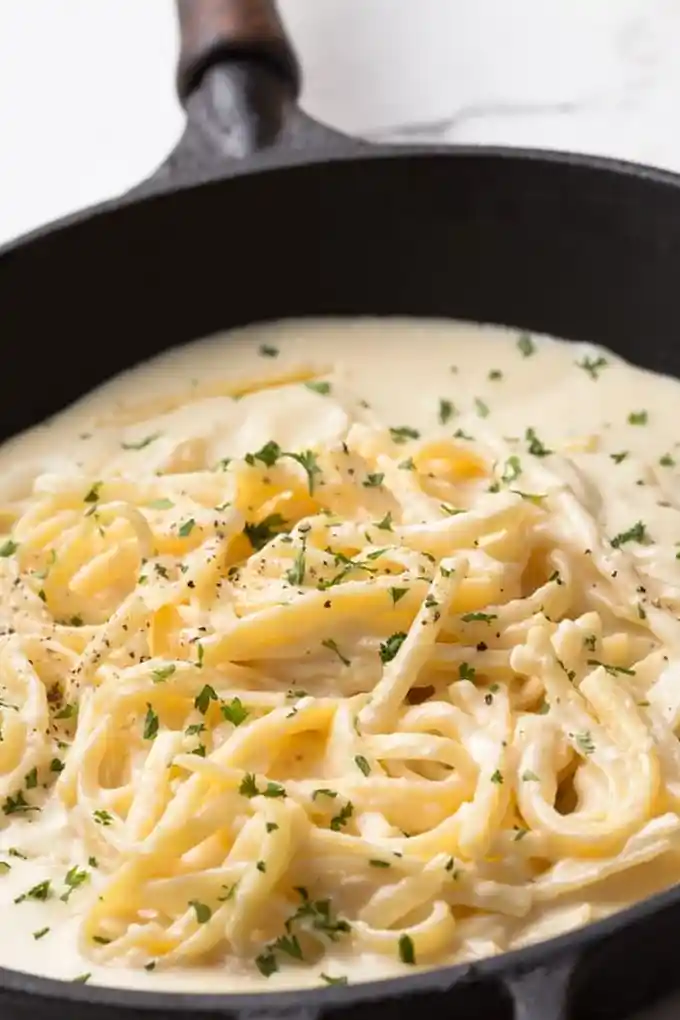
This rich and velvety Alfredo sauce is a versatile addition to any meal, providing a professional restaurant-style finish. It is designed to be quick to prepare and works exceptionally well with traditional pasta, low-carb alternatives, or as a savory topping for proteins.
List of ingredients
- 1/2 cup Butter (113g) – used as the fat base for the emulsion.
- 2 Cups Heavy Cream (500 mls) – provides the primary creamy texture and body.
- 3 tsp Garlic (minced) – adds essential aromatic depth to the sauce.
- 2 cups Parmesan Cheese (130 g) – must be freshly grated to ensure smooth melting.
- 1.5 cup Asiago Cheese (100 g) – freshly grated to add a sharper, salty flavor profile.
- Salt – added to taste based on the saltiness of the cheeses.
- Pepper – added to taste for a mild spicy contrast.
step-by-step instructions
- Prepare the serving base: Cook your choice of pasta noodles or prepare your zucchini noodles first. Have them drained and ready so the sauce can be added immediately while it is at its peak consistency.
- Melt butter and aromatics: Place a large, wide skillet over medium heat. Add the butter and minced garlic, stirring as the butter melts to infuse the garlic flavor without burning it.
- Simmer the cream: Pour the heavy cream into the skillet. Stir continuously for approximately two to three minutes until the mixture reaches a gentle simmer.
- Incorporate the cheeses: Stir in the freshly grated Parmesan and Asiago cheeses. Continue stirring constantly over medium heat until the cheese is completely melted and the sauce is bubbling.
- Season and serve: Taste the sauce and add salt and pepper as needed. Serve the hot sauce immediately over your prepared noodles, vegetables, or protein.
Optimizing Sauce Texture and Consistency
Use Freshly Grated Cheese to Prevent Graininess
Avoid using pre-shredded bagged cheese for this recipe. Bagged cheeses are coated in potato starch or cellulose to prevent clumping in the package, which prevents them from melting smoothly. Freshly grating your own block of Parmesan and Asiago ensures a silky, cohesive emulsion.
Maintain Medium Heat to Avoid Splitting
High heat can cause the fats in the butter and cream to separate from the solids, resulting in a greasy or broken sauce. Keep the skillet at a consistent medium heat and stir frequently. This gradual heating process helps the cheese integrate evenly into the cream.
Utilize a Wide Skillet for Faster Thickening
Using a wide skillet rather than a deep pot increases the surface area of the liquid. This allows moisture to evaporate more efficiently during the simmering phase. If your sauce feels too thin, continue simmering in a wide pan to reduce the liquid and concentrate the flavor.
Adjust Thickness with Additional Cheese
If the sauce has simmered but remains thinner than desired, the most effective fix is adding more freshly grated cheese. The proteins and fats in the cheese act as natural thickeners. Stir in small handfuls of Parmesan until the desired viscosity is achieved.
Ingredient Substitutions and Flavor Adjustments
Substituting Asiago with Extra Parmesan
If Asiago cheese is unavailable, you can replace it with an equal amount of Parmesan cheese. While you will lose the specific sharp tang of the Asiago, the sauce will remain creamy and flavorful. Ensure the substitute is also freshly grated to maintain the texture.
Using Pecorino Romano for a Saltier Profile
Pecorino Romano is a great alternative for those who prefer a stronger, saltier taste. Because Pecorino is made from sheep’s milk, it has a more pungent aroma than cow’s milk cheeses. If using Pecorino, reduce the additional salt added at the end of the recipe.
Replacing Heavy Cream with Half-and-Half
For a slightly lighter version, you can use half-and-half instead of heavy cream. Be aware that half-and-half has a lower fat content, which means the sauce may not thicken as quickly. You may need to simmer the mixture for a few extra minutes or add slightly more cheese to compensate for the lack of thickness.
Using Garlic Powder as an Alternative
If fresh minced garlic is not available, garlic powder can be used as a substitute. Use approximately 1 teaspoon of garlic powder to replace 3 teaspoons of fresh minced garlic. Stir the powder into the melted butter before adding the cream to ensure it is evenly distributed.
Serving and Pairing Suggestions
Pairing with Traditional Gluten-Free Pasta
For a classic experience, use gluten-free linguine or fettuccine. Cook the pasta in salted water and drain it thoroughly before tossing it with the sauce. To prevent the pasta from cooling down, keep the lid on the pot while you finish the final steps of the sauce preparation.
Preparing Low-Carb Zucchini Noodles
Use a spiralizer to create noodles from a large zucchini. To prevent the sauce from becoming watery, microwave the zoodles in 30-second bursts until just cooked. Place them on paper towels and pat them dry to remove excess moisture before adding the Alfredo sauce.
Adding Grilled Proteins for a Full Meal
This sauce pairs exceptionally well with grilled chicken breast or sautéed shrimp. Cook the protein separately and place it on top of the sauced noodles. The creaminess of the Alfredo balances the charred flavor of grilled meats.
Incorporating Steamed Vegetables
To add nutritional balance and color, stir in steamed broccoli florets or sautéed spinach at the very end. The vegetables should be cooked separately and added just before serving to maintain their texture. This prevents the vegetables from releasing water into the sauce.
Storage and Reheating Guidelines
Refrigerating the Sauce
Store any leftover sauce in an airtight container in the refrigerator. It will remain fresh and safe to eat for 3 to 4 days. Ensure the sauce has cooled slightly before sealing the container to prevent excessive condensation from forming inside.
Preventing Sauce Separation During Reheating
Cream-based sauces are prone to splitting when reheated too quickly. Use a low heat setting on the stove and stir constantly. If the sauce appears too thick or begins to separate, whisk in a tablespoon of milk or heavy cream to re-emulsify the fats.
Avoiding the Microwave for Reheating
Microwaves often create hot spots that can cause the cheese to oil off and the cream to curdle. It is highly recommended to reheat the sauce in a small saucepan. This allows you to control the temperature and maintain the smooth consistency of the emulsion.
Troubleshooting Common Issues
Fixing a Broken or Oily Sauce
If the sauce separates and looks oily, it is usually due to overheating. To fix this, remove the pan from the heat immediately. Whisk in a small amount of cold heavy cream or a teaspoon of cornstarch slurry (cornstarch mixed with water) over low heat to bring the sauce back together.
Correcting Overly Salty Sauce
Since Parmesan and Asiago are naturally salty, it is easy to over-season the dish. If the sauce is too salty, add a splash more of heavy cream or a small amount of unsalted butter. This dilutes the salt concentration without compromising the creaminess.
Managing Lumpy Cheese Texture
Lumps usually occur if the cheese is added to a boiling liquid or if pre-shredded cheese was used. To smooth out lumps, lower the heat and whisk vigorously. If the lumps persist, you can pass the sauce through a fine-mesh strainer, though this is a last resort.
Frequently Asked Questions
Can I use salted butter in this recipe?
Yes, you can use salted butter, but you should taste the sauce before adding any additional salt at the end. The combination of salted butter and two types of aged cheese can make the dish very salty quite quickly.
Is this sauce suitable for a keto diet?
Yes, this sauce is naturally low in carbohydrates and high in fat, making it ideal for keto. To keep the entire meal keto-friendly, serve the sauce over zucchini noodles, spaghetti squash, or steamed cauliflower.
Why is my sauce not thickening?
The most common reasons for a thin sauce are using pre-shredded cheese or not simmering the cream long enough. Ensure you are using freshly grated cheese and allow the cream to simmer for at least two to three minutes before adding the cheese.
Can I make this sauce in a small pan?
A small pan is suitable if you are making a half-batch of the recipe. However, for the full recipe, a large wide skillet is preferred to allow for better evaporation and easier stirring of the large volume of cheese.
Print
Creamy Homemade Alfredo Sauce
- Total Time: 15 minutes
- Yield: 8 servings 1x
- Diet: Keto
Description
A classic creamy sauce recipe that suits everyone from pasta fans to low carb lovers!
Ingredients
- 1/2 cup Butter (113g)
- 2 cups Heavy Cream (500 mls)
- 3 tsp minced Garlic
- 2 cups freshly grated Parmesan Cheese (130 g)
- 1.5 cup freshly grated Asiago Cheese (100 g)
- Salt to taste
- Pepper to taste
Instructions
- Step: In a large wide skillet, melt the butter over medium heat with the garlic.
- Step: Add the heavy cream and warm until it’s simmering for about two to three minutes, stirring all the time.
- Step: Add the grated Asiago cheese and grated Parmesan cheese, and heat until the sauce is bubbling over medium heat, stirring all the time.
- Step: Season to taste with salt and pepper and serve right away over pasta or low carb noodles of choice.
Notes
For a thicker sauce, simmer longer in a wide skillet or add more cheese. Use freshly grated cheese instead of bagged to ensure it melts properly without starch. Store in the fridge for 3-4 days and reheat gently to prevent splitting.
- Prep Time: 5 minutes
- Cook Time: 10 minutes
- Category: Sauce
- Method: Stovetop
- Cuisine: American
Nutrition
- Serving Size: 1/2 cup
- Calories: 431 kcal
- Sugar: 1 g
- Sodium: 770 mg
- Fat: 42 g
- Saturated Fat: 26 g
- Unsaturated Fat: 16 g
- Trans Fat: 0 g
- Carbohydrates: 3 g
- Fiber: 1 g
- Protein: 13 g
- Cholesterol: 133 mg