This traditional Dutch mustard soup, known as mosterdsoep, is a rich and velvety dish with a unique tang. It balances the sharpness of stoneground mustard with the sweetness of leeks and a creamy finish.
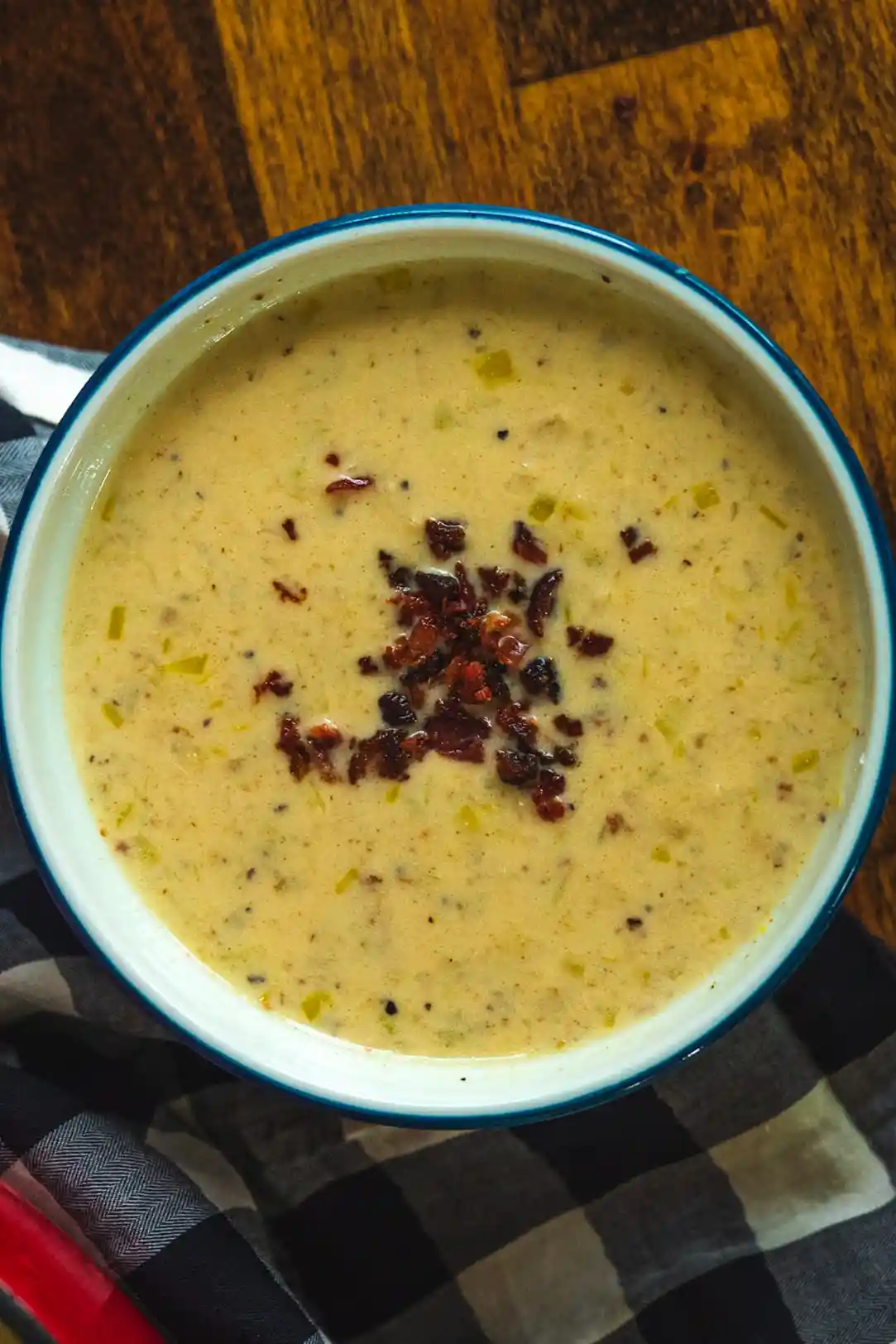
List of ingredients
- 1/2 lb cubed beef bacon or smoked turkey bacon – provides a smoky, salty base.
- 1-2 tablespoons unsalted butter – used if the pan needs more fat for sautéing.
- 1 large white onion, chopped – adds a foundational aromatic sweetness.
- 2 leeks, trimmed and chopped – provides a mild, onion-like flavor.
- 2 cloves garlic, minced – adds depth and pungency.
- 3 tablespoons stoneground mustard – the primary flavor agent for tanginess.
- 3 cups vegetable or chicken stock – the liquid base for the soup.
- 1 cup heavy cream or half-and-half – creates the characteristic velvety texture.
- 1 tablespoon cornstarch (optional) – used to thicken the consistency.
- Kosher salt and freshly ground pepper, to taste – for final seasoning.
step-by-step instructions
- Brown the meat: Cook the beef bacon or smoked turkey bacon in a large pot over medium-high heat until it is browned and crispy. Move the meat to a plate lined with paper towels to drain any excess grease.
- Prepare the fat: Check the amount of fat remaining in the pot. If there is less than two tablespoons, add unsalted butter to reach that amount.
- Sauté the aromatics: Reduce the heat to medium and add the chopped onion and leeks. Cook for about 5 minutes until they become soft, then stir in the minced garlic and cook for one additional minute.
- Simmer the soup: Stir in the stoneground mustard, followed by the stock and the cream. Let the mixture simmer for approximately 10 minutes until the vegetables are tender.
- Blend the mixture: Use an immersion blender to puree the soup directly in the pot. Alternatively, carefully transfer the soup to a traditional blender and process until smooth.
- Thicken the base: If a thicker texture is desired, whisk one tablespoon of cornstarch into two tablespoons of cold water. Stir this slurry into the soup and simmer until it reaches the preferred thickness.
- Final Seasoning: Taste the soup and add kosher salt and freshly ground pepper as needed. Serve the soup hot, topped with the reserved crispy beef bacon or turkey bacon.
Optimizing Your Mustard Selection
Choose Stoneground Mustard for Texture
Stoneground mustard is essential for this recipe because it offers a coarser texture and a more complex flavor than smooth varieties. It provides a rustic quality that complements the creamy base without becoming overpowering.
Avoid Using Yellow Mustard
Yellow mustard is generally too acidic and lacks the depth required for a savory soup. Using it can result in a flavor that is too sharp and one-dimensional, detracting from the sweetness of the leeks.
Exploring Dijon as an Alternative
If stoneground mustard is unavailable, Dijon mustard can be used as a substitute. While it is smoother, it still provides the necessary heat and tang, though you may lose some of the traditional rustic appearance.
Preparing and Cleaning Vegetables
Properly Cleaning Leeks
Leeks often trap sand and grit between their layers. Slice them lengthwise first and rinse them thoroughly under cold running water to ensure no debris remains in the final soup.
Uniform Chopping for Even Cooking
Dice the onion and leeks into similarly sized pieces. This ensures that they soften at the same rate, preventing some pieces from burning while others remain raw.
Preventing Garlic from Burning
Always add the minced garlic after the onions and leeks have softened. Garlic burns quickly at medium heat, and burnt garlic can introduce a bitter taste to the entire pot.
Achieving the Perfect Texture
Using an Immersion Blender
An immersion blender is the most efficient tool for this recipe as it allows you to puree the soup without transferring hot liquid. It also lets you control the texture if you prefer some small vegetable chunks.
Safety Tips for Traditional Blenders
When using a standard blender, never fill it to the top with hot liquid. Blend in small batches and leave the lid slightly vented to allow steam to escape, preventing pressure buildup.
The Role of the Cornstarch Slurry
Adding cornstarch directly to hot soup creates lumps that are difficult to remove. Mixing it with cold water first ensures it incorporates smoothly and thickens the soup evenly upon simmering.
Customizing the Creaminess
Substituting Heavy Cream
For a lighter version, you can use half-and-half or whole milk. Keep in mind that milk is thinner and may require a bit more cornstarch to achieve the same velvety mouthfeel.
Dairy-Free Cream Alternatives
Full-fat coconut milk or cashew cream are excellent plant-based substitutes. These options provide the necessary richness, although they may subtly alter the flavor profile of the mustard.
Managing Fat Separation
If you notice the cream separating, reduce the heat immediately. Simmering the soup on too high a flame can cause the fats to split, breaking the emulsion of the velvety base.
Stock and Broth Variations
Using Vegetable Stock
Vegetable stock is a great option for those avoiding animal-based broths. It maintains the savory profile while allowing the taste of the leeks and mustard to remain prominent.
Enhancing Chicken Stock
If using store-bought chicken stock, choose a low-sodium version. This allows you to control the salt levels manually, which is important since the beef bacon already adds significant salinity.
Homemade Broth Benefits
Homemade stocks often have more gelatin and depth than boxed versions. Using a home-simmered broth can result in a naturally thicker soup with a more professional taste.
Serving and Presentation Ideas
Selecting the Right Bread
A crusty sourdough or a toasted rye bread pairs exceptionally well with the tang of the mustard. The acidity of sourdough complements the creaminess of the soup perfectly.
Garnishing for Contrast
Beyond the crispy beef bacon, a sprinkle of fresh chives or parsley adds a pop of color. A small swirl of heavy cream on top can also enhance the visual appeal for guests.
Pairing with Side Salads
A light arugula salad with a lemon vinaigrette provides a refreshing contrast to the richness of the soup. The bitterness of the greens cuts through the creamy texture and mustard heat.
Storage and Preservation
Refrigerating Leftovers
Store the soup in an airtight container in the refrigerator for up to three to four days. Ensure the soup is cooled slightly before sealing to prevent excessive condensation inside the container.
Freezing Considerations
Cream-based soups can sometimes separate or grain when frozen. To minimize this, freeze the soup without the cream, then stir in the dairy fresh during the reheating process.
Thawing Safely
Thaw frozen soup in the refrigerator overnight. This slow process helps maintain the consistency of the ingredients better than microwave thawing.
Reheating Instructions
Low and Slow Method
Reheat the soup over low to medium heat on the stove. Avoid boiling the soup during reheating, as high temperatures can cause the cream to curdle.
Adding Extra Liquid
Soups often thicken as they sit in the fridge. When reheating, add a splash of stock or milk to return the soup to its original creamy consistency.
Microwave Reheating Tips
If using a microwave, heat the soup in short intervals. Stir the mixture every 60 seconds to ensure the heat is distributed evenly and the cream remains emulsified.
Make-Ahead Advice
Preparing the Base
You can sauté the aromatics and simmer the base with stock a day in advance. Simply omit the cream and blending steps until you are ready to serve the meal.
Pre-cutting Ingredients
Dice the onions, leeks, and garlic and store them in a sealed container. This reduces the active prep time significantly on the day of cooking.
Pre-cooking the Toppings
The beef bacon or turkey bacon can be browned and stored in the fridge. Quickly crisp them in a pan or oven right before serving to restore their texture.
Troubleshooting Common Issues
Overcoming a Strong Mustard Taste
If the mustard flavor is too intense, stir in an extra tablespoon of cream or a pinch of sugar. This helps neutralize the sharpness and balances the overall flavor profile.
Fixing a Lumpy Puree
If the soup remains lumpy after blending, pass it through a fine-mesh sieve. This will remove any remaining vegetable fibers and create a perfectly silky texture.
Correcting a Too-Thin Soup
If the soup is too watery, simmer it uncovered for a few extra minutes to reduce the liquid. Alternatively, add a small amount of additional cornstarch slurry.
Frequently Asked Questions
Can I use yellow mustard instead?
It is not recommended because yellow mustard lacks the complexity and depth of stoneground mustard, potentially making the soup taste too acidic.
Is this soup gluten-free?
The soup is naturally gluten-free if you omit the cornstarch or use a gluten-free thickener like arrowroot powder.
How do I store leftovers?
Keep the soup in an airtight container in the refrigerator for up to four days, and reheat slowly on the stove to prevent the cream from separating.
Can I add other vegetables?
Yes, diced carrots or celery can be added during the sautéing phase for extra nutrition and a slightly different flavor profile.
} Print
Creamy Dutch Mustard Soup
- Total Time: 30 minutes
- Yield: 4 servings 1x
- Diet: General
Description
A delicious, velvety Dutch soup known as ‘mosterdsoep,’ featuring a unique balance of stoneground mustard, cream, and mild sweet leeks.
Ingredients
- 1/2 lb cubed smoked turkey
- 1–2 tablespoons unsalted butter, if needed
- 1 large white onion, chopped
- 2 leeks, trimmed and chopped
- 2 cloves garlic, minced
- 3 tablespoons stoneground mustard
- 3 cups vegetable or chicken stock
- 1 cup heavy cream or half-and-half
- 1 tablespoon cornstarch (optional)
- Kosher salt and freshly ground pepper, to taste
Instructions
- Step: In a large pot, cook the smoked turkey over medium-high heat until browned and crispy. Remove to a paper towel lined plate to drain.
- Step: If there isn’t much fat remaining in the pan, add some butter. (You want about 2 tablespoons of fat total.)
- Step: Reduce heat to medium, and add the onion and leek and cook until soft, about 5 minutes. Add the garlic and cook one minute more.
- Step: Stir in the mustard, followed by the stock and the cream. Simmer until the vegetables are tender, about 10 minutes.
- Step: Use an immersion blender to puree soup, or remove to a blender to process.
- Step: If you’d like a thicker consistency, stir the cornstarch into 2 tablespoons of cold water and add to soup. Let simmer until thickened.
- Step: Season to taste with salt and pepper, serve topped with smoked turkey, and enjoy!
Notes
Use a high-quality stoneground mustard rather than yellow mustard for the correct flavor profile. The soup can be served entirely smooth or left slightly chunky depending on preference.
- Prep Time: 10 minutes
- Cook Time: 20 minutes
- Category: Soup
- Method: Stovetop
- Cuisine: Dutch
Nutrition
- Serving Size: 1 bowl
- Calories: 410 kcal
- Sugar: 7 g
- Sodium: 980 mg
- Fat: 31 g
- Saturated Fat: 17 g
- Unsaturated Fat: 12 g
- Trans Fat: 0 g
- Carbohydrates: 16 g
- Fiber: 4 g
- Protein: 18 g
- Cholesterol: 82 mg