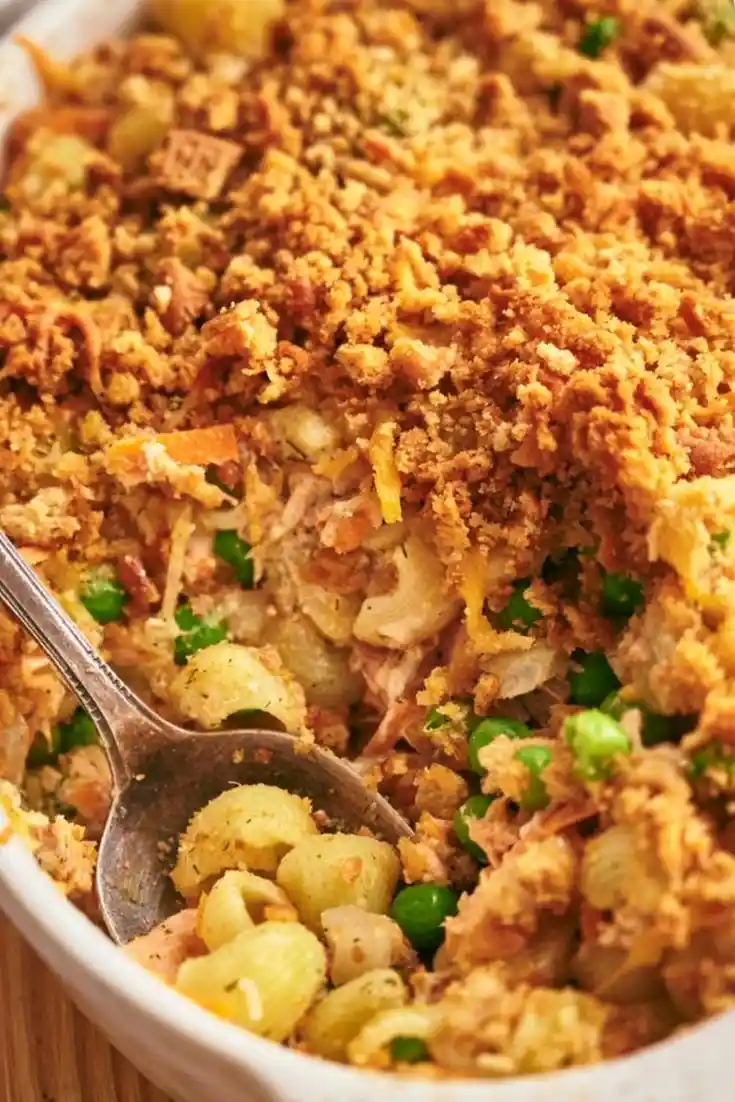
This creamy salmon casserole combines tender fish, fresh vegetables, and a buttery cracker topping for a satisfying meal. It is a quick-to-assemble dish that works well for busy weeknights or simple dinner parties.
List of ingredients
- 8 oz. small shell pasta, cooked according to package instructions – use al dente noodles.
- 1 carrot, shredded – adds color and sweetness.
- ½ cup cream of celery soup (or cream of mushroom soup) – creates the creamy base.
- 1 tbsp. Dill – provides a classic seafood flavor.
- 1/2 cup Greek Yogurt – adds tang and thickness.
- 1 cup cheddar cheese – divided between filling and topping.
- 1 cup frozen peas – adds pops of color and texture.
- 1/2 cup diced onions – for savory depth.
- 3/4 lbs. (350g) Salmon, cooked (or canned salmon, drained) – the primary protein.
- 3/4 cups Ritz crackers – crushed for the topping.
- 1/4 cup Butter, melted – binds the cracker crumbs.
step-by-step instructions
- Prepare the Oven: Preheat your oven to 350°F (180ºC). Lightly grease a medium-sized casserole dish with nonstick spray or butter to prevent sticking.
- Combine the Filling: In a large mixing bowl, stir together the cooked pasta, shredded carrots, frozen peas, cream of celery soup, Greek yogurt, half of the cheddar cheese, diced onions, dill, and cooked salmon until evenly distributed.
- Create the Topping: In a separate bowl, mix the crushed Ritz crackers with the melted butter and the remaining half of the cheddar cheese until the crumbs are well coated.
- Assemble and Bake: Transfer the salmon mixture into the prepared casserole dish and spread it evenly. Top with the buttery cracker mixture and bake for 20 minutes or until the topping is golden brown.
Advanced Cooking Techniques
Perfecting the Pasta Texture
Boil your pasta shells for one to two minutes less than the package directions. This ensures they remain firm and do not become mushy during the 20-minute baking process. Salt the boiling water generously to season the noodles from the inside out.
Preparing the Salmon Protein
If using canned salmon, drain the liquid thoroughly and flake the fish with a fork to remove any large bones or skin. For leftover cooked salmon, break it into bite-sized pieces. If using raw salmon, dice it into half-inch cubes to ensure it cooks through completely in the oven.
Controlling Moisture Levels
To prevent a watery casserole, ensure that all frozen vegetables are thawed and patted dry with a paper towel before adding them. If you add extra watery vegetables like mushrooms, sauté them first to evaporate excess liquid. This keeps the sauce thick and creamy.
Achieving a Golden Cracker Crust
Toss the crushed Ritz crackers with melted butter until every crumb is coated. This fat barrier prevents the crackers from simply drying out and instead helps them brown evenly. For an extra crisp finish, you can broil the dish for 60 to 90 seconds at the very end.
Alternative Ingredient Options
Low-Carb Pasta Substitutes
Replace the small shell pasta with steamed cauliflower florets for a lower-carbohydrate version. Steam the cauliflower for about five minutes and drain it very well to avoid adding excess water. The creamy sauce clings well to the florets similarly to pasta.
Gluten-Free Modifications
Swap the traditional pasta for a gluten-free shell alternative made from brown rice or corn. Use gluten-free crackers in place of Ritz to maintain the crunch. Ensure the cream soup used is also certified gluten-free to suit dietary needs.
Dairy-Free Alternatives
Use a plant-based butter and a dairy-free cream soup or a thick cashew cream base. Replace the Greek yogurt with a plain almond or soy-based yogurt. Use a vegan cheddar alternative for both the filling and the topping.
Varying the Creamy Base
While cream of celery is traditional, cream of mushroom provides a deeper, earthier flavor. You can also make a quick homemade bechamel sauce using butter, flour, and milk. This allows you to control the thickness and salt content of the base.
Flavor Enhancements
Adding Citrus Brightness
Stir in one teaspoon of fresh lemon zest to the salmon mixture before baking. The acidity of the lemon cuts through the richness of the cheese and Greek yogurt. A squeeze of fresh lemon juice over the finished dish also enhances the seafood notes.
Integrating Garlic and Aromatics
Sauté the diced onions with a teaspoon of minced garlic before adding them to the bowl. This removes the raw bite of the onion and adds a savory aromatic layer. Garlic powder can be used as a quicker alternative if sautéing is not an option.
Exploring Herb Variations
While dill is the classic pairing for salmon, fresh parsley or chives can add a mild, fresh taste. For a more robust flavor, a pinch of thyme or oregano works well. Mix fresh herbs in at the end to preserve their bright color.
Experimenting with Cheese Types
Substitute some of the cheddar with Gruyère or Swiss cheese for a nuttier, more sophisticated flavor profile. Parmesan cheese can be added to the cracker topping for an extra salty, savory crust. Mozzarella can be used for a stretchier, gooier texture.
Serving and Pairing Suggestions
Ideal Starchy Side Dishes
Serve this casserole alongside creamy mashed potatoes to lean into the comfort food theme. Garlic mashed cauliflower is a great lighter alternative. A side of buttered wild rice also complements the creamy texture of the dish.
Complementary Vegetable Sides
Roasted honey-glazed carrots provide a sweet contrast to the savory salmon. Steamed asparagus or sautéed spinach adds a fresh, green element to the plate. A simple side salad with a vinaigrette helps balance the richness of the cheese.
Fresh Garnish Options
Sprinkle freshly chopped parsley or dill over the top after removing the dish from the oven. A few thin slices of lemon placed around the edge of the platter add visual appeal. A dash of cracked black pepper provides a final seasoning touch.
Plating for Guests
For a more formal presentation, scoop the casserole into individual oven-safe ramekins before adding the topping. Bake them separately to ensure each guest gets a perfect ratio of crust to filling. This also makes serving much cleaner.
Storage and Food Safety
Proper Refrigeration Methods
Store leftover casserole in an airtight glass or plastic container in the refrigerator. It will remain fresh and safe to eat for three to four days. Ensure the dish is cooled slightly before sealing to prevent excessive condensation.
Optimal Reheating Techniques
Reheat portions in the oven at 325°F covered with foil to keep the moisture in. If using a microwave, add a splash of milk or water to the sauce to prevent it from becoming too thick. Uncover the dish for the last few minutes of oven reheating to re-crisp the topping.
Freezing for Future Meals
You can freeze the casserole after it has been baked and completely cooled. Wrap it tightly in plastic wrap and then aluminum foil to prevent freezer burn. It can be stored in the freezer for up to three months.
Safe Thawing Process
Thaw the frozen casserole overnight in the refrigerator before reheating. This ensures the center warms through evenly without overcooking the edges. Avoid thawing at room temperature to maintain food safety standards.
Common Problem Solutions
Fixing a Watery Filling
If the mixture looks too thin, stir in an extra tablespoon of Greek yogurt or a sprinkle of breadcrumbs. This happens most often when frozen vegetables aren’t drained properly. Ensuring the pasta is cooked al dente also prevents the release of excess starch.
Preventing Burnt Toppings
If the Ritz cracker topping browns too quickly while the center is still cold, cover the dish loosely with aluminum foil. This protects the crust from the direct heat of the upper oven element. Check the internal temperature with a thermometer to ensure it reaches 165°F.
Adjusting Bland Flavors
If the dish tastes flat, add a pinch of salt or a dash of white pepper to the filling before baking. Since baking can mute flavors, seasoning the salmon and vegetables individually before mixing helps. A small amount of Dijon mustard stirred into the sauce can also add depth.
Frequently Asked Questions
Can I use canned salmon?
Yes, canned salmon is an excellent pantry-friendly option. Make sure to drain it well and remove any skin or bones before flaking it into the mixture.
What is the best pasta shape?
Short shapes like shells, elbows, rotini, or penne are ideal. These shapes have ridges and hollows that hold onto the creamy sauce effectively.
Can I make salmon casserole ahead of time?
Yes, you can assemble the entire dish up to 24 hours in advance. Keep it covered in the refrigerator and add 5 to 10 minutes to the baking time when starting from cold.
Does fresh salmon work, or does it need to be cooked first?
Both work well. If using raw fresh salmon, dice it into small cubes (1/2 to 3/4 inch) so it cooks through during the baking process.
How do I get a crispy Ritz topping?
Ensure the crackers are thoroughly tossed in melted butter. Bake the dish uncovered and consider broiling for 60 to 90 seconds at the end for maximum crunch.
What can I use instead of cream of celery soup?
Cream of mushroom or cream of chicken soup are great alternatives. You can also use a homemade white sauce made from a roux of butter, flour, and milk.
Can I freeze salmon casserole?
Yes, bake the casserole first, cool it completely, and wrap it tightly. It can be frozen for up to three months and reheated in the oven.
How do I store leftovers?
Place leftovers in an airtight container and refrigerate for 3 to 4 days. Reheat gently in the oven or microwave, adding a bit of milk if the sauce has thickened.
Kitchen Equipment Guide
Selecting the Right Baking Dish
A 9×13-inch baking dish is standard for this recipe to ensure even heat distribution. If using a deeper dish, the casserole may require a few extra minutes of baking time. Use glass or ceramic for more consistent heat conduction.
Mixing Tool Recommendations
Use a large mixing bowl and a sturdy rubber spatula to fold the salmon and pasta together. This prevents the cooked pasta shells from breaking. A separate small bowl is useful for preparing the cracker topping.
Crushing the Crackers Efficiently
Place the Ritz crackers in a heavy-duty resealable plastic bag. Use a rolling pin or the bottom of a heavy glass to crush them into coarse crumbs. This method keeps the crumbs contained and prevents a mess on your counters.
Print
Cheesy Ritz Cracker Salmon Casserole
- Total Time: 30 minutes
- Yield: 4 servings 1x
- Diet: General
Description
This salmon casserole is pure comfort food—tender, flaky salmon in a rich and creamy sauce, topped with gooey melted cheese and a buttery, golden Ritz cracker crust.
Ingredients
- 8 oz. small shell pasta, cooked according to package instructions
- 1 carrot, shredded
- ½ cup cream of celery soup (or cream of mushroom soup)
- 1 tbsp. Dill
- 1/2 cup Greek Yogurt
- 1 cup cheddar cheese
- 1 cup frozen peas
- 1/2 cup diced onions
- 3/4 lbs. (350g) Salmon, cooked (or canned salmon, drained)
- 3/4 cups Ritz crackers
- 1/4 cup Butter, melted
Instructions
- Preheat: Preheat the oven to 350°F (180ºC).
- Mix Filling: In a bowl, mix the pasta, shredded carrots, frozen peas, cream of celery soup, greek yogurt, half of the cheddar cheese, onions, dill, and salmon.
- Prepare Topping: In another bowl, mix the crushed Ritz crackers with melted butter and the rest of the cheese.
- Bake: Transfer the salmon mixture to a greased casserole dish, top it with the crushed buttery crackers, and bake for 20 minutes or until golden brown.
Notes
For canned salmon, drain well to prevent the sauce from thinning. If using raw fresh salmon, cube it small (½–¾”) to ensure it cooks through during baking.
- Prep Time: 10 minutes
- Cook Time: 20 minutes
- Category: Casserole Recipes
- Method: Baking
- Cuisine: Seafood
Nutrition
- Serving Size: 1 serving
- Calories: 432 kcal
- Sugar: 4 g
- Sodium: 950 mg
- Fat: 25 g
- Saturated Fat: 12 g
- Unsaturated Fat: 13 g
- Trans Fat: 0 g
- Carbohydrates: 24 g
- Fiber: 3 g
- Protein: 26 g
- Cholesterol: 85 mg