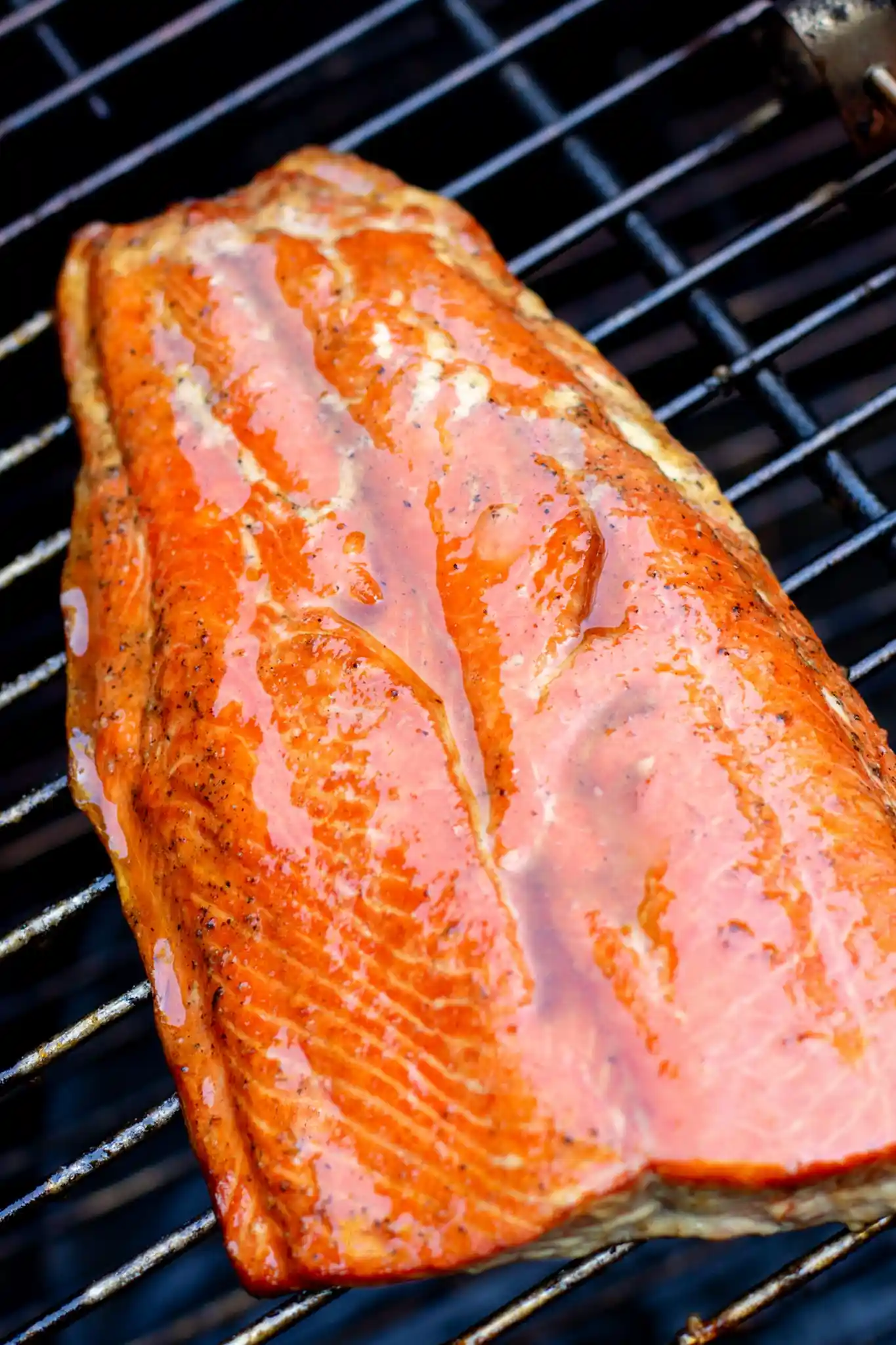
This smoked salmon recipe uses a simple brown sugar rub to create a sweet and savory crust. It is a fast-cooking method that delivers a professional flavor in under two hours.
List of ingredients
- 2 pounds salmon, skin-on – provides a sturdy base for smoking.
- 2 tablespoons brown sugar – creates a caramelized sweetness.
- 1 teaspoon dill weed, dried – adds a classic herbal note.
- 1 teaspoon salt – enhances flavor and helps dry brine.
- 1 teaspoon black pepper – provides a subtle spicy balance.
step-by-step instructions
- Prepare the Smoker: Heat your smoker to a temperature between 250 and 275 degrees Fahrenheit.
- Create the Rub: In a small bowl, stir together the salt, pepper, dried dill weed, and brown sugar until well combined.
- Prep the Fish: Pat the salmon fillet completely dry using paper towels to ensure the rub adheres well.
- Apply Seasoning: Pat the brown sugar mixture onto the surface of the fish, focusing primarily on the flesh side.
- Optional Brining: For deeper flavor, cover the seasoned salmon with plastic wrap and let it rest in the refrigerator for about one hour.
- Smoke the Salmon: Place the salmon skin side down directly on the wire rack and smoke for approximately one hour, or until the internal temperature reaches 145 degrees Fahrenheit.
- Rest the Meat: Remove the salmon from the smoker and let it rest on a cooling rack for 5 to 10 minutes before serving.
Choosing the Best Wood for Salmon
Mild Fruitwoods for Subtle Flavor
Apple and cherry woods are excellent choices for salmon because they provide a light, sweet smoke. These woods do not overpower the natural delicate taste of the fish. They are ideal for those who prefer a softer smoky profile.
Balanced Hardwoods for Depth
Pecan and oak offer a more robust flavor than fruitwoods but remain balanced. These are great options if you want the smoke to be a more prominent part of the dish. They pair well with the sweetness of the brown sugar rub.
Strong Woods for Bold Profiles
Hickory and mesquite are very powerful and can easily overwhelm salmon if used in excess. Use these only if you prefer a very strong, traditional barbecue taste. Be cautious with the amount of chips used to avoid a bitter aftertaste.
Temperature and Timing Guidelines
Maintaining the Hot Smoke Range
Keeping the smoker between 250 and 275 degrees Fahrenheit ensures the fish cooks through while absorbing smoke. This range is considered hot smoking, which is faster and safer for home cooks than cold smoking. Consistency in temperature prevents the fish from drying out.
Using an Instant-Read Thermometer
The only way to guarantee perfect salmon is by monitoring the internal temperature. Pull the fish exactly when it hits 145 degrees Fahrenheit to maintain moisture. Overcooking salmon leads to a chalky texture and loss of omega-3 oils.
The Importance of Resting
Allowing the salmon to rest for 5 to 10 minutes allows the internal juices to redistribute. This prevents the moisture from running out as soon as you slice the fillet. Resting ensures each bite remains tender and succulent.
Salmon Variety and Selection
Wild-Caught vs Farm-Raised
Wild-caught salmon often has a deeper color and a more intense, leaner flavor profile. Farm-raised salmon tends to have a higher fat content, which can make it more forgiving during the smoking process. Both options work well with this brown sugar rub.
Comparison of Salmon Species
King salmon is highly prized for its rich fat content and buttery texture. Sockeye is leaner with a bolder, redder color and more assertive taste. Atlantic and Coho salmon provide a middle-ground experience that is widely available and consistent.
The Role of the Skin
Keeping the skin on during the smoking process acts as a protective barrier. It prevents the bottom of the fillet from overcooking or sticking to the grate. The skin also helps hold the fillet together as the muscle fibers tighten during heating.
Rub Variations and Flavor Tweaks
Using Maple Syrup Instead of Sugar
For a more autumnal flavor, replace the brown sugar with an equal amount of thick maple syrup. This change introduces a woody sweetness that complements the smoke. You may need to pat the fish slightly more if the syrup makes the rub too wet.
Incorporating Garlic Powder
Adding a teaspoon of garlic powder to the rub adds a savory, aromatic dimension to the fish. Garlic balances the sweetness of the sugar and enhances the saltiness of the brine. This is a simple way to make the flavor more complex.
Fresh Dill vs Dried Dill Weed
Dried dill weed is used in the base recipe for concentrated flavor and better adhesion. If using fresh dill, chop it finely and increase the quantity to about three teaspoons. Fresh dill provides a brighter, more grassy note to the finished product.
Adjusting the Salt Type
While table salt is standard, kosher salt is a great alternative due to its larger grains. Kosher salt can be easier to distribute evenly across the surface of the fish. Adjust the quantity slightly if using a very fine salt to avoid over-salting.
Serving and Pairing Recommendations
Fresh Vegetable Side Dishes
Roasted brussels sprouts or steamed asparagus provide a bitter or earthy contrast to the sweet salmon. A side of sautéed spinach with lemon also cuts through the richness of the fish. These options keep the meal light and balanced.
Starch and Grain Pairings
Serve the smoked salmon over a bed of wild rice or quinoa for a hearty meal. Cauliflower rice is a great low-carb alternative that absorbs the juices from the fish. Roasted potatoes with rosemary also pair well with the smoky flavor.
Cold Presentation Ideas
This salmon is excellent when chilled and served on toasted bagels with cream cheese. You can also flake the cold salmon into a fresh salad with mixed greens and a vinaigrette. Cold service emphasizes the firmness and sweetness of the rub.
Appetizer and Platter Use
Slice the smoked salmon into thin strips and add it to a charcuterie board with olives and nuts. Pair it with a dollop of tzatziki sauce or a lemon-caper aioli for dipping. This makes it a sophisticated addition to any party spread.
Storage and Preservation
Refrigeration Basics
Store leftover smoked salmon in an airtight container in the refrigerator for up to one week. Keep it away from strong-smelling foods to prevent the fish from absorbing other odors. Ensure the container is fully sealed to prevent the fish from drying out.
Vacuum Sealing for Longevity
If you have a vacuum sealer, removing all air can extend the refrigerated life to about three weeks. This process prevents oxidation and keeps the oils in the salmon stable. It is the best method for those who want to prepare salmon in large batches.
Freezing Instructions
Cooked smoked salmon can be frozen for up to nine months without significant loss of quality. Wrap the fillets tightly in freezer paper or use a vacuum bag to prevent freezer burn. Thaw the fish slowly in the refrigerator overnight before consuming.
Essential Equipment for Smoking
Digital Temperature Probes
A remote probe thermometer allows you to monitor the internal temperature of the fish without opening the smoker lid. Opening the lid causes heat loss and extends the cooking time. This tool is essential for hitting the precise 145 degree mark.
Selecting the Right Smoker
Bullet smokers, pellet grills, and electric smokers all work for this recipe. The key is the ability to maintain a steady temperature between 250 and 275 degrees. If using a grill, utilize indirect heat and a smoker box for wood chips.
The Use of Cooling Racks
A wire cooling rack is necessary during the resting phase to allow air to circulate under the fish. Placing the salmon directly on a flat plate can cause the bottom to steam and become soggy. The rack preserves the texture of the skin and the crust.
Common Troubleshooting Tips
Preventing Dry Salmon
If the salmon feels dry, it was likely cooked past 145 degrees or the smoker temperature was too high. Always use a thermometer rather than relying on time alone. Ensure the fillet is a consistent thickness to avoid uneven cooking.
Fixing Bitter Smoke Flavor
Bitterness usually occurs when the wood chips ignite into flames rather than smoldering. Ensure your wood chips are dampened if using a charcoal grill. Avoid using too much mesquite or hickory for such a lean cut of meat.
Dealing with Sticking Skin
To prevent the skin from sticking to the grates, ensure the grates are lightly oiled before adding the fish. Wait until the salmon has naturally released from the rack before attempting to lift it. Using a wide fish spatula helps lift the fillet without breaking it.
Frequently Asked Questions
How long should I smoke the salmon?
The salmon typically takes about one hour in the smoker at 250-275 degrees Fahrenheit. However, you should always rely on the internal temperature of 145 degrees Fahrenheit as the primary indicator of doneness.
Can I use a different fish?
Steelhead trout is a fantastic substitute because it has a very similar fat content and texture to salmon. Other fatty fish like Arctic char can also be used with this same brown sugar rub.
Is it okay to skip the dry brine?
Yes, you can smoke the fish immediately after applying the rub. The dry brine is optional and primarily serves to deepen the flavor and firm up the texture of the flesh.
What is the difference between dill weed and dill seed?
Dill weed comes from the leaves and has a fresh, herbal taste, while dill seed is much more pungent and spicy. This recipe requires dill weed to ensure the flavor remains balanced and not overpowering.
Can I double the rub for more flavor?
Doubling the rub is possible and results in a sweeter, more intense crust similar to salmon candy. If you do this, be mindful of the salt content and consider reducing the added salt slightly.
Print
Brown Sugar Smoked Salmon
- Total Time: 65 minutes
- Yield: 4 servings 1x
- Diet: General
Description
You won’t believe how easy this Brown Sugar Smoked Salmon is! The rub is absolute perfection. It’s ready in less than two hours with just five simple ingredients and your smoker!
Ingredients
- 2 pounds salmon (skin-on)
- 2 tablespoons brown sugar
- 1 teaspoon dill weed (dried)
- 1 teaspoon salt
- 1 teaspoon black pepper
Instructions
- Step: Heat smoker to 250-275 degrees Fahrenheit.
- Step: In a small bowl, combine salt, pepper, dill and brown sugar to form the rub. Pat the salmon fillet dry with a paper towel.
- Step: Pat the seasoning mix onto the surface of the fish, focusing on the flesh side of the raw salmon.
- Step: (Optional) If time allows, place salmon in refrigerator to dry brine for about an hour, covered with plastic wrap.
- Step: Smoke salmon skin side down, directly on the wire rack of the smoker for one hour or until the salmon hits 145 degrees Fahrenheit using an instant read thermometer.
- Step: When it reaches an internal temperature of 145 degrees Fahrenheit, pull the salmon from the smoker and allow it to rest on a cooling rack for 5-10 minutes before serving.
Notes
Prefer pecan, oak, apple or cherry wood for a subtle flavor. Use dill weed (the green leaves), not dill seed. This salmon is best served cold or at room temperature.
- Prep Time: 5 minutes
- Cook Time: 60 minutes
- Category: Main Course
- Method: Smoking
- Cuisine: American
Nutrition
- Serving Size: 1 serving
- Calories: 346 kcal
- Sugar: 6 g
- Sodium: 683 mg
- Fat: 14 g
- Saturated Fat: 2 g
- Unsaturated Fat: 12 g
- Trans Fat: 0 g
- Carbohydrates: 6 g
- Fiber: 0.1 g
- Protein: 45 g
- Cholesterol: 125 mg