Achieving restaurant-quality salmon at home is surprisingly simple when you master the high-heat oven method. By using a quick roast technique, you lock in natural moisture while creating a delicate, flaky texture that pairs perfectly with any side dish. This foolproof approach turns a standard dinner into a gourmet experience in less than twenty minutes.
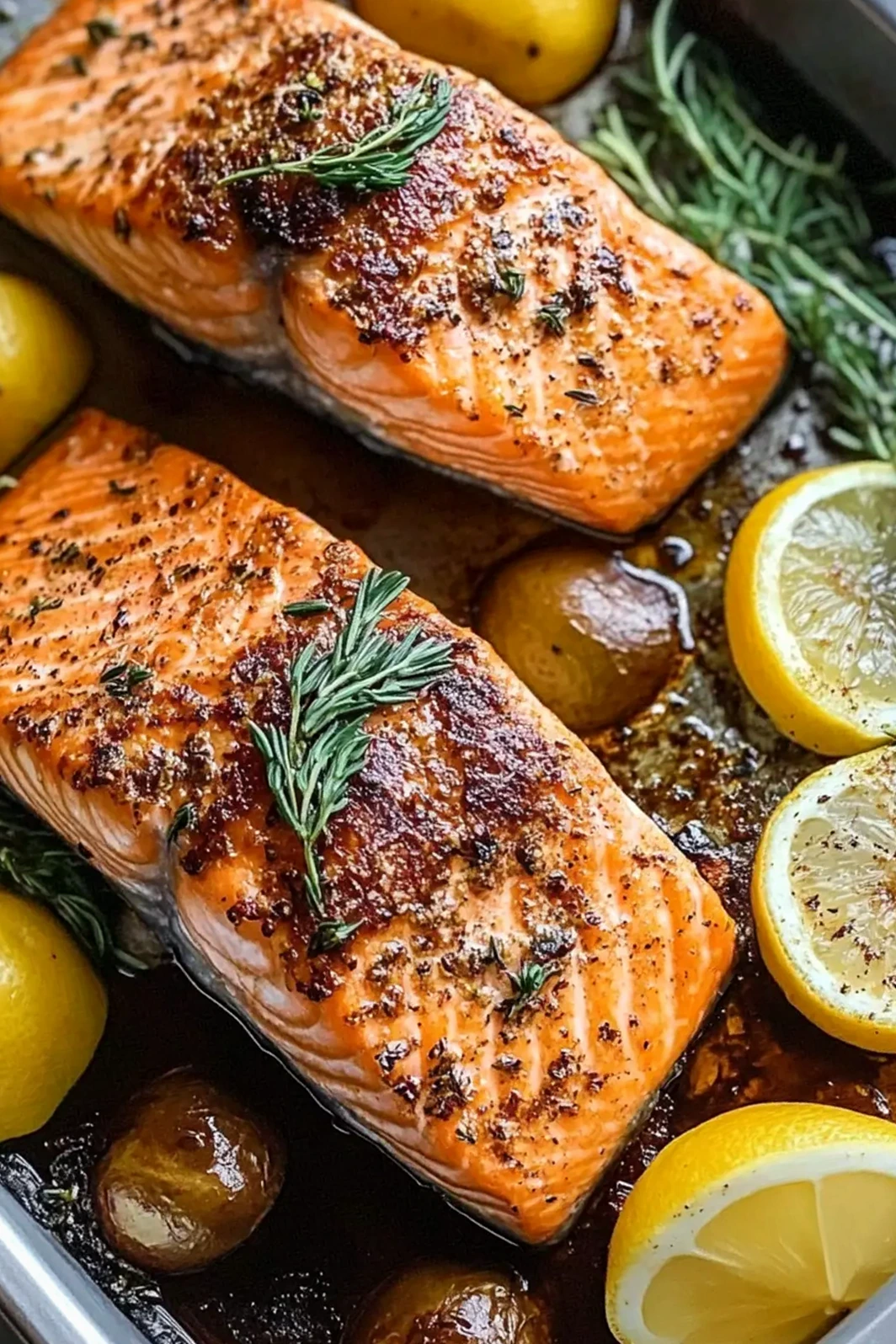
List of ingredients
- 4 fillets salmon, center-cut, skin-on (1-1.5 inches thick)
- 0.5 teaspoon kosher salt
- 0.5 teaspoon black pepper
- 1 teaspoon garlic powder
- 1 teaspoon paprika
- 2 tablespoons melted butter (or olive oil)
- Lemon, sliced (optional)
- Fresh dill (optional)
step-by-step instructions
- Step: Preheat the oven to 450°F (232°C).
- Step: Line a baking sheet with foil and lightly coat with cooking spray.
- Step: Arrange salmon fillets skin-side down on the sheet, spaced 1 inch apart.
- Step: Brush the tops generously with melted butter (or olive oil).
- Step: Season evenly with paprika, garlic powder, kosher salt, and black pepper.
- Step: Bake for 12–16 minutes, checking for doneness at the 12-minute mark.
- Step: Rest for 2–3 minutes before serving.
Refining the Preparation Process
Importance of Surface Moisture Control
Before you begin the seasoning phase, always pat the surface of your salmon fillets completely dry using paper towels. Excess moisture on the skin or flesh creates steam rather than the desired golden crust, which can make the finished product feel soggy. Removing this surface water is the quickest way to ensure your seasonings adhere perfectly every time.
Selecting the Right Cut for Consistency
Try to source center-cut salmon fillets because they maintain a uniform thickness from one end to the other. When the fish is the same thickness throughout, the heat penetrates every part of the protein at the same rate, preventing the thinner tail end from overcooking while the thick center stays raw. If your fillets have a very thin tail portion, tuck it underneath the main body to create a compact, even shape.
The Role of High Heat
The 450°F temperature setting is chosen specifically to flash-cook the salmon, which keeps the fibers tender while preventing the proteins from leaking out. Cooking fish too slowly at lower temperatures can cause the albumin, the white opaque substance, to pull out to the surface, resulting in a dry, messy appearance. High heat seals the exterior quickly, ensuring the center remains succulent and incredibly moist.
Customization and Flavor Adjustments
Exploring Different Herb Profiles
While dill is the classic companion for salmon, you can easily pivot based on what is growing in your kitchen or available in the pantry. Dried oregano or thyme works exceptionally well when mixed into your spice blend before roasting. If you prefer a fresh finish, try topping your cooked fish with finely minced chives or flat-leaf parsley for a vibrant, clean taste that cuts through the buttery richness.
Balancing Salt and Savory Notes
Kosher salt is preferred here because its coarse texture makes it easier to measure and distribute by hand compared to fine table salt. If you decide to experiment with seasoned salts or herb-infused blends, remember to check for sodium levels to avoid over-salting the delicate flesh. Always taste your spice mix before application if you are unsure of the flavor balance, as the salmon will absorb the profile quite readily.
Creating Aromatic Infusions
The suggestion to place lemon slices under the salmon is not just for visual appeal; it creates a fragrant steam bath as the heat transfers through the metal pan. You can extend this technique by placing sprigs of fresh rosemary or woody herbs like sage under the fillets as well. This aromatics-first approach infuses the fish with a complex scent that carries through to the very last bite.
Practical Serving Strategies
Building a Balanced Plate
This salmon recipe works as a versatile centerpiece, meaning you can serve it alongside everything from heavy starches to light salads. For a heartier meal, consider serving the fillets over a bed of roasted garlic mashed potatoes or fluffy jasmine rice that can soak up the remaining buttery juices. If you prefer something lighter, a simple shaved fennel and radish salad provides a crunchy, acidic contrast to the tender fish.
Formatting for Family Gatherings
When cooking for a larger group, it is helpful to keep all the salmon on a single, large rimmed baking sheet rather than using multiple smaller pans. This allows you to manage the entire batch at once and makes plating much faster. Simply arrange the fillets in a grid pattern, ensuring they are not touching, and provide a large serving spatula for guests to lift them off the foil easily.
Adjusting Portions for Different Appetites
Since the cooking time is relative to thickness rather than just the number of fillets, you can easily scale this recipe up. If you happen to have fillets of varying sizes, pull the thinner pieces off the tray slightly earlier than the thicker ones to keep them perfectly tender. This attention to detail ensures that every guest receives a piece of salmon cooked exactly to their liking.
Storage and Ongoing Maintenance
Maintaining Texture During Chilled Storage
Leftover salmon can easily become dry if stored incorrectly, so be sure to seal it tightly in an airtight container as soon as it has reached room temperature. Placing a slightly damp paper towel over the top of the fish inside the container helps retain humidity within the storage space. Consuming the leftovers within two days ensures you get the best possible quality from the cooked protein.
Safe Reheating Techniques
Avoid the microwave at all costs when reheating your salmon, as the electromagnetic waves will cause the fats to separate and turn the texture rubbery. The best approach is to place the salmon on a baking sheet and heat it in a low-temperature oven at 275°F (135°C) until it is just warmed through. This slow, gentle approach revives the fish without cooking it a second time, preserving the delicate moisture content.
Common Queries Addressed
Can I prepare this recipe using wild-caught salmon?
Yes, but keep in mind that wild-caught salmon is generally leaner than farmed varieties and will cook much faster. You should reduce the total cooking time by about two minutes and keep a very close eye on the internal temperature, as there is less fat to buffer against overcooking.
How do I know if my oven temperature is accurate?
Oven thermostats can sometimes drift over time, so using an independent oven thermometer placed on the middle rack is a reliable way to verify your temperature. At 450°F, even a 15-degree variance can affect how your crust forms, so a quick check ensures you hit that target heat every single time you cook.
What is the benefit of letting the fish rest?
Resting allows the internal temperature of the salmon to equalize, meaning the juices that were pushed toward the center during the high-heat roasting have time to redistribute throughout the fillet. If you cut into the fish immediately, these juices will run out onto your plate, leaving the meat inside feeling significantly drier than it would if given just three minutes of rest.
Should I remove the skin before eating?
Removing the skin is entirely a matter of personal preference, and many people find that the skin provides a lovely contrast to the soft, buttery flesh. If you prefer to eat it, the high-heat method often makes the skin slightly crisp, which is quite enjoyable. If you prefer to remove it, sliding a thin metal spatula between the flesh and the skin once the fillet is on your plate makes the process quick and clean.
Print
Best Damn Oven Salmon: Juicy, Flaky, Foolproof
- Total Time: 23 minutes
- Yield: 4 servings 1x
- Diet: Pescatarian
Description
This oven-baked salmon is an effortless, gourmet dinner option that provides juicy, flaky, and foolproof results every time.
Ingredients
- 4 fillets salmon, center-cut, skin-on (1–1.5 inches thick)
- 0.5 teaspoon kosher salt
- 0.5 teaspoon black pepper
- 1 teaspoon garlic powder
- 1 teaspoon paprika
- 2 tablespoons melted butter (or olive oil)
- Lemon, sliced (optional)
- Fresh dill (optional)
Instructions
- Step: Preheat the oven to 450°F (232°C).
- Step: Line a baking sheet with foil and lightly coat with cooking spray.
- Step: Arrange salmon fillets skin-side down on the sheet, spaced 1 inch apart.
- Step: Brush the tops generously with melted butter (or olive oil).
- Step: Season evenly with paprika, garlic powder, kosher salt, and black pepper.
- Step: Bake for 12–16 minutes, checking for doneness at the 12-minute mark.
- Step: Rest for 2–3 minutes before serving.
Notes
For meal prep, season fillets up to 4 hours ahead and refrigerate. Pat salmon dry thoroughly before seasoning for optimal texture.
- Prep Time: 5 minutes
- Cook Time: 15 minutes
- Category: Dinner Ideas
- Method: Baking
- Cuisine: American
Nutrition
- Serving Size: 1 fillet
- Calories: 250 kcal
- Sugar: 0 g
- Sodium: 350 mg
- Fat: 17 g
- Saturated Fat: 5 g
- Unsaturated Fat: 11 g
- Trans Fat: 0 g
- Carbohydrates: 1 g
- Fiber: 0 g
- Protein: 25 g
- Cholesterol: 70 mg