Making fresh pasta at home is a rewarding process that requires only a few basic pantry staples. This guide provides clear instructions for creating tender fettuccine ribbons that outperform store-bought options.

List of ingredients
- 2 1/2 cups flour (00 flour or all-purpose) – used for structure and dough consistency.
- 3 large eggs – provides richness and acts as the primary binding agent.
- 1/2 teaspoon salt – enhances the natural flavors of the wheat and eggs.
- 1 tablespoon olive oil – ensures a smooth texture and prevents sticking.
step-by-step instructions
- Create the flour well: Spread 2 1/4 cups of flour onto a clean, smooth work surface. Using the back of a rounded bowl or large spoon, press the center to form a well about 4 inches wide. Crack the eggs into the well and add the olive oil and salt.
- Incorporate the flour: With a fork, gently whisk the eggs while slowly drawing in a little flour from the inner edges of the well. Continue to mix carefully so the wall of flour doesn’t break until the mixture thickens into a shaggy dough.
- Knead the dough: Use a bench scraper or your hands to fold the remaining flour into the egg mixture until a rough ball forms. Knead by hand for 10 to 15 minutes until the dough becomes smooth and elastic. If the dough feels sticky, sprinkle in 1 tablespoon of the reserved flour at a time.
- Rest the pasta: Shape the dough into a round ball and wrap it tightly in plastic wrap. Let it rest at room temperature for at least 30 minutes and up to 3 hours. For longer storage, refrigerate for up to 24 hours, bringing it back to room temperature before rolling.
- Prepare for rolling: Lightly flour a flat work surface. Divide the rested dough into 2 to 4 equal portions and loosely cover the pieces you are not currently rolling with plastic wrap to prevent them from drying out.
- Roll the sheets: Working with one piece at a time, roll the dough out into a rectangle approximately 1/4 inch thick. Dust the top of the sheet lightly with flour to ensure it does not stick during folding.
- Cut the noodles: Fold the pasta sheet into loose folds 1 to 3 inches wide. Using a sharp knife, slice across the folds into 1/8-inch strips, then carefully separate and unfurl the cut strands to create the final fettuccine.
Guide to Cooking Fresh Pasta
Maintaining a Rolling Boil
Use a large pot with plenty of water to ensure the noodles have room to move freely. This prevents the fresh pasta from clumping together and helps the water temperature recover quickly after the dough is added.
Seasoning the Boiling Water
Add 1 to 2 tablespoons of salt once the water reaches a rolling boil. Salting the water is the only chance to season the pasta dough itself, ensuring the final dish is not bland.
Monitoring the Cooking Time
Fresh fettuccine cooks significantly faster than dried pasta. Begin checking for doneness after 2 minutes, as most fresh noodles reach an al dente state within 2 to 3 minutes.
Testing for Al Dente Texture
Remove a single strand and taste it to check for the correct bite. The pasta should be tender throughout but still possess a slight resistance in the center.
Emulsifying the Final Sauce
Reserve a small cup of the starchy pasta water before draining. Stirring a bit of this water into your sauce helps the liquid adhere to the smooth noodles for a professional finish.
Professional Kneading and Shaping Tips
Identifying Proper Dough Elasticity
The dough is ready when it feels smooth, supple, and springs back slowly after being poked with a finger. If it remains indented, it requires more kneading to develop the gluten network.
The Role of the Resting Period
Resting the dough allows the gluten proteins to relax and the flour to fully hydrate. This step is essential because it prevents the dough from shrinking back when you attempt to roll it thin.
Using a Bench Scraper for Efficiency
A bench scraper helps gather the shaggy dough without adding too much extra flour. It also allows you to clean your work surface quickly between rolling sessions.
Preventing Noodle Adhesion
Apply a light dusting of flour or semolina to the pasta sheets before folding and cutting. This ensures that the individual strands separate easily and do not fuse back together into a mass.
Pasta Dough Customizations
Adding Fresh Herb Infusions
Finely chop fresh basil, parsley, or thyme and mix it directly into the flour before forming the well. This incorporates a subtle earthy flavor and small green specks throughout the noodles.
Incorporating Aromatic Zests
Adding a teaspoon of lemon zest or a pinch of garlic powder to the flour provides a gentle aromatic lift. These additions pair exceptionally well with cream-based or butter-based sauces.
Adjusting the Pasta Shape
The same dough can be rolled thinner for lasagna sheets or stuffed for ravioli. Simply adjust the thickness of the roll and the width of the cut to create different pasta varieties.
Utilizing Semolina Flour
Replacing a portion of all-purpose flour with semolina can result in a firmer bite and a more traditional texture. Semolina is higher in protein and helps the pasta maintain its structure during boiling.
Storage and Preservation Methods
Short-Term Refrigeration
Store uncooked, cut pasta in an airtight container that has been lightly dusted with flour. Keep it in the refrigerator for up to 2 days, ensuring the strands are not packed too tightly.
Freezing Fresh Pasta Nests
Twirl the cut noodles into loose nests and place them on a baking sheet to freeze until firm. Once frozen, transfer the nests to a freezer bag for storage up to 2 months.
Cooking Directly from Frozen
There is no need to thaw frozen pasta before cooking. Drop the frozen nests directly into boiling salted water and add 1 to 2 extra minutes to the total boiling time.
Maintaining Room Temperature Balance
If the dough was refrigerated overnight, let it sit at room temperature for 30 to 60 minutes before rolling. Cold dough is too stiff and will resist being flattened into thin sheets.
Common Troubleshooting Solutions
Managing Sticky Dough Texture
If the dough clings to your hands or the counter, sprinkle a small amount of flour over the surface. Add flour in increments of one tablespoon to avoid making the dough too tough.
Correcting Dry or Crumbly Dough
If the dough fails to come together or feels too dry, sprinkle in a few drops of water. Knead the water in gradually until the ball becomes smooth and cohesive.
Preventing Dough Shrinkage
If the pasta keeps springing back while rolling, it has not rested long enough. Cover the dough and let it sit for another 15 to 30 minutes to allow the gluten to relax fully.
Handling Flour Clumps
Ensure the flour is leveled in the well to prevent large clumps from forming. If clumps appear during the mixing stage, use your fingers to pinch them smooth during the kneading process.
Frequently Asked Questions
Can I use a pasta machine for this recipe?
Yes, a pasta machine is an excellent tool for achieving uniform thickness. Pass the dough through the widest setting first, then gradually decrease the setting until the desired thickness is reached.
Why does my pasta dough tear when rolling?
Tearing usually happens if the dough is too dry or if it has not rested sufficiently. Ensure you are using room-temperature eggs and allowing the dough to relax for at least 30 minutes.
Can I make this without olive oil?
The olive oil is optional but recommended for a silkier texture. You can omit it, but you may find the dough slightly less pliable and more prone to sticking.
What is the difference between 00 flour and all-purpose flour?
00 flour is more finely milled and has a lower protein content, resulting in a softer pasta. All-purpose flour is more common and provides a slightly heartier, chewier texture.
Print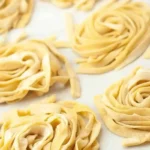
Beginner’s Guide to Homemade Fettuccine
- Total Time: 49 minutes
- Yield: 4 servings 1x
- Diet: General
Description
Learn how to make homemade fettuccine with eggs and flour—simple fresh pasta that cooks in minutes and tastes amazing.
Ingredients
- 2 1/2 cups flour (00 flour or all-purpose)
- 3 large eggs
- 1/2 teaspoon salt
- 1 tablespoon olive oil
Instructions
- Step 1: Spread 2¼ cups of flour onto a clean, smooth work surface. Using the back of a rounded bowl or large spoon, press the center to form a well about 4 inches wide. Crack the eggs into the well and add the olive oil and salt.
- Step 2: With a fork, gently whisk the eggs while slowly drawing in a little flour from the inner edges of the well. Continue to mix carefully so the wall of flour doesn’t break. As more flour blends in, the mixture will thicken and start to look like a shaggy dough.
- Step 3: Use a bench scraper or your hands to fold the remaining flour into the egg mixture until a rough ball of dough forms. Knead the dough by hand for 10 to 15 minutes, working until it becomes smooth and elastic. If it feels sticky, sprinkle in 1 tablespoon of the reserved ¼ cup of flour at a time while kneading.
- Step 4: Shape the dough into a round, wrap it tightly in plastic wrap, and let it rest at room temperature for at least 30 minutes and up to 3 hours.
- Step 5: Lightly flour a flat work surface. Divide the rested dough into 2 to 4 equal portions and loosely cover the pieces you’re not rolling with plastic wrap.
- Step 6: Working with one piece at a time, roll it out into a rectangle about ¼ inch thick. Dust the sheet lightly with flour.
- Step 7: Fold the pasta sheet into loose folds 1 to 3 inches wide, then slice across the folds into ⅛-inch strips. Carefully separate and unfurl the cut strands to create your fettuccine noodles.
Notes
Weigh the flour for consistent results and use room-temperature eggs for easier mixing. Let the dough rest for at least 30 minutes so the gluten relaxes. Fresh pasta can be refrigerated in a floured airtight container for 2 days or frozen for up to 2 months.
- Prep Time: 20 minutes
- Cook Time: 3 minutes
- Category: Side Dish
- Method: Hand-kneaded
- Cuisine: Italian
Nutrition
- Serving Size: 1 serving
- Calories: 369 kcal
- Sugar: 0.3 g
- Sodium: 346 mg
- Fat: 8 g
- Saturated Fat: 2 g
- Unsaturated Fat: 5 g
- Trans Fat: 0.01 g
- Carbohydrates: 60 g
- Fiber: 2 g
- Protein: 13 g
- Cholesterol: 140 mg