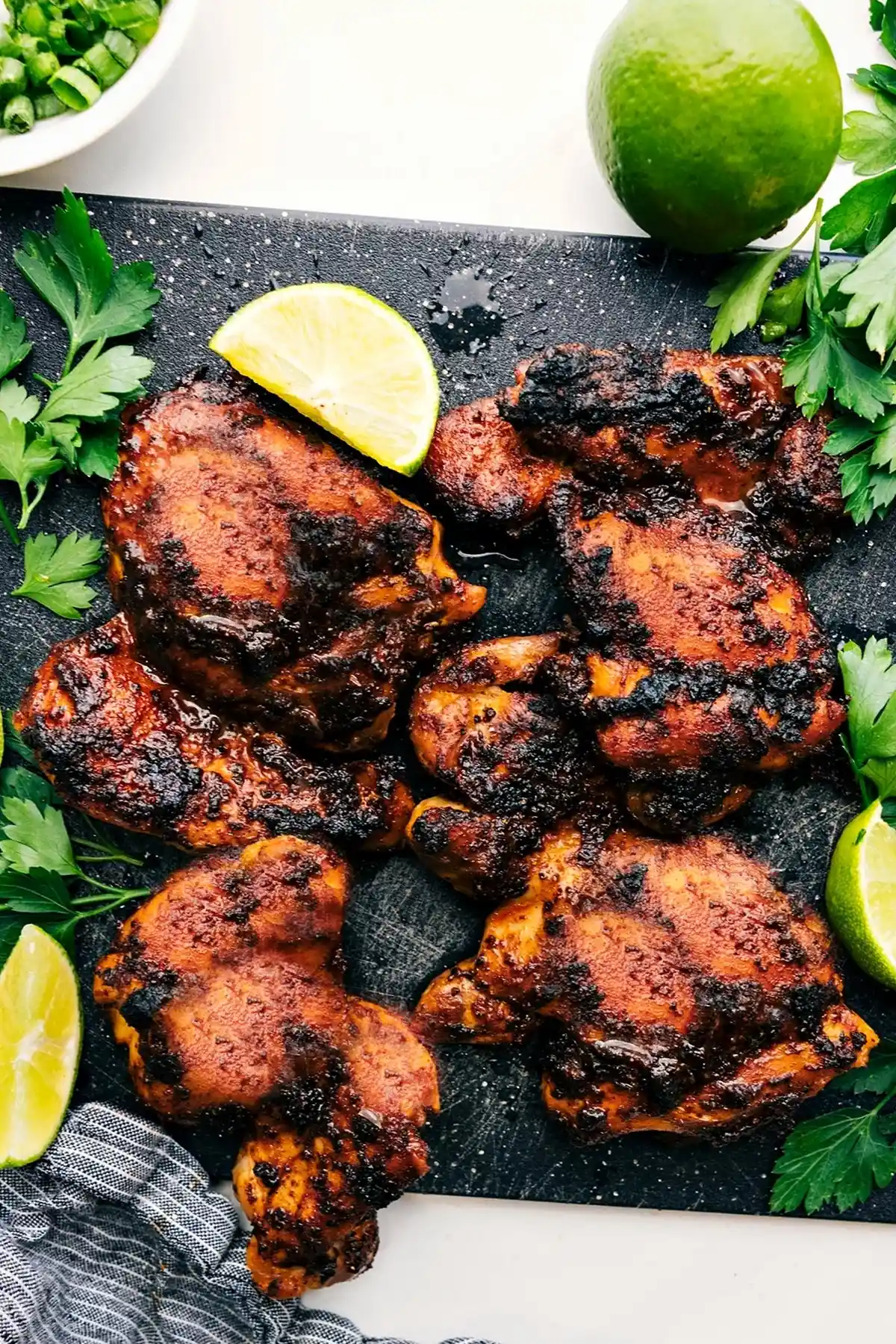
Baked boneless chicken thighs are the ultimate solution for a reliable, flavor-packed protein that fits into any busy weeknight schedule. By combining simple pantry seasonings with the acidity of balsamic vinegar, you create a succulent, caramelized crust that elevates basic chicken into something extraordinary. These thighs are incredibly versatile, working perfectly as a standalone main course or as a foundational ingredient for your meal prep throughout the week.
List of ingredients
- 2 pounds boneless skinless chicken thighs
- 2 tablespoons plus 2 teaspoons olive oil
- 1 tablespoon plus 1 teaspoon balsamic vinegar
- 2-1/2 teaspoons chili powder
- 1 teaspoon ground cumin
- 1 teaspoon garlic powder
- 1 teaspoon paprika
- 2 teaspoons fine salt
- 1-1/2 teaspoons black pepper
step-by-step instructions
- Step: Preheat oven to 425°F. Line a large sheet pan with foil.
- Step: Pat chicken thighs completely dry with paper towels.
- Step: In a small bowl, whisk together olive oil, balsamic vinegar, chili powder, cumin, garlic powder, paprika, salt, and pepper.
- Step: Rub or brush the seasoning mixture over the back first, and then the front of each thigh until evenly coated.
- Step: Arrange chicken thighs flat on the prepared sheet pan, spaced out well.
- Step: Bake in the center of the oven for 15 minutes.
- Step: Move the oven rack to 8 inches from the heat source. Switch to broil and cook for 7–10 minutes, or until the tops are nicely blackened and caramelized.
- Step: Remove from oven, tent with foil, and let rest for 5–10 minutes. Brush pan juices on top before serving.
Refining your roasting technique
Ensuring consistent internal temperature
Using an instant-read meat thermometer is the most reliable way to ensure your chicken reaches the safe internal temperature of 165°F. Insert the probe into the thickest part of the thigh, being careful not to hit any bone or cartilage. This quick check guarantees that the meat remains juicy and safe to serve every single time you cook this recipe.
The importance of surface dryness
When you skip the step of patting the chicken dry with paper towels, the moisture remaining on the surface will immediately release as steam in the high-heat oven. This prevents the Maillard reaction, which is the process responsible for the savory, browned crust we want on these thighs. Always prioritize a dry exterior before applying the oil-based spice rub to ensure better caramelization.
Managing sheet pan crowding
If your thighs are overlapping or touching, the heat cannot circulate effectively around each piece of meat. Give every thigh enough space to breathe so that the hot air can reach all sides. If you have a smaller oven, it is better to use two separate sheet pans rather than overcrowding a single one.
Expanding your flavor profiles
Adapting the spice blend for heat levels
If you prefer a milder version for younger family members, you can reduce the chili powder by half and supplement with an extra teaspoon of sweet paprika. Conversely, if you want a deeper spice profile, adding a pinch of smoked paprika or a dash of cayenne can introduce a complex layer of heat without altering the foundational cooking method.
Using the balsamic vinegar replacement
While the balsamic vinegar provides a specific sweet and tart profile that helps with browning, you can use a combination of apple cider vinegar and a small drizzle of honey as a substitute. This creates a similar acidity level while providing the sugar needed for the broiler to darken the edges of the chicken perfectly.
Practical ways to incorporate leftovers
Utilizing chicken in daily meals
Because these thighs are roasted with a balanced spice blend, they work exceptionally well when chilled and sliced thin for sandwiches or wraps. You can also incorporate the chopped meat into stir-fries at the very last minute to warm it through, or fold it into a creamy pasta sauce to add a substantial protein boost to your favorite weeknight noodles.
Elevating standard grain bowls
For a quick lunch, place the cooked chicken over a bed of warm quinoa or jasmine rice. Top with fresh avocado slices, pickled red onions, and a scoop of hummus or creamy dressing to create a complete, restaurant-style bowl that comes together in minutes.
Answers to common cooking questions
Why do I need to use balsamic vinegar?
Balsamic vinegar is unique because it contains natural sugars and a concentrated acidity that caramelizes beautifully under high heat. It deepens the flavor profile of the chicken and provides a rich glaze that simple oil and spice rubs cannot replicate on their own.
Can this recipe be prepared in advance?
Yes, you can whisk the spice rub, oil, and vinegar together in a bowl up to 24 hours before cooking. However, it is best to rub the mixture onto the chicken right before it goes into the oven to ensure the salt doesn’t draw too much moisture out of the meat too early.
How should I store leftovers?
Place any remaining cooked chicken in a shallow, airtight container once it has cooled to room temperature. It will stay fresh in the refrigerator for up to five days, or you can freeze it in a heavy-duty freezer bag for up to two months, provided you remove as much air as possible to prevent frost buildup.
Is it necessary to flip the chicken?
Flipping is unnecessary with this high-heat method. By leaving the chicken stationary on the sheet pan, you allow the skin side to develop a consistent, darkened crust while the underside remains tender and moist. The broiler effectively finishes the tops to provide that classic roasted appearance.
What if I only have bone-in thighs?
While this recipe is optimized for boneless skinless thighs, you can use bone-in varieties if you adjust the timing. Bone-in chicken takes longer to cook through, so you would need to extend the initial oven bake by about 10 to 15 minutes before switching to the broiler to finish the skin.
Troubleshooting common roasting issues
Dealing with burnt edges
If you notice the spice rub darkening too quickly while using the broiler, move the sheet pan to a lower rack position. The broiler intensity varies significantly between oven models, so keeping a close visual watch is critical during those final few minutes of cooking.
Avoiding rubbery textures
Rubbery chicken usually occurs when the heat is too low or if the oven has not fully preheated. Always ensure your oven has signaled that it has reached the target 425°F before inserting the sheet pan. This high temperature is essential to sear the meat quickly and lock in its internal moisture.
Managing excess pan juices
After the chicken finishes cooking, the sheet pan will often have a collection of savory juices and melted fat. Instead of discarding these, use a brush to coat the chicken with the liquid before serving. This infuses the meat with concentrated flavor and ensures the dish stays moist even after it has been sliced or chopped for later use.
Print
Baked Boneless Chicken Thighs
- Total Time: 32 minutes
- Yield: 4–6 servings 1x
- Diet: Gluten-free
Description
Baked boneless chicken thighs might sound simple, but this combo of pantry spices, olive oil, and balsamic vinegar gives big flavor with barely any effort. These have a slight kick, but the spice is really mild once added to a dish or paired with a sauce.
Ingredients
- 2 pounds boneless skinless chicken thighs
- 2 tablespoons plus 2 teaspoons olive oil
- 1 tablespoon plus 1 teaspoon balsamic vinegar
- 2–1/2 teaspoons chili powder
- 1 teaspoon ground cumin
- 1 teaspoon garlic powder
- 1 teaspoon paprika
- 2 teaspoons fine salt
- 1–1/2 teaspoons black pepper
Instructions
- Step: Preheat oven to 425°F. Line a large sheet pan with foil.
- Step: Pat chicken thighs completely dry with paper towels.
- Step: In a small bowl, whisk together olive oil, balsamic vinegar, chili powder, cumin, garlic powder, paprika, salt, and pepper.
- Step: Rub or brush the seasoning mixture over the back first, and then the front of each thigh until evenly coated.
- Step: Arrange chicken thighs flat on the prepared sheet pan, spaced out well.
- Step: Bake in the center of the oven for 15 minutes.
- Step: Move the oven rack to 8 inches from the heat source. Switch to broil and cook for 7–10 minutes, or until the tops are nicely blackened and caramelized.
- Step: Remove from oven, tent with foil, and let rest for 5–10 minutes. Brush pan juices on top before serving.
Notes
Choose chicken thighs that are similar in size for the most even cooking. Store leftovers in an airtight container in the fridge for up to 5 days or freeze for up to 2 months.
- Prep Time: 10 minutes
- Cook Time: 22 minutes
- Category: Dinner
- Method: Baking
- Cuisine: American
Nutrition
- Serving Size: 1 serving
- Calories: 449 kcal
- Sugar: 0.7 g
- Sodium: 163 mg
- Fat: 26 g
- Saturated Fat: 6 g
- Unsaturated Fat: 18 g
- Trans Fat: 0 g
- Carbohydrates: 2 g
- Fiber: 0.7 g
- Protein: 47 g
- Cholesterol: 197 mg