This efficient recipe uses a savory Asian-inspired marinade to create a caramelized crust on salmon fillets. It is a high-protein dinner that can be prepared in under 20 minutes using common pantry ingredients.
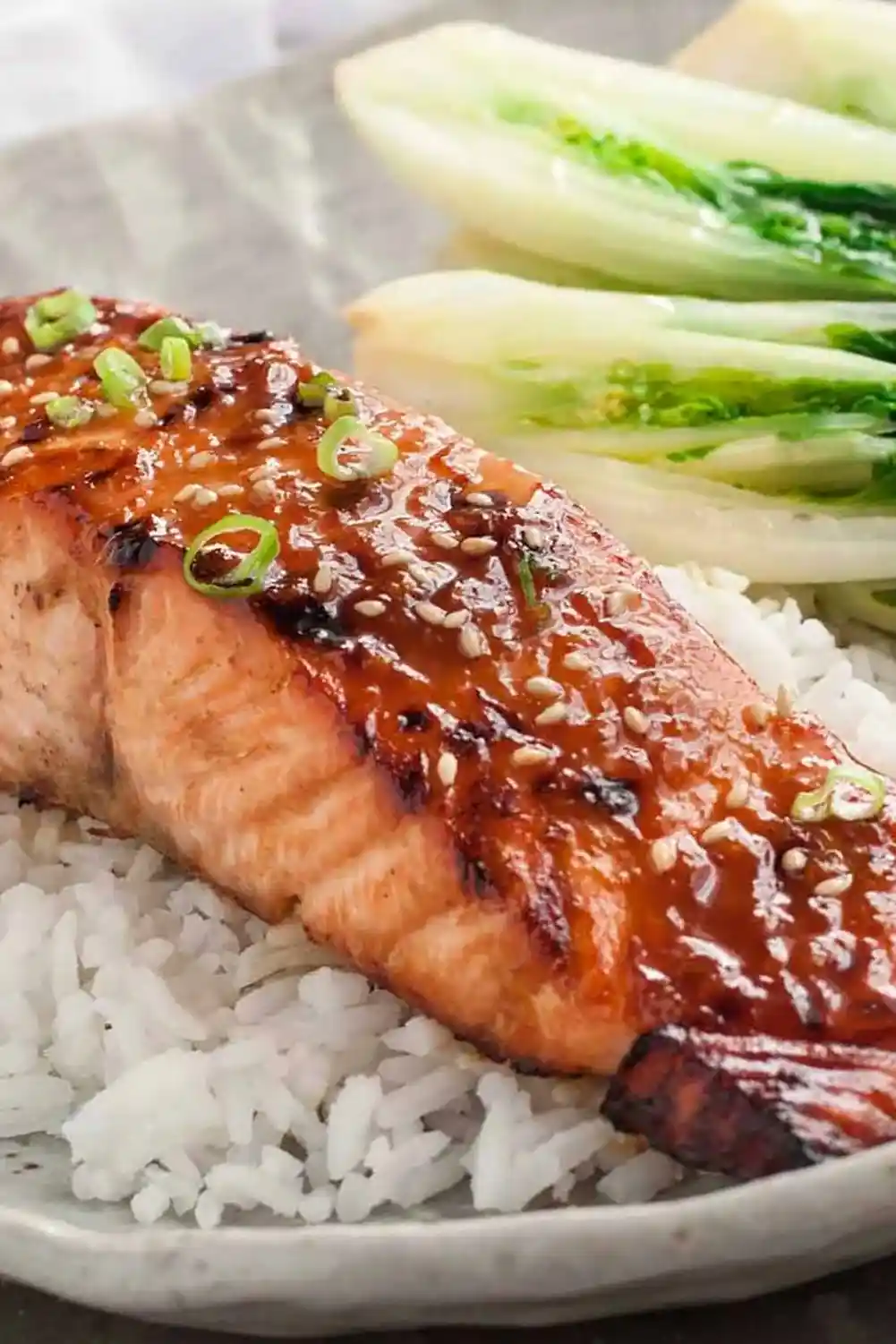
List of ingredients
- 2 x 180g / 6oz salmon fillets, skinless – use fresh or thawed fillets.
- Oil spray – olive oil or canola oil works best.
- 1 tsp fresh ginger, finely grated – provides a sharp, aromatic heat.
- 1 garlic clove, crushed – adds a pungent savory base.
- 1 tbsp soy sauce – for saltiness and depth.
- 2 tbsp oyster sauce – adds a thick, savory umami flavor.
- 2 tbsp sweet chili sauce – provides sweetness and mild spice.
- Sesame seeds – for garnish and texture.
- Scallions or shallots, finely sliced – adds a fresh, onion-like finish.
- Steamed Asian greens – such as bok choy or gai lan for a healthy side.
- Cooked rice – white or brown rice as a base.
step-by-step instructions
- Prepare the marinade: In a shallow bowl, combine the grated ginger, crushed garlic, soy sauce, oyster sauce, and sweet chili sauce. Add the salmon fillets to the bowl and turn them to ensure they are fully coated, then cover and marinate for 30 minutes or up to overnight.
- Heat the broiler: Set your grill or broiler to the high setting. Position the oven rack approximately 25 cm (10 inches) away from the heat source to ensure the fish cooks evenly without burning instantly.
- Apply the glaze: Place the marinated salmon on a baking tray without adding oil or parchment paper. Use a spoon or brush to dab additional glaze onto the surface of the salmon, avoiding excess glaze that could pool and burn on the tray.
- Initial broiling: Place the tray under the broiler and cook for 7 minutes.
- Final caramelization: Remove the tray from the oven and spray the surface of the salmon generously with oil spray. Return it to the broiler for another 1 to 3 minutes until the top is caramelized and the flesh flakes easily with a fork. For medium rare, aim for an internal temperature of 50°C (122°F).
- Serve: Plate the salmon over rice with steamed Asian greens and garnish with a sprinkle of sesame seeds and sliced scallions.
Optimization Tips for Broiling
Position the Oven Rack Correctly
Placing the rack exactly 25 cm from the heat source prevents the glaze from burning before the center of the fish is cooked. If the rack is too close, the sugars in the sweet chili sauce will char too quickly. If it is too far, you will lose the characteristic caramelization.
Use Oil Spray for Surface Crispness
Applying oil spray after the first broiling stage helps conduct heat more effectively across the surface. This creates a more consistent golden-brown crust. It also prevents the fish from sticking to the tray during the final minutes of cooking.
Avoid Using Parchment Paper
Parchment paper can burn or curl when exposed to the high, direct heat of a broiler. The natural oils from the salmon are sufficient to prevent sticking to a clean baking tray. If the tray is too dry, a very light coating of oil can be applied beforehand.
Monitor Internal Temperature
Using a digital meat thermometer is the most accurate way to avoid overcooking. Pull the salmon out at 50°C for medium rare, as the temperature will rise slightly during the resting period. Overcooked salmon becomes dry and loses its buttery texture.
Salmon Selection and Preparation
Choose the Right Cut
Center-cut fillets provide a uniform thickness, which ensures the fish cooks evenly throughout. Avoid fillets with varying thicknesses, as the thinner ends will overcook before the center is done. Skinless fillets are recommended for this glaze, though skin-on works if you cook it as is.
Handling Frozen Fillets
If using frozen salmon, thaw it completely in the refrigerator overnight before marinating. Thawing in warm water or the microwave can damage the cell structure of the fish, leading to a mushy texture. Pat the fish dry with paper towels before adding the marinade to improve adhesion.
Identifying Fresh Salmon
Fresh salmon should have a vibrant color and a firm texture that springs back when pressed. Avoid any fillets that have a strong fishy odor or a slimy surface. The flesh should look moist but not watery.
Flavor Customizations and Substitutions
Substituting Sweet Chili Sauce with Honey
If sweet chili sauce is unavailable, combine 1.5 tablespoons of honey or maple syrup with 0.5 tablespoons of sriracha or chili flakes. This provides the necessary sugar for caramelization and the heat required for the Asian profile. The consistency will be slightly thinner than commercial sauce.
Using Jam for a Fruitier Glaze
For a different flavor profile, use 1 tablespoon of any fruit jam mixed with 0.5 tablespoons of hot water and 0.5 tablespoons of sriracha. This creates a thick, sticky glaze that caramelizes well under the broiler. Apricot or orange jams pair particularly well with salmon.
Adjusting the Umami Balance
If the glaze tastes too sweet, add an extra teaspoon of soy sauce or a pinch of salt to balance the sugars. Conversely, if it is too salty, a small squeeze of lime juice can brighten the flavor and cut through the sodium. Oyster sauce is essential for the deep savory note.
Alternative Ginger Preparations
While grated fresh ginger is preferred, you can use ginger paste if you are short on time. Use a 1:1 ratio, but be aware that paste can sometimes be more intense. For a milder flavor, use finely minced ginger instead of grating it into a pulp.
Accompanying Side Dish Methods
Preparing Perfect Jasmine Rice
Rinse jasmine rice under cold water until the water runs clear to remove excess surface starch. This ensures the grains remain separate and fluffy rather than clumping together. Use a ratio of 1 part rice to 1.5 parts water for a standard stovetop preparation.
Steaming Asian Greens Properly
Steam bok choy or gai lan for only 3 to 5 minutes to maintain a crisp texture and vibrant green color. Oversteaming makes the greens limp and removes the fresh contrast needed for the rich salmon. Season them lightly with salt and a drop of sesame oil after steaming.
Adding Quick Pickled Cucumbers
Thinly slice cucumbers and toss them with rice vinegar, a pinch of sugar, and salt. Let them sit for 10 minutes before serving. The acidity of the pickles cuts through the richness of the salmon and the sweetness of the glaze.
Storage and Preservation Guidelines
Optimal Refrigeration Time
Store cooked salmon in an airtight container in the refrigerator for up to three days. Ensure the fish is completely cooled before sealing the lid to prevent condensation. Condensation can make the caramelized glaze soggy and degrade the texture of the fish.
Avoiding Freezer Burn
While cooked salmon can be frozen, it is not recommended if you want to preserve the glaze quality. If you must freeze it, wrap the fillets tightly in plastic wrap and place them in a vacuum-seal bag. This minimizes air exposure and prevents the fish from drying out.
Choosing the Right Container
Glass containers are preferable to plastic for storing salmon, as they do not absorb odors and are easier to clean. Ensure the container is large enough that the fillets do not overlap, which preserves the integrity of the glaze.
Effective Reheating Techniques
The Low-Heat Oven Method
To maintain the texture, reheat salmon in the oven at 120°C (250°F) for about 10 minutes. This gentle heat warms the fish through without overcooking the proteins. Cover the dish loosely with foil to retain moisture during the process.
Gentle Microwave Heating
If using a microwave, use a medium power setting and heat in 30-second intervals. This prevents the salmon from becoming rubbery. Place a damp paper towel over the fish to create a small amount of steam, which keeps the flesh moist.
Air Fryer Refreshing
An air fryer can restore some of the crispness to the glaze. Heat at 160°C (320°F) for 2 to 3 minutes. Be careful not to overheat, as the sugar in the glaze can burn quickly in an air fryer’s concentrated heat.
Planning and Make-Ahead Strategies
Overnight Marination Benefits
Marinating the salmon overnight allows the flavors of the garlic and ginger to penetrate deeper into the flesh. This results in a more consistent taste throughout the fillet. Keep the fish in a sealed container or zip-top bag in the coldest part of the refrigerator.
Pre-mixing the Glaze
The marinade ingredients can be whisked together up to a week in advance and stored in a jar. When ready to cook, simply pour the mixture over the salmon. This reduces the active prep time to just a few minutes on the day of serving.
Pre-cooking the Rice
Rice can be cooked several hours ahead of time and kept warm in a rice cooker. If reheating cold rice, add a tablespoon of water and microwave it covered to restore the moisture. This ensures the salmon is served immediately after broiling.
Troubleshooting Common Cooking Errors
Preventing Glaze Burn
If the glaze is burning too quickly, immediately move the rack one level lower in the oven. Ensure you are dabbing the glaze on rather than pouring it, as pools of sauce will burn instantly. If the top is too dark but the fish is raw, cover it loosely with foil.
Stopping Salmon from Sticking
If the salmon sticks to the tray, it is usually due to a lack of surface oil or the tray being too cold. Ensure the tray is at room temperature and use the oil spray generously. If it sticks, use a thin metal spatula to gently lift the edges.
Fixing Overcooked Salmon
Once salmon is overcooked, it cannot be made moist again, but you can mask the dryness with extra sauce. Serve it with a side of avocado or a dollop of Greek yogurt to add missing creaminess. For future attempts, reduce the broiling time by 1-2 minutes.
Frequently Asked Questions
Can I use a different type of fish?
Yes, this marinade works well with other fatty fish like steelhead trout or Arctic char. White fish like cod or halibut can also be used, but they cook faster and may require a shorter broiling time to avoid drying out.
Is it okay to use a BBQ grill?
A BBQ grill is not recommended because the high sugar content in the glaze will burn and flare up before the fish is cooked. If you must use a grill, use indirect heat and move the fish to the hot zone only for the final minute of caramelization.
How do I know when the salmon is done?
The salmon is done when the flesh changes from translucent to opaque and flakes easily when pressed with a fork. The most reliable method is using a thermometer to hit 50°C for medium rare or 60°C for medium.
Print
Asian Glazed Salmon
- Total Time: 15 minutes
- Yield: 2 servings 1x
- Diet: General
Description
This salmon is marinated for just 30 minutes in a simple but super tasty Asian marinade and then broiled/grilled to produce a gorgeous caramelisation. Just a really fantastic, quick and delicious way to cook salmon using pantry staples.
Ingredients
- 2 x 180g / 6oz salmon fillets, skinless
- Oil spray
- 1 tsp fresh ginger, finely grated
- 1 garlic clove, crushed
- 1 tbsp soy sauce
- 2 tbsp oyster sauce
- 2 tbsp sweet chili sauce
- Sesame seeds
- Scallions/shallots, finely sliced
- Steamed Asian Greens
- Rice
Instructions
- Marinade salmon: Combine the Marinade ingredients in a shallow bowl. Add salmon and turn to coat. Cover and marinate for 30 minutes or up to overnight.
- Preheat: Preheat grill/broiler on high. Place the rack 25 cm / 10″ from the heat source.
- Glaze: Place salmon on baking tray (no oil required, no paper – it will burn). Dab glaze onto the salmon, whatever will stick. Don’t pour excess glaze on, it will pool around the salmon and burn.
- Cook: Grill/broil for 7 minutes. Remove, spray the surface generously with oil. Grill/broil for another 1 to 3 minutes until the surface is caramelised at the salmon is cooked – the flesh should flake.
- Serve: Serve salmon sprinkled with sesame seeds, scallions/shallots with rice and steamed Asian greens on the side.
Notes
Salmon skin can be left on if preferred. Do not use parchment paper under the broiler as it will burn. Sweet chili sauce substitutes: 1 1/2 tbsp honey/maple syrup + 1/2 tbsp sriracha, or 1 tbsp jam + 1/2 tbsp hot water + 1/2 tbsp sriracha. Recommended internal temperatures: Medium rare 50°C/122°F, Medium 60°C/140°F.
- Prep Time: 5 minutes
- Cook Time: 10 minutes
- Category: Dinner
- Method: Broiling
- Cuisine: Asian
Nutrition
- Serving Size: 214 g
- Calories: 276 kcal
- Sugar: 8 g
- Sodium: 780 mg
- Fat: 16 g
- Saturated Fat: 3 g
- Unsaturated Fat: 13 g
- Trans Fat: 0 g
- Carbohydrates: 12 g
- Fiber: 1 g
- Protein: 22 g
- Cholesterol: 70 mg