This beef and cabbage soup is a nutrient-dense meal that delivers the flavor profile of stuffed cabbage in a simplified format. It is designed for easy preparation in a single pot, making it ideal for meal prep and batch cooking.
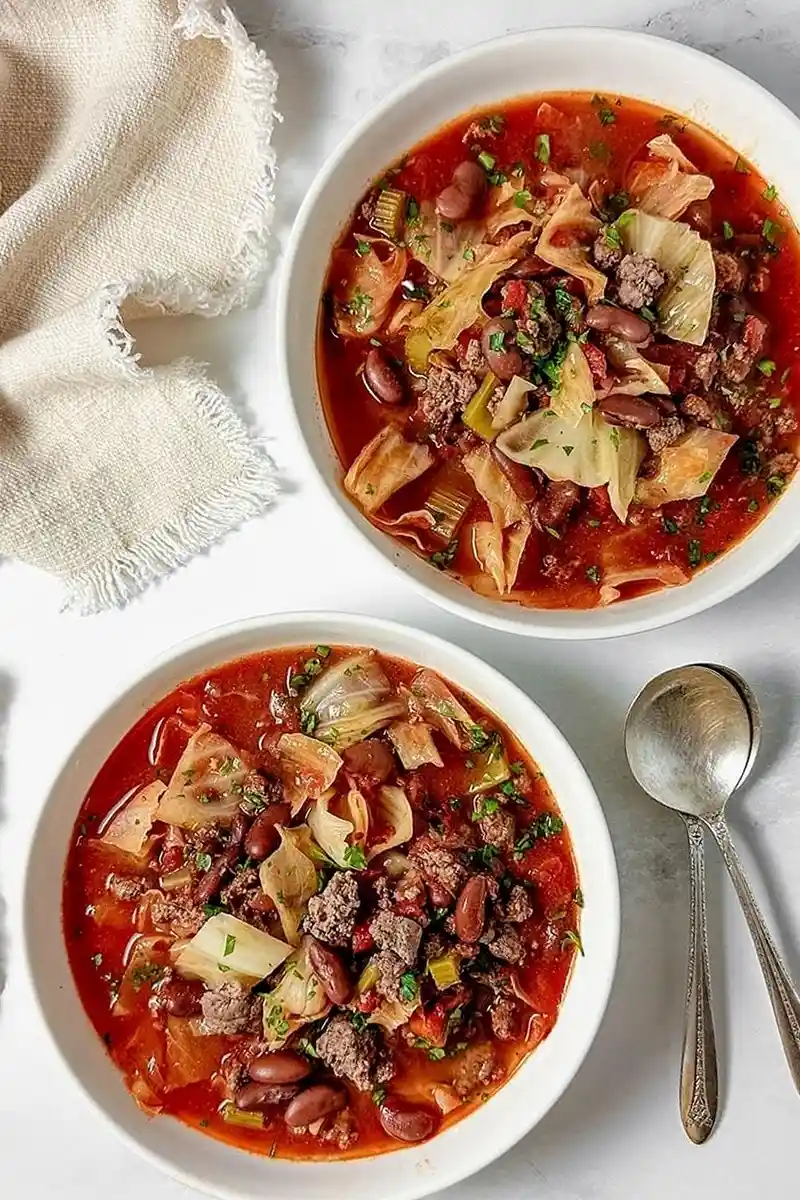
List of ingredients
- 1 pound lean ground beef (90% lean) – serves as the primary protein and flavor base.
- 1/2 teaspoon garlic salt – adds a seasoned saltiness to the meat.
- 1/4 teaspoon garlic powder – provides a concentrated garlic aroma.
- 1/4 teaspoon pepper – adds a basic spicy note.
- 2 celery ribs, chopped – contributes textural variety and earthiness.
- 1 can (16 ounces) kidney beans, rinsed and drained – adds plant-based protein and thickness.
- 1/2 medium head cabbage, chopped – the primary vegetable for bulk and flavor.
- 1 can (28 ounces) diced tomatoes, undrained – provides acidity and liquid base.
- 3-1/2 cups water – the primary hydration for the broth.
- 4 teaspoons beef bouillon granules – ensures a deep, savory beef flavor.
- Minced fresh parsley – used as a fresh herbal finish.
step-by-step instructions
- Brown the meat: In a Dutch oven, cook the ground beef over medium heat until it is no longer pink, breaking it into small crumbles; drain the excess fat from the pot.
- Combine ingredients: Stir in the garlic salt, garlic powder, pepper, chopped celery, rinsed kidney beans, chopped cabbage, undrained diced tomatoes, water, and beef bouillon granules.
- Boil: Increase the heat to bring the entire mixture to a rolling boil.
- Simmer: Reduce the heat to low, cover the pot with a tight-fitting lid, and let it simmer for 1 hour to soften the cabbage and meld flavors.
- Garnish: Distribute the soup into bowls and garnish each serving with minced fresh parsley.
Optimizing Ingredient Selection
Using High Lean-Ratio Beef
Using 90% lean ground beef prevents the soup from developing an oily layer on the surface. If you use beef with a higher fat content, it is critical to drain the pot thoroughly after browning. This ensures the broth remains clear and the taste is not overly greasy.
Choosing the Best Cabbage Variety
Green cabbage is the standard choice for this recipe due to its ability to hold its shape during long simmering. Savoy cabbage can be used for a more tender texture and a slightly sweeter flavor. Red cabbage is an option, though it will alter the color of the broth to a purple hue.
Preparing Cabbage for Even Cooking
Cut the cabbage into uniform pieces, approximately one inch in size. Uniformity ensures that all pieces soften at the same rate during the hour-long simmer. This prevents some pieces from becoming mushy while others remain raw.
Selecting the Right Kidney Beans
Dark red kidney beans provide the best color and structural integrity for this soup. Ensure the beans are rinsed and drained thoroughly to remove excess canning liquid and sodium. This allows the beef bouillon to dominate the flavor profile.
Evaluating Tomato Options
Canned diced tomatoes are used for their consistency and acidity. Using the undrained liquid from the can adds extra thickness and concentrated tomato flavor to the broth. For a smoother texture, you can use crushed tomatoes instead of diced.
Managing Beef Bouillon Concentrations
Beef bouillon granules provide a controlled amount of salt and umami. If you prefer a lighter broth, start with three teaspoons and adjust to taste at the end. Using high-quality granules prevents a metallic aftertaste in the final dish.
Cooking Equipment and Techniques
Benefits of the Dutch Oven
A Dutch oven is ideal because its heavy base distributes heat evenly and prevents the meat from scorching. The thick walls retain heat efficiently during the simmering process. This leads to a more consistent temperature and better vegetable tenderness.
Alternative Pot Selections
If a Dutch oven is unavailable, a heavy-bottomed stockpot is a suitable alternative. If using a thin-walled pot, reduce the browning heat to avoid hot spots. You can also brown the beef in a skillet and transfer it to any large pot for the simmering stage.
Achieving a Proper Brown on Beef
Cook the beef over medium heat and avoid stirring constantly at first. This allows the meat to develop a sear, which enhances the savory depth of the soup. Once browned, break the meat into small crumbles for a consistent distribution in every spoonful.
Controlling the Simmer Rate
A simmer is characterized by small, infrequent bubbles breaking the surface. If the soup boils too vigorously, the cabbage may break down too quickly. Keeping the lid on traps steam and ensures the vegetables cook through without excessive evaporation.
Deglazing the Pot
When adding the water and tomatoes after browning the beef, use a wooden spoon to scrape the bottom of the pot. These browned bits, known as fond, contain concentrated flavor. Incorporating them into the broth significantly improves the overall taste.
Customizing the Recipe
Substituting Ground Turkey
Ground turkey is a leaner alternative that works well in this recipe. Because turkey has a milder flavor than beef, you may want to increase the garlic powder slightly. Ensure the turkey is browned thoroughly to maintain a hearty texture.
Using Fresh Tomatoes
Fresh garden tomatoes can replace canned versions if they are ripe and juicy. Dice them and include the juices, but you may need to add an extra half cup of water to compensate for the lack of canning liquid. Fresh tomatoes provide a brighter, more acidic taste.
Adding Sautéed Onions
Adding one finely diced onion to the pot during the browning phase increases the aromatic complexity. Sauté the onions until translucent before adding the other ingredients. This adds a subtle sweetness that balances the saltiness of the bouillon.
Incorporating Root Vegetables
Diced carrots or parsnips can be added along with the celery for extra nutrition. These vegetables should be cut to a size similar to the cabbage to ensure they cook through in one hour. They add a natural sweetness and more color to the broth.
Adding Grains for Heartiness
Serving the soup over a scoop of cooked white or brown rice turns it into a full meal. Alternatively, you can stir in cooked barley during the last ten minutes of simmering. This increases the thickness and caloric density of the dish.
Adjusting Herbal Profiles
While parsley is the standard garnish, adding a bay leaf during the simmering process adds a subtle woody note. Fresh thyme or oregano can be stirred in for a more Mediterranean flavor. Remove any whole bay leaves before serving.
Serving and Pairing Ideas
Fresh Garnish Applications
Freshly minced parsley adds a bright contrast to the deep colors of the beef and cabbage. Other fresh herbs like cilantro or chives can also be used. Garnish right before serving to maintain the color and volatile oils of the herbs.
Pairing with Bread
A crusty sourdough or a piece of toasted rye bread complements the acidity of the tomatoes. The bread serves as a vehicle for soaking up the savory broth. Warm bread with butter is recommended for a more filling meal.
Adding Acidic Finishes
A small squeeze of fresh lemon juice or a teaspoon of apple cider vinegar stirred in at the end can brighten the flavor. This acidity cuts through the richness of the beef. It is a useful technique if the soup tastes too heavy.
Serving Temperature Guidelines
This soup is best served hot, as the fats in the beef remain liquid and the flavors are more pronounced. If serving as a chilled soup, ensure the beef is very finely crumbled. However, the standard preparation is intended for hot consumption.
Storage and Preservation
Refrigeration Parameters
Store the cooled soup in airtight glass or plastic containers. It will maintain its quality in the refrigerator for four to five days. Ensure the soup is cooled to room temperature before sealing to prevent condensation buildup.
Freezing for Long Term Use
This soup freezes well due to its hearty ingredients. Use zippered freezer bags and remove as much air as possible to prevent freezer burn. Freeze the bags flat to save space and ensure a faster thawing process.
Safe Thawing Procedures
Thaw frozen portions in the refrigerator overnight for the safest results. Avoid thawing on the counter to prevent bacterial growth. If you are in a hurry, the defrost setting on a microwave can be used.
Reheating Methods
For the best texture, reheat the soup in a saucepan over medium-low heat. Add a small amount of water or beef broth if the liquid has thickened too much during storage. Stir gently to avoid breaking the cabbage pieces.
Microwave Reheating Tips
Place the soup in a microwave-safe bowl and cover it with a lid or paper towel. Heat in one-minute intervals, stirring in between. This prevents uneven heating and avoids the soup splashing.
Troubleshooting and FAQs
Reducing Excess Sodium
To lower the salt content, replace the garlic salt with additional garlic powder and use a low-sodium beef bouillon. You can also rinse the kidney beans more thoroughly. Avoid adding extra salt until the final tasting stage.
Fixing Watery Broth
If the soup is too thin, simmer it uncovered for the last 15 to 20 minutes of cooking. This allows the water to evaporate and the flavors to concentrate. Alternatively, mash a few of the kidney beans against the side of the pot to thicken the liquid.
Correcting Over-Salted Soup
If the soup is too salty, add an extra cup of water or unsalted beef stock. Adding more cabbage or an extra can of rinsed beans can also help dilute the salt concentration. A small amount of sugar or honey can sometimes mask excessive saltiness.
Managing Cabbage Texture
If the cabbage is too firm, increase the simmering time by 15 minutes. If it is too mushy, reduce the cooking time to 45 minutes next time. The exact texture depends on the age and variety of the cabbage used.
Preventing Bean Mushiness
Add the kidney beans halfway through the simmering process if you prefer them to be firmer. Adding them at the start is fine for most canned beans, but older beans may break down. Ensure they are properly drained before adding.
Handling High Tomato Acidity
If the soup tastes too tart, add a pinch of sugar or a small amount of butter. This neutralizes the sharp acidity of the canned tomatoes. This creates a more rounded and balanced flavor profile.
How long does beef cabbage soup last in the fridge?
When stored in an airtight container, this soup remains safe and flavorful for four to five days.
Can I make this recipe in a slow cooker?
Yes, brown the beef and sauté the celery first, then combine all ingredients in the slow cooker. Cook on low for 6 to 8 hours or on high for 3 to 4 hours.
What if I do not have beef bouillon granules?
You can substitute the granules and water with 3.5 cups of store-bought beef broth. Ensure the broth is unsalted or adjust the garlic salt accordingly.
Can I add potatoes to this soup?
Yes, diced gold or red potatoes work well. Add them at the same time as the cabbage, but be aware they will thicken the soup further due to the released starch.
Print
Beef Cabbage Soup
- Total Time: 1 hour 20 minutes
- Yield: 12 servings 1x
- Diet: General
Description
When I was a little girl, I helped my parents work the fields of their small farm. Lunchtime was always a treat when Mother picked fresh vegetables from the garden and simmered them in her big soup pot. We loved making this delicious recipe.
Ingredients
- 1 pound lean ground beef (90% lean)
- 1/2 teaspoon garlic salt
- 1/4 teaspoon garlic powder
- 1/4 teaspoon pepper
- 2 celery ribs, chopped
- 1 can (16 ounces) kidney beans, rinsed and drained
- 1/2 medium head cabbage, chopped
- 1 can (28 ounces) diced tomatoes, undrained
- 3–1/2 cups water
- 4 teaspoons beef bouillon granules
- Minced fresh parsley
Instructions
- Step 1: In a Dutch oven, cook beef over medium heat until no longer pink, breaking it into crumbles; drain. Stir in the remaining ingredients except parsley.
- Step 2: Bring to a boil. Reduce heat; cover and simmer for 1 hour. Garnish with parsley.
Notes
Store cooled soup in airtight containers in the refrigerator for 4 to 5 days. This soup also freezes well for up to three months. For a variation, you can use ground turkey instead of beef or add diced onions during the browning stage.
- Prep Time: 10 minutes
- Cook Time: 1 hour 10 minutes
- Category: Dinner
- Method: Simmering
- Cuisine: American
Nutrition
- Serving Size: 1 cup
- Calories: 116 kcal
- Sugar: 3 g
- Sodium: 582 mg
- Fat: 3 g
- Saturated Fat: 1 g
- Unsaturated Fat: 2 g
- Trans Fat: 0 g
- Carbohydrates: 11 g
- Fiber: 3 g
- Protein: 11 g
- Cholesterol: 19 mg