This hearty one-pot meal combines savory ground beef and tender elbow pasta in a rich tomato sauce. It is a practical weeknight dinner that comes together in under 45 minutes.
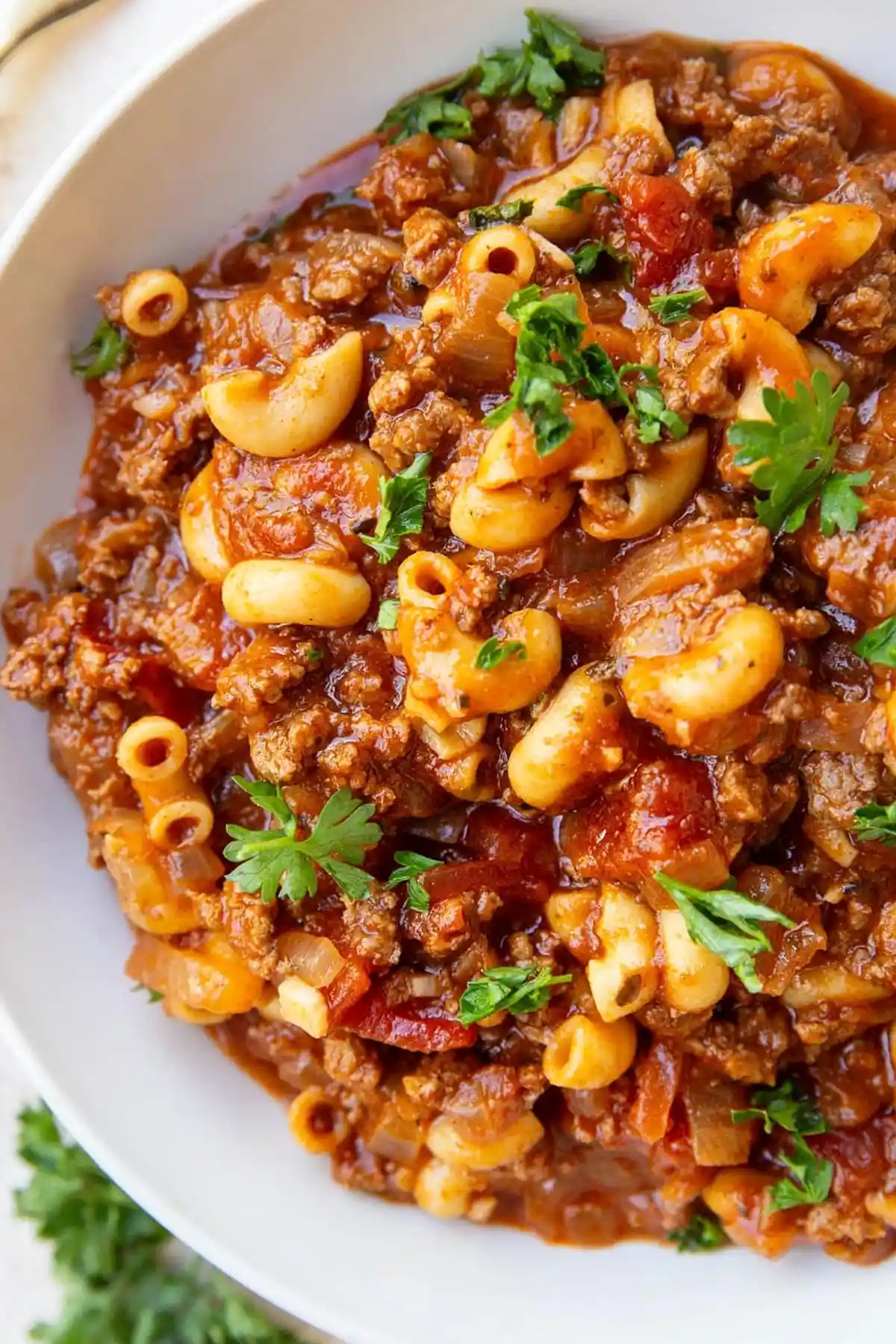
List of ingredients
- 1 Tbsp avocado oil – used for sautéing and browning.
- 1 medium-sized yellow onion, finely diced – provides a savory aromatic base.
- 4 cloves garlic, minced – adds pungent depth to the sauce.
- 1 pound ground beef – the primary protein source.
- 2 tsp paprika – adds smoky color and flavor.
- 1 tsp Italian seasoning – a blend of dried herbs for aromatic complexity.
- ½ tsp sea salt, to taste – enhances all other flavors.
- ¼ tsp black pepper, to taste – adds a subtle spicy kick.
- 1 (15-oz) can tomato sauce – creates the smooth base of the sauce.
- 1 (15-oz) can diced tomatoes – adds texture and acidity.
- 1 ½ cups beef broth – provides the liquid needed to cook the pasta.
- 1 Tbsp soy sauce or worcestershire sauce – adds umami and richness.
- 1 Tbsp pure maple syrup or brown sugar – balances the acidity of the tomatoes.
- 3 Tbsp fresh parsley, finely chopped – used for a fresh finish.
- 1 cup elbow noodles – the classic pasta choice for this dish.
- ½ cup grated cheddar cheese or colby jack cheese, optional – for a creamy topping.
step-by-step instructions
- Sauté Aromatics: Heat the avocado oil in a Dutch oven, large deep skillet, or thick-bottomed pot over medium-high heat. Add the diced onion and cook, stirring occasionally, until translucent, about 3 to 5 minutes.
- Add Garlic: Stir in the minced garlic and continue to sauté for another 2 minutes until fragrant.
- Brown the Beef: Add the ground beef to the pot. Use a spatula to break the meat into small pieces and cook until browned and mostly cooked through.
- Season the Meat: Sprinkle in the paprika, Italian seasoning, sea salt, and black pepper. Stir well to coat the beef evenly in the spices.
- Simmer the Sauce: Pour in the tomato sauce, diced tomatoes, beef broth, soy sauce (or Worcestershire), and maple syrup. Stir well and bring to a full boil, then reduce heat to medium and let it simmer for 8 to 10 minutes.
- Cook the Pasta: Stir in the elbow noodles. Cook at a gentle bubble for 7 to 12 minutes, stirring occasionally, until the noodles reach your desired tenderness.
- Final Touch: Stir in the fresh chopped parsley once the noodles are cooked.
- Thicken and Rest: Let the goulash sit for a few minutes; the noodles will absorb the excess liquid, making the sauce thicker.
- Serve: Dish into bowls and sprinkle with grated cheddar, colby jack, or parmesan cheese if desired.
Pro Cooking Techniques for Better Results
Selecting the Best Ground Beef for Flavor
For a richer taste, choose 80/20 ground beef as the fat carries the seasoning flavors. If you prefer a leaner option, 90/10 beef works well but may require a small amount of extra oil for browning. Ensure the meat is fully browned to develop a deep, caramelized flavor profile.
Sautéing Onions for Maximum Depth
Cook the onions until they are translucent and slightly golden. This process releases the natural sugars in the onion, providing a sweeter foundation for the acidic tomato sauce. Avoid burning the garlic by adding it only after the onions have softened.
Choosing the Right Pot for Even Heating
A Dutch oven is ideal because its thick walls distribute heat evenly and prevent the bottom from scorching. If using a skillet, ensure it has a deep lip to prevent the sauce from splashing. A heavy-bottomed pot helps maintain a consistent simmer during the pasta cooking phase.
Managing Pasta Texture
Stir the noodles occasionally to prevent them from sticking to the bottom of the pot. Since the pasta absorbs liquid as it sits, cook them until they are just barely tender (al dente). This prevents the noodles from becoming mushy as the dish rests before serving.
Ingredient Substitutions
Alternative Protein Options
Ground turkey or ground chicken can be used as leaner alternatives to beef. If using turkey, add an extra teaspoon of soy sauce or beef broth to compensate for the milder flavor. These alternatives maintain the structure of the dish while reducing the overall fat content.
Gluten-Free Pasta Selections
Chickpea-based or brown rice pasta noodles are excellent gluten-free substitutes. Note that gluten-free noodles often release more starch, which may thicken the sauce faster. You may need to add an extra quarter-cup of beef broth to maintain the desired consistency.
Replacing Beef Broth
Vegetable broth or chicken broth can be used if beef broth is unavailable. For a deeper flavor when using vegetable broth, add a pinch more paprika or a drop of soy sauce. In a pinch, water with a bouillon cube provides a similar result.
Alternative Sweeteners for Balance
Brown sugar is a direct substitute for maple syrup to balance the tomato acidity. For a refined sugar-free option, a small amount of honey or date syrup works well. The goal is not to make the dish sweet, but to mellow the tartness of the canned tomatoes.
Umami Boosters Instead of Soy Sauce
If you do not have soy sauce or Worcestershire, a teaspoon of tomato paste can add similar depth. A small amount of fish sauce also provides the necessary salty, savory punch. Ensure any substitute is used sparingly to avoid over-salting the dish.
Custom Variations and Add-ins
Adding Fresh Bell Peppers
Diced red or green bell peppers add color and a mild sweetness to the meal. Add them to the pot at the same time as the garlic for a softened texture. For a crunchier bite, add them halfway through the sauce simmering process.
Incorporating Leafy Greens
Fresh baby spinach or chopped kale can be stirred in during the last two minutes of cooking. The residual heat will wilt the greens without overcooking them. This is an efficient way to increase the nutrient density of the meal.
Adding Root Vegetables
Finely diced carrots or turnips can be sautéed with the onions. These root vegetables add a subtle earthiness and more fiber to the goulash. Ensure they are diced small so they cook through in the same time as the meat.
Adjusting the Heat Level
For a spicier version, add red pepper flakes or a pinch of cayenne pepper when adding the other seasonings. A diced jalapeño added during the sauté phase provides a fresh, sharp heat. Adjust the amount based on your personal spice tolerance.
Hearty Bean Additions
Stirring in a can of drained kidney beans or black beans transforms the dish into a chili-mac style meal. Combine this with an extra teaspoon of chili powder for a deeper, smokier profile. Beans add significant protein and make the meal more filling.
Serving and Pairing Ideas
Complementary Vegetable Sides
Serve this goulash with steamed broccoli or sautéed green beans to add brightness to the plate. A crisp side salad with a lemon vinaigrette cuts through the richness of the beef and cheese. Roasted carrots also pair well with the paprika notes in the sauce.
Choosing the Right Cheese Topping
While cheddar and colby jack provide a classic melt, grated parmesan adds a salty, nutty finish. For a creamier texture, try a dollop of sour cream or a sprinkle of mozzarella. Use a coarse grate for the cheese to ensure it distributes evenly across the bowl.
Bread Accompaniments
Warm garlic bread or a crusty sourdough baguette is perfect for soaking up the remaining sauce. Toasted focaccia with rosemary provides an aromatic contrast to the savory meat. Serve the bread warm to complement the temperature of the goulash.
Fresh Herb Garnishes
Beyond the parsley included in the recipe, chopped chives or green onions add a mild onion flavor. Fresh basil leaves provide a sweet, peppery aroma that enhances the tomato base. Sprinkle the herbs immediately before serving to maintain their color and scent.
Storage and Preservation
Refrigeration Guidelines
Store leftover goulash in an airtight container in the refrigerator for up to 5 days. Allow the dish to cool slightly before sealing the lid to prevent excessive condensation. Keep the container in the main body of the fridge rather than the door for consistent temperature.
Freezing Instructions
This dish can be frozen for up to 3 months in freezer-safe bags or airtight containers. Leave a small amount of space at the top of the container to allow for expansion. Note that the noodles may absorb more sauce and soften further after being frozen and thawed.
Thawing Process
Thaw frozen goulash in the refrigerator overnight for the best results. If you are in a rush, use the defrost setting on your microwave. Avoid thawing at room temperature to ensure food safety.
Reheating Techniques
Stovetop Reheating Method
Place the goulash in a small pot over medium-low heat. Add a splash of beef broth or water to loosen the sauce, as the noodles will have absorbed much of the liquid. Stir gently and heat until steaming throughout.
Microwave Reheating Tips
Heat the goulash in a microwave-safe bowl, covering it with a damp paper towel to retain moisture. Heat in 1-minute intervals, stirring between each session to ensure even heating. Add a teaspoon of water if the sauce appears too thick.
Oven Warming Approach
Transfer the goulash to an oven-safe baking dish and cover with foil. Heat at 325°F (160°C) for about 15-20 minutes. This method is ideal if you want to melt extra cheese on top during the final few minutes of warming.
Make-Ahead Strategy
Pre-Cooking the Meat and Sauce
You can prepare the meat and sauce base up to two days in advance. Cook everything up until the point where you would add the pasta, then cool and refrigerate. When ready to serve, bring the sauce to a boil and then add the raw noodles.
Handling the Pasta Separately
If you prefer to keep the noodles from overcooking, boil them separately to al dente. Store the cooked noodles and the sauce in different containers. Combine them and heat through just before serving for the best texture.
Prep-Work for Busy Weeknights
Dice the onions and mince the garlic in advance and store them in a small container. Measure out the dried spices into a small bowl or bag. This reduces the active prep time to just a few minutes on the day of cooking.
Troubleshooting Common Issues
Fixing a Watery Sauce
If the sauce is too thin after cooking, simmer it uncovered for an additional 5 minutes to reduce the liquid. You can also stir in a tablespoon of tomato paste for instant thickening. Ensure the noodles have had time to rest, as they naturally thicken the dish.
Preventing Overcooked Noodles
If the noodles are cooking too quickly, remove the pot from the heat slightly before they are finished. The carry-over heat will continue to cook the pasta as it rests. Always check the tenderness of the noodles starting at the 7-minute mark.
Balancing Excessive Acidity
If the tomato sauce tastes too tart, add another pinch of brown sugar or maple syrup. A small pinch of baking soda can also neutralize the acidity of the tomatoes. Stir in a tablespoon of butter at the end for a smoother, richer taste.
Correcting Over-Salting
If the dish is too salty, add a splash of unsalted beef broth or water. Adding more diced tomatoes or a handful of spinach can also dilute the salt concentration. Avoid adding more cheese, as most cheeses contain significant salt.
Frequently Asked Questions
What is the difference between American and Hungarian Goulash?
Hungarian goulash is typically a slow-cooked stew featuring chunks of beef, potatoes, and carrots. American goulash is a quicker meal that uses ground beef and includes pasta noodles in a thicker tomato sauce.
Can I use macaroni instead of elbow noodles?
Yes, macaroni is very similar in shape and size to elbow noodles and works perfectly. Any small pasta shape, such as ditalini or shells, can be used as long as the cooking time is adjusted accordingly.
Is this dish suitable for meal prep?
Yes, this recipe is excellent for meal prep as it stores well and tastes great reheated. To prevent the pasta from becoming too soft, consider undercooking the noodles slightly if you plan to eat them over several days.
How do I adjust the spice level?
Increase the amount of paprika for a smokier flavor or add cayenne pepper for heat. If the dish is too spicy, stir in a spoonful of sour cream or extra cheese to mellow the flavors.
Can I use fresh tomatoes instead of canned?
Fresh tomatoes can be used if they are ripe and juicy, but you will need to dice them finely. Since fresh tomatoes have more water, you may need to simmer the sauce longer to achieve the correct thickness.
Print
One-Pot American Beef Goulash
- Total Time: 45 minutes
- Yield: 4 servings 1x
- Diet: General
Description
American-style goulash with ground beef and pasta noodles. This easy one-pot meal is easy to prepare and delicious for the whole family.
Ingredients
- 1 Tbsp avocado oil
- 1 medium-sized yellow onion, finely diced
- 4 cloves garlic, minced
- 1 pound ground beef
- 2 tsp paprika
- 1 tsp Italian seasoning
- ½ tsp sea salt
- ¼ tsp black pepper
- 1 (15-oz) can tomato sauce
- 1 (15-oz) can diced tomatoes
- 1 ½ cups beef broth
- 1 Tbsp soy sauce or worcestershire sauce
- 1 Tbsp pure maple syrup
- 3 Tbsp fresh parsley, finely chopped
- 1 cup elbow noodles
- ½ cup grated cheddar cheese or colby jack cheese (optional)
Instructions
- Step: Heat the avocado oil in a Dutch oven or large pot over medium-high heat and sauté chopped onion for 3 to 5 minutes until translucent.
- Step: Stir in the minced garlic and sauté for another 2 minutes.
- Step: Add the ground beef and break it up with a spatula.
- Step: Stir in paprika, Italian seasoning, sea salt, and black pepper, cooking until the beef is browned.
- Step: Stir in the tomato sauce, diced tomatoes, beef broth, soy sauce (or Worcestershire sauce), and pure maple syrup.
- Step: Bring to a boil, then reduce heat to medium and simmer for 8 to 10 minutes.
- Step: Add the pasta noodles and cook for 7 to 12 minutes until tender, then stir in the fresh parsley.
- Step: Serve in bowls with optional grated cheese on top.
Notes
You can use gluten-free elbow noodles made from chickpeas, brown rice, or cassava.
- Prep Time: 10 minutes
- Cook Time: 35 minutes
- Category: Main Dishes
- Method: Stove-top
- Cuisine: American
Nutrition
- Serving Size: 1 serving
- Calories: 480 kcal
- Sugar: 31 g
- Sodium: 1109 mg
- Fat: 22 g
- Saturated Fat: 7 g
- Unsaturated Fat: 4 g
- Trans Fat: 0 g
- Carbohydrates: 42 g
- Fiber: 5 g
- Protein: 28 g
- Cholesterol: 74 mg