This effortless one-pan meal creates a rich, creamy sauce by roasting feta cheese and cherry tomatoes together. It is a perfect solution for a quick weeknight dinner that requires minimal cleanup.
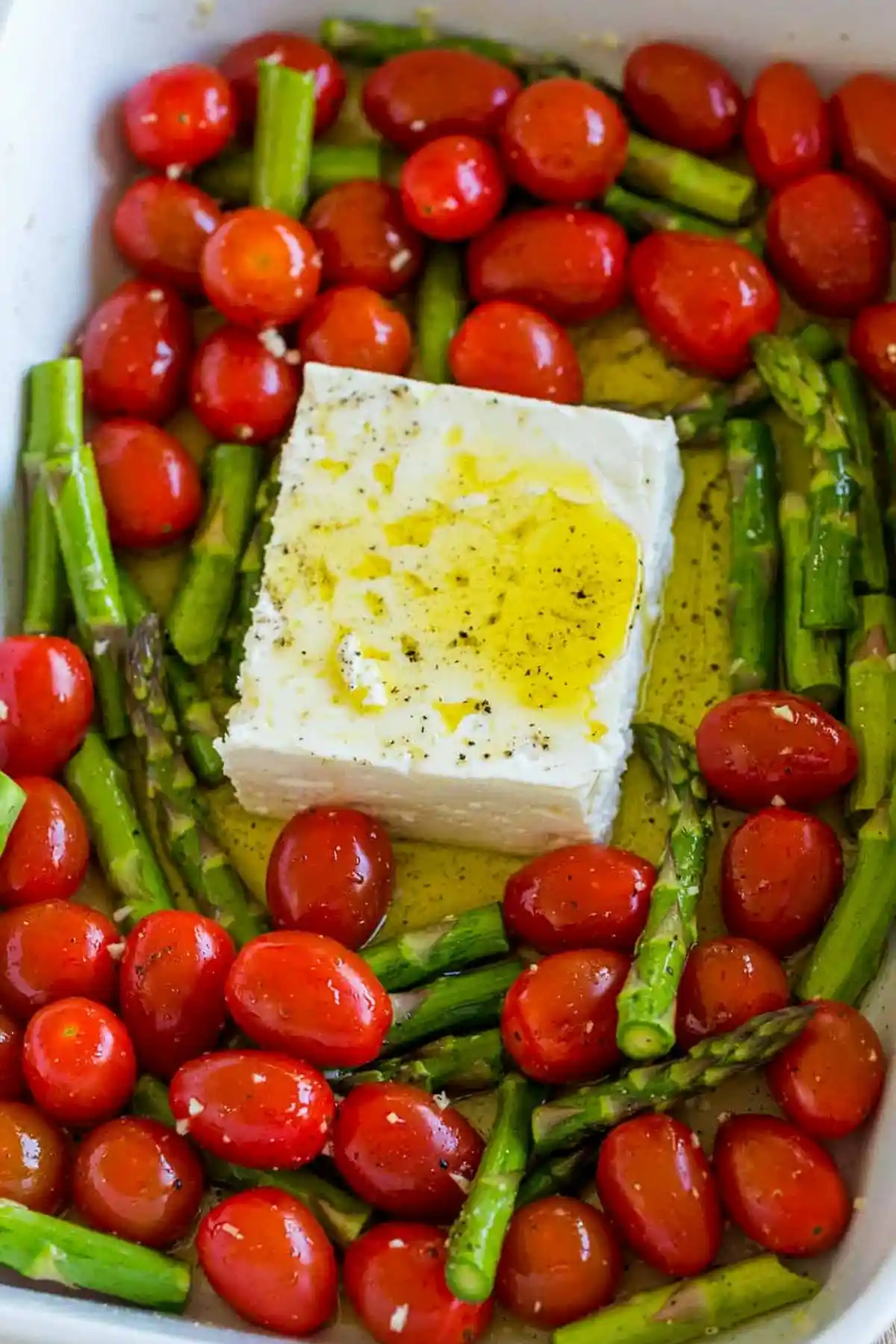
List of ingredients
- 4 cups cherry or grape tomatoes – these provide the base for the sauce.
- 8 oz asparagus – ends trimmed and cut into bite-size pieces for added nutrition.
- 1/3 cup extra virgin olive oil – used for roasting, plus 1 Tbsp for drizzling.
- 1/4 tsp salt – enhances the natural flavors of the vegetables.
- 1/2 tsp black pepper – adds a subtle spicy kick.
- 8 oz block Feta Cheese – use a block for the best creamy consistency.
- 10 oz penne pasta – or any short pasta variety.
- 4 garlic cloves – finely minced and divided between baking and finishing.
- 1/4 cup fresh parsley or basil – finely minced for a fresh herbal finish.
step-by-step instructions
- Prepare the Oven and Pan: Preheat your oven to 400°F. In a 9×13 inch casserole dish, combine the tomatoes, asparagus, 1/3 cup olive oil, 2 minced garlic cloves, 1/2 tsp black pepper, and 1/4 tsp salt. Toss everything together to ensure the vegetables are evenly coated.
- Add the Cheese: Move the vegetables to the sides to create a space in the center of the dish. Place the 8 oz block of feta cheese in this center spot. Drizzle the top of the cheese with 1 Tbsp of olive oil and an extra sprinkle of black pepper.
- Bake: Place the casserole in the oven and bake at 400°F for 30 minutes. You will know it is done when the tomatoes start to burst and release their juices.
- Cook the Pasta: About halfway through the baking time, bring a large pot of salted water to a boil. Add the penne pasta and cook according to the package instructions until al dente. Drain the pasta, but reserve some of the cooking water for later use.
- Finish the Sauce: Remove the casserole from the oven. Immediately stir in the remaining minced garlic and the finely minced parsley or basil. Use the back of a large spoon to mash the softened feta cheese into the olive oil and tomato juices until the sauce is smooth and well dispersed.
- Combine and Serve: Stir the drained cooked pasta into the creamy sauce. If the sauce is too thick, add small amounts of the reserved pasta water until you reach your desired consistency. Serve while warm, keeping in mind that the burst tomatoes can be very hot.
Optimal Pasta Shape Selection
Penne Pasta
Penne is a classic choice because its tubular shape and ridges help the thick feta sauce cling to the pasta. This ensures that every single piece is well-coated in the creamy emulsion. It maintains a firm bite that contrasts well with the soft roasted vegetables.
Rigatoni Pasta
Rigatoni is slightly larger than penne and has a wider opening. This allows the roasted cherry tomatoes and small pieces of asparagus to actually get trapped inside the pasta. It creates a more substantial mouthfeel and a heartier meal.
Fusilli Pasta
The spiral shape of fusilli is ideal for trapping the creamy sauce in its twists. This maximizes the surface area contact between the pasta and the cheese. It is an excellent choice if you prefer a more integrated sauce experience.
Gemelli Pasta
Gemelli resembles two strands of pasta twisted together. This unique structure creates deep grooves that hold the feta and olive oil mixture efficiently. It adds an elegant visual appeal to the final dish.
Trottole Pasta
Trottole is a tightly wound spiral pasta that is very sturdy. Its compact shape makes it easy to stir into the heavy cheese sauce without breaking the pasta. It provides a satisfying chewiness that pairs well with the soft feta.
Cavatappi Pasta
Cavatappi is a corkscrew-shaped pasta that is hollow. Like penne, it captures sauce inside the tube, but the spiral adds extra surface area on the outside. This makes it one of the best options for maximizing sauce distribution.
Modifying Your Vegetable Mix
Adding Roasted Chicken
To make this a high-protein meal, you can replace the asparagus with chicken tenders. Roast the chicken in the same pan with the feta and tomatoes for the full 30 minutes. Ensure the chicken pieces are small enough to cook through in the same timeframe as the vegetables.
Integrating Leafy Greens
If you want more greens, try stirring in fresh baby spinach or kale during the final mixing step. The residual heat from the pasta and the sauce will wilt the greens perfectly. This adds a pop of color and additional nutrients without requiring extra cooking time.
Substituting the Tomatoes
It is not recommended to fully substitute the cherry tomatoes because their acidity and juice are essential for the sauce. Without the tomato liquid, the feta can become too thick or grainy. If you must use something else, try sun-dried tomatoes packed in oil to maintain some moisture.
Choosing the Right Feta
Greek Feta Cheese
Traditional Greek feta made from sheep and goat milk tends to be saltier and tangier. It provides a very authentic, sharp flavor profile that cuts through the richness of the olive oil. This is the best choice for those who love a bold cheese taste.
French Feta Cheese
French feta is often creamier and milder than the Greek variety. It melts slightly more smoothly into the olive oil, creating a more homogenous sauce. This is a great option for children or those who prefer a less intense saltiness.
Cow’s Milk Feta
Feta made from cow’s milk is widely available and typically the most affordable. While it may be slightly less tangy, it still provides the necessary creamy structure for this recipe. It works perfectly well if you cannot find traditional sheep’s milk feta.
Professional Preparation Tips
Salt Your Boiling Water
Always add a generous amount of salt to your pasta water, approximately one tablespoon per gallon. This is the only chance to season the pasta itself, which prevents the dish from tasting bland. Salted water also helps the pasta maintain a better structure.
Use a Solid Block of Feta
Avoid using crumbled feta, as it will dry out and brown rather than melting into a sauce. A solid block retains its moisture during the roasting process. This allows it to emulsify with the olive oil and tomato juices into a creamy consistency.
Reserve the Pasta Cooking Water
Always save about a cup of the starchy pasta water before draining. If the feta sauce feels too thick or clumps together, a splash of this water will loosen it. The starch in the water helps bind the oil and cheese for a glossier finish.
Best Side Dish Pairings
Classic Caesar Salad
A crisp Caesar salad with romaine lettuce and parmesan provides a fresh contrast to the rich pasta. The acidity of the dressing helps cleanse the palate between bites of creamy cheese. It is a light way to balance the meal.
Traditional Greek Salad
Pairing this dish with a Greek salad featuring cucumbers, olives, and red onions complements the Mediterranean flavors. This adds a refreshing, crunchy element to the dinner. It reinforces the theme of the feta and olive oil.
Garlic Bread
Warm, toasted garlic bread is perfect for scooping up any leftover feta sauce from the plate. Use a crusty baguette and plenty of butter for the best results. It adds a satisfying crunch to the overall meal.
Fresh Sourdough Bread
Sourdough provides a tangy flavor that pairs beautifully with the roasted tomatoes. Use it to soak up the olive oil emulsion at the bottom of the pan. Lightly toast the slices to add texture.
Preserving and Warming Leftovers
Refrigeration Method
Store any remaining pasta in an airtight container in the refrigerator for up to three to four days. The sauce may thicken significantly as it cools. This is normal and can be easily corrected during the reheating process.
Microwave Reheating
When reheating in the microwave, add a splash of filtered water or a drizzle of olive oil to the pasta. Heat in short bursts, stirring in between, to ensure the cheese redistributes evenly. This prevents the pasta from drying out.
Stovetop Warming
For the best texture, reheat the pasta in a skillet over medium-low heat. Add a tablespoon of water or milk to loosen the sauce as it warms. Stir gently to avoid breaking the pasta shapes.
Fixing Common Issues
Sauce is Too Thick
If the cheese does not blend smoothly or feels too heavy, gradually stir in reserved pasta water. Add one tablespoon at a time until the sauce reaches a silky consistency. This emulsifies the fats and creates a professional-looking glaze.
Cheese is Not Melting
If the feta remains in chunks, ensure you are using a block rather than crumbles. Use a sturdy spoon or a potato masher to press the cheese firmly into the hot oil. If it is still stubborn, a minute more in the oven can help soften it.
Tomatoes are Not Bursting
If the tomatoes are still whole after 30 minutes, they may have been too cold or the oven temperature too low. Gently press them with a fork to release the juices. You can also return the pan to the oven for another 5 to 10 minutes.
Frequently Asked Questions
Can I use frozen tomatoes?
Frozen tomatoes can be used, but they release significantly more water than fresh ones. You may need to reduce the amount of olive oil slightly. Be aware that the texture will be softer and less structured than fresh cherry tomatoes.
Can I use a different oil?
Extra virgin olive oil is recommended for the flavor and health benefits. However, avocado oil is a good alternative due to its high smoke point. Avoid using butter or coconut oil as they will change the Mediterranean flavor profile of the dish.
How long does it last in the fridge?
The baked feta pasta stays fresh for about 3 to 4 days when stored in an airtight container. Because it contains dairy and cooked vegetables, it is best consumed within this window for optimal safety and taste.
Can I bake this in a different size pan?
A 9×13 inch pan is ideal for the quantities listed. If you use a smaller pan, the vegetables will be more crowded, which may lead to steaming rather than roasting. Use a larger pan if you want the tomatoes to caramelize more quickly.
Is it possible to make this vegan?
You can substitute the feta with a firm vegan feta alternative made from coconut oil or almonds. Use the same roasting method, though keep in mind that vegan cheeses have different melting points. You may need to mash it more vigorously to create a sauce.
Print
Creamy Baked Feta Pasta with Roasted Vegetables
- Total Time: 45 minutes
- Yield: 6 servings 1x
- Diet: Vegetarian
Description
Feta Pasta with tomatoes and asparagus is a creamy and easy pasta casserole. Cook the pasta while the cheese and tomatoes bake for a quick dinner.
Ingredients
- 4 cups cherry or grape tomatoes
- 8 oz asparagus, ends trimmed and cut into bite-size pieces
- 1/3 cup extra virgin olive oil, plus 1 Tbsp to drizzle over cheese
- 1/4 tsp salt
- 1/2 tsp black pepper
- 8 oz block Feta Cheese
- 10 oz penne pasta
- 4 garlic cloves, finely minced, divided
- 1/4 cup fresh parsley or basil, finely minced
Instructions
- Prep: Preheat oven to 400˚F.
- Combine: Add tomatoes and asparagus to a 9×13 casserole. Add 1/3 cup olive oil, 2 minced garlic cloves, 1/2 tsp black pepper, and 1/4 tsp salt. Toss to combine.
- Arrange: Make a space in the center and place the 8 oz block of feta in the pan. Drizzle the top with 1 Tbsp olive oil and another sprinkle of black pepper.
- Bake: Bake at 400˚F for 30 minutes until tomatoes start to burst.
- Cook Pasta: Halfway through baking, boil salted water and cook pasta according to package instructions. Drain, reserving some cooking water.
- Finish Sauce: Remove casserole from oven. Stir in remaining minced garlic and parsley. Use the back of a large spoon to press the cheese into the olive oil and stir until well dispersed.
- Mix: Stir in drained cooked pasta. Add reserved pasta water as desired for a saucier consistency. Serve warm.
Notes
Use short pasta like Penne, Rigatoni, or Fusilli for easier mixing. To make the pasta creamier, add reserved hot pasta water before serving.
- Prep Time: 15 minutes
- Cook Time: 30 minutes
- Category: Main Course
- Method: Baking
- Cuisine: Finnish
Nutrition
- Serving Size: 1 serving
- Calories: 411 kcal
- Sugar: 6 g
- Sodium: 535 mg
- Fat: 21 g
- Saturated Fat: 7 g
- Unsaturated Fat: 14 g
- Trans Fat: 0 g
- Carbohydrates: 43 g
- Fiber: 3 g
- Protein: 14 g
- Cholesterol: 34 mg