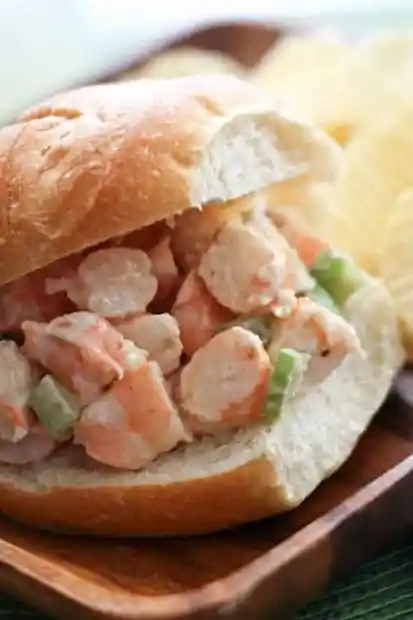
This refreshing shrimp salad combines tender steamed seafood with a creamy, tangy dressing. It is an ideal choice for summer lunches, whether served as a sandwich or on a bed of fresh greens.
List of ingredients
- 3 lbs fresh shrimp (with shell) – provides the main protein and structure.
- 3-4 tablespoons Old Bay seasoning – adds a classic savory and spiced flavor.
- 1 cup water – used as the base for the steaming liquid.
- 1 cup white vinegar – adds acidity and helps tenderize the shrimp during steaming.
- 1/4-1/3 cup light mayo – creates a creamy binding agent for the salad.
- good pinch of salt – enhances the natural flavors of the seafood.
- 1 1/2 – 2 celery stalks, chopped – contributes a crisp texture and fresh taste.
- 1/2 lemon, juiced – provides a bright, citrusy finish.
- Old Bay, to taste – used for final seasoning adjustments.
step-by-step instructions
- Steam the shrimp: Combine water, white vinegar, and Old Bay seasoning in a large pot. Steam the shrimp for 2 to 3 minutes, or until they turn pink. Drain the shrimp immediately and set them aside to chill in the refrigerator.
- Prepare the seafood: Once chilled, peel and devein the shrimp. Chop them into bite-sized pieces and place them into a large mixing bowl.
- Mix the dressing: Add light mayonnaise to the chopped shrimp, starting with 1/4 cup and adding more if needed to reach the desired consistency. Stir in the chopped celery, salt, and fresh lemon juice.
- Final seasoning: Gently combine all ingredients. Sprinkle a small amount of Old Bay seasoning over the mixture and taste. Add additional salt or Old Bay as needed to balance the flavors.
- Serve: Scoop the salad onto fresh rolls, rye bread, or place it over a bed of mixed greens.
Expert Shrimp Preparation Techniques
Identifying Fresh Seafood Quality
When selecting shrimp, look for shells that are translucent and firm to the touch. Avoid shrimp with a strong ammonia smell or those with black spots on the shells, as this indicates age. Fresh shrimp should have a mild, salty scent reminiscent of the ocean.
Mastering the Steaming Process
To avoid overcooking, watch the shape of the shrimp closely. They should form a loose ‘C’ shape when perfectly cooked; if they curl tightly into an ‘O’ shape, they are likely overdone and may become rubbery. Remove them from the heat the moment they turn opaque and pink.
Efficient Peeling and Deveining
Use kitchen shears to snip the back of the shell for faster deveining. If the shrimp are chilled thoroughly, the shells will release more easily from the meat. Always rinse the peeled shrimp in cold water to remove any remaining debris before chopping.
Rapid Chilling for Texture
Immediately transferring steamed shrimp to a cold environment stops the cooking process. You can place the drained shrimp in a colander set over a bowl of ice water for a few minutes. This preserves the snap of the shrimp and prevents them from becoming mushy.
Ingredient Substitutions and Alternatives
Creating a Homemade Spice Blend
If Old Bay seasoning is unavailable, you can create a similar flavor profile using a mix of paprika, celery salt, black pepper, and a pinch of cayenne. Use a 2:1 ratio of paprika to celery salt for a balanced taste. This ensures the salad maintains its characteristic savory depth.
Using Greek Yogurt for a Lighter Base
For a lower-calorie alternative to light mayonnaise, substitute equal parts plain Greek yogurt. Greek yogurt provides a similar creaminess and an added probiotic benefit. Note that yogurt is tangier than mayo, so you may want to reduce the amount of lemon juice used.
Incorporating Different Crunchy Vegetables
If you prefer a different texture than celery, try finely diced red bell pepper or English cucumber. Water chestnuts offer a very similar crunch and a neutral flavor that does not overpower the shrimp. Ensure any watery vegetables are patted dry before adding them to the bowl.
Replacing White Vinegar in the Steaming Liquid
Apple cider vinegar can be used as a substitute for white vinegar, providing a slightly sweeter and fruitier undertone. Rice vinegar is another option, though it is milder and may require a slight increase in lemon juice. The primary goal is to maintain an acidic environment during steaming.
Serving and Presentation Ideas
Selecting the Best Bread Pairings
Toasted rye bread provides a bold, earthy contrast to the creamy shrimp salad. For a softer experience, use toasted brioche rolls or traditional potato buns. Lightly buttering and toasting the bread prevents the salad from making the bread soggy.
Low-Carb and Grain-Free Options
Serve the shrimp salad inside large Romaine lettuce leaves or butter lettuce cups for a crisp, low-carb meal. Sliced cucumber rounds or hollowed-out avocado halves also serve as excellent natural vessels. These options highlight the freshness of the seafood.
Complementary Side Dish Pairings
Pair the salad with kettle-cooked potato chips for a salty crunch that balances the lemon juice. A side of creamy coleslaw or a fresh fruit salad with melon and berries complements the zesty flavors. A chilled cucumber salad with dill is another refreshing accompaniment.
Garnishing for Visual Appeal
Top the finished salad with a sprinkle of fresh chopped parsley or chives for a pop of color. A thin slice of lemon placed on the side of the plate adds a professional touch. A dusting of smoked paprika can provide a visually striking contrast against the creamy dressing.
Storage and Food Safety
Proper Refrigeration Methods
Store the shrimp salad in a glass airtight container to maintain freshness and prevent the absorption of other fridge odors. Keep the container in the coldest part of the refrigerator, typically the back of the shelf. Ensure the salad is cooled completely before sealing the lid.
Maximum Safe Storage Duration
Consuming the shrimp salad within two to three days is recommended for optimal quality and safety. Seafood degrades faster than other proteins, and the mayo-based dressing can separate over time. If the salad has been sitting for more than three days, it should be discarded.
Identifying Signs of Spoilage
Check for a sour or overly pungent smell before serving leftovers. Any change in the color of the shrimp or a slimy texture in the dressing indicates bacterial growth. When in doubt, discard the seafood to avoid foodborne illness.
Maintaining Temperature During Transport
If taking the salad to a picnic or party, keep it in an insulated cooler bag with ice packs. Shrimp salad should be kept below 40 degrees Fahrenheit to prevent the growth of harmful bacteria. Avoid leaving the salad at room temperature for more than two hours.
Make-Ahead Strategies
Pre-Steaming the Seafood
You can steam and chill the shrimp up to 24 hours before you plan to assemble the salad. Once steamed and cooled, store the peeled and chopped shrimp in a sealed container. This reduces the preparation time on the day of serving.
Prepping the Vegetable Base
Dice the celery and juice the lemon in advance to streamline the mixing process. Store the chopped celery in a small container with a damp paper towel to keep it crisp. Keep the lemon juice in a small jar in the refrigerator.
Batch Cooking for Meal Prep
If preparing the salad for the week, keep the shrimp and the dressing components separate. Mix the mayo, lemon, and seasoning in one container and the shrimp and celery in another. Combine them just before eating to ensure the vegetables stay crunchy.
Common Troubleshooting Solutions
Correcting a Watery Consistency
If the salad appears too watery, it is often because the shrimp were not drained properly after steaming. Gently strain the mixture through a fine-mesh sieve or add a small amount of additional mayonnaise to thicken the sauce. Patting the chopped shrimp dry with paper towels before mixing prevents this issue.
Balancing Overly Strong Acidity
If the vinegar or lemon flavor is too dominant, stir in a tablespoon of extra mayonnaise or a pinch of sugar. The fat in the mayo helps neutralize the sharp acid notes. Adding more chopped celery can also dilute the intensity of the citrus.
Adjusting Excessive Saltiness
If the Old Bay or salt makes the dish too salty, add more unseasoned chopped shrimp to the mix. Increasing the amount of celery or adding a handful of diced cucumber also helps balance the sodium levels. Avoid adding more lemon juice, as this can sometimes enhance the perception of salt.
Frequently Asked Questions
Can I use frozen shrimp for this recipe?
Yes, frozen shrimp can be used as long as they are completely thawed before steaming. Thaw them overnight in the refrigerator or under cold running water. Pat them dry before adding them to the pot to ensure the steaming liquid remains concentrated.
How do I know when the shrimp are perfectly steamed?
The shrimp are done when they turn from translucent grey to an opaque pink color. They should feel firm to the touch but still have a slight springiness. Overcooking will result in a rubbery texture and a tight curl.
Can I use a different type of vinegar?
Apple cider vinegar is a suitable alternative and adds a mild sweetness. Rice vinegar is also an option for a softer acidity. Avoid using balsamic or red wine vinegar, as their strong flavors may clash with the Old Bay seasoning.
Is it possible to freeze the finished shrimp salad?
No, you should not freeze the finished shrimp salad. The mayonnaise will break and separate upon thawing, resulting in an unappealing texture. Additionally, the celery will lose its crunch and become mushy after freezing.
Can I make this recipe without mayo?
Yes, you can substitute mayonnaise with mashed avocado for a creamier, heartier texture. Sour cream or Greek yogurt also work well as binders. Adjust the salt and lemon levels based on the flavor of your chosen substitute.
Print
Zesty Steamed Shrimp Salad
- Total Time: 25 minutes
- Yield: 6–8 servings 1x
- Diet: General
Description
A refreshing summer shrimp salad featuring fresh shrimp steamed with Old Bay seasoning and tossed with a light dressing of mayonnaise, celery, and fresh lemon juice.
Ingredients
- 3 lbs fresh shrimp (with shell)
- 3–4 tablespoons Old Bay seasoning
- 1 cup water
- 1 cup white vinegar
- 1/4–1/3 cup light mayo
- good pinch of salt
- 1 1/2 – 2 celery stalks, chopped
- 1/2 lemon, juiced
- Old Bay, to taste
Instructions
- Step: Steam shrimp in large pot with water, vinegar and old bay for 2 -3 minutes or until shrimp are pink. Drain and set aside to chill. Peel and devein shrimp, then chop and place in large mixing bowl.
- Step: To chopped shrimp add mayo (start with 1/4 cup, add more if needed), celery, salt and lemon. Gently combine and sprinkle a bit of Old Bay to shrimp mixture and taste. Add more salt or Old Bay if needed.
- Step: Enjoy on rolls, rye bread or on it’s own over a bed of greens.
Notes
The shrimp can be steamed ahead of time and kept in the refrigerator to chill before preparing the salad.
- Prep Time: 20 minutes
- Cook Time: 5 minutes
- Category: Main Dish
- Method: Steaming
- Cuisine: American
Nutrition
- Serving Size: 1 serving
- Calories: 210 kcal
- Sugar: 3 g
- Sodium: 850 mg
- Fat: 7 g
- Saturated Fat: 2 g
- Unsaturated Fat: 5 g
- Trans Fat: 0 g
- Carbohydrates: 4 g
- Fiber: 1 g
- Protein: 32 g
- Cholesterol: 190 mg