This vibrant Mexican shrimp ceviche offers a refreshing, citrus-forward experience that highlights the delicate sweetness of fresh seafood. Perfect for warm afternoons or festive gatherings, this no-cook preparation relies on high-quality citrus juice to transform raw shrimp into a tender, flavorful dish. It is a quintessential, nutrient-dense option that balances bold acidity with the richness of creamy avocados and crunchy garden vegetables.

List of ingredients
- 3 pounds large raw tiger shrimp (peeled and deveined)
- 4 large tomatoes (seeded and diced)
- 1 small red onion (diced)
- 2 serrano peppers (seeded and finely chopped)
- 1 cucumber (peeled and diced)
- 1 handful cilantro (chopped plus several sprigs for garnish)
- 2 avocados (peeled, pitted and cubed)
- 1 teaspoon olive oil
- Salt to taste
- Pepper to taste
- 6 limes (juiced)
- 4 lemons (juiced)
- 1 bag of tortilla chips or tostadas
step-by-step instructions
- Step: Cut shrimp into 1/4-inch pieces.
- Step: Lay out shrimp in the bottom of glass baking dish. Pour lemon and lime juice over them and refrigerate for 2 hours. The acid from the lemons and limes will “cook” the shrimp.
- Step: Toss prepared shrimp with the remaining ingredients and refrigerate for one more hour or longer.
Essential Preparation Advice
Understanding the Curing Process
The transformation of raw shrimp through the use of citrus juices is a process that relies entirely on citric acid to denature proteins. By allowing the shrimp to sit in the mixture for at least two hours, you ensure that the texture reaches the ideal level of firmness. If the shrimp remains gray or translucent after two hours, simply extend the chilling time slightly to ensure complete coverage by the acidic marinade.
Importance of Non-Reactive Equipment
When working with highly acidic ingredients like lemon and lime juice, your choice of kitchen vessel is critical to avoid metallic off-flavors. Avoid using aluminum, copper, or uncoated iron bowls, as these metals react chemically with the citric acid and can leave behind a distinct, undesirable metallic taste. Opt for glass, ceramic, high-quality plastic, or stainless steel to keep your ceviche tasting clean and bright.
Mastering the Vegetable Texture
To ensure the best mouthfeel, it is vital that the vegetables are chopped into uniform, bite-sized pieces that match the size of your shrimp. For the tomatoes and cucumbers, removing the seeds before dicing prevents the dish from becoming overly watery during the marination phase. This attention to detail results in a cohesive scoop every time you enjoy a tostada or a handful of chips.
Practical Ingredient Substitutions
Finding Suitable Seafood Alternatives
While tiger shrimp offers a meaty, lobster-like texture that holds up well to acidity, other firm-fleshed seafood can work effectively. Mahi-mahi or cod are excellent choices if you prefer a different oceanic flavor, provided the fish is cut into small, even cubes. Scallops also perform beautifully in this style of preparation, offering a delicate, sweet contrast to the sharp citrus marinade.
Customizing Heat Levels
The amount of heat in a ceviche is entirely dependent on the pepper variety and how it is processed. Serrano peppers provide a sharp, clean heat; if you want a milder experience, jalapeños are a reliable alternative. Always remember that the seeds and white membranes contain the majority of the capsaicin, so removing these thoroughly will significantly reduce the spice level without sacrificing the peppery flavor profile.
Serving and Presentation Strategies
Creative Ways to Plate Ceviche
While the classic presentation involves a simple bowl served with a side of crunchy tortilla chips, there are several ways to elevate the experience for guests. Spooning the mixture into hollowed-out avocado halves provides a beautiful visual and a creamy base that complements the zesty shrimp. Alternatively, serving small portions on individual endive leaves or crisp romaine cups offers a fresh, low-carb vessel that keeps the dish light and refreshing.
Pairing for a Balanced Meal
If you are looking to turn this appetizer into a substantial meal, consider pairing it with a side of chilled quinoa salad or black bean slaw. These sides provide additional fiber and texture that stand up well to the intense acidity of the citrus juices. A side of mild guacamole can also help balance out the brightness of the lime, adding a layer of fat that softens the overall experience.
Managing Storage and Quality
Maintaining Ideal Freshness
Ceviche is best enjoyed within 24 hours of its preparation to maintain the ideal structural integrity of the shrimp and the crispness of the vegetables. Over time, the acidic environment will continue to break down the ingredients, which can eventually lead to a mushy, softer texture. For optimal results, keep the dish in an airtight container at the coldest part of your refrigerator until the moment you are ready to assemble your final serving.
Addressing Potential Troubleshooting
If you find that your ceviche has become too acidic after the initial marinating period, you can counteract this by folding in a slightly larger portion of diced avocado or fresh, non-marinated cucumber just before serving. These additions introduce fat and moisture that mellow the bite of the lemon and lime. If the dish feels too salty, a small increase in the ratio of fresh tomatoes can help restore the natural balance of the recipe.
Frequently Asked Questions
How do I choose the best shrimp for ceviche?
Look for shrimp that is labeled as raw, peeled, and deveined, which saves significant labor time in the kitchen. If the shrimp has an odor or appears slimy, it is not fresh enough for raw applications; ensure you only select high-quality, firm shrimp from a reputable source.
Is there a way to make this dish with pre-cooked shrimp?
While you can use pre-cooked shrimp to speed up the process or cater to those who prefer not to eat raw-cured fish, keep in mind that the flavor will differ. Cooked shrimp does not need to marinate in the citrus juice for long, so simply toss the cooked shrimp with the juices and vegetables for 15-20 minutes to allow the flavors to combine.
Why should I avoid freezing the avocado?
Freezing avocados changes their cellular structure, resulting in a watery or mushy texture that does not hold up when diced for a cold, fresh dish like ceviche. For the best consistency, always use fresh, perfectly ripe avocados that offer a slight yield when pressed with a thumb.
Can I make this dish ahead of time?
You can certainly prep the vegetables and juice the citrus ahead of time, but it is best to combine the shrimp with the acid no more than three hours before serving. This ensures that the proteins are properly cured without crossing over into becoming overly firm or chalky due to excessive exposure to the acidic marinade.
Print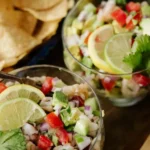
Zesty Mexican Shrimp Ceviche (Ceviche de Camarón)
- Total Time: 2 hours 15 minutes
- Yield: 10 cups 1x
- Diet: Pescatarian
Description
Bright, fresh, and bursting with flavor, this Mexican Shrimp Ceviche recipe is sure to become one of your favorite summer recipes. Made with just 11 ingredients and 15 minutes of active prep, this easy ceviche recipe is the no-cook meal of your dreams!
Ingredients
- 3 pounds large raw tiger shrimp (peeled and deveined)
- 4 large tomatoes (seeded and diced)
- 1 small red onion (diced)
- 2 serrano peppers (seeded and finely chopped)
- 1 cucumber (peeled and diced)
- 1 handful cilantro (chopped plus several sprigs for garnish)
- 2 avocados (peeled, pitted and cubed)
- 1 teaspoon olive oil
- Salt to taste
- Pepper to taste
- 6 limes (juiced)
- 4 lemons (juiced)
- 1 bag of tortilla chips or tostadas
Instructions
- Step: Cut shrimp into 1/4-inch pieces.
- Step: Lay out shrimp in the bottom of glass baking dish. Pour lemon and lime juice over them and refrigerate for 2 hours. The acid from the lemons and limes will “cook” the shrimp.
- Step: Toss prepared shrimp with the remaining ingredients and refrigerate for one more hour or longer.
Notes
Ceviche does well for up to 24-30 hours in the refrigerator. Use a non-reactive bowl (glass, plastic, melamine, or stainless steel) to marinate. You can swap in regular white shrimp for a more delicate texture.
- Prep Time: 15 minutes
- Cook Time: 0 minutes
- Category: Main Course
- Method: Marinating
- Cuisine: Mexican
Nutrition
- Serving Size: 1 cup
- Calories: 208 kcal
- Sugar: 4 g
- Sodium: 780 mg
- Fat: 8 g
- Saturated Fat: 1 g
- Unsaturated Fat: 7 g
- Trans Fat: 0 g
- Carbohydrates: 17 g
- Fiber: 6 g
- Protein: 21 g
- Cholesterol: 171 mg