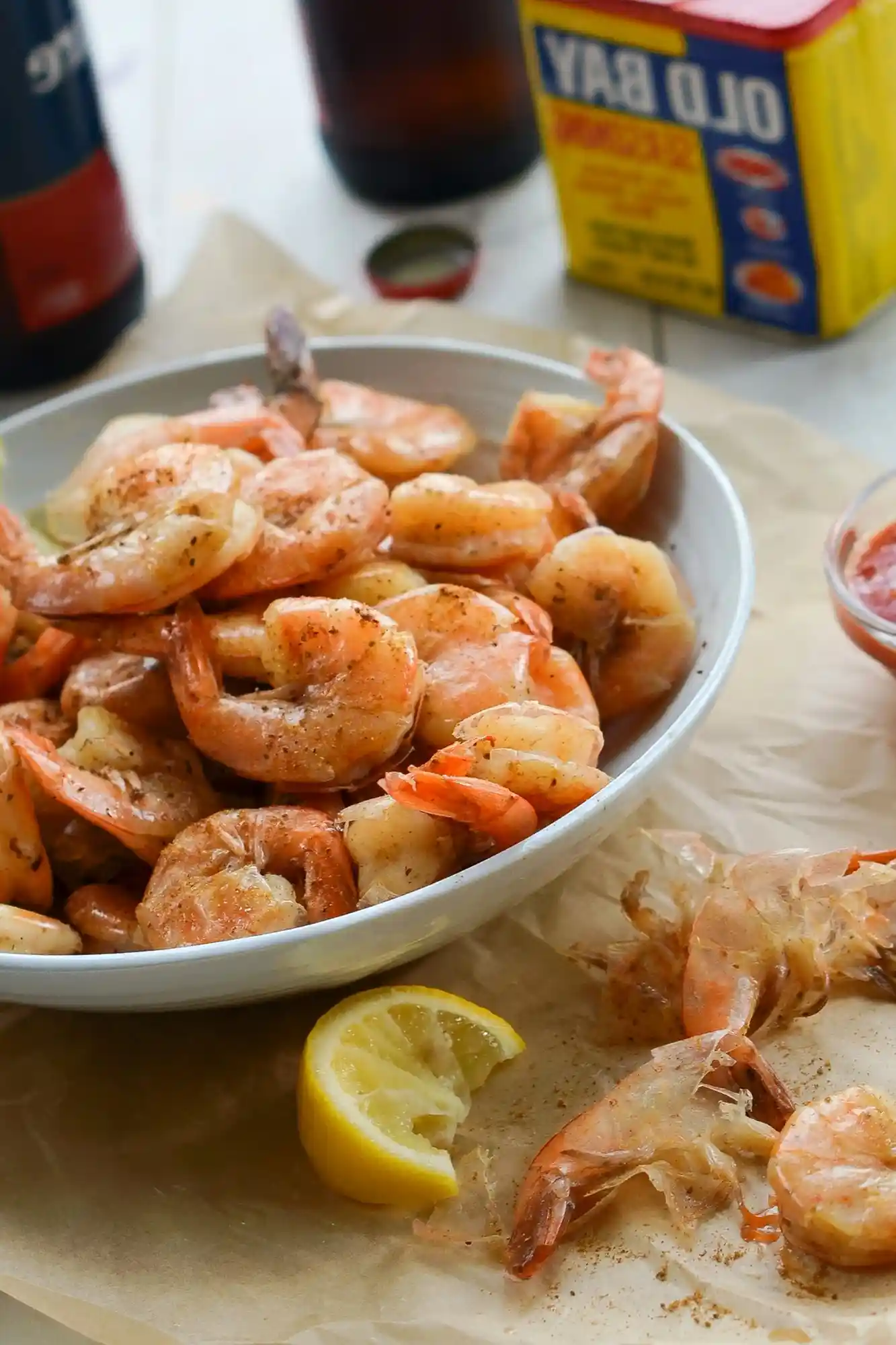
This quick seafood boil delivers bold, zesty flavors perfect for a casual gathering or a summer feast. These peel-and-eat shrimp are simmered in a spiced broth and paired with a classic homemade dipping sauce for a hands-on dining experience.
List of ingredients
- 2½ tablespoons Old Bay seasoning – provides the signature zesty and salty flavor profile.
- 3 tablespoons unsalted butter – adds richness and helps the spices cling to the shells.
- 1 cup vegetable broth – serves as a savory, alcohol-free base for the boiling liquid.
- 1 cup water – balances the intensity of the broth and seasoning.
- 2 lb extra large shrimp (26/30), shell split and deveined – ensures meaty bites that do not overcook quickly; thaw if frozen.
- 6 tablespoons ketchup – creates a sweet and tangy foundation for the sauce.
- ½ tablespoon prepared horseradish – adds a sharp, spicy kick to the dipping sauce.
- 1 tablespoon freshly squeezed lemon juice – brightens the flavors of the cocktail sauce.
- Pinch cayenne pepper – introduces a subtle heat to the finish.
step-by-step instructions
- Prepare the broth: Combine the Old Bay seasoning, unsalted butter, vegetable broth, and water in a large pot or Dutch oven. Bring the mixture to a rolling boil over high heat.
- Cook the shrimp: Add the shrimp to the boiling liquid, then immediately reduce the heat to medium. Cover the pot with a tight-fitting lid and cook for 3 to 6 minutes, stirring once to ensure even heat distribution.
- Monitor doneness: Remove the shrimp as soon as they turn pink and opaque but are still tender. Avoid overcooking to prevent a rubbery texture.
- Mix the cocktail sauce: In a small mixing bowl, whisk together the ketchup, prepared horseradish, lemon juice, and cayenne pepper until smooth.
- Platter and serve: Use a slotted spoon to lift the shrimp from the broth and place them on a large platter. Serve the shrimp either hot or chilled alongside the freshly mixed cocktail sauce.
Pro Tips for Perfect Shrimp
Select the Correct Shrimp Size
Using extra-large shrimp, specifically the 26/30 count, is ideal for boiling. This size provides enough meat to withstand the boiling process without shrinking significantly. Smaller shrimp tend to overcook in seconds, leading to a tough texture.
Properly Thaw Frozen Shrimp
If using frozen shrimp, thaw them slowly in the refrigerator overnight for the best quality. If you are short on time, place them in a sealed bag and submerge them in a bowl of cold water. Never use warm water, as this can compromise the texture and safety of the seafood.
Identify the Perfect Doneness
Watch the shape of the shrimp carefully as they cook. Shrimp are perfectly done when they curl into a ‘C’ shape; if they curl tightly into an ‘O’ shape, they are overcooked. Remove them from the heat the moment they turn pink and opaque.
Optimize Seasoning Distribution
Stirring the shrimp once during the boiling process is crucial for even seasoning. This movement ensures that every shell is coated in the butter and Old Bay mixture. Avoid over-stirring, which can break the delicate meat from the shell.
Ingredient Substitutions and Alternatives
Replacing Old Bay Seasoning
If Old Bay is unavailable, you can create a similar blend using paprika, celery salt, black pepper, and a pinch of cinnamon. Ensure the salt level is balanced, as seafood boils rely heavily on a savory, salty profile. You can also use a generic seafood boil seasoning blend.
Choosing Alternative Liquid Bases
While vegetable broth is an excellent alcohol-free choice, you can use clam juice for a more intense seafood flavor. If you prefer a lighter taste, replace the broth with a mixture of water and a squeeze of lemon. Avoid using heavy creams or milks in the boiling liquid.
Horseradish Variations
Prepared horseradish is the standard for cocktail sauce, but you can use creamed horseradish for a milder, creamier dip. If you prefer a more intense heat, use freshly grated horseradish root. Always taste the sauce after adding horseradish, as the potency varies by brand.
Low-Sugar Sauce Options
To reduce sugar, replace standard ketchup with an unsweetened tomato paste diluted with a small amount of water and a teaspoon of apple cider vinegar. This maintains the tanginess and color of the sauce. Balance the acidity with a small pinch of stevia or monk fruit sweetener if needed.
Serving and Pairing Ideas
Traditional Cornbread Pairings
Serve these shrimp with warm, honey-glazed cornbread to balance the salty spices of the boil. The sweetness of the corn complements the savory Old Bay seasoning. Consider adding jalapeños to the cornbread for an extra layer of heat.
Fresh Vegetable Side Dishes
A fresh corn salad with lime and cilantro provides a crisp, refreshing contrast to the rich shrimp. Steamed asparagus or sautéed zucchini are also excellent light options. These vegetables cleanse the palate between bites of the spiced seafood.
Assembling a Seafood Platter
For a party, arrange the shrimp on a bed of crushed ice to keep them cold. Garnish the platter with fresh lemon wedges, parsley sprigs, and bowls of the cocktail sauce. This presentation keeps the shrimp chilled and makes them easy for guests to grab.
Selecting Complementary Beverages
Pair this dish with sparkling water infused with cucumber or a crisp, non-alcoholic ginger beer. The carbonation and citrus notes cut through the richness of the butter. An iced green tea with lemon also works well to refresh the palate.
Storage and Reheating Guidelines
Chilling Shrimp for Cold Service
To serve these shrimp cold, transfer them to a bowl and immediately plunge them into an ice bath. This stops the cooking process and locks in the moisture. Pat them dry with paper towels before refrigerating to prevent them from becoming watery.
Refrigeration and Shelf Life
Store cooked shrimp in an airtight container in the coldest part of your refrigerator. They will remain fresh and safe to eat for up to three days. Keep the cocktail sauce in a separate sealed jar to maintain its consistency.
Gently Reheating Boiled Shrimp
To reheat, avoid the microwave as it often makes shrimp rubbery. Instead, place them in a steamer basket over simmering water for 2 to 3 minutes. This gently warms the meat while keeping it moist and tender.
Freezing Leftover Shrimp
Cooked shrimp can be frozen for up to two months in a vacuum-sealed bag. When ready to eat, thaw them slowly in the refrigerator. Reheat them quickly in warm water or steam them to restore the texture.
Common Troubleshooting
Fixing Rubbery Shrimp Texture
Rubbery shrimp are almost always the result of overcooking. To prevent this, use a kitchen timer and remove them the moment they reach a pink hue. If you have already overcooked them, serve them chilled with extra sauce to mask the toughness.
Adjusting a Sauce That is Too Spicy
If the horseradish or cayenne makes the cocktail sauce too hot, stir in an extra tablespoon of ketchup. A small amount of honey or maple syrup can also neutralize the heat. Adding a bit more lemon juice can help balance the spice with acidity.
Enhancing a Bland Broth
If the boiling liquid lacks punch, increase the amount of Old Bay seasoning or add a clove of crushed garlic. A splash of apple cider vinegar added to the water can also enhance the depth of flavor. Ensure the liquid is boiling before adding the shrimp.
Dealing with Shrimp That Won’t Turn Pink
If the shrimp remain grey, they are undercooked and unsafe to eat. Return them to the boiling liquid for another minute or two. Ensure the pot is covered with a lid to trap the heat and speed up the process.
Frequently Asked Questions
Can I use small shrimp instead of extra large?
Yes, but you must significantly reduce the cooking time. Small shrimp can cook through in as little as 1 to 2 minutes. Monitor them closely to avoid overcooking them into small, tough pellets.
How do I know when the shrimp are done?
The shrimp are done when the flesh changes from translucent grey to an opaque pinkish-white. They should also curl slightly into a ‘C’ shape. If they curl tightly into a circle, they are overdone.
Can the cocktail sauce be made in advance?
Yes, the cocktail sauce can be made up to 24 hours in advance. In fact, letting it sit in the refrigerator allows the flavors of the horseradish and lemon to meld. Stir well before serving to reintegrate any separated ingredients.
Do I need to peel the shrimp before boiling?
No, boiling them in the shell is recommended as it protects the delicate meat from the direct heat of the water. The shells also absorb the spices from the broth, which adds more flavor to the eating experience.
Is it better to serve these hot or cold?
Both options are delicious and depend on the occasion. Hot shrimp are great for a cozy dinner or a hearty boil, while chilled shrimp are the classic choice for appetizers and summer parties.
Print
Zesty Maryland-Style Boiled Shrimp with Tangy Cocktail Sauce
- Total Time: 20 minutes
- Yield: 4 to 6 servings 1x
- Diet: General
Description
These boiled shrimp are messy, delicious, and made for the best kind of summer eating.
Ingredients
- 2½ tablespoons Old Bay seasoning
- 3 tablespoons unsalted butter
- 1 cup non-alcoholic beer
- 1 cup water
- 2 lb extra large shrimp (26/30), shell split and deveined, thawed if frozen
- 6 tablespoons ketchup
- ½ tablespoon prepared horseradish
- 1 tablespoon freshly squeezed lemon juice, from 1 lemon
- Pinch cayenne pepper
Instructions
- Heat the liquid: Combine the Old Bay, butter, non-alcoholic beer, and water in a large pot and bring to a boil.
- Boil the shrimp: Add the shrimp, turn the heat down to medium, and cover the pot with a lid.
- Cook: Cook, stirring once, for 3 to 6 minutes, or until the shrimp are pink and just cooked through.
- Platter: Using a slotted spoon, remove the shrimp from the broth and transfer to a serving platter.
- Make the sauce: In a small bowl, whisk together the ketchup, horseradish, lemon juice, and cayenne pepper.
Notes
Prepared horseradish can be found in the refrigerator aisle at your supermarket.
- Prep Time: 15 minutes
- Cook Time: 5 minutes
- Category: Appetizer, Fish & Seafood, Main Course
- Method: Boiling
- Cuisine: American
Nutrition
- Serving Size: 1 serving
- Calories: 220 kcal
- Sugar: 4 g
- Sodium: 344 mg
- Fat: 7 g
- Saturated Fat: 4 g
- Unsaturated Fat: 3 g
- Trans Fat: 0 g
- Carbohydrates: 8 g
- Fiber: 1 g
- Protein: 31 g
- Cholesterol: 259 mg