This versatile pasta salad combines fresh vegetables and a tangy dressing for a refreshing side dish. It is an ideal make-ahead option for gatherings, picnics, or weekly meal prep.

List of ingredients
- 16 ounces rotini (or any medium pasta shape) – holds dressing well.
- 1 medium English cucumber (chopped) – adds a crisp texture.
- 1 pint grape tomatoes (halved) – provides juicy sweetness.
- 1 small bell pepper (any color, chopped) – adds color and crunch.
- 1/4 cup finely diced red onion (or sliced green onions) – provides a sharp contrast.
- 1 cup Italian dressing (bottled or homemade) – the primary flavor base.
- 1/4 cup sliced black olives (optional) – adds a salty depth.
- 3 tablespoons chopped fresh parsley – provides a fresh herbal finish.
- 2/3 cup crumbled feta cheese (or to taste) – adds creamy, salty notes.
- salt and black pepper (to taste) – used for final seasoning.
step-by-step instructions
- Cook the pasta: In a large pot, boil pasta in salted water until al dente (firm) according to package directions. Drain and rinse under cold water to cool.
- Prepare the vegetables: While the pasta cools, chop the cucumber, grape tomatoes, bell pepper, and red onions.
- Combine main components: In a large bowl, combine your cooked and cooled pasta, prepared vegetables, Italian dressing, sliced olives (if using), and fresh parsley. Toss well to ensure all ingredients are evenly coated.
- Final seasoning: Season the mixture with salt and pepper to taste and gently stir in the crumbled feta cheese.
- Chill: Refrigerate for at least 2 hours before serving to allow the flavors to blend and the pasta to soak in the dressing.
Optimal Preparation Techniques
Preventing Overcooked Pasta
Cook the pasta strictly to al dente, which means it should still have a slight bite in the center. Overcooked pasta becomes mushy when tossed with dressing and chilled in the refrigerator. This ensures the salad maintains a sturdy texture over several days.
The Importance of Rinsing Pasta
Rinsing the pasta under cold water immediately after draining stops the cooking process. This prevents the pasta from continuing to cook in its own residual heat. It also removes excess surface starch, which prevents the noodles from clumping together in the bowl.
Managing Vegetable Moisture
Pat the chopped cucumbers dry with a paper towel before adding them to the mix. Additionally, if the grape tomatoes are exceptionally juicy, drain them slightly after halving. This prevents excess water from diluting the dressing and making the salad watery.
Timing the Cheese Addition
Fold in the crumbled feta cheese as the very last step of the assembly process. Stirring gently prevents the feta from breaking down too much or smearing against the pasta. This keeps the distinct white crumbles visible and intact for a better presentation.
Ingredient Substitutions and Enhancements
Selecting Alternative Pasta Shapes
While rotini is recommended for its ability to trap dressing in its spirals, other medium shapes work well. Penne, farfalle (bow ties), or fusilli are excellent sturdy alternatives. Avoid very small pasta or thin noodles, as they may break or become too soft during the chilling process.
Adding Hearty Protein Substitutions
To turn this side dish into a main meal, add plant-based proteins like chickpeas or cannellini beans. You can also incorporate shredded cooked chicken or diced turkey for added substance. These proteins absorb the Italian dressing, making them flavorful additions to the mix.
Using Different Cheese Varieties
Feta is the classic choice for a salty, tangy profile, but mozzarella pearls provide a milder, creamier taste. Shaved parmesan or crumbled blue cheese are other options for those who prefer a stronger flavor. Choose a cheese that maintains its shape when chilled.
Incorporating Extra Greenery
Toss in a handful of fresh baby spinach or arugula just before serving for a nutritional boost. You can also add thinly sliced celery or frozen peas that have been thawed. These additions introduce more color and varying levels of crunch to the final dish.
Adding Briny Elements
Beyond black olives, you can add sliced pepperoncini or capers for a spicy, vinegary kick. Sun-dried tomatoes packed in oil also add a concentrated, sweet-tart flavor. These ingredients complement the Italian dressing and enhance the overall zestiness.
Creating Your Own Dressing
The Standard Vinaigrette Ratio
A balanced Italian dressing typically follows a ratio of three parts oil to one part acid. Using a high-quality extra virgin olive oil and red wine vinegar creates a classic base. This balance ensures the dressing is flavorful without being overwhelmingly acidic.
Enhancing Flavor with Aromatics
Adding one clove of finely minced garlic provides a pungent depth that bottled dressings often lack. Dried oregano and basil are essential herbs that define the Italian flavor profile. These aromatics should be whisked into the vinegar before adding the oil.
Using Emulsifiers for Stability
Incorporate a teaspoon of honey and a teaspoon of Dijon mustard into your homemade dressing. These ingredients act as emulsifiers, helping the oil and vinegar stay blended together. This results in a smoother consistency that clings better to the pasta and vegetables.
Adjusting Acidity Levels
If the dressing feels too sharp, add a small amount of extra honey or maple syrup to balance the vinegar. For more brightness, add a squeeze of fresh lemon juice. Adjusting the acidity allows you to tailor the salad to your specific taste preferences.
Storage and Maintenance Guide
Refrigeration Duration and Safety
Store the completed pasta salad in an airtight container in the refrigerator for up to 5 days. Keep the container tightly sealed to prevent the salad from absorbing other odors from the fridge. Ensure the salad is cooled completely before sealing to avoid condensation buildup.
Preventing the Salad from Drying Out
Pasta continues to absorb liquid even after it has been chilled, which can leave the salad looking dry. Before serving leftovers, toss the salad with an extra tablespoon of Italian dressing. This refreshes the coating and restores the original flavor intensity.
Reasons to Avoid Freezing Pasta Salad
Freezing is not recommended for this recipe because the cellular structure of the fresh vegetables breaks down. Upon thawing, cucumbers and tomatoes become soft and release excess water. The pasta also tends to lose its structure and become grainy.
Optimal Container Choices
Glass containers are preferable to plastic as they do not retain smells or stains from the dressing. Ensure there is a small amount of headspace in the container to allow for easy tossing. Using a wide-mouth container makes it easier to stir in extra dressing when refreshing the dish.
Serving and Presentation Ideas
Complementary Main Courses
This pasta salad pairs exceptionally well with grilled mains such as burgers, grilled chicken breasts, or roasted fish. It also serves as a cooling contrast to spicy dishes like ribs or blackened shrimp. Its acidity helps cut through the richness of grilled meats.
Potluck Transport Tips
When transporting the salad to a party, use an insulated cooler bag with ice packs to keep the ingredients crisp. If the salad is being made a day in advance, keep the dressing in a separate jar and toss it just before departure. This prevents the pasta from over-absorbing the liquid during transit.
Plating for Visual Appeal
Garnish the final platter with a few extra sprigs of fresh parsley or a sprinkle of paprika for color. Arrange the salad in a wide bowl to showcase the variety of colorful vegetables. Adding a few whole grape tomatoes on top creates a professional, fresh appearance.
Adding Last-Minute Fresh Herbs
While parsley is included in the recipe, adding fresh basil leaves just before serving enhances the aroma. Finely chopped chives can also add a mild onion flavor and a bright green pop. Fresh herbs should always be added at the end to prevent them from wilting.
Common Troubleshooting Solutions
Correcting Bland Flavor Profiles
If the salad tastes bland after chilling, it is likely because the pasta has absorbed the salt and acidity. Add a splash more Italian dressing and a pinch of salt. A small squeeze of fresh lemon juice can also wake up the flavors without adding too much volume.
Fixing Watery Consistency
Wateriness usually occurs if the vegetables were not drained properly or if the pasta was not rinsed and dried. To fix this, you can gently strain some of the excess liquid from the bottom of the bowl. In the future, ensure cucumbers are patted dry before addition.
Managing Onion Intensity
If the red onions are too pungent, soak the diced pieces in cold water for 10 to 15 minutes before adding them. Drain them well and pat them dry. This process removes the harsh sulfur compounds while keeping the crunch and color.
Dealing with Clumped Pasta
If the pasta has clumped together, it is usually due to a lack of oil or improper rinsing. Use a fork to gently separate the noodles before adding the dressing. Ensure the pasta is completely cool before mixing to prevent the dressing from breaking.
Frequently Asked Questions
How long is pasta salad good for in the fridge?
It remains fresh for up to 5 days when stored in an airtight container. To maintain quality, toss it with a bit more dressing before serving on the third or fourth day.
Can I use a different type of vinegar?
Yes, apple cider vinegar can be used for a slightly fruitier taste, or white wine vinegar for a cleaner, sharper acidity. Red wine vinegar is the traditional choice for Italian style.
What happens if I skip the chilling time?
The salad will still be edible, but the flavors will not be as integrated. Chilling allows the pasta to absorb the dressing, resulting in a more cohesive and flavorful dish.
Can I make this recipe vegan?
Yes, you can make this vegan by omitting the feta cheese or replacing it with a plant-based feta alternative. Ensure the Italian dressing used does not contain honey or animal-derived additives.
What is the best pasta for cold salads?
Short, sturdy shapes like rotini, fusilli, and farfalle are best. They hold their shape well when chilled and have nooks and crannies that capture the dressing.
Print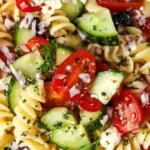
Zesty Italian Pasta Salad
- Total Time: 2 hours 35 minutes
- Yield: 12 servings 1x
- Diet: Vegetarian
Description
A classic pasta salad recipe with crisp veggies, feta, and zesty Italian dressing.
Ingredients
- 16 ounces rotini (or any medium pasta shape)
- 1 medium English cucumber, chopped
- 1 pint grape tomatoes, halved
- 1 small bell pepper, chopped
- ¼ cup finely diced red onion or sliced green onions
- 1 cup Italian dressing
- ¼ cup sliced black olives (optional)
- 3 tablespoons chopped fresh parsley
- ⅔ cup crumbled feta cheese (microbial-rennet)
- salt and black pepper, to taste
Instructions
- Step 1: In a large pot, boil pasta in salted water until al dente (firm) according to package directions. Drain and rinse under cold water to cool.
- Step 2: Chop the cucumber, grape tomatoes, bell pepper, and red onions.
- Step 3: In a large bowl, combine your cooked and cooled pasta, prepared vegetables, Italian dressing, sliced olives (if using), and fresh parsley. Toss well to coat.
- Step 4: Season with salt and pepper to taste and gently stir in feta cheese.
- Step 5: Refrigerate for at least 2 hours before serving to allow the flavors to blend and the pasta to soak in the dressing.
Notes
To keep the salad from getting watery, pat cucumbers dry and drain tomatoes. Use a sturdy pasta shape cooked al dente. For added protein, consider adding chickpeas or shredded chicken. Store in an airtight container in the refrigerator for up to 5 days.
- Prep Time: 20 minutes
- Cook Time: 15 minutes
- Category: Pasta Salad
- Method: Mixing
- Cuisine: American
Nutrition
- Serving Size: 1 cup
- Calories: 233 kcal
- Sugar: 5 g
- Sodium: 303 mg
- Fat: 7 g
- Saturated Fat: 2 g
- Unsaturated Fat: 4 g
- Trans Fat: 1 g
- Carbohydrates: 34 g
- Fiber: 2 g
- Protein: 8 g
- Cholesterol: 7 mg