This quick chicken dinner uses a bright citrus and ginger rub to flavor bone-in thighs. The combination of honey and soy sauce creates a sweet and savory glaze that pairs well with various healthy side dishes.
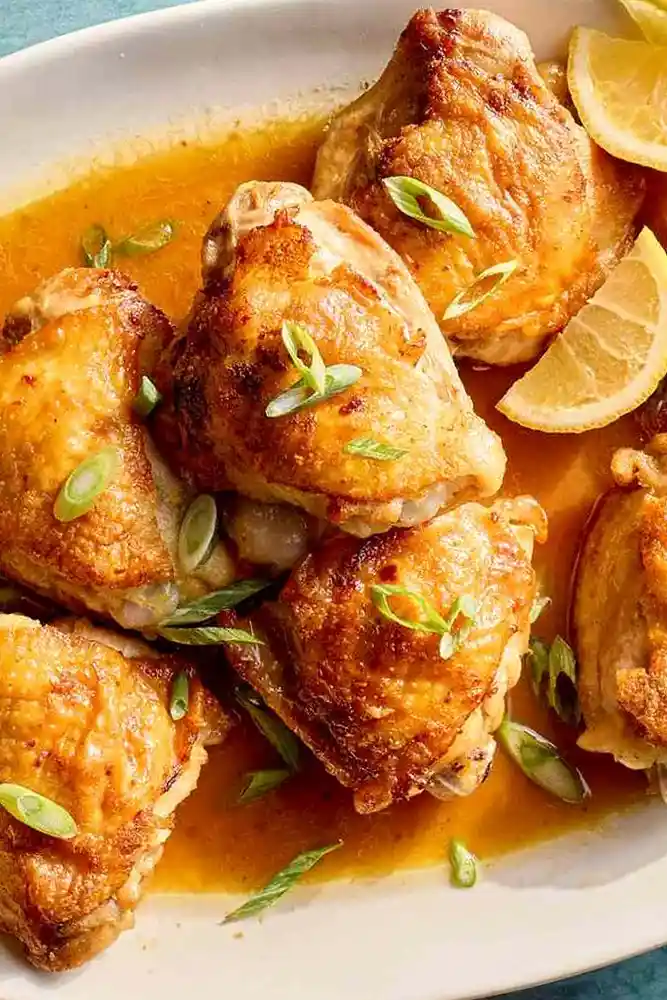
List of ingredients
- 1 lemon – used for both zest and juice.
- 1 tablespoon grated fresh ginger – provides a pungent, spicy flavor.
- 0.5 teaspoon salt – enhances all ingredients.
- 2 tablespoon honey – adds sweetness and helps the sauce thicken.
- 1 tablespoon reduced-sodium soy sauce – adds saltiness and depth.
- 8 chicken thighs with bone – keeps the meat juicy and tender.
- 2 teaspoon vegetable oil – prevents sticking and aids browning.
- Sliced green onions and lemon wedges (optional) – used for a fresh garnish.
step-by-step instructions
- Prepare the citrus: Finely shred the peel from the lemon and then extract the juice.
- Create flavor mixtures: In one bowl, combine the lemon peel, grated ginger, and salt. In a separate bowl, whisk together the lemon juice, honey, soy sauce, and 2 tablespoons of water.
- Season and sear: Rub the lemon peel mixture directly under the skin of the chicken thighs. Heat the vegetable oil in a 12-inch skillet over medium-high heat.
- Brown the chicken: Place the chicken thighs skin-side down in the hot oil. Cook for approximately 7 minutes or until the skin is well-browned.
- Simmer to finish: Turn the chicken over and pour in the lemon juice mixture. Reduce the heat, cover the skillet with a lid, and cook for 14 to 18 minutes until the internal temperature reaches 180 degrees F.
- Plate and garnish: Transfer the chicken to plates. Skim excess fat from the pan juices if desired, and drizzle them over the meat. Top with sliced green onions and serve with lemon wedges.
Advanced Cooking Techniques
Using a Microplane for Efficient Zesting
A Microplane zester allows you to finely grate the lemon peel without hitting the bitter white pith. It also works perfectly for the fresh ginger, meaning you do not have to wash the tool between these two ingredients since they both go into the same rub.
Leveraging the Benefits of Bone-In Thighs
Bone-in thighs are more cost-effective than chicken breasts and contain slightly more fat. This additional fat renders during the searing process, ensuring the meat remains moist and flavorful even when cooked to the higher internal temperature required for thighs.
Using an Instant-Read Thermometer for Accuracy
A probe thermometer eliminates the need to guess if the chicken is done by cutting into the meat. Keeping the lid on the pan while monitoring the temperature prevents heat from escaping, which speeds up the cooking process and keeps the meat tender.
Achieving a Perfect Sear on Chicken Skin
To get a crisp, golden-brown skin, ensure the oil is shimmering before adding the chicken. Avoid moving the thighs too frequently during the first 7 minutes; letting them sit undisturbed allows the Maillard reaction to create a deep brown crust.
Ingredient Substitutions and Alternatives
Substituting Maple Syrup for Honey
If honey is unavailable, pure maple syrup is an excellent alternative. It provides a similar sweetness and viscosity, though it adds a slight woody flavor that complements the ginger and lemon well.
Using Coconut Aminos instead of Soy Sauce
For a lower-sodium or soy-free option, substitute the soy sauce with coconut aminos. Coconut aminos are slightly sweeter and less salty, so you may want to add a small pinch of extra salt to the rub to maintain the flavor balance.
Replacing Fresh Ginger with Ground Ginger
If you do not have fresh ginger root, you can use ground ginger powder. Use about one-fourth teaspoon of powder for every tablespoon of fresh ginger, as the dried version is significantly more concentrated in flavor.
Utilizing Different Cooking Oils
While vegetable oil is recommended for its neutral taste and high smoke point, avocado oil or grapeseed oil also work well. Avoid using butter for the initial sear, as the milk solids can burn at the medium-high heat required for browning the skin.
Recommended Side Dish Pairings
Steamed Jasmine Rice
Jasmine rice is an ideal pairing because its floral aroma and neutral flavor absorb the lemon-ginger pan sauce. Rinse the rice under cold water before cooking to remove excess starch for a fluffier texture.
Roasted Broccoli and Carrots
Toss broccoli florets and sliced carrots in olive oil and salt, then roast them at 400 degrees F for 20 minutes. The charred edges of the vegetables provide a bitter contrast to the sweet honey glaze on the chicken.
Quinoa and Kale Salad
For a nutrient-dense option, serve the chicken over a bed of cooked quinoa and massaged kale. Toss the salad with a simple dressing of olive oil and apple cider vinegar to complement the acidity of the lemon.
Sautéed Baby Spinach
Quickly sauté baby spinach with a clove of minced garlic and a touch of olive oil. This provides a light, earthy side that does not overwhelm the delicate flavors of the ginger and citrus.
Storage and Reheating Guidelines
Proper Refrigeration Methods
Store leftover chicken and sauce in an airtight container in the refrigerator. The chicken will remain safe and flavorful for up to three to four days when kept at a temperature of 40 degrees F or below.
Freezing for Long-Term Storage
Place cooked chicken thighs in a freezer-safe bag or container, ensuring the pan sauce is included to keep the meat moist. Properly frozen chicken will maintain its quality for up to three months.
Best Reheating Practices
To avoid drying out the meat, reheat the chicken in a skillet over medium-low heat with a tablespoon of water or broth. Cover the pan to create a steaming effect that gently warms the meat through.
Preventing Rubberiness During Reheating
Avoid using a microwave on high power, as this can make the chicken skin rubbery and the meat tough. If using a microwave, use the medium power setting and heat in short intervals, checking the temperature frequently.
Troubleshooting Common Issues
Fixing a Sauce that is Too Thin
If the pan juices are too watery, remove the chicken from the pan and simmer the sauce on high heat for 3-5 minutes. This reduces the liquid and concentrates the honey and soy flavors, creating a thicker glaze.
Preventing Honey from Burning in the Pan
Honey has a lower burn point than oil. If you notice the sauce darkening too quickly, lower the heat immediately and add a tablespoon of water to stabilize the temperature and prevent scorching.
Managing Under-Browned Skin
If the skin is not browning, it may be because the pan was not hot enough or the pan was overcrowded. Cook the chicken in batches if necessary to ensure there is enough space for steam to escape, allowing the skin to crisp.
Addressing Overcooked Meat
If the chicken exceeds 180 degrees F, it may become slightly dry. To fix this, generously drizzle the remaining pan sauce over the meat or serve it with a side of steamed vegetables to add moisture back to the plate.
Frequently Asked Questions
Can I use boneless chicken thighs?
Yes, you can use boneless thighs, but they will cook faster. Reduce the simmering time by about 5-8 minutes and use a thermometer to ensure they reach the safe internal temperature.
How do I peel ginger effectively?
Instead of a vegetable peeler, use the edge of a metal spoon to gently scrape the skin off the ginger root. This method allows you to remove the peel from the knobby edges without wasting any of the ginger flesh.
Can I make this recipe in an oven?
Yes, sear the chicken in a skillet first, then transfer the pan to a 375 degree F oven for 20-25 minutes. Ensure the pan is oven-safe and the chicken is covered with foil to retain moisture.
What is the best oil for searing?
High-smoke point oils like vegetable, canola, or avocado oil are best. These oils can withstand the medium-high heat required to brown the skin without smoking or breaking down chemically.
Print
Zesty Honey Lemon Ginger Chicken Thighs
- Total Time: 35 minutes
- Yield: 4 servings 1x
- Diet: General
Description
For a fast and healthy chicken dinner, try our lemon-ginger chicken recipe. The sweet and salty combination of honey and soy sauce adds irresistible flavor.
Ingredients
- 1 lemon
- 1 tablespoon grated fresh ginger
- 0.5 teaspoon salt
- 2 tablespoon honey
- 1 tablespoon reduced-sodium soy sauce
- 8 chicken thighs with bone
- 2 teaspoon vegetable oil
- Sliced green onions and lemon wedges (optional)
Instructions
- Step: Finely shred peel from lemon and juice lemon.
- Step: In bowl combine the lemon peel, ginger and salt. In another bowl combine lemon juice, honey, soy sauce and 2 Tbsp. water.
- Step: Rub lemon peel mixture under the skin of the chicken thighs. In 12-inch skillet, heat oil over medium-high heat.
- Step: Place chicken, skin side down, in the hot oil. Cook 7 minutes or until well-browned.
- Step: Turn the chicken and add lemon juice mixture. Reduce heat; cover and cook 14 to 18 minutes longer or until done (180 degrees F.).
- Step: Transfer chicken to plates. Skim fat from pan juices, if desired. Drizzle chicken with some of the pan juices. Top with green onion and serve with lemon wedges.
Notes
Using a Microplane zester can speed up the preparation of lemon zest and ginger. Use an instant-read thermometer to ensure chicken thighs reach an internal temperature of 180°F.
- Prep Time: 10 minutes
- Cook Time: 25 minutes
- Category: Dinner
- Method: Pan-frying
- Cuisine: American, Asian
Nutrition
- Serving Size: 2 chicken thighs
- Calories: 459 kcal
- Sugar: 10 g
- Sodium: 567 mg
- Fat: 31 g
- Saturated Fat: 8 g
- Unsaturated Fat: 23 g
- Trans Fat: 0 g
- Carbohydrates: 12 g
- Fiber: 1 g
- Protein: 33 g
- Cholesterol: 158 mg