This refreshing avocado shrimp salsa combines plump seafood with creamy textures and bright citrus notes. It serves as a perfect high-protein appetizer for parties or a light summer lunch.
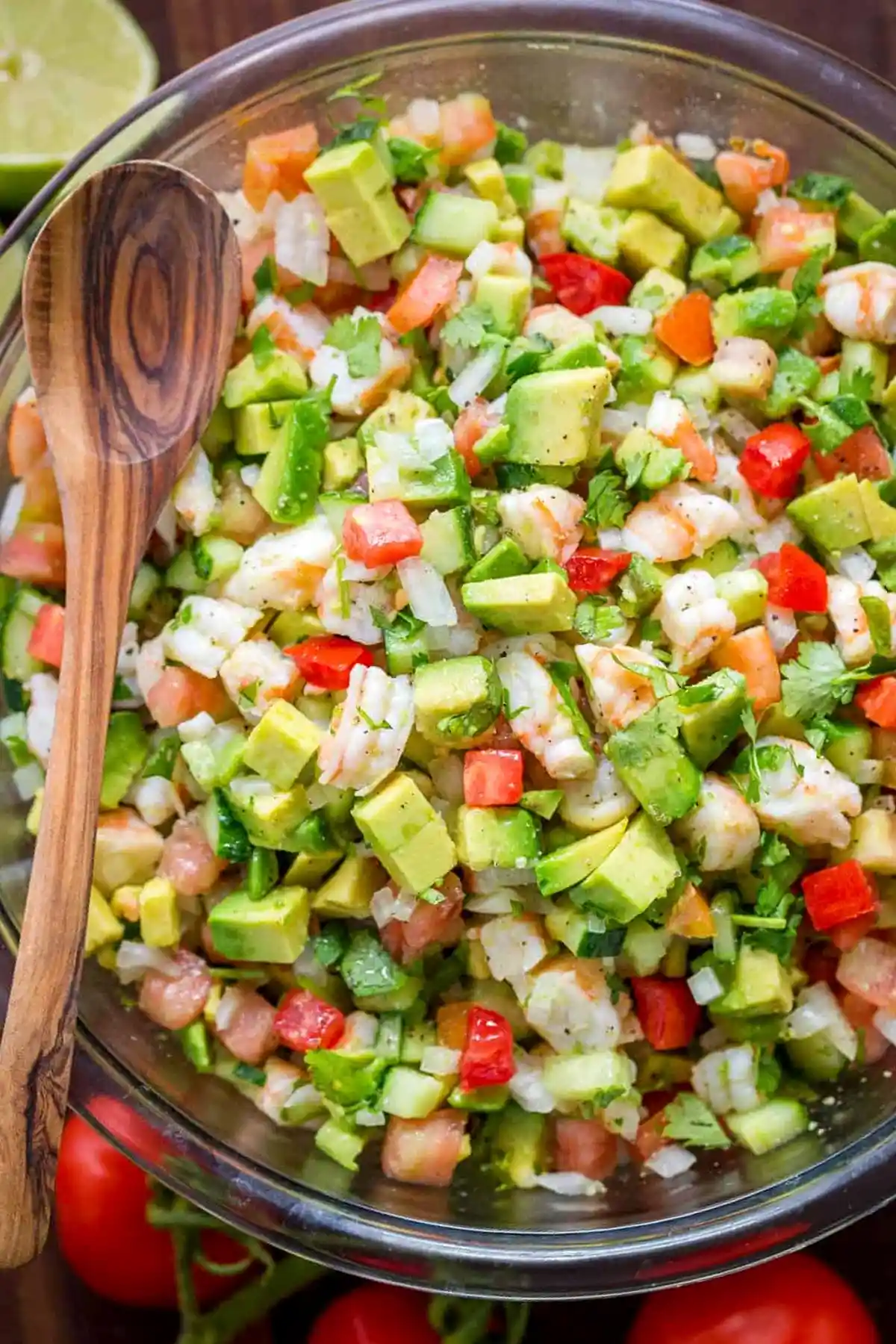
List of ingredients
- 1 lb raw shrimp (peeled and deveined) – provides the main protein and a tender bite.
- 1/4 tsp Salt and black pepper, or to taste – basic seasoning for the shrimp.
- 1 Tbsp olive oil – used for sautéing the shrimp to prevent sticking.
- 3 medium limes, juiced – provides the essential acidity to balance the fats.
- 2 medium/large avocados – adds a rich, creamy consistency to the salsa.
- 1/2 english cucumber – adds a crisp, fresh crunch.
- 3 medium (or 4 roma tomatoes) – contributes juicy sweetness and color.
- 1 small onion (finely diced) – adds a sharp, pungent contrast.
- 1/2 cup Cilantro (1/2 bunch) (chopped) – provides a fresh, herbal finish.
step-by-step instructions
- Cook the Shrimp: Season shrimp lightly with salt and pepper. Place a large skillet over medium high heat. Once the pan is hot, add 1 Tbsp olive oil. Add shrimp in a single layer and cook 3 minutes total, turning once halfway. Saute just until cooked through then remove from the pan. Transfer to cutting board, coarsely chop and place into a large mixing bowl.
- Marinate: Squeeze the juice of 3 medium limes over the shrimp, stir and set aside to marinate while you prepare remaining salsa ingredients.
- Combine Vegetables: Dice cucumber, tomato and avocado and add them to the mixing bowl with shrimp.
- Final Mix: Finely dice onion and chop 1/2 bunch of fresh cilantro. Add to the mixing bowl then stir together all of the ingredients until well combined and serve.
Pro Tips for Ingredient Preparation
Selecting the Best Shrimp
Choose shrimp that are translucent and smell like the ocean, avoiding any with a strong ammonia scent. If using frozen shrimp, thaw them completely in the refrigerator overnight to maintain the best texture during cooking.
Ensuring Proper Shrimp Doneness
Cook shrimp only until they turn opaque and form a ‘C’ shape. If they curl tightly into an ‘O’ shape, they are overcooked and will become rubbery and chewy.
Choosing Ripe Avocados
Gently squeeze the avocado in the palm of your hand; it should give slightly but not feel mushy. Avoid avocados with deep bruises or excessively soft spots, as these will break down too quickly when stirred into the salsa.
Prepping Tomatoes to Avoid Excess Water
Remove the seeds and the watery pulp from the center of the tomatoes before dicing. This prevents the salsa from becoming too liquidy and keeps the other ingredients crisp.
Dicing for Uniformity
Aim for a consistent dice across the cucumber, tomato, and avocado, roughly the size of the chopped shrimp. This ensures that every spoonful contains a balanced mix of all the flavors and textures.
Customizing Your Salsa
Incorporating Heat with Peppers
If you prefer a spicier profile, finely dice a jalapeño or serrano pepper and add it along with the onion. Remove the seeds and white membranes to control the heat level.
Substituting the Cucumber
For a different crunch, replace the English cucumber with peeled and diced jicama. Jicama provides a sturdier texture and a slightly sweeter, nuttier flavor profile.
Using Different Onion Varieties
Substitute the small white onion with a red onion for a milder flavor and a vibrant purple color. Soak the diced red onion in cold water for ten minutes and drain before adding to reduce its sharpness.
Alternative Citrus Options
While lime is traditional, you can replace one of the limes with a lemon for a different type of brightness. This slightly alters the acidity and complements the shrimp differently.
Adding a Sweet Element
Incorporate finely diced mango or pineapple to create a tropical twist. The sweetness of the fruit pairs exceptionally well with the creamy avocado and salty shrimp.
Serving and Pairing Suggestions
The Best Dippers
Serve this salsa with thick-cut corn tortilla chips that can support the weight of the shrimp and avocado. For a lower-carb option, use sturdy cucumber slices or endive leaves as edible scoops.
Using Salsa as a Topping
Spoon the salsa over grilled white fish, salmon fillets, or blackened chicken breasts. The cool temperature of the salsa provides a refreshing contrast to the hot protein.
Tostada Presentation
Spread a thin layer of refried beans on a crispy tostada shell and top with a generous scoop of shrimp salsa. Garnish with a slice of radish for extra crunch and visual appeal.
Taco Filler Alternative
Use this salsa as a filling for soft corn tortillas. Add a dollop of Greek yogurt or sour cream on top to add more creaminess to the taco.
Platter Arrangements
Arrange the salsa in a chilled bowl surrounded by sliced bell peppers, carrots, and jicama sticks. This turns the recipe into a complete vegetable and protein platter for guests.
Storage and Freshness Guide
Preventing Avocado Oxidation
The lime juice in this recipe acts as a natural preservative by lowering the pH level. To further prevent browning, press a piece of plastic wrap directly onto the surface of the salsa before sealing the container.
Optimal Refrigeration Time
Store the salsa in an airtight glass container in the refrigerator for up to 24 hours. Beyond this window, the vegetables may lose their crispness and the avocado may soften too much.
Temperature for Serving
This dish is best served chilled or at room temperature. Remove it from the fridge about 15 minutes before serving to allow the flavors to open up fully.
Why You Should Not Freeze This Salsa
Avoid freezing this recipe because the high water content in the cucumber and tomato will create ice crystals. Additionally, the avocado will change texture and color, becoming unappealing upon thawing.
Make-Ahead Advice
Preparing the Shrimp in Advance
You can sauté and chop the shrimp several hours before the event. Keep them marinated in the lime juice in the fridge to deepen the flavor profile.
Chopping Vegetables Early
Dice the onion, cucumber, and tomato and store them in a separate container. However, wait to add the avocado and cilantro until just before serving to maintain maximum freshness.
Assembling the Components
If you must assemble the full salsa early, leave out the salt until the last moment. Salt draws moisture out of vegetables, which can make the salsa watery if it sits too long.
Managing Batch Sizes
If making a double batch, mix the ingredients in two separate bowls. This prevents the bottom layer of ingredients from being crushed by the weight of the top layers.
Troubleshooting Common Issues
Fixing a Watery Salsa
If your salsa becomes too liquidy, use a slotted spoon to transfer the mixture to a clean bowl. Alternatively, add a few more pieces of diced avocado to help thicken the consistency.
Adjusting Bland Flavors
If the salsa tastes flat, add an extra squeeze of fresh lime juice or a pinch of salt. The acidity of the lime is what activates the other flavors in the mix.
Handling Overcooked Shrimp
If the shrimp are too firm, chop them into much smaller pieces. This disguises the rubbery texture and allows them to blend more seamlessly with the softer vegetables.
Dealing with Too Much Onion
If the onion flavor is overpowering, stir in a bit more diced cucumber or avocado. The neutrality of these ingredients helps balance the pungency of the raw onion.
Frequently Asked Questions
Can I use pre-cooked shrimp?
Yes, you can use pre-cooked shrimp to save time. Rinse them under cold water, pat them dry with paper towels, and chop them before adding them to the lime juice marinade.
Do I have to peel the shrimp myself?
You can purchase shrimp that are already peeled and deveined to simplify the process. Just ensure they are fully thawed before cooking.
Can I substitute the cilantro?
If you dislike cilantro, flat-leaf parsley is a suitable replacement. While the flavor is different, it still provides the necessary herbal freshness.
How do I keep the salsa from getting mushy?
Avoid over-stirring the salsa once the avocado is added. Use a folding motion with a spatula to combine the ingredients gently without crushing the avocado chunks.
Is it okay to use frozen lime juice?
Freshly squeezed lime juice is highly recommended for the best flavor and color preservation. If using bottled juice, ensure it is 100% pure lime juice without added sugars.
Print
Zesty Avocado Shrimp Salsa
- Total Time: 20 minutes
- Yield: 6 servings 1x
- Diet: General
Description
This Avocado Shrimp Salsa is a party favorite! Loaded with shrimp, avocado and a surprising ingredient! Easy, excellent avocado shrimp salsa recipe.
Ingredients
- 1 lb raw shrimp, peeled and deveined
- 1/4 tsp salt and black pepper
- 1 Tbsp olive oil
- 3 medium limes, juiced
- 2 medium/large avocados
- 1/2 english cucumber
- 3 medium or 4 roma tomatoes
- 1 small onion, finely diced
- 1/2 cup chopped cilantro
Instructions
- Step 1: Season shrimp lightly with salt and pepper. Place a large skillet over medium high heat. Once the pan is hot, add 1 Tbsp olive oil. Add shrimp in a single layer and cook 3 minutes total, turning once halfway. Saute just until cooked through then remove from the pan. Transfer to cutting board, coarsely chop and place into a large mixing bowl.
- Step 2: Squeeze the juice of 3 medium limes over the shrimp, stir and set aside to marinate while you prepare remaining salsa ingredients.
- Step 3: Dice cucumber, tomato and avocado and add them to the mixing bowl with shrimp.
- Step 4: Finely dice onion and chop 1/2 bunch of fresh cilantro. Add to the mixing bowl then stir together all of the ingredients until well combined and serve.
Notes
If using any sized pre-cooked shrimp – rinse under cold water, pat dry with paper towels then chop.
- Prep Time: 17 minutes
- Cook Time: 3 minutes
- Category: Appetizer, Salad
- Method: Sautéing
- Cuisine: American, Mexican
Nutrition
- Serving Size: 1 serving
- Calories: 242 kcal
- Sugar: 4 g
- Sodium: 722 mg
- Fat: 13 g
- Saturated Fat: 1 g
- Unsaturated Fat: 12 g
- Trans Fat: 0 g
- Carbohydrates: 15 g
- Fiber: 7 g
- Protein: 18 g
- Cholesterol: 190 mg